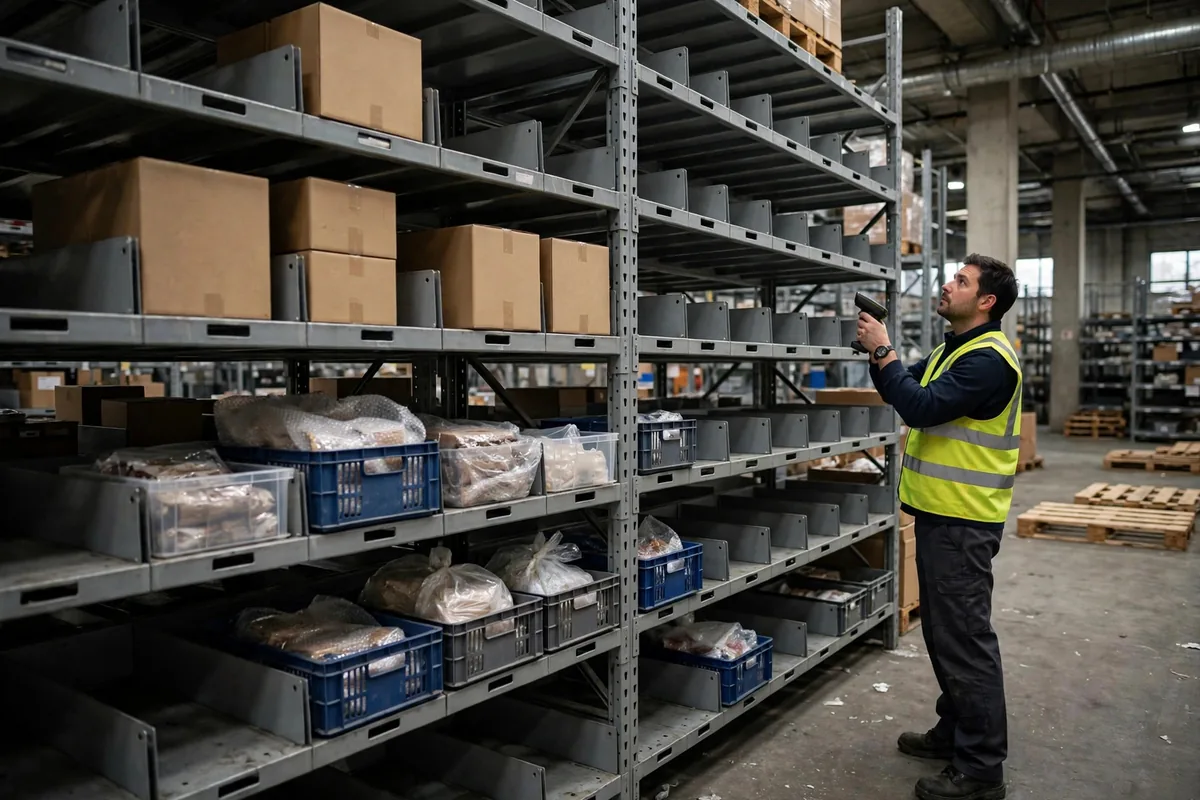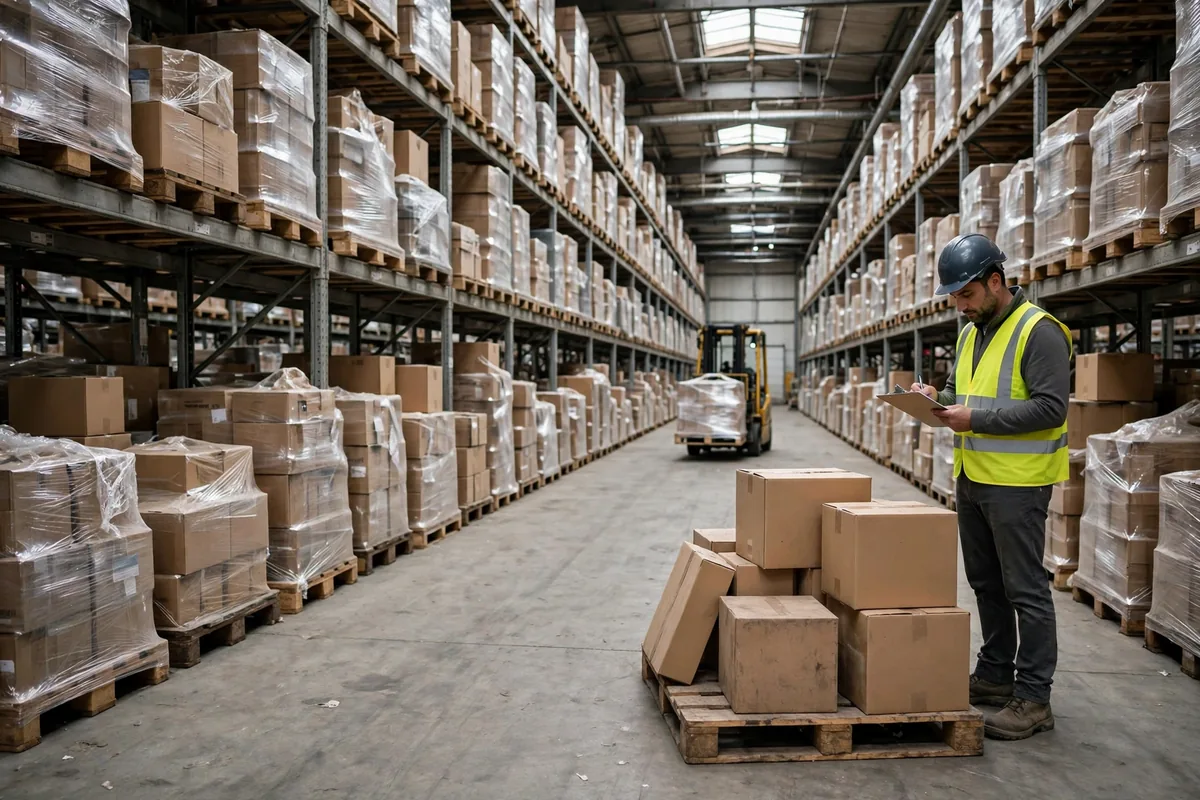
It was 7:40 on a Tuesday morning last November when I walked into the warehouse and found Lao Zhou, our count team lead, standing at the mouth of Zone A holding a printout. Sixty locations sampled, seventeen mismatched — a warehouse cycle count variance report nobody wants to see on a Tuesday morning. The crew had stayed until 11 p.m. the night before to finish the count, and the recheck the next morning still didn't tie out. Lao Zhou looked at me and said, "Boss, these numbers have legs. The more we count, the worse it gets."
If you have run a warehouse, you know that feeling. A new manager's first instinct is to check the cameras and wonder who is walking out with product. An experienced one knows better. In our operation, nine mismatches out of ten have nothing to do with character — they come from holes in the process. As long as the holes stay open, the numbers will never tie out, no matter how often you count.
Where Warehouse Cycle Count Variance Actually Comes From: Five Holes
Hole number one: misplaced stock, the wrong item in the wrong slot. This is our single biggest source of variance. A week before last year's Singles' Day peak, a 3C accessory in Zone B showed 480 on the books and 412 on the shelf — 68 short. Three days of digging found 65 of them in the two neighboring slots. Two look-alike models had been put in each other's places, scanned correctly each time, so one location was over and the other under. The remaining three turned out to be damaged units nobody had logged — more on that later. Look-alike products stored side by side are an invitation to mix them up. Our rule now is simple: similar SKUs never sit in adjacent slots, with at least one unrelated product between them. Six months in, slot-mix variances had fallen by more than half.
Hole number two: missed or double scans at receiving and putaway. When peak season hits, people rush, and rushing means skipped steps. Reviewing March this year, we found the same pattern three weeks running: two or three receipts a week where the team scanned the carton label but not the individual item codes, so the system believed the full carton was on the shelf while a few loose units were missing. The opposite happens too — the same pallet scanned twice, inflating the book stock. Our fix has no fancy technology: one confirmation step at putaway. the operator must scan the location barcode to close the task; a quantity mismatch locks the next step. People skip steps when they are busy. The system has to make skipping impossible.
Hole number three: the system lags behind the physical move — transfers and returns not posted on time. This is the category most often misread as "we counted wrong." In early April, 120 returned units sat in quarantine. Inspection cleared 96 for resale, the physical stock moved back to good stock, but the paperwork stayed stuck in the returns flow. On count day, good stock was 96 over and quarantine was 96 under. Nothing was lost. The books just hadn't caught up. Internal transfers do the same thing: move the stock without posting the move, and the next day's count lights up red. Our rule now: when the physical stock moves, the paperwork moves the same day. Returns, transfers, and damage write-offs never stay overnight, and anything unposted at close of shift gets reported by the team lead, by name.
Hole number four: picking errors and unlogged damage. Pick one wrong item and the variance lands on two SKUs at once: the one you picked is short, the one you shouldn't have touched is over. Damage is sneakier. A crushed carton, a torn seal — the picker puts the unit back on the shelf and the system still thinks it's good stock. Last September a location came up 11 units short. It took a whole afternoon to trace it to damaged goods moved to a holding area with no log entry at all. Damage logging can't rely on goodwill. Every pick zone now has a damage bin, and damaged goods go only in the bin. When the bin fills, the team lead logs and processes the lot. A bin is visible. A log entry follows.
Hole number five: the counting method itself. If you only sample the easy locations — ground level, full cartons — the high bays and loose-pick areas never get counted, and their variances hide for years. A fuzzy cutoff is worse. If outbound orders keep moving while you count, the numbers you compare against are already stale, and the reconciliation turns into a list of timing differences. We freeze the relevant locations one hour before a count, and the count sheet carries the book figure frozen at that moment. Outbound moves during a count go through an exception flow with its own log. Sampling changed too: locations with a variance in the past three months get picked first.
The Counterintuitive Part: Theft Is the Smallest Cause
The moment a variance shows up, plenty of managers look at their people first. I understand it — it's the easiest explanation. But our review records for the last two years say otherwise. Of the warehouse cycle count variance cases we could trace to a cause, theft and unexplained loss accounted for less than one in ten. More than nine in ten came from the five holes above. And the harder you squeeze people — more cameras, more suspicion — the less the variance improves, because the holes are still leaking. Morale takes the hit instead. Veterans feel distrusted, new hires are afraid to touch anything, and mistakes multiply.
Look at it the other way: a variance is an alarm, not an accusation. It tells you which step is leaking. Our review meeting now opens with one question — not "whose fault is this" but "where is the hole?" Fixing a person solves one incident. Closing a hole solves a whole category.
Full Stocktake vs. Cycle Counting: The Bill We Actually Ran
Plenty of warehouses still shut down once or twice a year for a full wall-to-wall count, believing it is the thorough option. We used to. Then we ran the numbers.
| Item | One full shutdown count | One month of cycle counting |
|---|---|---|
| Downtime | Whole warehouse stopped for 1 day | 1–2 hours a day, no stoppage |
| Outbound impact | All orders for the day delayed | Shipping runs normally |
| Labor | Everyone involved, about 200 people | 2 counters, part-time |
| How fast variances surface | Once or twice a year | Same day, hole closed the same day |
| Crew morale | Overnight shifts, drained team | Normal rosters |
With a crew of around 200, one shutdown day means a full day of outbound frozen plus overtime across the board. Worse, a variance that has been building for a year takes months of paperwork to trace, and by then half the trail is gone. With cycle counting, we count a small slice every day. A variance shows up the same day it is created, and the hole gets closed the same day. Over a year, cycle counting costs fewer total labor hours than the big shutdown counts did — and accuracy went up, not down. We ran this comparison twice. Same answer both times. A full count is a punishment you give yourself.
The Investigation Order: Locate It in Half a Day
When a variance lands, don't tear the whole warehouse apart. Work this order — most cases are located within half a day:
- Check the cutoff first. Was anything moving in or out during the count? Pull the timing differences out before anything else.
- Check the neighboring slots. Does the SKU look like its neighbor? Is there extra stock one slot over? Slot-mix is always the neighbor first.
- Check the three unposted document types. Transfers, returns, damage write-offs — anything stuck from the same day?
- Check receiving records. For that SKU, the last two weeks: any missed scans, any double scans?
- Check picking records and the damage bin last. Wrong picks and unlogged damage almost always turn up here.
If five steps don't locate it, then widen the search or pull the camera footage. Most of the time, step three solves it.
Every count review ends at the same wall chart in our warehouse. Five lines: slot-mix, missed scans, paperwork posted, damage logged, cutoff clean. The team lead ticks each one off, and anything unticked gets a written reason on the spot. That chart has been on the wall for two years. Our variance rate came down one tick at a time.
So the next time a warehouse cycle count variance lands on your desk, don't start with your people. Start with the process. Leave the holes open and no amount of counting will fix the numbers. Close the holes, and the numbers fix themselves.
By Chen Feng, Warehouse Operations Manager