How many warehouses have you toured where you talked rent first, ceiling height second, and only thought to ask about the columns last?
Let me ask it more sharply: have you ever calculated how much rent a single column costs you per year?
The worst case I ever saw was in the Inland Empire. Nobody mentioned the columns during lease negotiations. After move-in, two of them turned out to sit right in the main aisle. Forklifts had to swing around them every pass — an extra 20 seconds per trip, hundreds of trips a day. Worse was fire protection: the columns blocked sprinkler coverage, and the fire marshal required additional heads at the tenant's expense. The rent looked cheap. The columns ate the discount and then some.
Column grids are invisible before you sign, and in your face every day after.
Column Spacing: Memorize a Few Numbers First
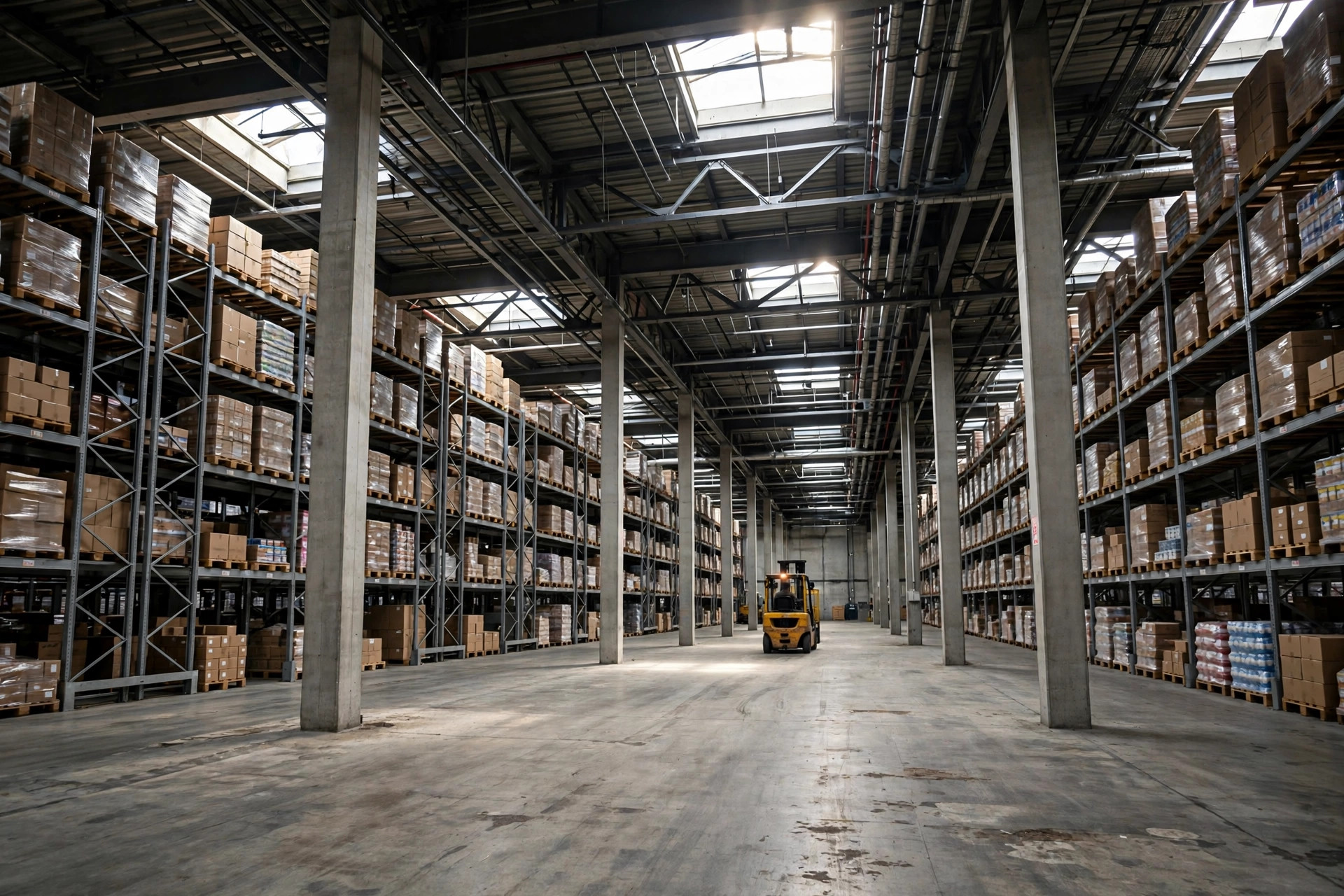
In new US warehouse construction, the most common column grids are 50 by 50 feet and 52 by 52 feet; older buildings often have 40 by 40. In Europe, new builds commonly run around 24 meters. You don't need to memorize these — but walk into a tour with a sense of scale: the wider the grid, the freer your rack layout; the tighter the grid, the more columns you fight.
Here's a quick calculation: divide the building depth by the column spacing and you know how many rack runs fit in a row. Whatever doesn't divide evenly is where the columns compete with you for floor space. Run it on the floor plan before signing — five minutes, and it kills half the pitfalls.
Read clear height and column grid together. A 40-foot clear height with a 40-foot grid means dense columns and a constrained layout everywhere; a 30-foot clear with a 52-foot grid is often more usable. Looking at height without the grid is looking at half the picture. When a broker pitches "40-foot clear, rack it to the sky," ask for the column spacing — one question marks you as someone who's done this before.
One more thing people miss: the column's actual footprint. A dot on the drawing is a two-foot-square concrete column in real life. A 12-foot aisle on paper becomes barely 10 feet once the column stands in it. When you calculate aisle width, subtract the column first. Drawing dimensions are not real dimensions.
What If a Column Lands in Your Aisle?
Short answer first: the best place for a column is inside the racking; second best is at the end of a rack row; worst is dead center in an aisle.
Lay out racking on the column module: let columns fall where two back-to-back rack runs meet, or at row ends. Aisles must yield to columns, never the other way around. One column eats about two feet, plus its impact protection — the aisle effectively loses close to three feet. A 12-foot aisle with a column in it starts scraping forklifts on the turn.
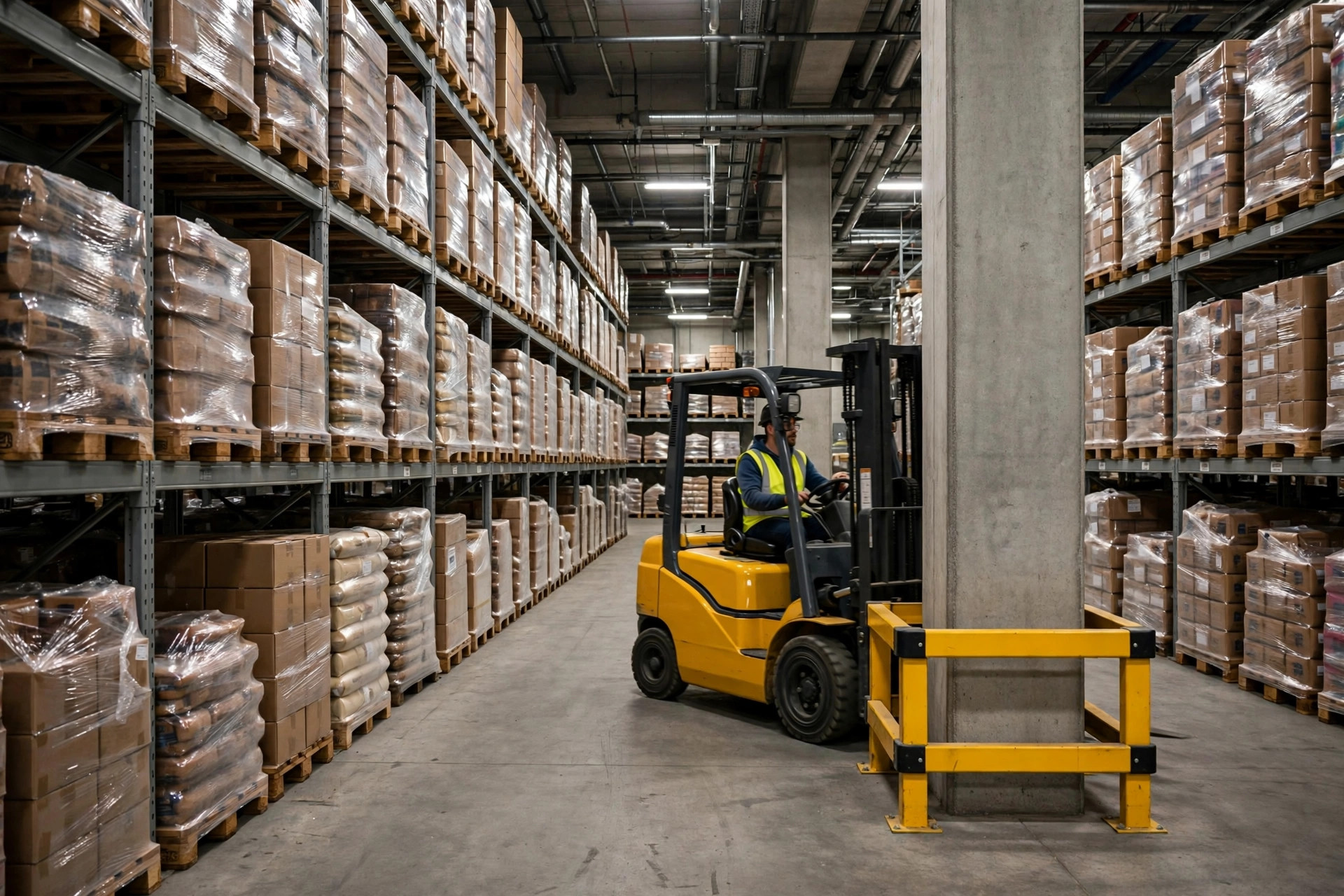
Forklift turning radius is a hard constraint. A typical counterbalance truck needs roughly 7 to 8 feet of turning radius. Take the aisle width, subtract the column footprint, subtract a safety margin — if what's left is smaller than the turning radius, that aisle is decoration. The truck either can't get in or can't get out, or the driver simply won't try. Run this formula on every tour. It beats any broker's pitch.
Fire protection is the other landmine. When a column blocks sprinkler coverage, the fire marshal can require extra heads or force you to keep the rack bays around the column at reduced height. In 2021 I toured a building in Dallas where exactly that happened — the top two levels of racking near the columns had to stay empty, and the tenant paid rent on that dead space every year. Fire codes vary by jurisdiction; asking about local requirements before you sign isn't embarrassing. Asking late costs money.
One more habit worth building: hand the column grid to your racking vendor before they quote, not after. A good vendor lays the rack runs on the column module as a matter of routine — columns tucked into back-to-back seams, aisles kept clean — and will flag the conflicts you missed. A vendor who quotes without asking for the grid is quoting a fantasy layout. The five minutes it takes to send the floor plan saves the five figures it costs to reconfigure installed racking around a column you "discovered" later.
Bring a Tape Measure: Three Things to Check on Every Tour
First, measure the actual column spacing. The drawing says 50 feet; the tape may read 49 — construction tolerance plus the column's own cross-section shaves real, usable inches off. One foot short, and two rack runs that fit on paper don't fit in steel. Thirty seconds with a tape measure. Worth it.
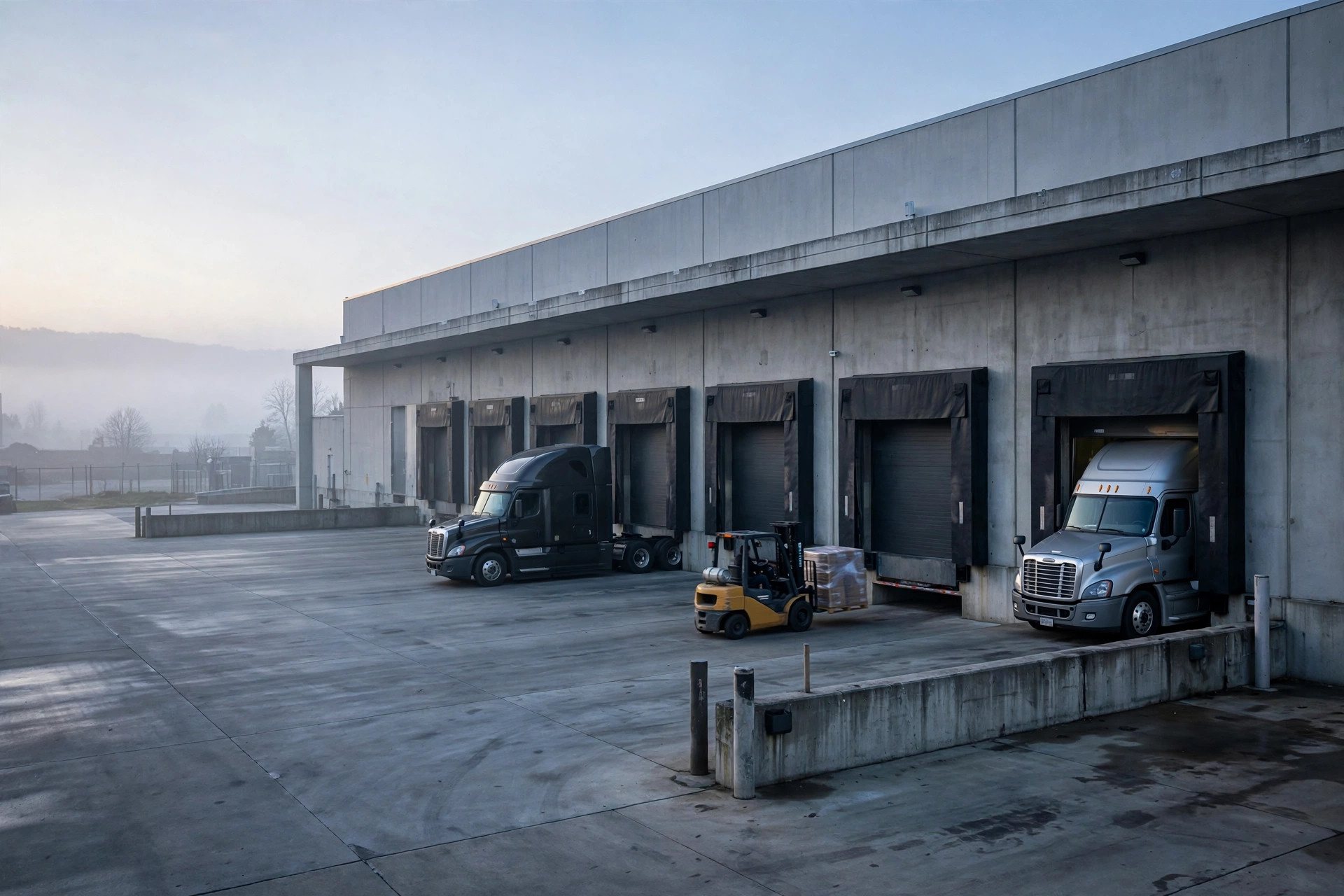
Second, check where columns sit relative to the doors and the dock. A column too close to a dock door makes trailer spotting and forklift loading miserable. Ideally each dock door sits centered between two columns, with working room on both sides. A door jammed against a column turns peak-season loading into a slow-motion jam.
Third, look for column "injuries." A column with scraped paint and a bent guard tells you the aisle design at that spot was already wrong — the previous tenant paid the tuition for you. Also check whether columns have impact protection at all. If not, installing it is job one after move-in. One column knocked out of plumb can compromise a whole rack run, and the repair bill runs a hundred times the cost of a guard.
When a column truly can't be avoided, there are remedies: break the rack run at the column and let the column "grow" inside the row end; wrap it in a guard painted a loud, visible color; convert the aisle to one-way traffic to kill the awkward two-way meets; or designate the bays around it as odd-size locations for irregular freight. Every remedy has a price — which is exactly why the math belongs before the signature, not after.
Next tour, bring a tape measure and the floor plan, and do three things on site: measure the real column spacing, sketch your rack layout onto the plan, and mark every column that lands in an aisle. More than two columns in aisles — walk away, no matter how sweet the rent looks. Once you sign, the columns aren't moving.