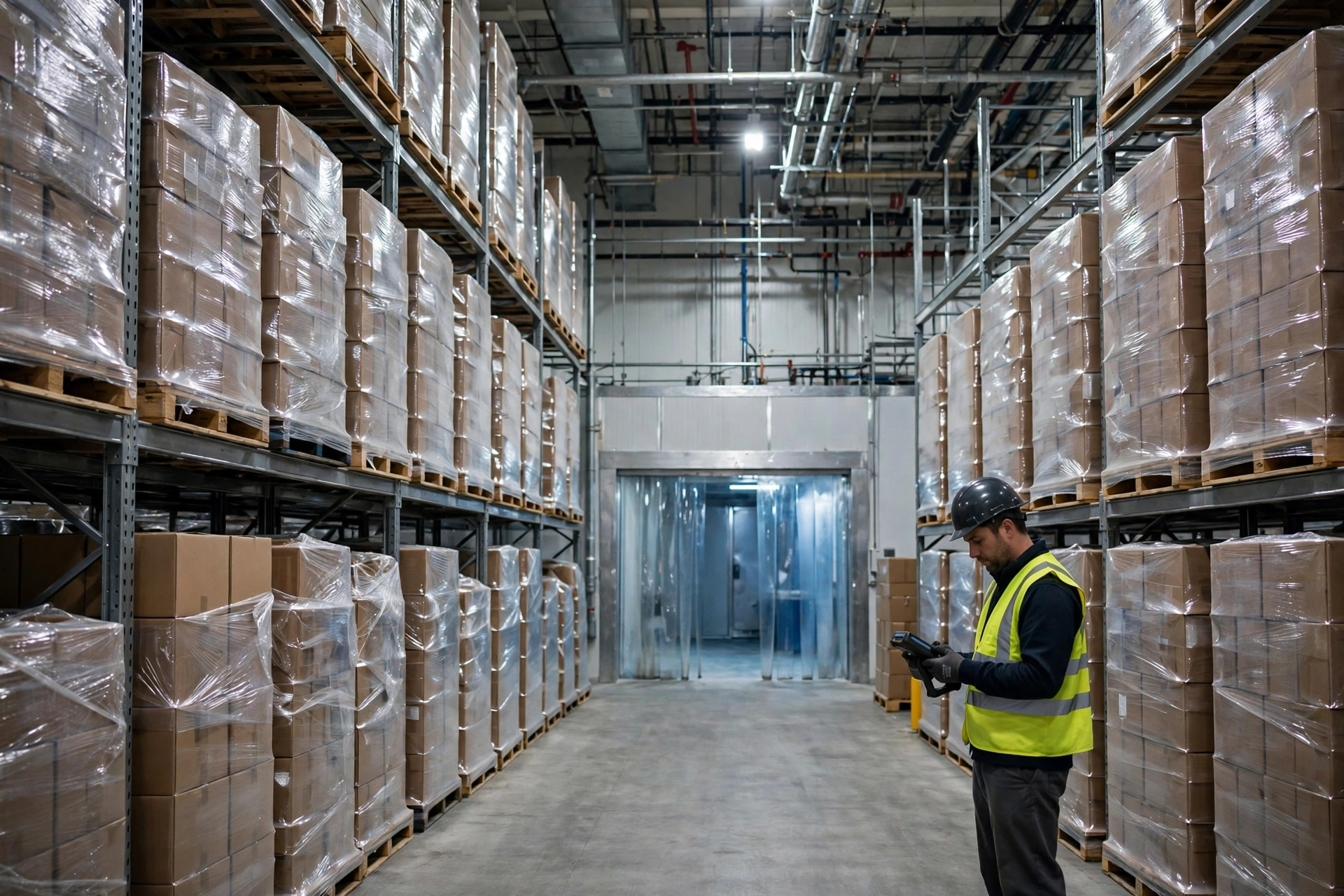
It was 6:40 on a July morning in 2023. I walked into the warehouse before all the lights were on, and Lao Li flagged down my forklift from Bay B. "Chen, you need to see this."
One pallet of cookie cartons, stacked neat. The top two layers were splattered white. Pigeon droppings. My stomach dropped — the chain supermarket's inspector was arriving at 9. Bird droppings are acidic. Once they stain printed carton faces, you can't wipe them clean. All 80 cases on that pallet got downgraded.
That morning I did the math: the loss on that one pallet would have paid for six months of bird control equipment. Listen — warehouse bird control sounds like a small problem until pigeons move in over your head. Then it becomes a big problem wearing a small disguise.
How the pigeons moved in
We run a single-story high-bay warehouse, 11 meters to the roof, dock doors open all day. It started with a few sparrows. The guys thought it was charming. Somebody fed them bread crumbs twice. Within two months, thirty pigeons had claimed the roof steel.
Pigeons are loyal tenants. They forage by day, roost by night, and they do not care where they drop. When we finally tallied the damage, it was ugly:
- Corrosion. Droppings are acidic. Drip them on rack beams and the paint bubbles within weeks. Drip them on cartons and the cartons are scrap. In our worst week, the cleaning crew lost two full days to droppings alone.
- Sprinkler blockage. Feathers wrapped around sprinkler heads look harmless. In a real fire, the water doesn't come down — that's life or death. Our fire maintenance contractor told me feathers plus dust can coat the glass bulb and delay activation.
- The food safety red line. Half our bays store food. Third-party audit checklists say it plainly: no bird activity, no droppings inside the facility. In our October 2023 audit, the auditor spotted one fresh dropping on a beam in Bay C and wrote up a non-conformance. My corrective action report ran six pages.
The worst part: we'd deep-cleaned the entire warehouse the week before that audit. Ladders up to the roof beams, everything. Twenty minutes into the audit, the auditor pointed at a steel beam: "There's a feather up there. Explain that." My face went green.
What we tried: lessons we paid for
Over the next year we tried four approaches. Here's the honest scorecard:
| Method | Cost | Result | Verdict |
|---|---|---|---|
| Ultrasonic bird repellers | 4 units, about $900 total | Fewer birds for 3 days, all back within a week | Pigeons aren't scared. They outsmarted us. |
| Sticky bird gel | A few hundred bucks | Caught two pigeons — and one magpie | Too controversial, crew hated cleaning it. Scrapped. |
| Manual chasing | $0, guards did it | Gone by day, back by night | Whack-a-mole. Guards complained. |
| Bird netting + sealing + laser deterrent | ~$11,000 one-time | Near zero within three months | This is the answer. |
The ultrasonic units first. The marketing sounded amazing — "inaudible to humans, unbearable to birds." We installed four. Three quiet days, and I got optimistic. On day seven, a pigeon was perched directly on top of one unit, doing its business. If those things worked, city pigeons would be extinct.
The sticky gel was worse. Smear it on beams and yes, it catches birds — but then what? The bird flaps, feathers stick to the gel, dust sticks to the gel, and the cleaning crew curses for three days. Worst of all, it doesn't discriminate. One day it caught a magpie, and the thing screamed while two of our younger staff stood there looking sick. We pulled it after two weeks.
The system that stuck: netting + sealing + laser
In March 2024 we stopped improvising and built a real warehouse bird control system. Three years on, bird problems are basically gone. Here's exactly what we run.
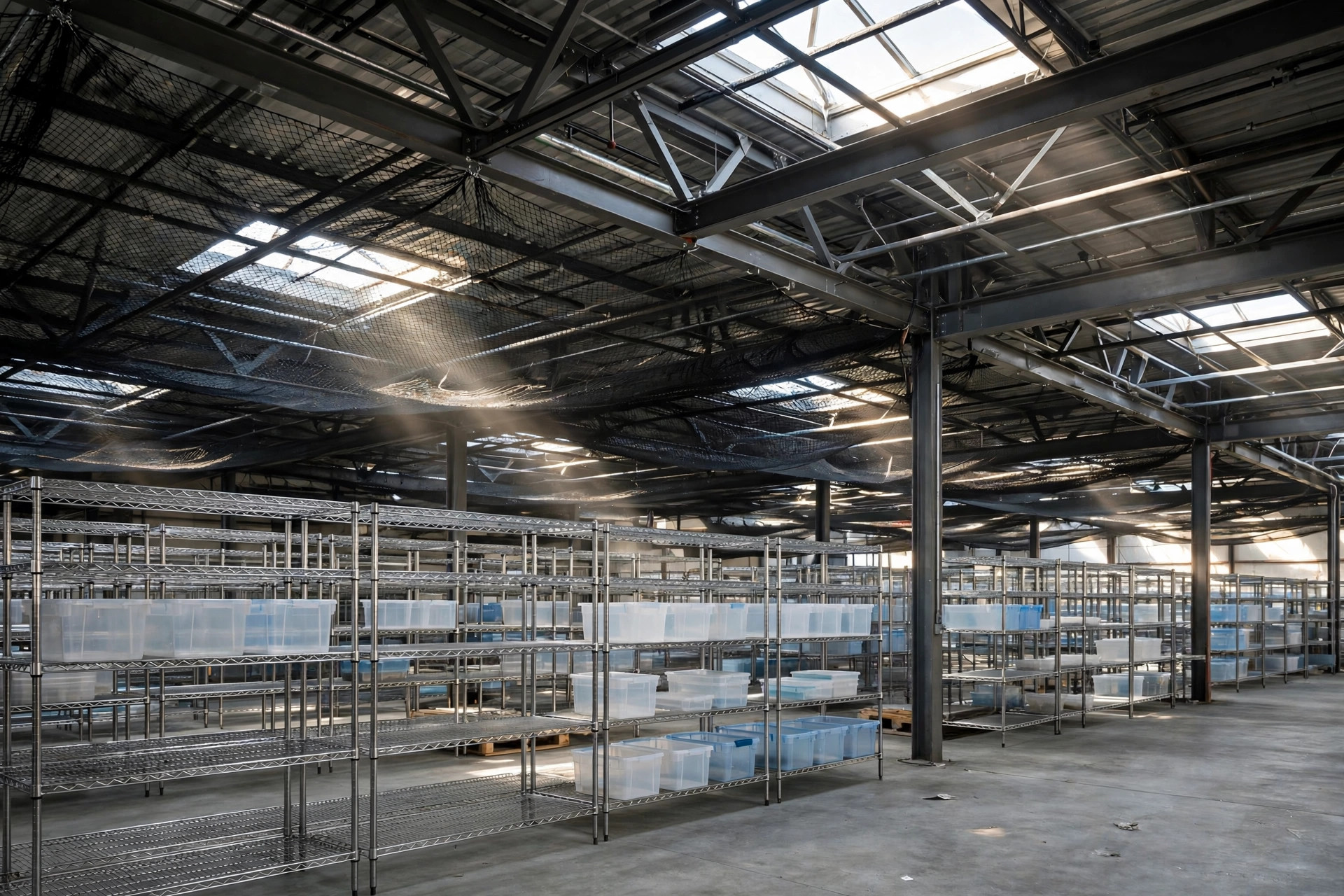
Piece one: bird netting on the high ground. Pigeons love roof steel — that's their bedroom. We hired a contractor to hang netting 30 cm below every beam, 2 cm mesh: pigeons can't get through, sparrows can't either. Our 12,000-square-meter roof cost about $7,000 for netting plus labor. Not cheap, but it's a one-time spend — the netting lasts 8 to 10 years. Amortized, that's under $900 a year, less than one ruined pallet.
Piece two: seal the doors. Dock doors are the pigeons' front entrance. We hung PVC strip curtains over all 12 docks — forklifts push through, people walk through, pigeons can't fly through. Every vent and broken window got wire mesh. The rule: netting keeps them off the roost, sealing cuts the supply line. You need both.
Piece three: a laser deterrent for the stragglers. Netting and sealing are passive defense; the laser is active. At dusk, when pigeons come home to roost, it sweeps the roof — the green beam flashes past and they won't land. It barely runs during the day, costs almost nothing in power. One unit, about $3,000, covers our whole roof.
Two standing routines back it up, both written into our SOP:
- Monday morning, shift lead does a look-up walk: beams, sprinkler heads, above the dock doors. Feathers or droppings get cleaned and logged within 10 minutes. More than 3 spots in one walk — we check for a breached entry that day.
- Monthly roof check: any holes in the netting, missing curtain strips, is the laser still sweeping? Equipment team, 15 minutes.
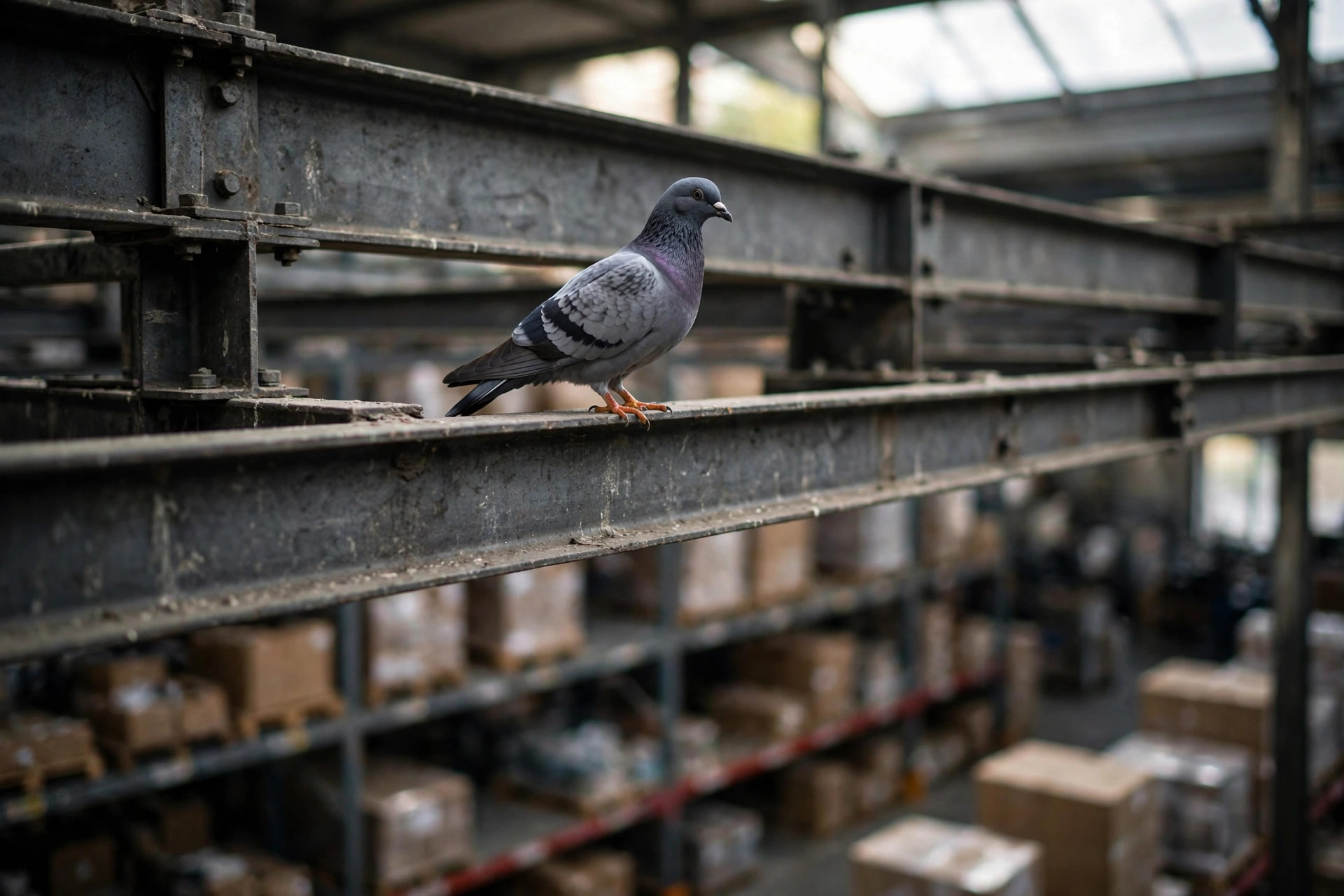
The counterintuitive part: poison is the dumbest option, and prevention beats chasing
I'll say something unpopular: I've seen warehouses use poisoned bait. Forget legality for a second (many wild birds are protected — poisoning carries liability). It doesn't even work. You kill one batch, and new pigeons arrive, because your warehouse is still a five-star hotel: sheltered, warm, predator-free. Can you poison forever?
Worse, a poisoned pigeon can drop into a food bay, or get eaten by a hawk or a cat — secondary poisoning, bigger mess. Our rule is absolute: deter, never kill. Chase them off. No need for cruelty.
Here's the real counterintuitive lesson: most people treat bird control as a "chasing" problem and go shopping for gadgets. The order is backwards. Prevention (netting + sealing) solves 80% of the problem; chasing (laser) only handles the last 20%. Leave the entries open and the most expensive repeller on earth is just an itch-scratcher for pigeons. We learned that the hard way — after wasting $900 on ultrasonic units first.
The full accounting: about $11,000 one-time for the three-piece system, under $700 a year in maintenance. Before we did this, a year of bird damage cost us well over $20,000 in hidden costs — cleaning labor, scrapped cartons, audit firefighting. Do the math yourself.
One reminder for fellow operators: don't wait for an auditor to point at a dropping and ask you to explain. Walk in on the morning shift, look up at the beams — ten seconds. Feathers mean pigeons have been house-hunting. Droppings mean they've moved in. The earlier you act, the cheaper it is.
By Chen Feng, Warehouse Operations Manager