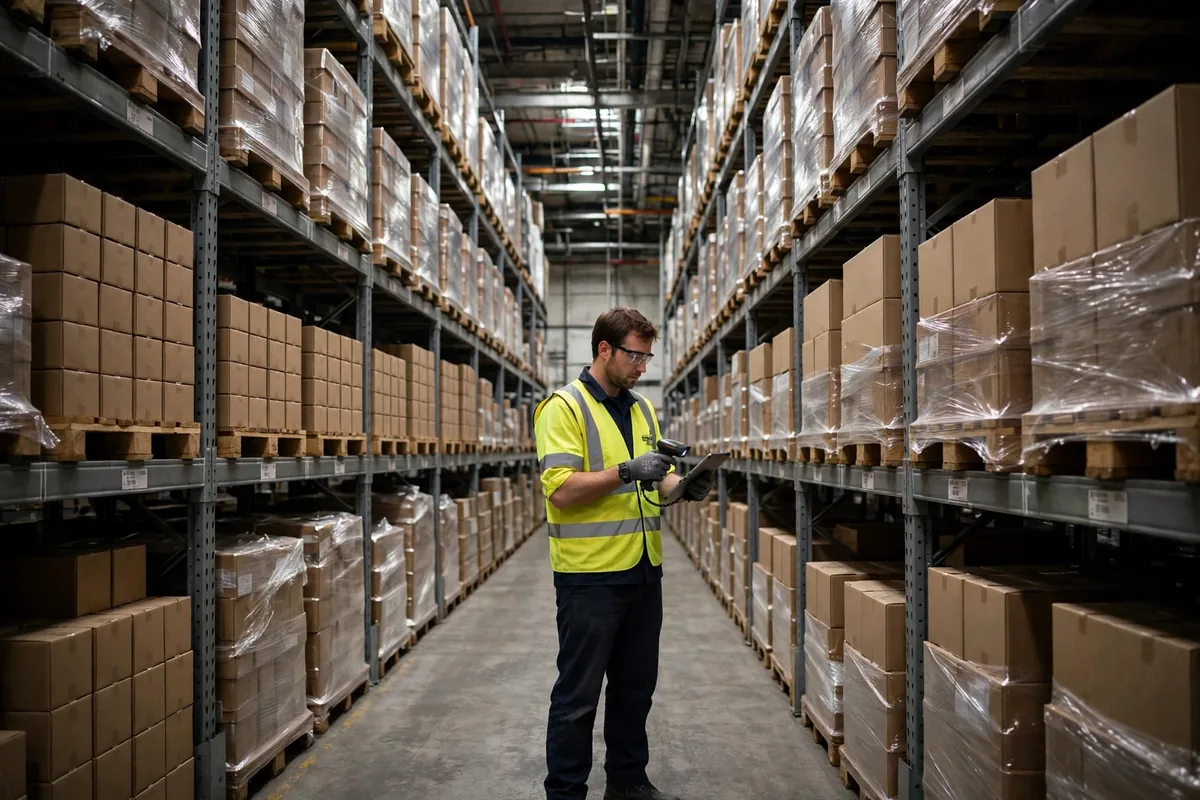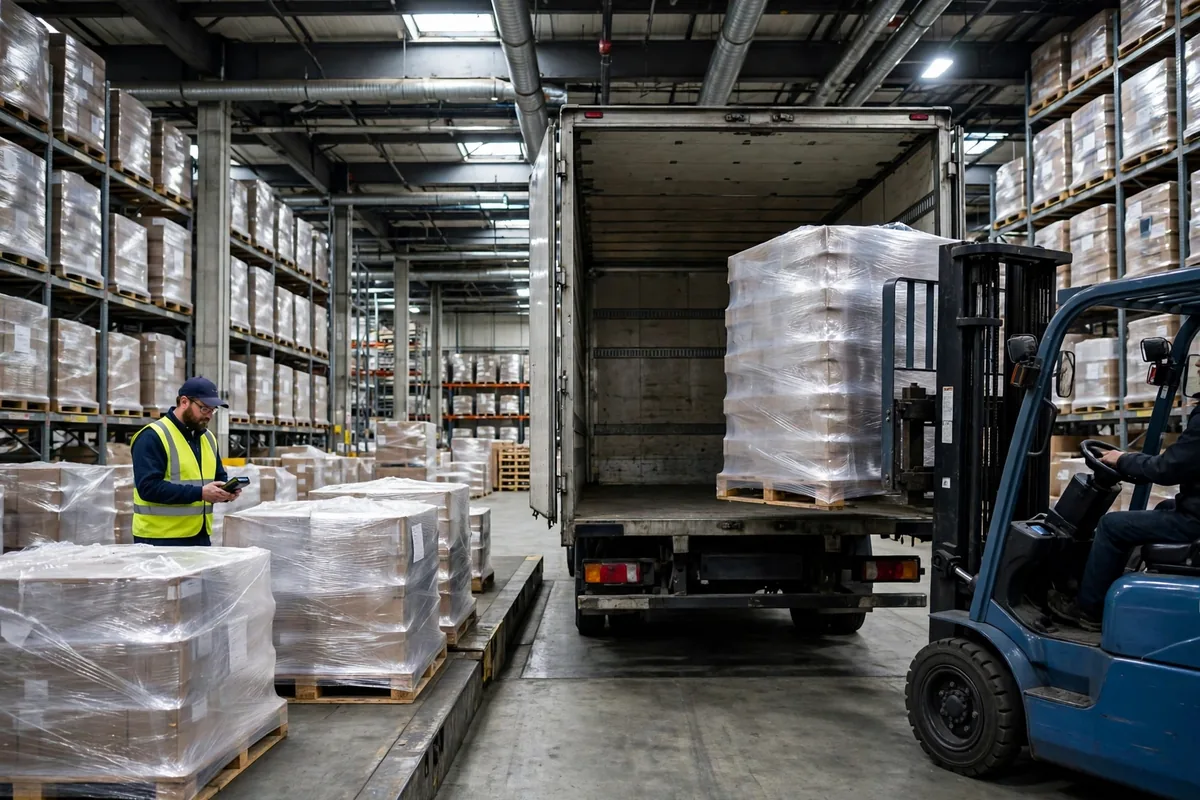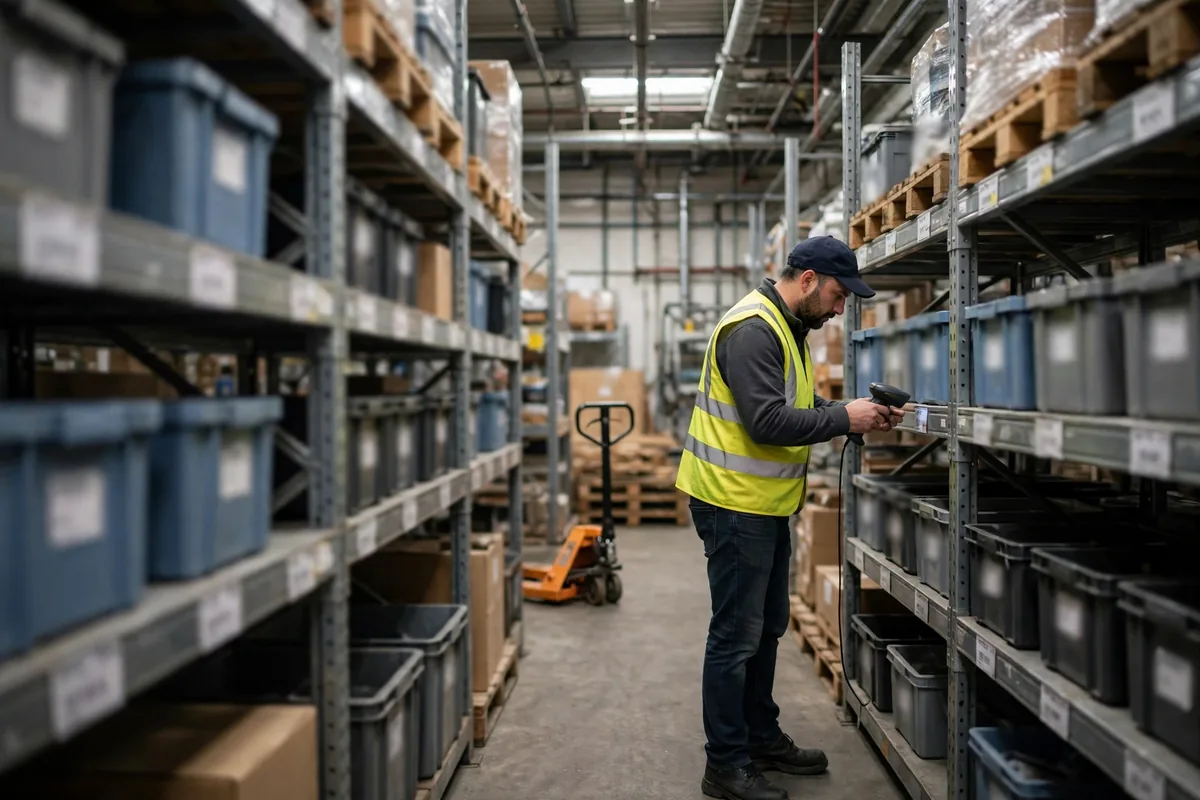
Our warehouse bin location naming convention was born on a bad afternoon, not in a meeting. In the summer of 2023, in my 3,000-square-metre leased unit outside the city, a new hire put two cartons of phone cases into a spot labelled "Temp 3." The problem was simple: we had three different Temp 3s — one by the dock door, one on the mezzanine, and one next to returns. Customer service chased the order, we searched for the better part of an hour, found the cartons, and still shipped late. That day I stopped pretending a small warehouse can borrow a big warehouse system and stopped pretending we needed no system at all.
A warehouse bin location naming convention that follows your feet
Strip away the jargon and a working code answers one question in three seconds: where am I standing, and where is the next slot? The logic we settled on has five parts — zone, aisle, bay, level, position — written as A-03-07-2-05. A is the zone (A for picking, B for bulky goods, R for returns; three zones, no clever abbreviations). 03 is the aisle. 07 is the seventh bay down that aisle. 2 is the level. 05 is the fifth position along that level, counted left to right.
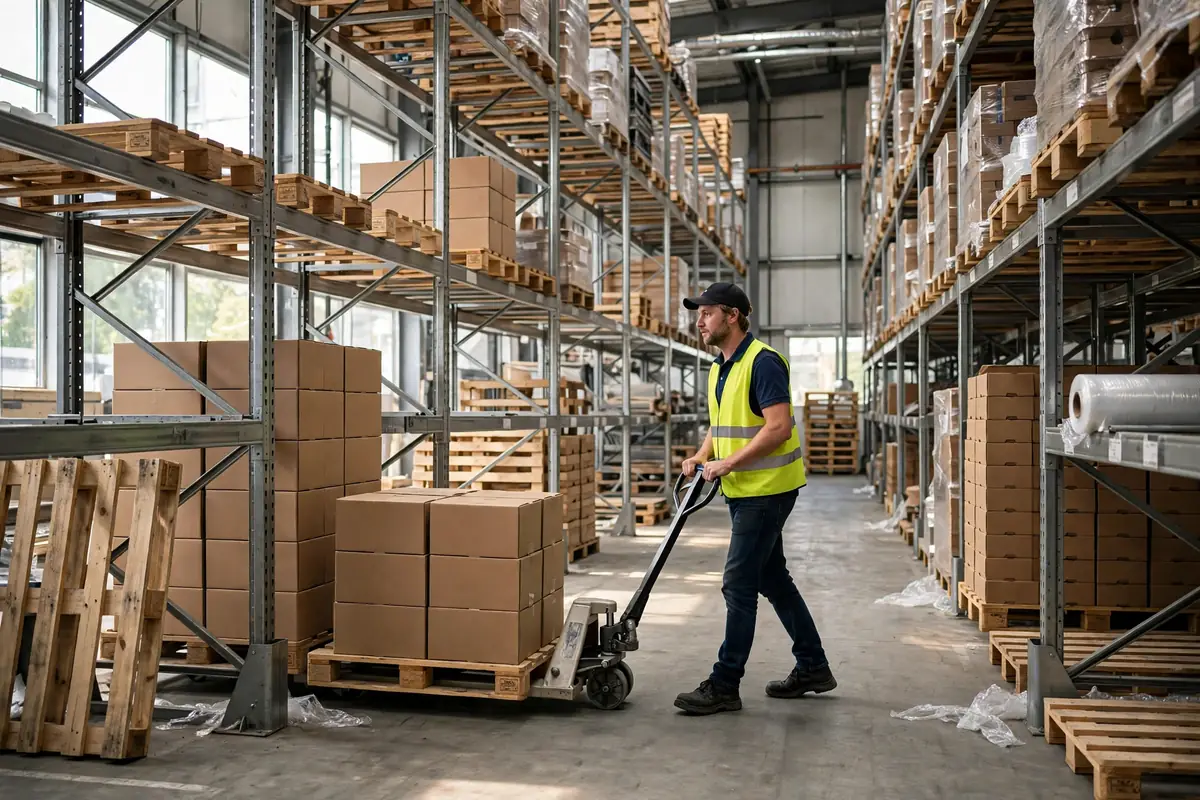
That is the whole point of a warehouse bin location naming convention: it is a walking route written in characters. The order matters more than the letters. I once tried putting level before aisle because it looked tidier in a spreadsheet. On the floor, pickers said "level two, aisle three" out loud and wrote "aisle three, level two" on paper, and the system matched neither. A code has to follow the walk: arrive in a zone, walk an aisle, stop at a bay, look up to a level, reach into a position. The code is not a report for the office. It is a signpost for a person pushing a trolley in bad light.
Here is the cheap version we taped to the office whiteboard. The ranges are our real ranges, not a textbook standard:
| Part | Meaning | Our range | Why |
|---|---|---|---|
| 1 | Zone | A pick / B bulky / R returns | Three zones is all we can remember |
| 2 | Aisle | 01-06 | Zero-padded so system sorting stays sane |
| 3 | Bay | 01-12 | Twelve bays per aisle lasts us years |
| 4 | Level | 1-4 | Level 1 is waist height, level 4 needs a step |
| 5 | Position | 01-08 | Eight slots per level keeps labels readable |
One counter-intuitive call: leave empty numbers on purpose. We used only five positions on most levels but numbered up to eight. A neighbouring owner laughed at the waste. Those gaps are where a sudden bestseller goes. If you fill every number on day one, growth forces you into suffixes like 07A squeezed between 07 and 08, and suffixed slots become a reliable factory for counting errors later.
Why pretty codes die on the floor
A fellow owner once paid a consultant for a beautiful scheme — colours, initials, friendly zone names, printed like airport signage. It looked great. Pickers do not admire signage at speed. In yellow light, with a reflective label, O becomes 0, I becomes 1, and a two-letter zone code gets misread every shift. During our 2024 stocktake review, I tallied our own misplacement notes (an internal example count, not an industry statistic) and found look-alike characters behind more than half of them. That was enough: we banned O, I and Z from codes, zero-padded every number, and kept levels to a single digit.
The other kind of pretty is worse: encoding product information into the location. Category, brand, even supplier initials baked into the bin code sounds smart until the product moves — and products always move. A friend running auto parts near Kunshan in 2022 built brand initials into his locations; when that brand exited, an entire row of codes became historical fiction and new hires kept asking why the shelf lied to them. A location code should only ever describe a place. What sits in the place belongs in the item record. Keep that line clean.
Renaming without stopping the warehouse
Every warehouse bin location naming convention eventually faces the same test: can you change it without breaking the building? The expensive part of renaming is not labels. It is stopping. We did not stop, and we did not miss an order, because we ran old and new codes side by side for two weeks.
Week one, we only added labels. Every bay got its new code on a different-coloured sticker beside the old one, nothing was torn off, and pick lists printed both codes. Veterans walked by the old code, new hires by the new one, and nobody had to relearn the building overnight. Over the second weekend, when volume was low, we switched the location master data in one pass and cycle-counted the whole building against the new codes — count and migrate together, shelf by shelf, so each position was verified at the moment it changed. After two weeks we peeled off the old stickers and the transition was simply over.
The money, as an illustrative example calculation you can rerun with your own numbers: a label printer, label stock, magnetic holders and one weekend of overtime for two people cost us less than a single day of outside consulting at local rates. What it bought back was search time. Before the rename we burned roughly half a shift a week hunting for stock; afterwards the hunting mostly disappeared. I will not quote a precise percentage saving, because your baseline is not mine and invented precision helps nobody. Do this instead: multiply your weekly hunting hours by your loaded hourly wage, compare it with the one-off rename cost, and the payback period tells you whether to start this month or this quarter.
Labels and scanning: fix the action, not the slogan
A good code with sloppy labels is still a mess. We keep three hard rules. First, every label lives in exactly one place — the lower-left corner of each position, at a consistent height — so staff never hunt for the label itself. Second, putaway always scans location first, item second, and the system rejects the reverse order; "scan it later" is where book stock starts drifting from physical stock. Third, manual keying of a code is allowed only when a scanner dies, it goes on a paper exception sheet the same day, and a second person verifies it. When that sheet fills a page, we hold a short meeting — not to blame anyone, but because a full page usually means the process, not the person, is awkward somewhere.
One more scar: no handwritten labels, ever. In the damp winter of 2023, two handwritten labels bled until B-02 and B-08 looked identical, and we misplaced stock four times in a week. Since then even a three-day temporary location gets a printed label. The paper you save by handwriting comes back as search time, with interest.
Small warehouses cannot burn money on ceremony, and we do not need to. One sequence everyone uses, no look-alike characters, spare numbers left open, a two-week dual-code rename that never stops shipping, and a scan order nobody is allowed to reverse — that is the whole playbook. Start by counting how many places in your building share the same nickname. That number is your business case.
By Xiao Ma, Small Warehouse Owner