Every automation budget I've ever reviewed lies in the same way: it prices the equipment and wishes away everything else.
Fall of 2023. A 120,000-square-foot e-commerce fulfillment center in Fontana, California signs off on a $4.2 million AMR goods-to-person project. Eighteen months later the books close at $5.38 million — a 28% warehouse automation budget overrun. The robots themselves account for less than $200,000 of the extra $1.18 million.
Where did the other million go? That's the ledger we're opening today. After years of doing cost analysis on logistics projects, I've learned this: nine times out of ten, an automation project doesn't blow its budget on the equipment. It bleeds out through three black holes that never made it onto the budget sheet — or got a made-up number next to them.
Black Hole #1: Integration and Customization — the First Budget-Overrun Leak
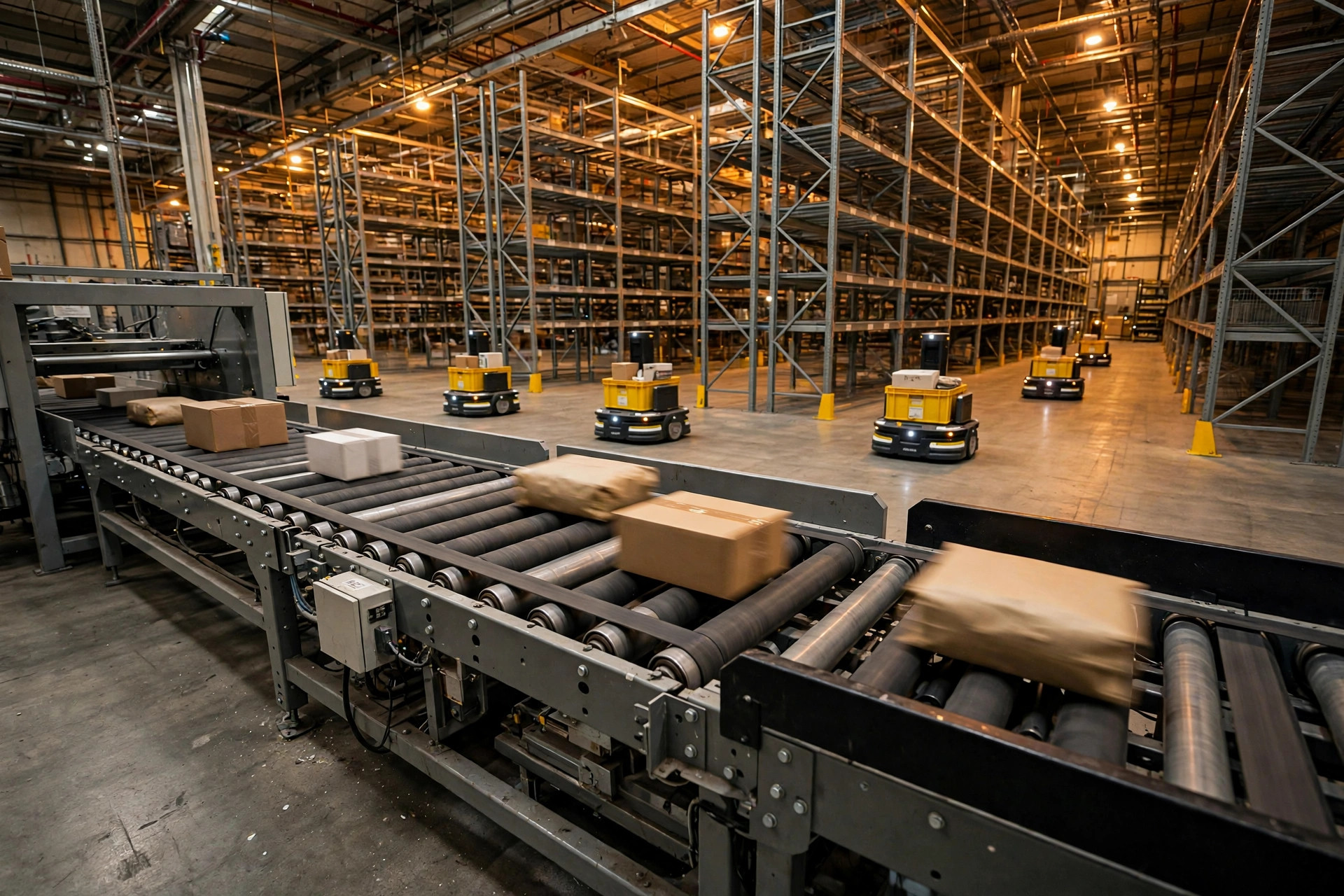
Hardware comes with a quote. Software doesn't. The AMR vendor quotes you the bots, the chargers, the fleet-management licenses — all clean line items. Then your WMS has to talk to the fleet manager, your exception workflows need customizing, and management wants reports the system doesn't natively produce. All of that is billed by the integrator by the day.
A 3PL handling apparel signed a $350,000 integration contract for a sortation line in early 2024. Three months in, the business side submitted 40-plus "small requests": returns needed a dedicated chute, hot SKUs needed priority waves, the EDI reconciliation format had to change. Every "small request" was a change order. Three months later the integration bill stood at $610,000. Was that money wasted? Yes. But the contract said time-and-materials, the business signed each change order, and finance had to book it.
The root cause sits in the proposal stage: the requirements interviews covered IT and the ops manager but never the shift leads or customer service. Those "small requests" weren't new requirements — they were existing requirements nobody asked about.
My formula: budget integration and customization at 1.25x the integrator's first quote. If frontline staff weren't interviewed, make it 1.4x. This isn't permission to overspend — it's so you don't have to explain yourself to the board when the change orders arrive.
Black Hole #2: Civil Works and Facility Retrofit — the Building Behind the Overrun
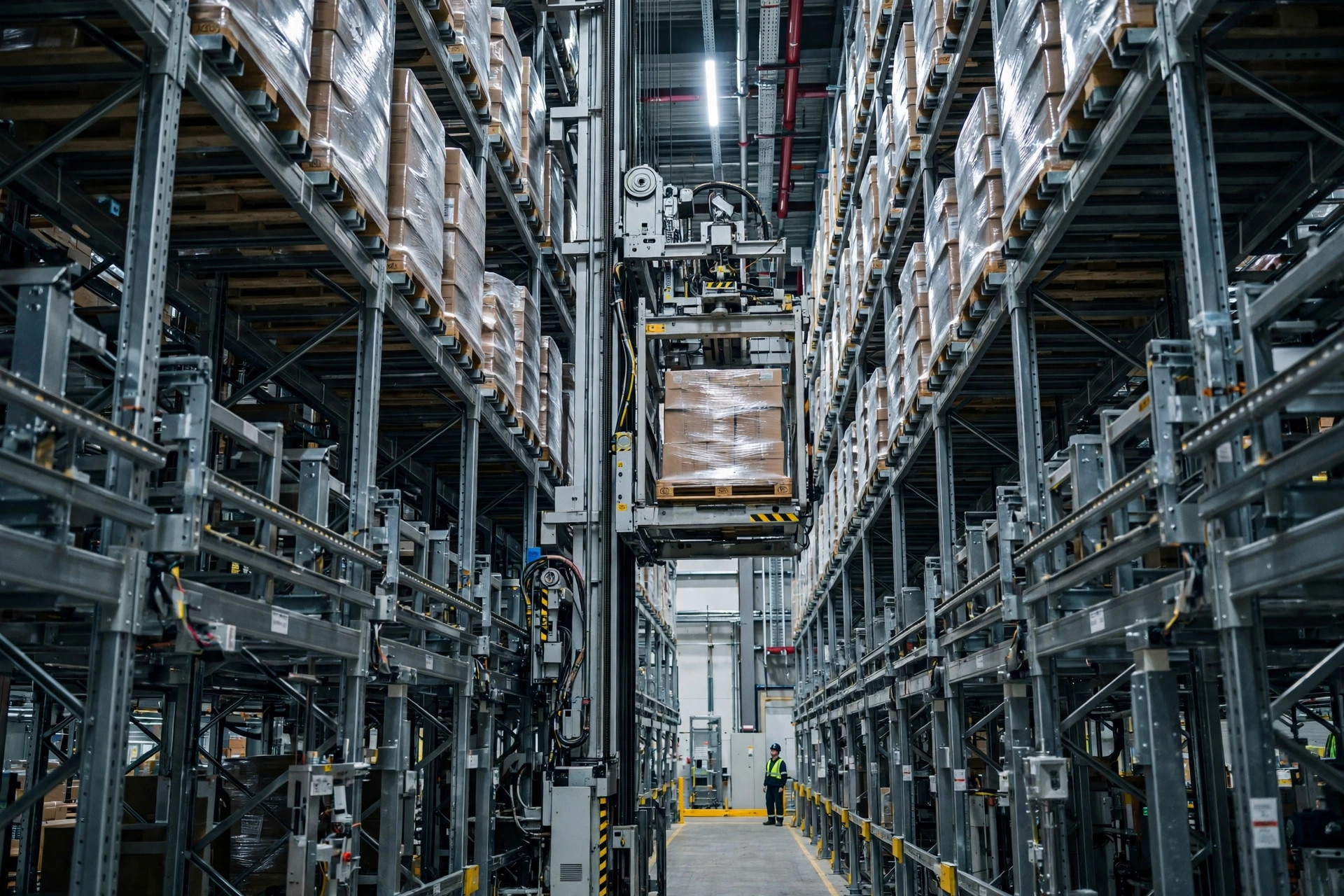
Every vendor proposal assumes a "standard warehouse": level floors, adequate power, full network coverage, compliant fire suppression. No older building is standard.
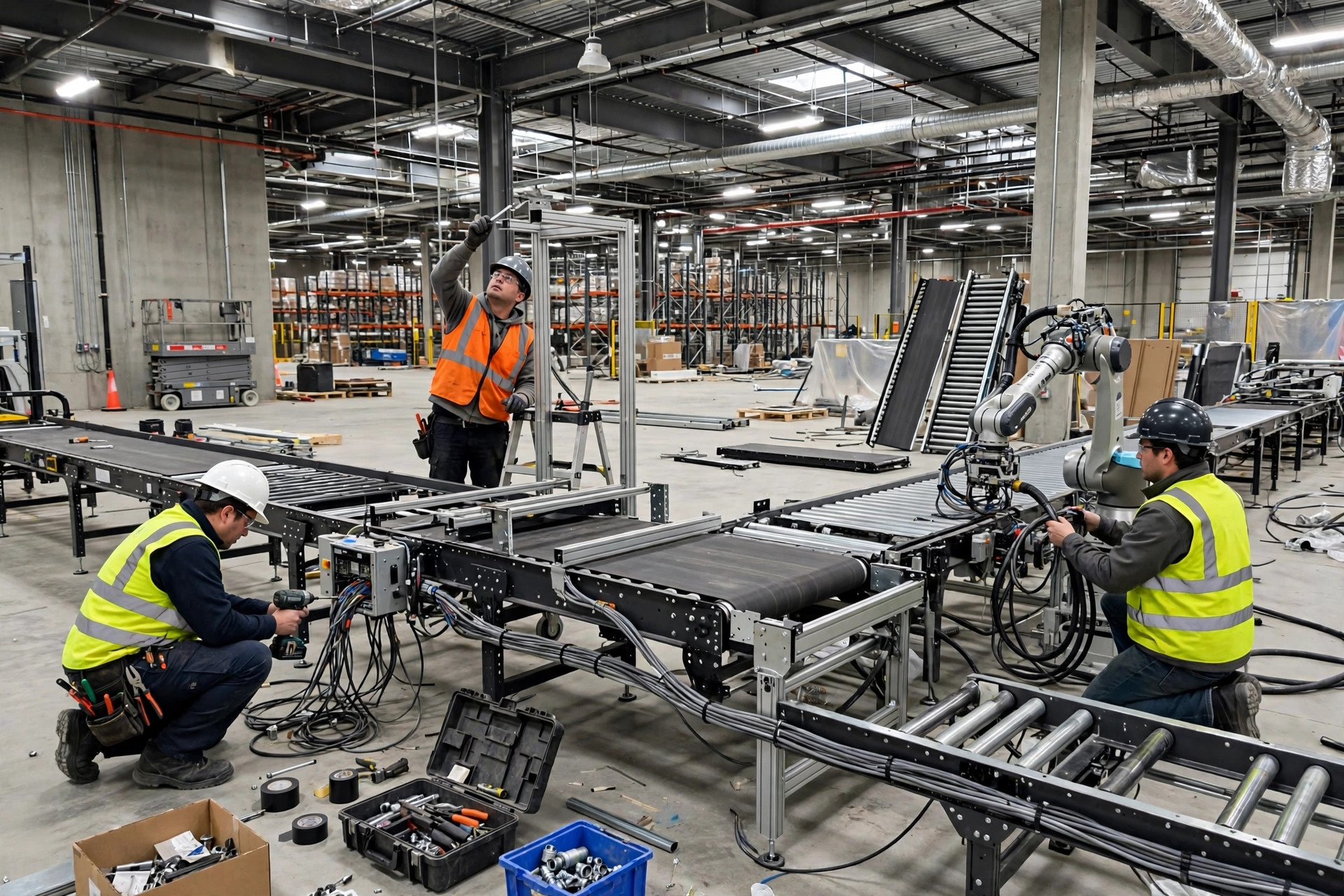
In 2022, a 150,000-square-foot legacy warehouse in Texas budgeted $250,000 for civil works on an AS/RS project — footings and localized reinforcement. Once the crew started measuring, floor settlement exceeded the vendor's tolerance, and the entire operating area needed re-slabbing. The electrical room couldn't handle the load; the utility's upgrade queue added four months. Civil works closed at $710,000, the schedule slipped five months, and the equipment sat in temporary storage — racking up storage fees on top.
The cruelest part: all of it was knowable at the proposal stage. A professional site survey — floors, power, structure, fire protection — costs a few tens of thousands of dollars and quantifies 80% of civil-works risk. But in my experience, most projects skip the survey to "save" that fee and budget straight off the vendor's standard assumptions. That is the most wasted money in the entire project.
My formula: budget civil works at 1.3x the surveyed quote for buildings over ten years old, 1.15x for newer ones. If you approved the budget without a survey, add the survey fee first, then apply the multiplier.
Black Hole #3: Ramp-Up and Dual Running — the Nine Months Your ROI Model Ate
I've reviewed hundreds of ROI models. Nearly all make the same error: they count the heads saved and forget the heads added.
Automation doesn't flip over like a switch. The parallel-running period lasts three to nine months, and during that window you run dual operations: the old process headcount can't leave, while the new system needs on-site engineers, data reconcilers, and exception handlers. A 200-person warehouse commonly carries 15 to 20 extra people through ramp-up. At fully loaded US warehouse labor cost — wages plus benefits, insurance, and management overhead — that's well over $50,000 per person per year. In most ROI sheets, that line reads zero.
Then spares and downtime. First-year maintenance is sometimes bundled into the equipment price, sometimes billed annually at 8 to 12% of it. Consumables — tires, sensors, belts — get replacement cycles from lab data; add real-world dust, temperature, and humidity, and plan on 70% of nameplate life. Proposal budgets either omit these lines or fill them with the vendor's ideal numbers.
My formula: ramp-up labor equals extra headcount times monthly fully loaded cost times ramp-up months, as its own line — never netted against "labor savings." First-year maintenance and spares get their own line at 10% of equipment price.
The Full Picture: What a $5 Million Project Budget Should Look Like
Here's the budget anatomy of a mid-size AMR project in the $5 million range. Treat the figures as an illustrative model; the proportions come from my own post-mortems:
| Cost line | Typical proposal practice | Recommended budget | Padding logic |
|---|---|---|---|
| Equipment | Full vendor quote | Quote x 1.0 | Most transparent line — no padding needed |
| Integration & customization | First quote, sometimes omitted | First quote x 1.25–1.4 | Change-order factor; thinner frontline interviews, higher factor |
| Civil works & retrofit | "Standard assumptions," or omitted | Surveyed quote x 1.15–1.3 | Older building takes the high end; survey before approval |
| Ramp-up labor | Omitted (most common) | Modeled separately, never netted | Extra heads x months, fully loaded |
| Year-1 maintenance & spares | Vendor's ideal numbers | 10% of equipment price | Real-world duty cycle, not lab data |
By this table, a project quoted at $5 million should be approved at $6.2 to $6.8 million. That looks alarming — but that's what it actually costs.
The Counterintuitive Take: Overruns Are a Granularity Problem, Not an Equipment Problem
Here's the uncomfortable conclusion from my post-mortems: fewer than three in ten overruns trace back to "wrong equipment" or "missed performance." More than seven in ten happen because the proposal treated an equipment purchase budget as a total project budget — that is the standard script of a warehouse automation budget overrun.
One layer deeper: the common corporate practice of adding a flat 15% contingency is itself wrong. The three black holes have completely different risk shapes — integration is requirements risk, civil works is survey risk, operations is schedule risk. A flat 15% always lands the same way: integration runs 40% over, civil works 60% over, the operations line was never there, and the 15% total buffer is a rounding error.
Contingency must be itemized, with each factor traceable: the change factor to interview coverage, the civil factor to building age and the survey report, the operations factor to the ramp-up plan. Finance's job isn't to squeeze the budget — it's to give every dollar of risk a name.
The Takeaway: A Formula You Can Paste Into Your Budget Sheet
Next proposal cycle, paste this into the spreadsheet:
Total project budget = equipment quote x 1.0 + integration first quote x 1.25 + surveyed civil quote x 1.3 (older building) + ramp-up labor (separate line) + equipment price x 10% (year-1 maintenance & spares)
If it lands 25–35% above the vendor's quote, don't panic — you weren't over before, you were under. When the board asks why you're above the other bids, walk them through the three black holes line by line. A budget with math behind it is a budget. One without is a wish.
Warehouse automation budget overruns are never a technology problem. They're an accounting problem. Do the math in fine grain, and overruns become a matter of luck; do it coarse, and they're a matter of time.
By Lao Zhou, Logistics Cost Analyst