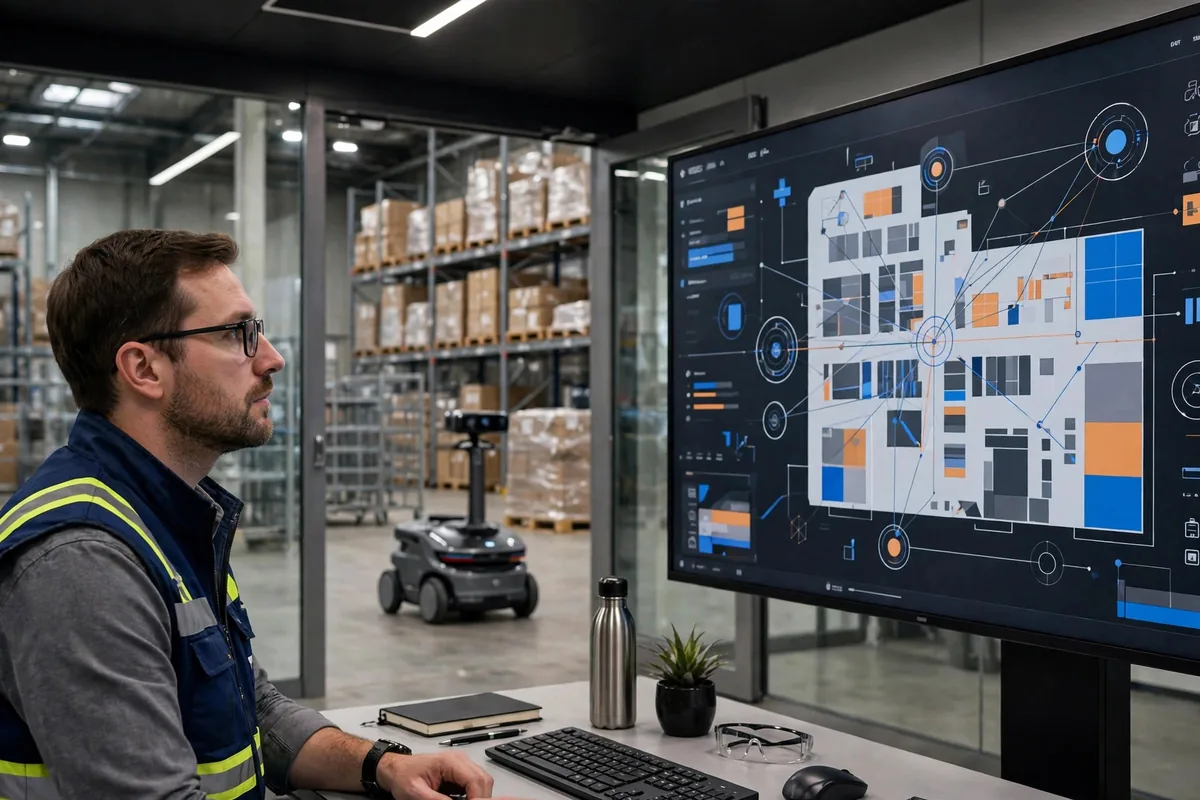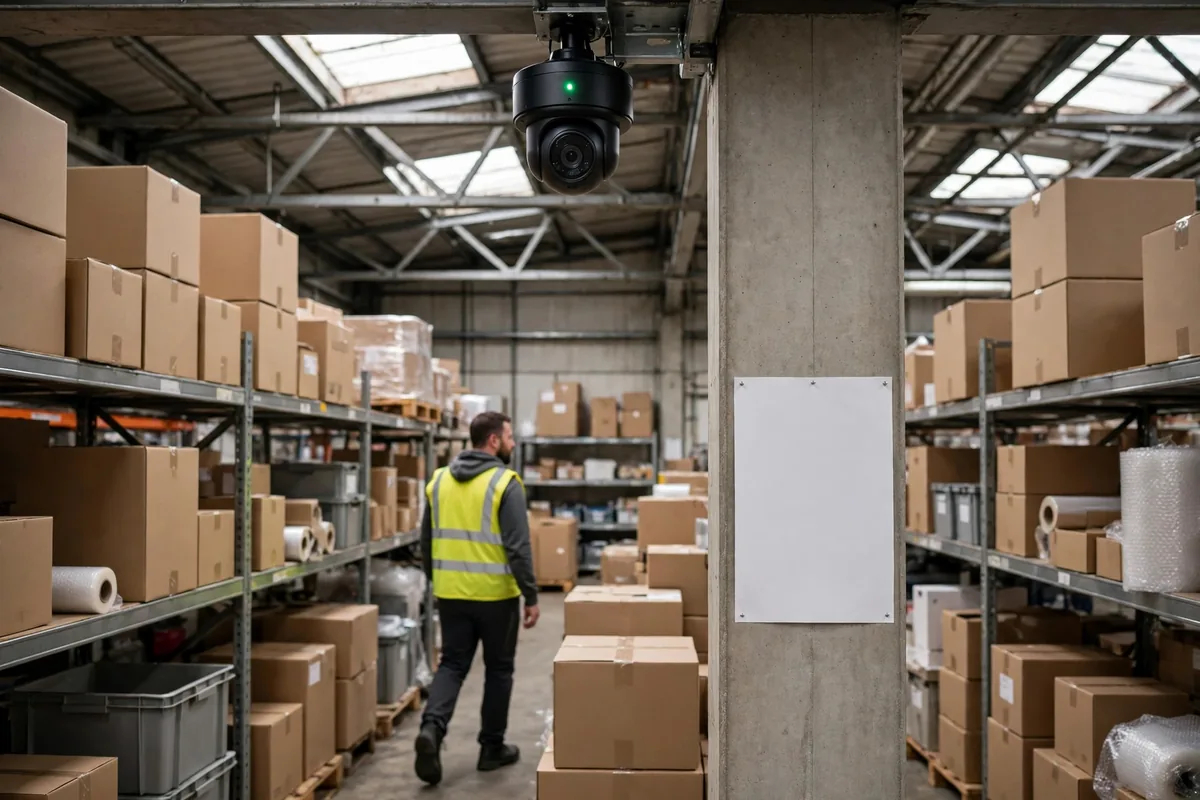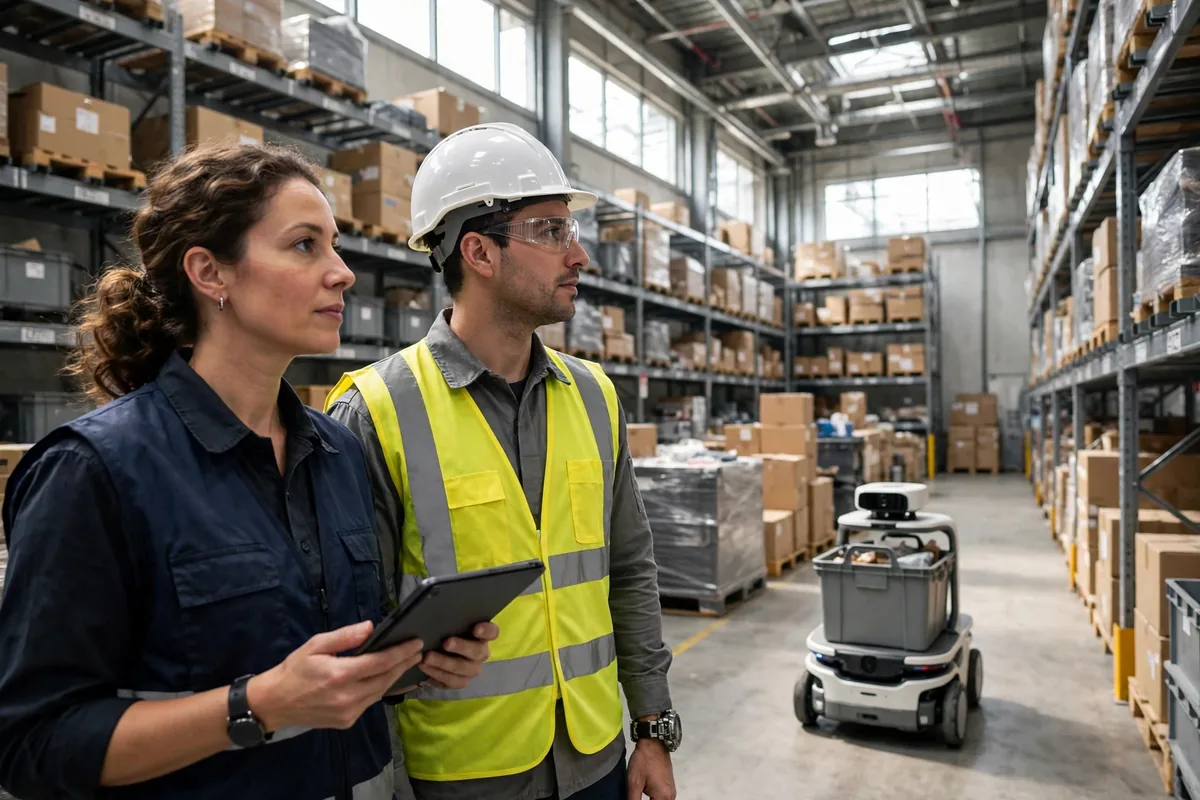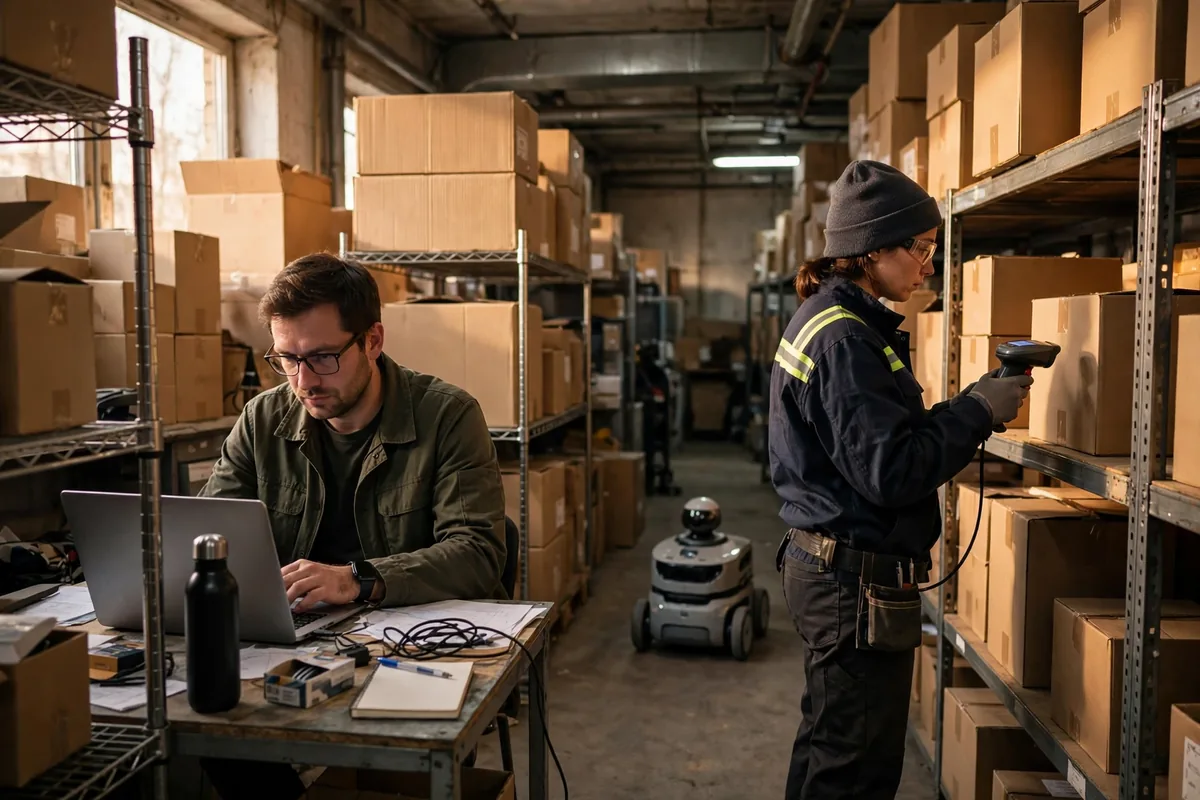
Warehouse AI buy vs build vendor selection — that is the question that comes up every time someone mentions AI in our little corner of the industry. Buy off the shelf or build it yourself? Let me level with you first: our warehouse is about 3,000 square meters, a dozen people on a normal day, a few temps when peak season hits, and we count every penny all year round. Last year an AI vendor came by with a demo so slick it looked like science fiction — cameras that spot a misplaced item the second it lands on the wrong shelf, dashboards full of numbers jumping around like a movie. I almost signed on the spot. Then I went home, did the math, and my hand pulled back. A warehouse our size cannot afford to burn money like that. One wrong burn, and half a year of work goes up in smoke.
Let me tell you about Lao Zheng, the owner of the warehouse next door, because his story makes the point better than mine. His place is about our size, and last year he gritted his teeth and bought a vision-inspection system to catch picking errors. In the demo the recognition rate looked great. In the first week of going live, reality showed up: his product mix is a general store's jumble — hundreds of lookalike packages — and the system misread items more often than his people did. Worse, every time the system raised an alarm, the whole line had to stop for a recheck, and during peak season the recheck time cost more than the time the system saved. Lao Zheng told me later that the system was not bad, it just did not fit a messy general-goods warehouse like his. What he spent on it would have paid two experienced pickers for two years.
My story went the other way. We did not buy a big system. We cobbled together a home-grown fix from off-the-shelf tools: pickers scan with a handheld terminal, the system runs one simple check, a wrong scan buzzes, a right scan sails through. It sounds thoroughly unglamorous. But in the first month after launch, our mis-ships dropped by a big margin. And the cost? A few handheld terminals plus a small bit of development work — a fraction of what Lao Zheng's system cost. That is how small warehouses survive: not fancy, just effective.
Put the two stories together and the conclusion is fairly clear: in warehouse AI buy vs build vendor selection, the biggest risk for a small warehouse is not picking the wrong technical route, it is overestimating how much your operation can absorb. The big vendors' solutions are designed for big warehouses — the data volumes, the staffing, the maintenance teams are all sized for large operations. A small warehouse copying that playbook is like a street food stall ordering supplies off a five-star hotel menu: the food never gets cooked, and the fridge is full first.
Buying off the shelf: the trap is fit, not price
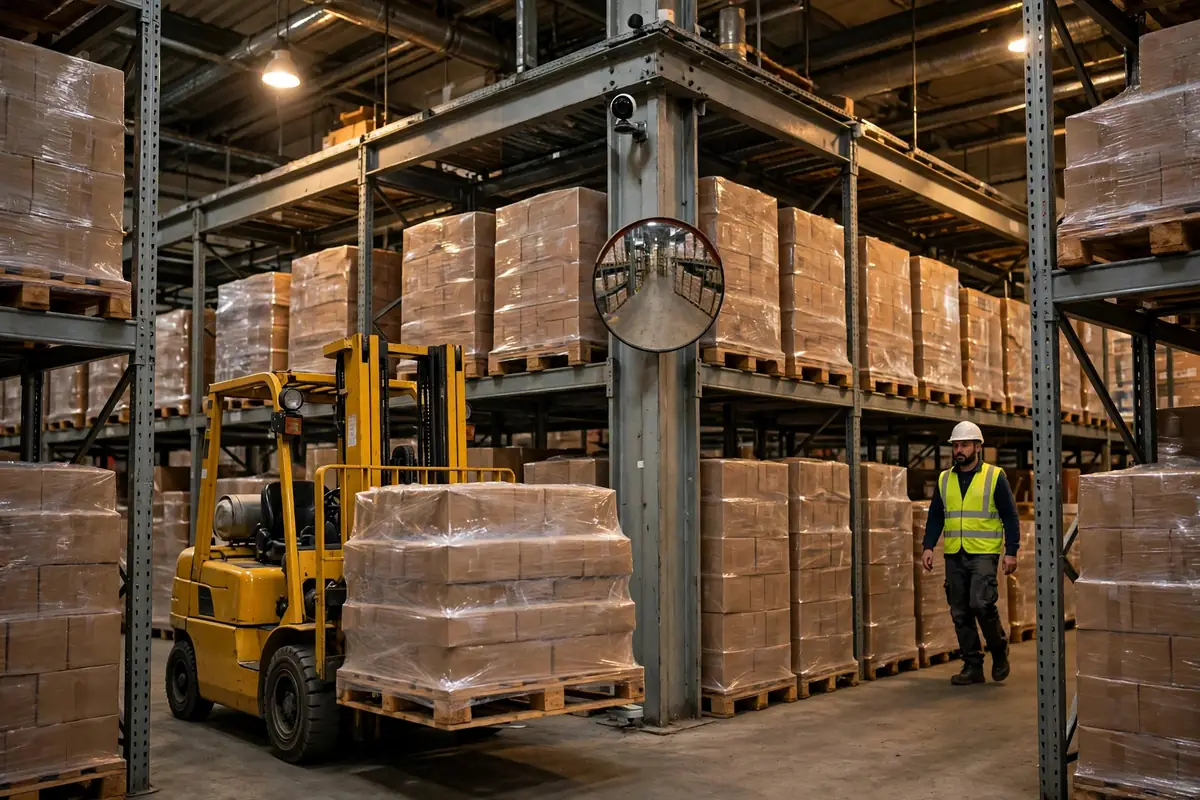
When you buy a ready-made system, the vendor's favorite line is that it works out of the box. My experience is that "out of the box" needs a footnote: your warehouse has to look like the one in the demo. The demo warehouse has neat racking, clearly distinct packaging, lighting bright as a photo studio. Our warehouse? The racking was added over several years in different heights, the packaging has gone through several versions, and the barcodes on some old stock are worn half off. Put a system into that environment and the recognition rate is going to drop. That is a given.
So when you look at a ready-made system, do not just watch the demo — check three things. First, test it on your hardest-to-recognize batch of goods. If it cannot tell those apart, the rest of the features do not matter. Second, ask who tunes the parameters after go-live: does the vendor send someone, or does your own team learn it? Vendor visits cost extra; if your team cannot learn it, the system will run half-tuned forever. Third, work out the yearly maintenance and upgrade fees. Some systems are cheap to buy and expensive to keep, with service fees every year being the real bill. Once those three questions have straight answers, the numbers on the quote finally mean something.
Building it yourself: can a small warehouse even walk that road
Building your own sounds like the freest option — make whatever you want — but for a small warehouse it is usually the most expensive road of all. And expensive is not just the development bill. It is who keeps the system alive afterward. A full-time developer's salary sits there on the books, nobody fixes it at midnight when it breaks, and any change you want joins a queue. We have a dozen people. We cannot afford a dedicated development team, and we cannot wait out a long build cycle.
That does not mean building is entirely off the table. The trick is what you build. If it is combining existing tools to solve one specific small problem — automatic reconciliation, exception alerts, simple picking-route hints — that kind of lightweight build is entirely within a small warehouse's reach. Hire a part-time developer or outsource by feature, pay per finished function, accept it when it works, and the effect is immediate. The danger is starting out wanting to build a grand system that does everything: six months later the requirements document is on its eighth revision, and the warehouse is still running on manual effort.
In the end, buying, building, and cobbling together are not good or bad in themselves. Only one question matters: which one fits the size you are right now. Here is a simple comparison:
| Route | Upfront cost | Time to launch | Ongoing upkeep | Best for |
|---|---|---|---|---|
| Buy off the shelf | High, one big payment | Fast, running in weeks | Vendor-dependent, yearly service fees | Mid-to-large warehouses with standard processes and tidy goods |
| Build it yourself | Higher, long development | Slow, months at minimum | Your own staff, fixed cost | Warehouses with a tech team and very unusual needs |
| Cobble together | Low, combine existing tools | Fastest, testable in days | Light, swap a tool if it breaks | Small warehouses with tight budgets and specific problems |
Here is the counterintuitive part: for a small warehouse, the most expensive thing is not buying a system — it is buying a system that nobody maintains and nobody uses. It sits there gathering dust while the service fees keep coming. That is the real money pit. Sometimes not buying beats buying wrong. List the problems you actually have, solve them one by one with the cheapest method that works, and only consider a system for the ones that survive. That order must not be reversed.
One more money-saving trick for fellow small operators: negotiate a pilot, never sign the full package on day one. Take one line, one product category, try it for a month. If it works, talk price. If it does not, walk away, and the most you lose is a month of pilot fees. That is how we trialled a picking-prompt tool last year: during the pilot we found it did nothing for a multi-SKU, small-batch warehouse like ours, so we simply did not renew, and saved a large sum. The vendor was not thrilled at first, but we held firm and they agreed in the end. Remember, before you pay, you are the customer. After you pay, you are the one begging them to change things.
So here is my honest take: small warehouses are not too poor for AI. We just have to use AI the small-warehouse way. Do not be dazzled by demo videos, do not be intimidated by big-vendor proposals. Work out your own numbers first, then decide whether to spend. Spend where it hurts — the mis-ships, the short-ships, and the overtime that happen in your warehouse every single day. Small warehouses have their own way of surviving, and once you figure it out, you can run just as fast.
By Xiao Ma, Small Warehouse Owner