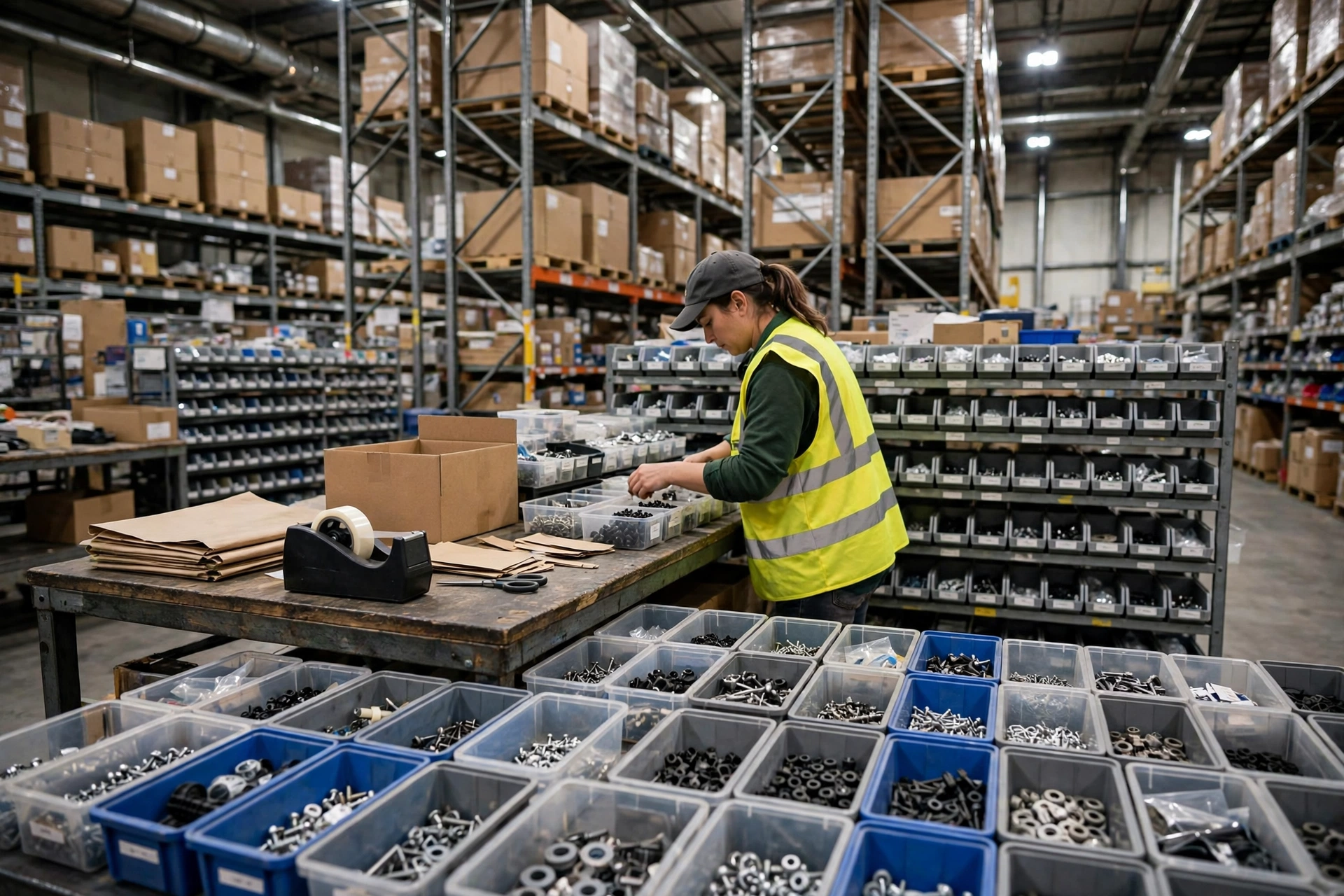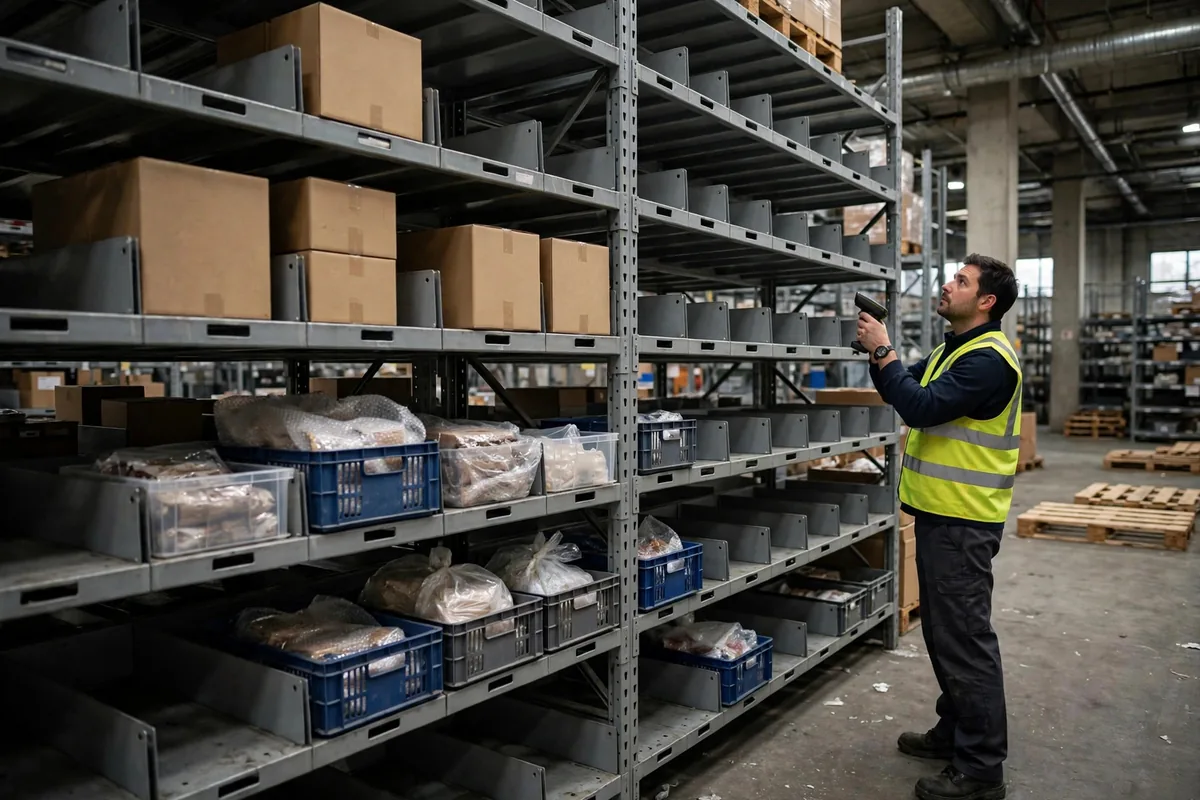
We have a client in home appliances, a modest warehouse of about five thousand square meters holding more than four thousand SKUs. At last year's renewal, the owner complained to me: "Susan, your picking speed keeps dropping. In peak season we ship twenty thousand orders a day and the pickers work past midnight." I walked their floor once and saw the problem immediately: their warehouse ABC classification was still the layout from three years ago, when the warehouse opened. Half of their twenty best sellers were buried in the deepest corner of the building, and pickers walked several extra kilometers every day just to reach them. They had done a warehouse ABC classification once, at opening, and never touched it again.
This is painfully common in our business. Plenty of warehouses treat ABC classification as a one-time project: sort it once, stick labels on the shelves, done. Three years later the best sellers have completely changed, but the slotting is frozen in time. The real work of ABC classification is not the first sort. It is how often you review it afterward. One sort is not enough. The review cycle is what matters.
Three Ways to Do Warehouse ABC Classification
ABC classification sounds simple until you try it, because there are three ways to do it, and they give you very different results.
By sales value is the most common. Roughly the top twenty percent of SKUs by revenue are A items, the middle is B, the tail is C. This method manages money, which makes it great for board reports and for fee negotiations. One of our clients used it, and the result was a warehouse full of high-priced, low-frequency goods sitting in the best locations, shipping a few times a year, occupying prime real estate for nothing.
By pick frequency is the most practical method on the warehouse floor. Whatever ships most often is A, whatever the unit price. A picker does not care how much money a SKU makes in a year. She cares whether she has to pick it ten times today. That home appliance client re-sorted by frequency, and travel distance dropped by about a third. Peak season overtime fell by nearly half.
By gross margin is the third way, and it fits categories where margins vary wildly. High-margin items deserve the closest attention, because a mispick or a loss on them hurts far more. One imported-snacks client of ours ranks A items by margin, and counts those items most often.
None of the three is right or wrong. It depends on what problem you are solving. My advice is to use all three at once: slot locations by pick frequency, allocate management attention by sales value, and set counting priorities by margin. Three lenses together beat clinging to one.
Misclassification Costs Real Money
People underestimate what wrong classification costs. For that home appliance client, we ran the numbers before the re-sort. The extra walking translated into nearly twenty thousand yuan a month in extra labor. Mispicks went up too, and every wrong shipment costs seventy to eighty yuan in returns and reshipping, adding up to several thousand more per month. The hidden cost was worse: C items occupying A locations meant best sellers had nowhere to go, replenishment lagged, and peak-season stockouts lost orders that never showed up on any report.
Here is the counterintuitive part: C items sometimes deserve more attention than A items. A items get watched every day, so they rarely go badly wrong. C items are exactly the ones nobody watches, so they are the ones that quietly turn into dead stock. Another client of ours had a batch of old-model goods sitting in a corner for three years, worth over a hundred thousand yuan on the books. By the time anyone looked, the packaging had gone damp and the whole lot had to be written off. The most common mistake in ABC classification is staring at A items and forgetting C entirely.
Seasonal products are where warehouse ABC classification most often goes wrong. We have a client in portable heaters. Every October through December, heaters surge into A class, picking five or six times their normal volume, and by February they fall straight back to C. The first year they had no experience with this, so they fixed heaters into A locations based on the peak-season ranking. Come spring, the best locations in the building were occupied by goods that barely moved all year, while the real spring best sellers had nowhere to go. The second year they got smarter and created a separate seasonal A class: in for the season, out when it ends, with slotting following the calendar. ABC classification is not fixed in stone. It has to breathe with the sales rhythm. New products deserve the same patience. Give them three months of observation before assigning a class. If one takes off, promote it to A. If it does not, let it sit honestly in C instead of occupying a prime spot from day one.
The Warehouse ABC Classification Review Cycle: Monthly for A, Quarterly for B, Twice a Year for C
Here is the simple table we now give our clients:
| Class | Review cycle | What to review | What changes |
|---|---|---|---|
| A | Monthly | Pick frequency, sales shifts | Slotting moves, monthly counts |
| B | Quarterly | Rank movement, new climbers | Minor slotting tweaks, quarterly counts |
| C | Twice a year | Dead stock, expiry risk | Clearance, markdown, write-off decisions |
The logic is simple: the more important the item, the more often you review it. A items get reviewed monthly because best sellers change fast. A new product can explode in two or three weeks, and if you wait for a quarterly review, the moment is gone. B items get reviewed quarterly, watching for climbers and fallers: which B item doubled its picks this quarter and should move up, which one fell and should move down. C items get reviewed twice a year, and the question is not ranking but cleanup: what has not moved in six months, and do we keep it, mark it down, or write it off.
Review results have to land in two places. First, slotting: A items must sit closest to the pick face, in the easiest locations. Those spots are scarce. Whoever climbs the ranking moves in, whoever drops moves out, no sentiment involved. Second, counting frequency: A items counted monthly, B items quarterly, C items twice a year. That is how counting labor gets allocated, not spread evenly.
Next time you negotiate a contract, remember to ask three questions. One, when was your warehouse ABC classification last reviewed? Two, does slotting keep pace with sales changes? Three, how often is dead C stock cleared out? If the other side cannot answer, their management stopped on opening day, and no matter how cheap the quote looks, think twice.
By Susan, 3PL Sales Director