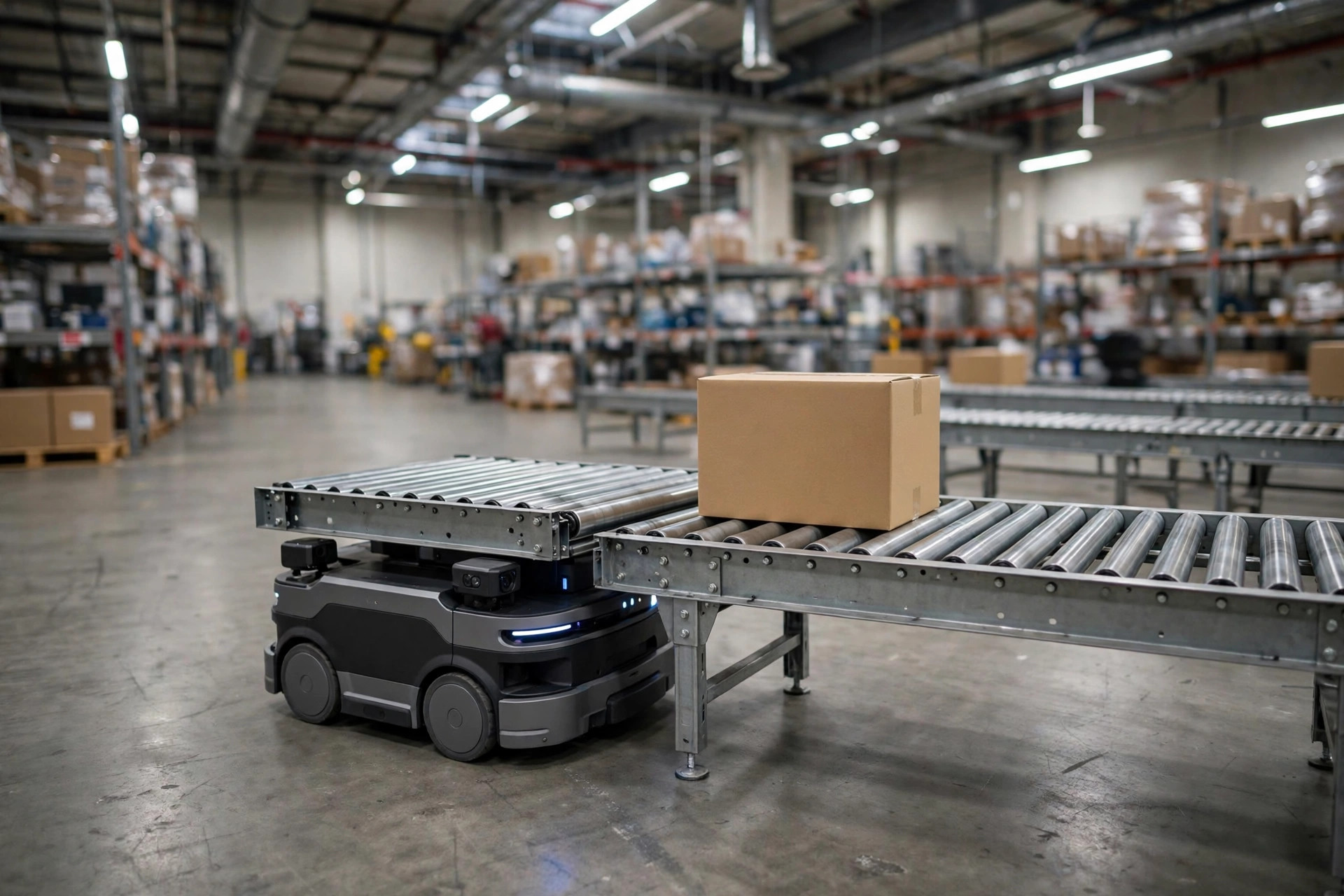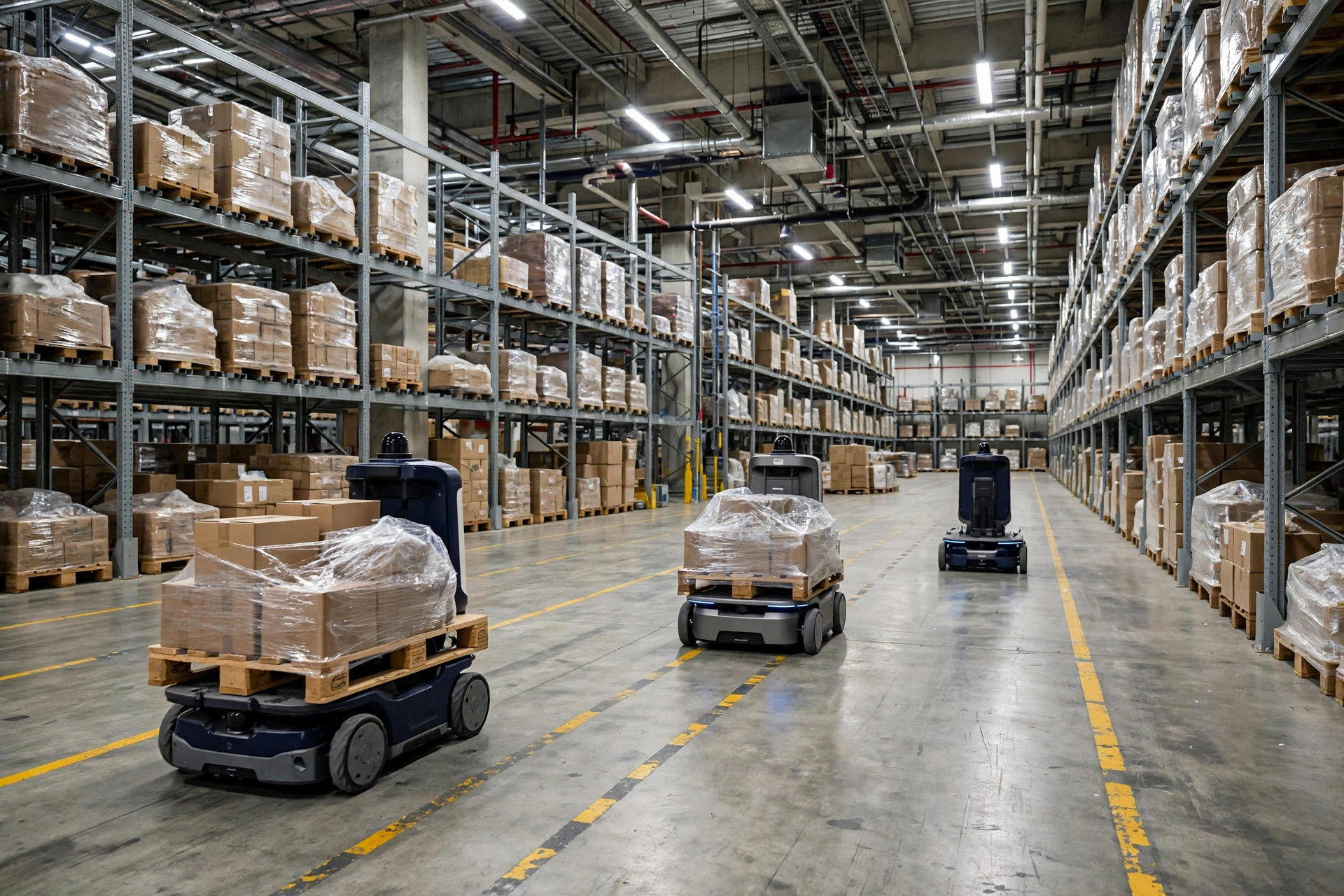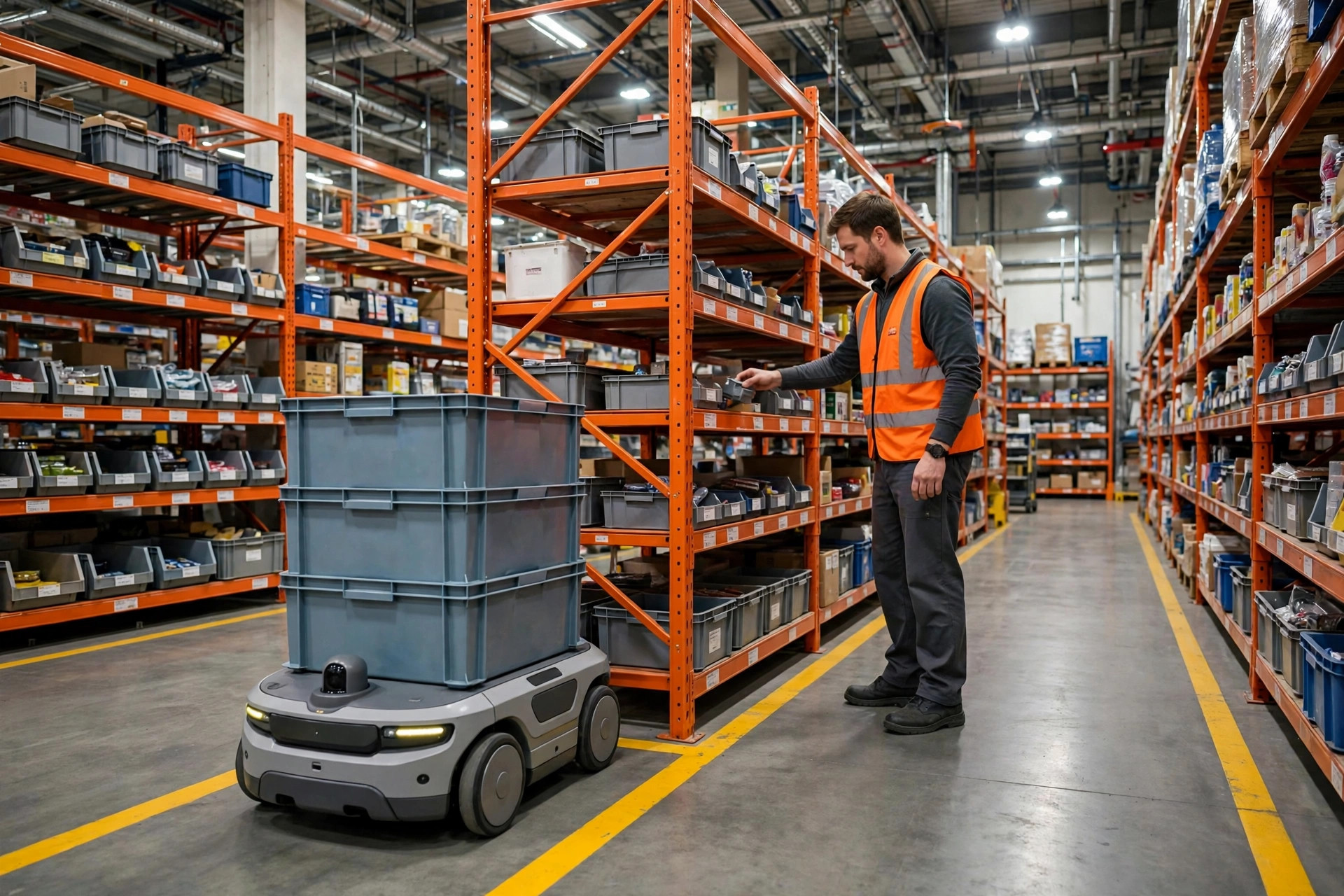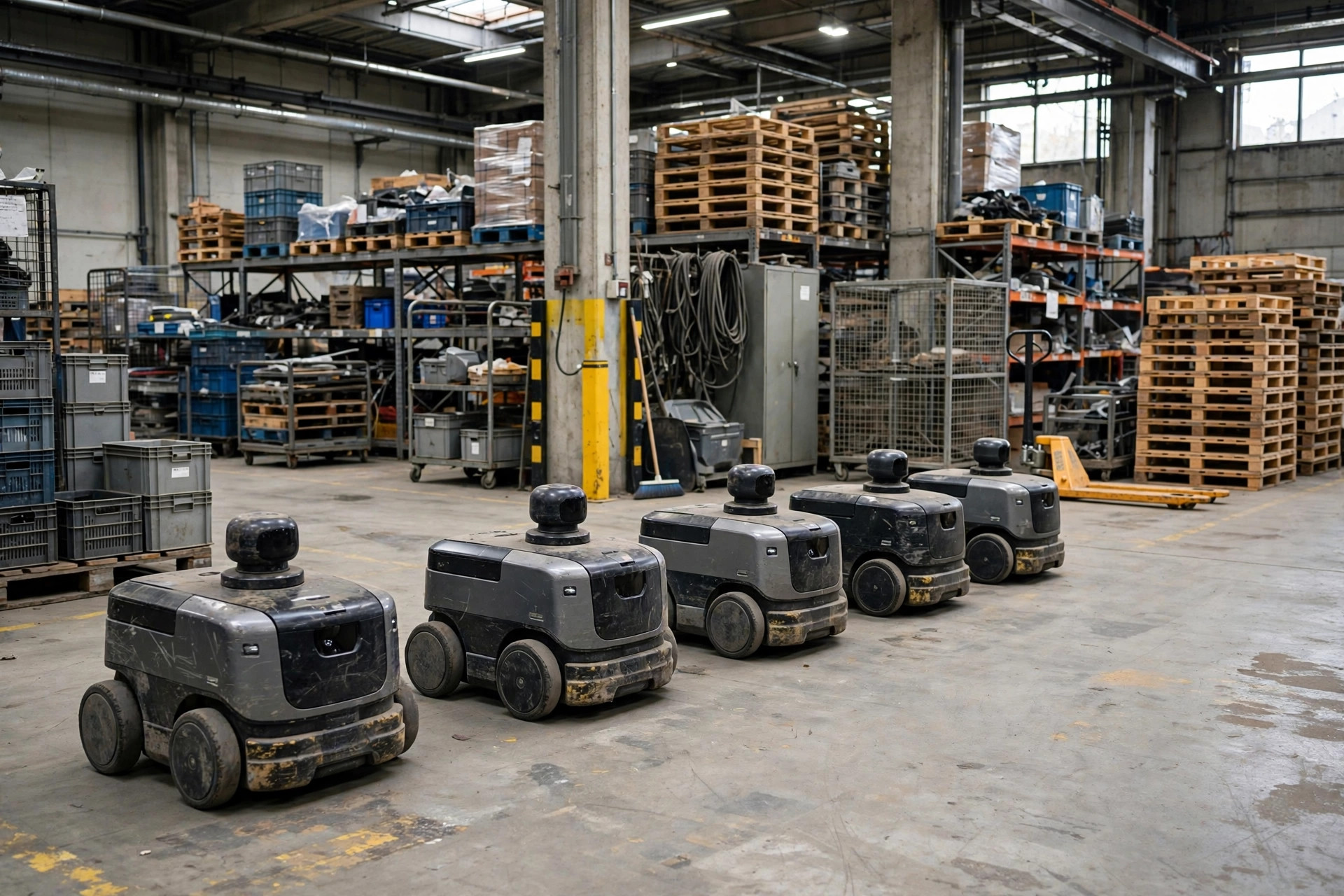
Here's my verdict up front: buying used AMRs is fine. But what you're actually buying isn't the robot — it's the remaining operating hours. In 2024 I helped a warehouse evaluate a deal: eight used material-handling AMRs at $60K each, versus $110K new. The owner thought he'd saved $400K and couldn't stop grinning. Six months later I went back. Nobody was grinning — $120K in software license transfers, a six-week wait for one drive-wheel assembly, and downtime losses nobody wanted to calculate.
An AMR is like a used car, except the traps run deeper. With a used car you can at least pull the service history at a dealership. With a used AMR, the "service history" lives in the manufacturer's backend. If the seller won't hand over the account, you can't even see the error logs.
What actually gets old on an AMR (it's not what you think)
Strip an AMR down and three components decide how much life it has left: the battery, the LiDAR, and the drive wheels.
The battery first. Think of it as a phone battery scaled up — lithium iron phosphate packs typically last around 3,000 full cycles, which sounds like eight years at one charge a day. That's the lab number. In a warehouse that hits 95°F in summer, knock 30% off. Battery health comes down to two numbers: total full charge cycles, and SOH (state of health). Below 80% SOH, the pack is in "it works, barely" territory. Below 70%, it won't survive a peak-season shift.
Then the LiDAR — the robot's eyes, and usually the single most expensive component, often a quarter of the vehicle's cost or more. Picture it as a mirror spinning at thousands of RPM, counting laser pulses. Bearings wear out. An aging LiDAR first shows up as noisy ranging — the robot starts to jitter when it localizes — and eventually it throws faults and the vehicle just stops. Nobody "refurbishes" a LiDAR. When it dies, you buy a new one at the manufacturer's current price, and if your model is discontinued, good luck.
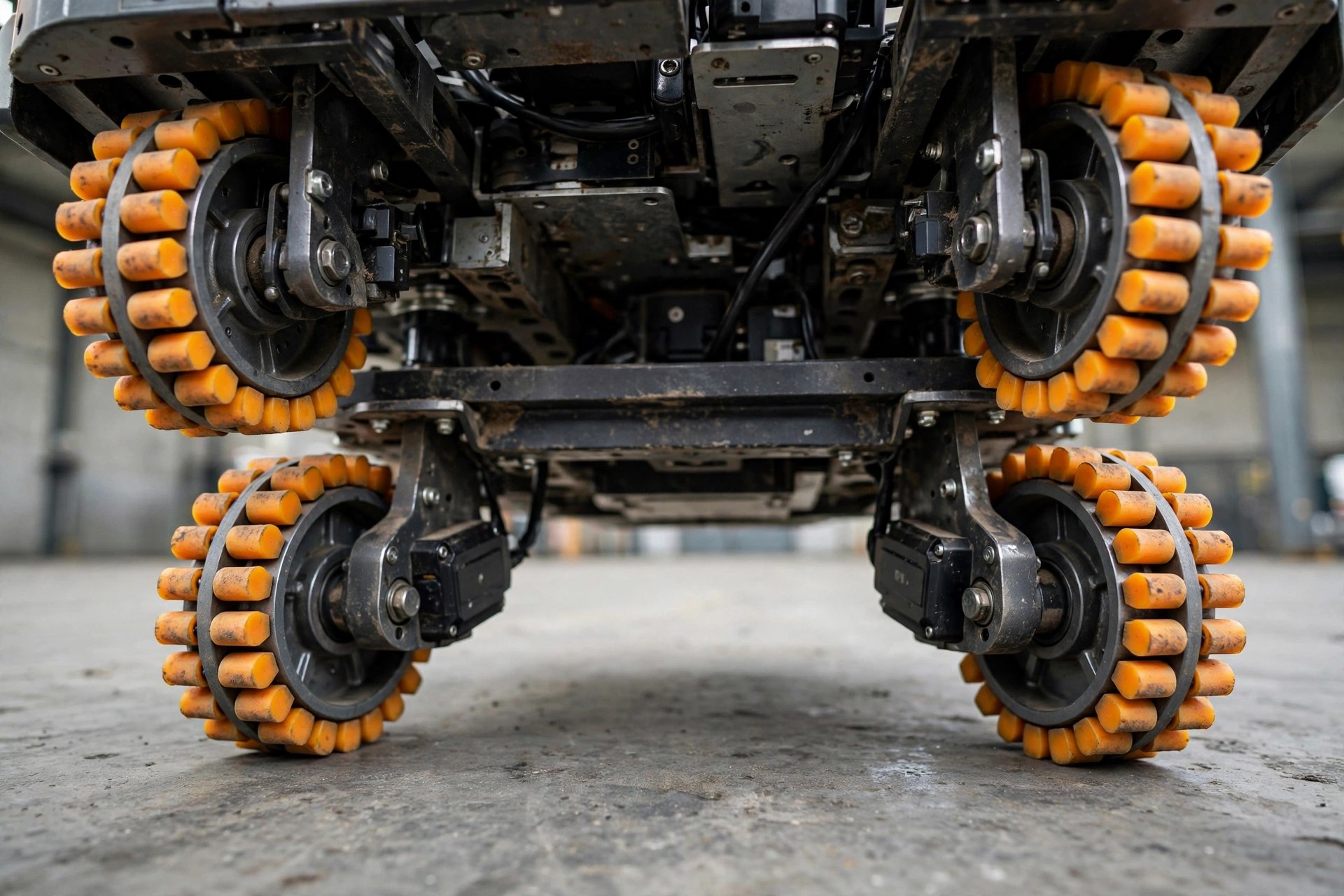
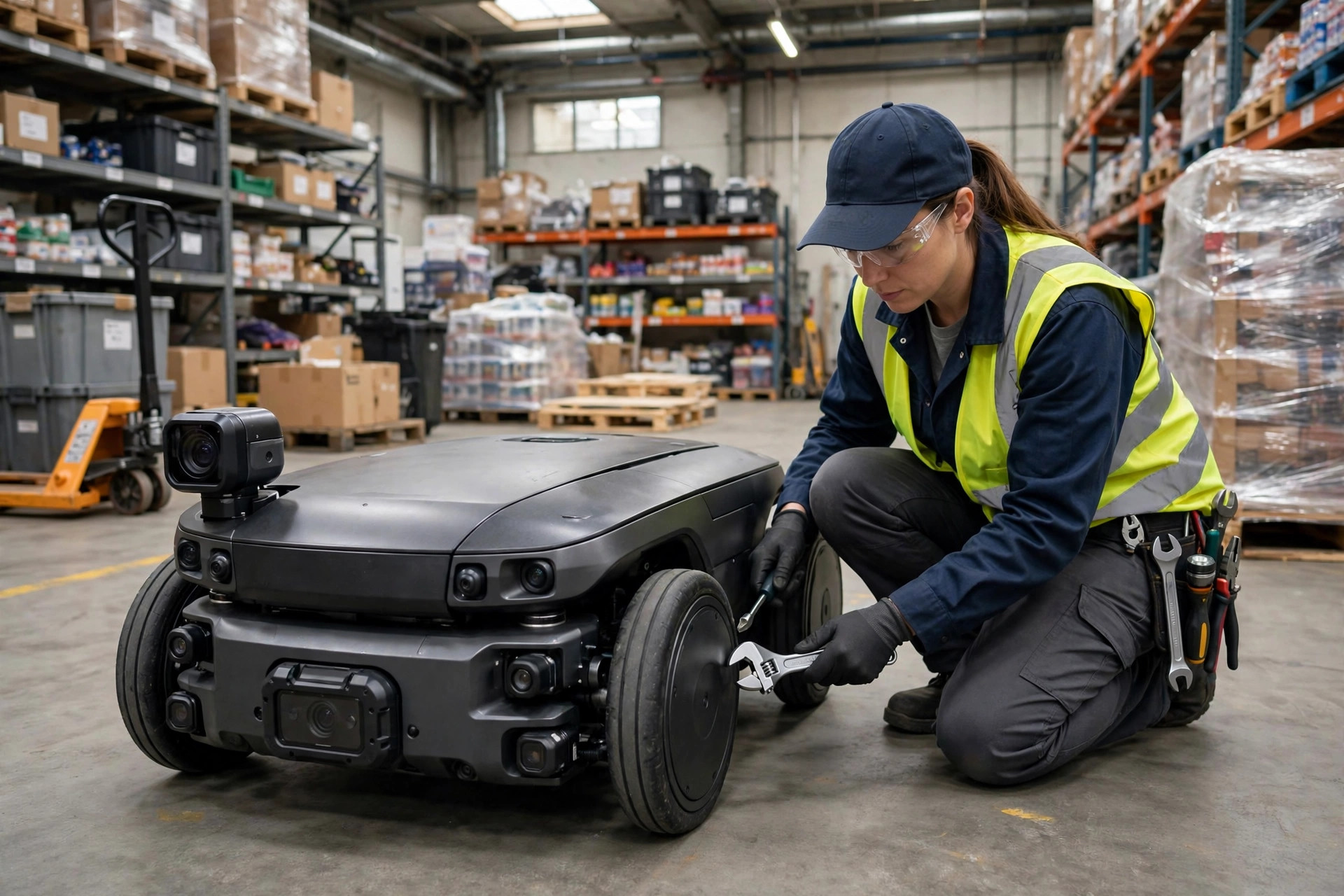
Finally, the drive wheels: motor, gearbox, rubber tire. Pure mechanical wear. Worn tires slip, and slip degrades localization — a new vehicle holds ±10 mm, a worn one can drift to ±30 mm. In a tote-handoff application, 30 mm of error is enough for a robotic arm to grab thin air.
So the principle is simple: check the battery's cycles and SOH, the LiDAR's manufacturing date and fault frequency, and the drive wheels' wear. The inspection checklist below is built around exactly these four things — plus total operating hours to close the books.
The inspection checklist: skip the walkaround, check these four
First, operating hours. Ask the seller to show cumulative operating hours from the backend — not "looks 90% new." A vehicle designed for 50,000 hours that's already run 38,000 has 12,000 left; at 16 hours a day, that's roughly two years. Now the counterintuitive part: ultra-low hours aren't always a bargain. I once saw a batch of 2021 units with only 4,000 hours, priced cheap — but they'd sat in storage at low charge for years, and SOH was down to 55%. The worst thing for an AMR battery isn't being used; it's sitting idle at low charge. It's like a person: three years on the couch atrophies muscle faster than daily work does.
Second, pull the error logs. Demand the complete logs for the last three months and look for three categories: localization losses, LiDAR anomalies, battery over-temperature events. If localization losses happen more than a couple of times a week, the sensors are already going, or the vehicle was running in an environment it was never suited for. Logs don't lie — but sellers do "forget" to share them. No logs, no deal.
Third, measure localization accuracy on site. Don't trust the ±10 mm on the brochure. Run the vehicle on a fixed route for 20 round trips, measure the deviation from a marked stop point with a tape measure each time, and take the worst case. New standard is within ±10 mm; for used, ±20 mm is acceptable. Over ±30 mm, walk away — either the wheels or the LiDAR is already done. This test takes half an hour. If the seller stalls, they're hiding something.
Fourth, check battery health. Insist on a full charge-discharge cycle on site and read the SOH and actual runtime. Below 80% SOH, price the deal as "battery replacement required on arrival" — one AMR traction battery costs nearly half a used vehicle. A refurbished pack looks shiny, but SOH doesn't lie. One full cycle exposes it.
Three traps — hit one and the deal is dead
Trap one: software licenses and map versions. Many AMRs charge annual licenses for navigation software and fleet management, and the license is tied to the original customer's account. Transferring a used vehicle often means re-buying the license or paying a "transfer fee" — in the 2024 case I opened with, eight vehicles cost $120K to transfer, $15K each. Worse: map versions. Some older models' navigation software is end-of-life; it can't ingest your new rack layout, and the vehicle becomes a very expensive pallet jack. Before buying, ask the manufacturer three questions: is this model's software still supported, what does license transfer cost, and can a second-hand owner even use the fleet management system?
Trap two: discontinued spare parts. The AMR industry has been consolidating fast — small vendors fold, product lines get axed. Drive-wheel assemblies, LiDARs, controllers: once a proprietary part is discontinued, you're hunting cannibalized units. In early 2025 I evaluated a batch of 2020 vehicles for a food distribution center — genuinely cheap at under $40K each. Then one drive wheel developed a whine, and the manufacturer said that gearbox was discontinued. Six weeks waiting for a salvaged part. For six weeks that vehicle was $40K of scrap metal. Before buying, check the spare-parts catalog on the manufacturer's site. If key components show "discontinued" or "out of stock," walk away no matter how cheap.
Trap three: masked battery degradation. This is the nasty one. Some refurbishers swap in a fresh battery shell, polish the connectors, and the SOH reads 92%. Your on-site charge-discharge test looks normal — because they tampered with the battery management system, or dropped in a set of second-life cells that look brand new but have sky-high internal resistance. How to catch it? Measure internal resistance. Demand an internal-resistance test on individual cells with a proper meter — new cells read single-digit milliohms; second-life cells often read double. If the seller won't even let you open the battery cover, leave.
And one piece of pseudo-need nonsense I need to call out: people hire consultants for a big "automation feasibility assessment" before buying used AMRs, and the report concludes "we recommend purchasing 10 AMRs." Wake up — if you can't execute the inspection checklist in this article, no amount of glossy assessment will stop you from buying a time bomb. Build the inspection capability first, then buy the robots.
The math: used vs. new, five-year total cost
Assume eight vehicles running two shifts a day: $110K new, $60K used. Five-year total cost of ownership looks roughly like this:
| Cost item | New (8 units) | Used (8 units) | | Purchase price | $880K | $480K | | Software licenses / transfer (5 yrs) | ~$80K, bundled in year-one service | $120K transfer + ~$150K renewals | | Battery replacement | ~$100K around year 5 | ~$160K in years 2–3 | | Spare parts & repairs (5 yrs) | ~$120K | ~$250K (incl. discontinued-part premiums) | | Downtime losses (est.) | Low, ~$50K | High, ~$180K | | Residual value at year 5 | ~$200K | Near zero | | 5-year total | ~$1.03M | ~$1.14M |
See it? The used fleet saves $400K up front and costs $110K more over five years. That's the trade-off: used AMRs save first-year cash flow and lose four years of certainty. If cash is tight and the project horizon is two to three years, used makes sense. If you plan to run them for five, buy new.
Worth it or not? Look at this one number
Don't get spun by "like new" or "barely used." A used AMR comes down to one number: remaining operating hours.
The math is simple: (designed total hours − hours already run) ÷ your annual usage hours = years left. Plug that into the TCO table above and see if the total makes sense. If the remaining life is under three years, don't touch it unless the price is absurdly low — under 30% of new.
One thing you can do tomorrow: before visiting any used vehicle, call the manufacturer's support line with the VIN and ask three things — is the software still in its support window, what does license transfer cost, and are key spare parts discontinued. Those three calls are worth $400K. Trust me.
By Da Liu, Automation Engineer