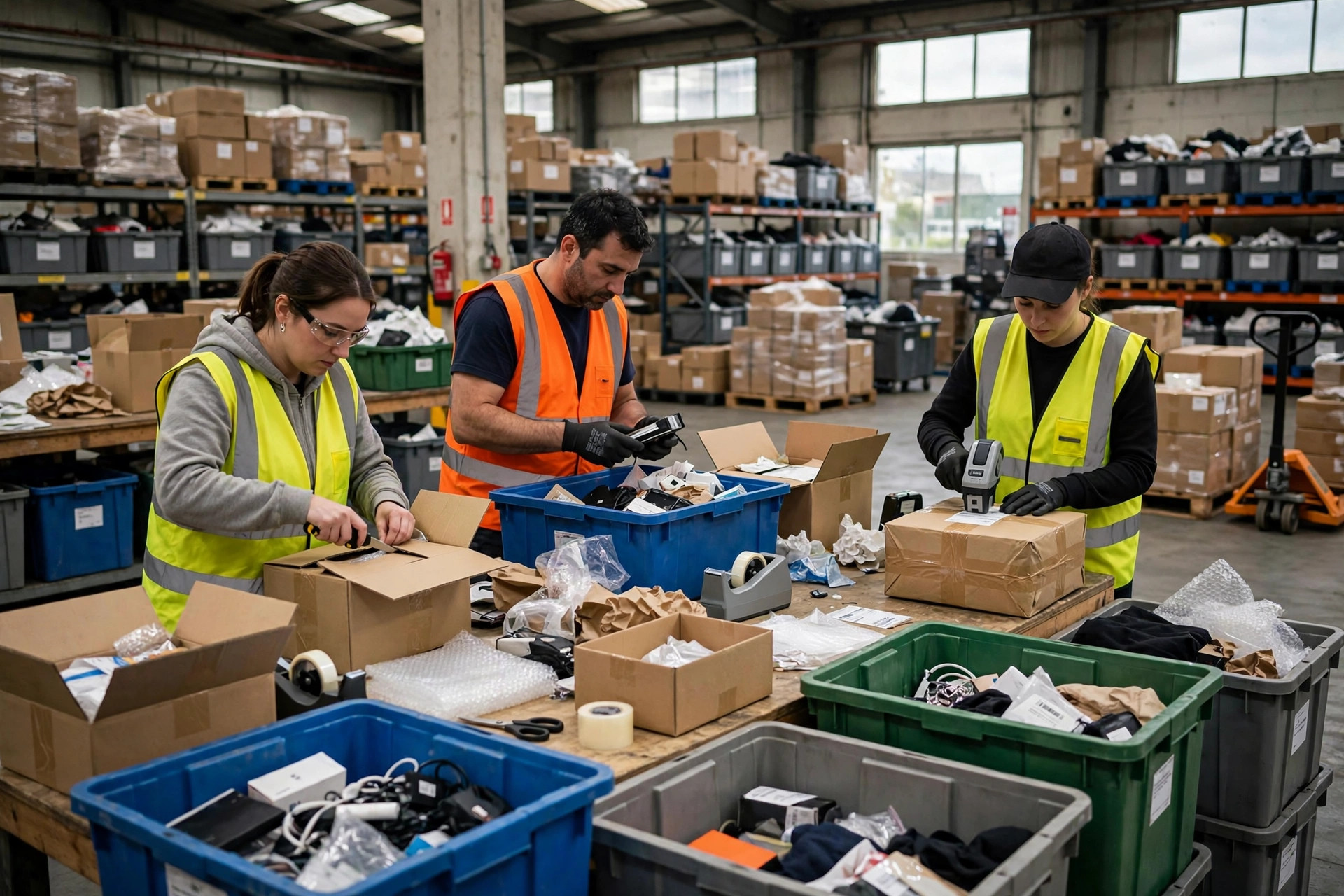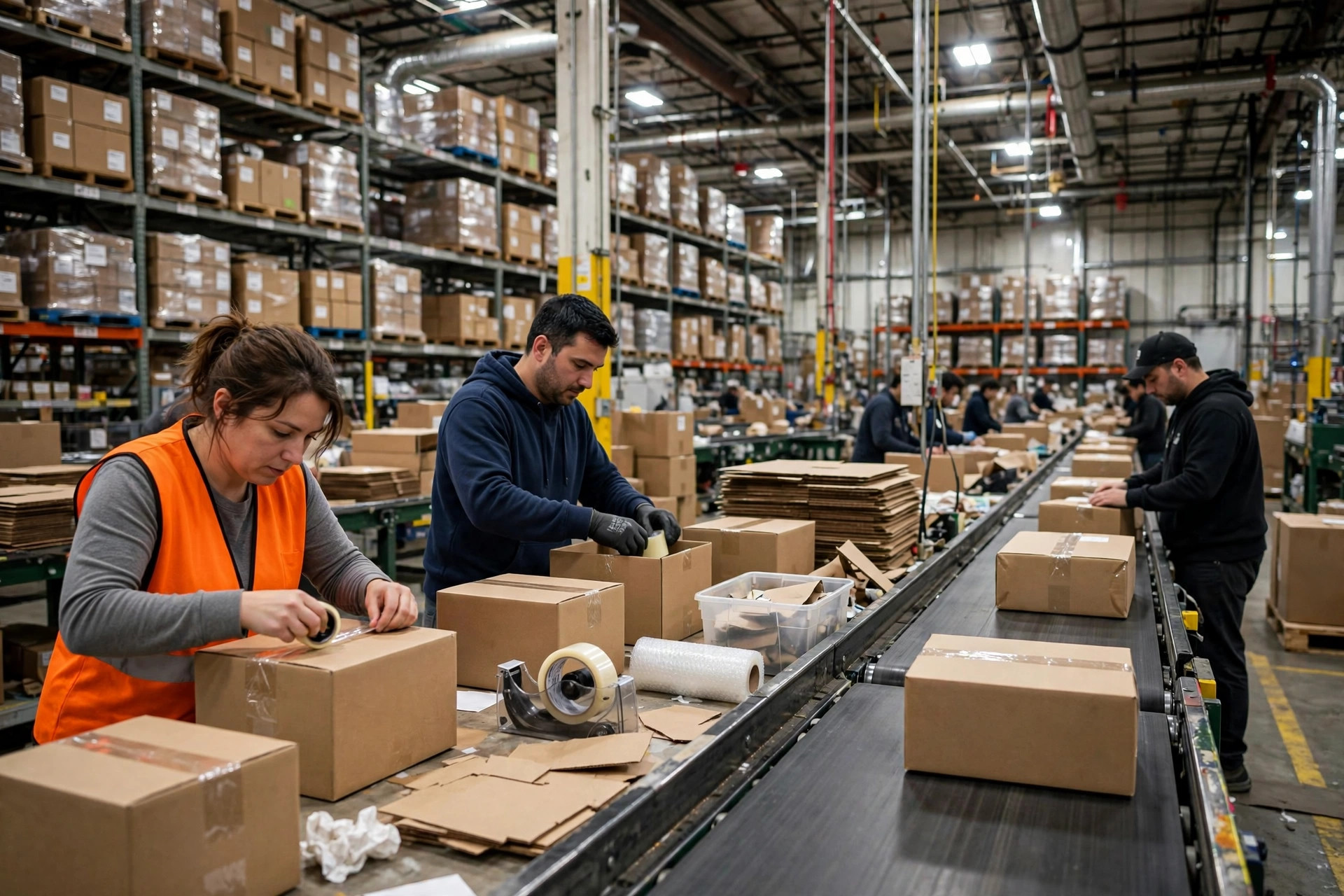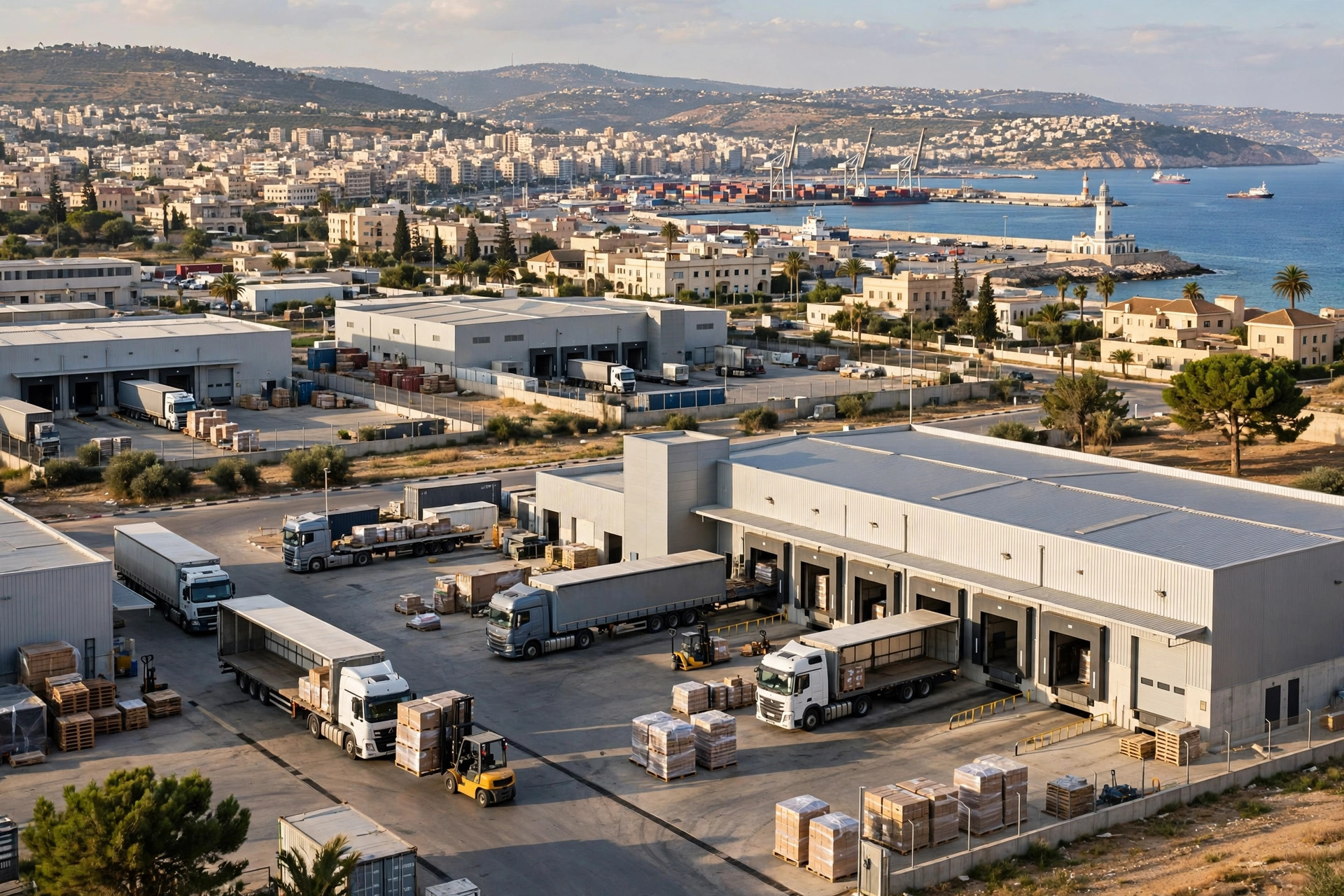
The Tunis warehouse market is easy to misread. On a map of North Africa, Tunisia looks small: a modest population, a modest economy, and a domestic consumer market that cannot support a large regional distribution network on its own. Shift the perspective to the European supply chain, however, and Tunis changes character entirely. It sits on the central Mediterranean coast of North Africa, facing Italy across a short sea crossing, with Algeria to the west and Libya to the east. The question for any company considering storage here is therefore not "how big is the Tunisian market?" but "does this location help goods move between Europe and North Africa more reliably, or more cheaply, than the alternatives?"
Tunis on the Map: Which Line Does It Actually Sit On?
Tunisia's warehousing logic can be read through three lines that meet around the capital. The first is the maritime line. The port of Rades, in the Tunis metropolitan area, handles much of the country's container and roll-on/roll-off traffic, making it the most practical gateway for goods entering or leaving Tunisia by sea. The older port of Tunis itself plays a different role, leaning more toward passenger traffic and conventional cargo.
The second line is industrial. The industrial belts around the capital host a substantial export-processing sector, above all suppliers of automotive components — wiring harnesses, electronic parts, plastic parts — that have shipped to European vehicle manufacturers for years. For these firms, a warehouse is first a production-support facility and only second a distribution node. The third line is domestic distribution: Tunis itself is the country's largest consumption and consolidation center, and a warehouse serving the local market is judged first by how well it covers the capital region, and only later by how far it reaches into the center and south.
These three lines produce a discipline that many newcomers learn the hard way: do not ask one warehouse to serve all three purposes. A warehouse built for European orders should sit close to the port and the factory. A warehouse built for the domestic market should sit close to the capital's consumption and delivery networks.
Consider a composite but typical case. A components supplier with a plant in an industrial belt south of the capital initially kept finished goods inside its own factory warehouse, spilling over into rented space nearby as orders grew. While production was stable, the arrangement worked. When European customer orders swung, the factory warehouse became the bottleneck: either rent extra space for the peak and carry it empty in the off-season, or scramble for temporary space at short notice, usually in an inconvenient location. The company eventually changed its logic rather than its total footprint. The warehouse near the plant became a "support and buffer" site; a second warehouse near the port became the "shipping and consolidation" site, linked by scheduled shuttle runs. The lesson is about roles, not square meters: define what each warehouse is for before choosing where it goes.
Three Warehouse Locations, Three Different Calculations
In practice, site selection around Tunis falls into three categories, and each one is judged on a different calculation.
| Location | Best for | Core advantage | Main cost | Suits |
|---|---|---|---|---|
| Near the port | Export consolidation, import distribution, transit cargo | Close to the vessel, fewer handover steps | Tighter availability, exposure to sailing-schedule swings | Companies whose volumes depend on sea freight and time-sensitive shipping |
| Inside an industrial belt | Component support, semi-finished buffer stock | Close to the factory, fast production response | A step removed from both the port and the consumer market | Manufacturers already producing locally for European customers |
| Capital-region distribution point | Domestic retail, e-commerce, fast-moving consumer goods | Covers the capital's consumption and delivery networks | Exports require an extra leg of road transport | Brands and distributors serving the Tunisian domestic market |
Rent is only one line in this calculation, and it is the line most easily misread. Comparing two warehouses on monthly rent alone ignores three larger costs. First, shuttle and line-haul transport: a warehouse a step farther from the port or the factory adds daily truck runs that can quietly erase any rent saving. Second, working capital tied up in inventory: the wrong location forces higher safety stock, and money sitting in stock costs far more than rent. Third, elasticity in peak season: temporary space found at short notice is usually worse located and worse priced than space contracted in advance. An honest comparison adds all four together. Specific rent levels and rates vary by district, warehouse type, and lease term, and any figure quoted without a location and a date should be treated as illustrative only; current local quotations and policy should be checked before signing.
Time is the other cost that rarely appears in a rent comparison. Sea crossings from Tunisia to European markets are short, which in principle supports short replenishment cycles. That cycle's stability depends on port operations, sailing frequency, and customs clearance lining up. Get the replenishment rhythm right first — high-frequency small batches lean heavily on the port warehouse and shuttle, low-frequency large batches on capacity and financing — and area and location follow.
Why Auto Components Came First, Not Consumer Goods
A striking feature of the Tunis warehouse market is that its most developed warehousing demand did not come from consumer goods at all. It came from industrial goods bound for Europe. The reason is structural. Automotive suppliers' relationships with European vehicle manufacturers go back years, their orders are comparatively stable, their products are standardized, and their export procedures are mature. The domestic consumer market, by contrast, is limited in size, and its e-commerce and modern retail distribution systems are still developing. Neither the volume nor the density of domestic demand is yet enough to support a large regional distribution center on its own.
This leads to a counterintuitive judgment: the Tunis warehouse market looks like a North African local market, but behaves more like a southern extension of the European supply chain. That judgment changes strategy. Serving Tunisian consumers calls for planning on domestic rhythms; nearshore support for Europe calls for judging the warehouse first by how well it connects factory, port, and sailing schedule.
A second case illustrates what nearshore distribution actually looks like here. A supplier serving customers in Italy and France uses its Tunis warehouse as a nearshore buffer: European orders are consolidated, inspected, and combined here, then shipped onward by sea on a set schedule. Inbound goods from Europe can also be broken down and sorted here before distribution to North African customers. The model works only if the Tunis site genuinely beats shipping directly from farther away — the short sea crossing helps, but the real advantage is that inspection, sorting, and labeling can be done here rather than pushing every step into a European warehouse. That advantage depends on execution: picking accuracy, documentation compliance, and shipping punctuality.
There is also a regional dimension to handle carefully. Tunisia sits between Algeria and Libya, and overland distribution in either direction is geographically plausible, but cross-border procedures, lead times, and compliance vary by destination and cannot be inferred from map distance. Treating Tunis as a hub for all of North Africa is a hypothesis to verify, not an assumption to build on.
Three Questions Before Signing a Lease in Tunis
Pulling the analysis together, three questions deserve clear answers before any lease is signed. First, whom does the warehouse serve: European orders, the domestic market, or both? Different answers mean different locations and different roles. Second, what is the replenishment rhythm: high-frequency small batches, or low-frequency large batches? Rhythm determines dependence on the port, the shuttle, and inventory levels. Third, which value-added steps belong in Tunisia: inspection, sorting, labeling, consolidation — and which should stay in Europe? That division of labor determines the operational capability the warehouse needs, and whether it genuinely creates value or merely adds another handover point.
If all three answers point toward European nearshore support, Tunis is a serious candidate: the triangle of port, industrial belt, and European market is real, and the automotive supply base is real. If the answers point toward covering a large North African market, or riding domestic consumption growth, the warehousing market here may not yet be at that stage, and a more restrained plan — small scale first, validated, then expanded — is the wiser course.
In the end, the Tunis calculation is not a rent calculation but a proximity calculation: whom the warehouse sits close to determines whom it creates value for. Get that question right, and most of the site decision follows. The specifics — district, warehouse type, lease term, operating partner — then need settling against port conditions, availability, and the latest local policy.
By Dr. Chen, Supply Chain Researcher