
Let me tell you a proof-of-delivery story from last fall that cost us real money. I was running a load of auto parts down to Phoenix. Receiver signed the paper delivery receipt, I folded it into my pocket and rolled out. Three days on the road, that slip lived in my cab mixed in with fuel receipts and toll tickets. Back at the yard I tossed it on the dispatcher's desk. A month later the shipper calls: we never got that load, where's the paperwork? Dispatcher tore the drawers apart. Nothing. Shipper says no paperwork, no payment. That load was just under two grand. We argued for over a week and the company ate half of it. I still think about that one. Still stings.
Fifteen years behind the wheel, and I know exactly how hard life is for a paper POD. Drivers stuff them in pockets, behind sun visors, under coffee cups. Handwriting smudged by sweat, ruined by rain — happens all the time. Back at the office, dispatch has to sort through them one by one, snap photos, email them to the shipper, and only then can accounting cut an invoice. If any link in that chain slips — driver forgets to turn it in, dispatcher gets busy and forgets to send it — the shipper's payment clock slides. From the moment the receiver signs to the moment the shipper's accounting department actually sees that paper, three to five days is normal. Losing one entirely? Also normal.
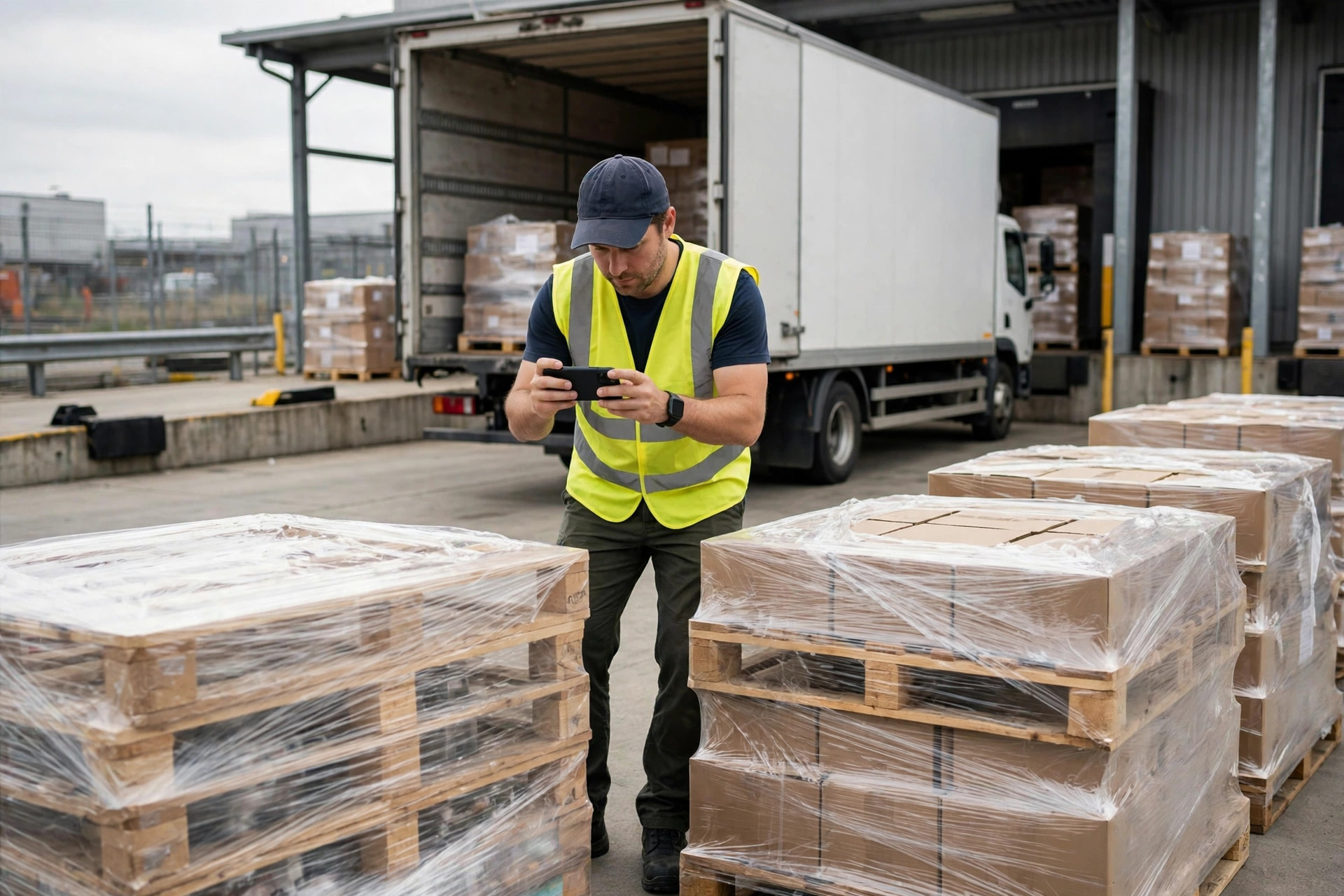
This spring our company added photo POD to the TMS. Unload, get the signature, pull out my phone, snap the receipt, hit upload, done. The photo goes straight into the system — dispatch sees it instantly, the shipper sees it too. First time I used it I grumbled. One more chore, I thought. Just making dispatch's life easier, right? Two months in, I realized it's not that simple.
The paper proof-of-delivery routine I lived for a decade
Every driver knows the paper drill: unload, chase down a signature, pocket the slip, turn it in back at the yard, dispatch sorts it, emails it, reconciles it. Every step runs on somebody's memory. In peak season I'd run two or three loads a day, slips piling up, and I'd slap the whole stack on the dispatcher's desk and watch him wince. Scribbled handwriting, signatures you can't read — and when the shipper asks a question, nobody knows the answer. Worst of all is the lost slip. It's not that drivers don't care. There's just too much stuff in a cab, and one thin piece of paper vanishes easy. Lose one and you're looking at an argument at best, eating the cost at worst — like that Phoenix load.
And here's one that really burned me. Winter before last I hauled a load up to Denver. The warehouse guy signed like he was writing a prescription — total scribble. Slips went back, shipper said they couldn't tell who signed, wouldn't honor it. Dispatch sent me back out to get a fresh signature. Half a day and a tank of fuel, gone. That's when it hit me: with a paper POD, getting the signature is only step one. Everything after that is luck.
Who actually saves time when drivers photograph the POD
Here's the honest truth: snapping that photo mostly saves the office's time, not the driver's. The driver actually picks up an extra chore — park, pull out the phone, find the light, get it sharp, hit upload, and wait if the signal's bad. Used to be sign-and-go. Now it's two or three extra minutes per stop.
But here's how the math really works:
| Step | Paper POD | Photo POD |
|---|---|---|
| Turn-in | Only when the driver gets back — a day or two late is normal | Uploaded at the dock, in the system within minutes |
| Finding it | Digging through drawers and cabs — lost means gone | Search by load number, there it is |
| Invoicing | Wait till all slips are in — three to five days easy | Invoice can go out the same day |
| Disputes | Everybody's word against everybody else's | Photo evidence: signature, timestamp, location |
Dispatch used to burn hours every day chasing slips and hunting for lost ones. That work is mostly gone now. Accounting invoices faster, the payment cycle shortens, cash comes back quicker. And for the driver? A lost slip can never land on my head again — photo uploaded, responsibility cleared. Let me be straight about it: digitizing the proof of delivery doesn't save the driver's time. It saves the office's time and the company's money. The driver spends two or three extra minutes and in exchange never takes the blame for a lost receipt again. That's a trade I'll take any day.
One detail a lot of people miss: the uploaded photo carries its own timestamp and location, recorded automatically. Back in the day, when a shipper asked "what time exactly did you deliver," the driver couldn't say and dispatch couldn't dig it out of the slips. Now you open the photo and it's all there. That's a real chain of evidence — signature, time, place, all three. A lot less room to argue.
One thing most people get backwards: a photo, no matter how sharp, only proves "I delivered it." It doesn't prove "the freight was fine." I once delivered a load where the cartons looked perfect on the outside. Receiver signed, I snapped the photo. Then the shipper opened the boxes and found two crushed inside, and came knocking. I pulled up the photo: cartons intact at delivery, signature complete. After that it was between the shipper and the warehouse — nothing to do with me. So photo POD kills the "it never arrived" dispute. It can't kill the "the freight was damaged" dispute. Two different things. Don't mix them up. Expecting one photo to settle every argument is wishful thinking.
My advice to shippers and warehouses
First, don't half-do the photo. Lay the slip flat, make sure the signature, date, and load number are all legible. I've seen drivers snap crooked blurry shots that dispatch can't read even zoomed in — might as well not bother. Companies should make it a rule: blurry photo gets sent back for a retake. Don't feel bad about those two minutes.
Second, speak up about dead zones ahead of time. Some warehouses sit out where there's no signal and the upload won't go through. The driver has to remember to re-send once there's coverage. Better yet, the system should queue it offline and auto-upload when there's signal — don't make the driver carry that in his head. A driver's brain is already full of routes, appointment times, and dock requirements. One more thing to remember is one too many.
Third, shippers, don't just enjoy the convenience. With digital proof of delivery, you get the photo fast and reconcile fast — so meet us halfway. Flag problems early instead of digging up month-old loads. A photo is just a photo. People still have to act like people.
Fourth, drivers, do your part too. Glance at the screen after you snap it and make sure it actually uploaded before you roll. I've seen guys snap and walk away, and the place had no signal — photo never went through, and then it's your word against theirs. Two seconds. Don't skip it.
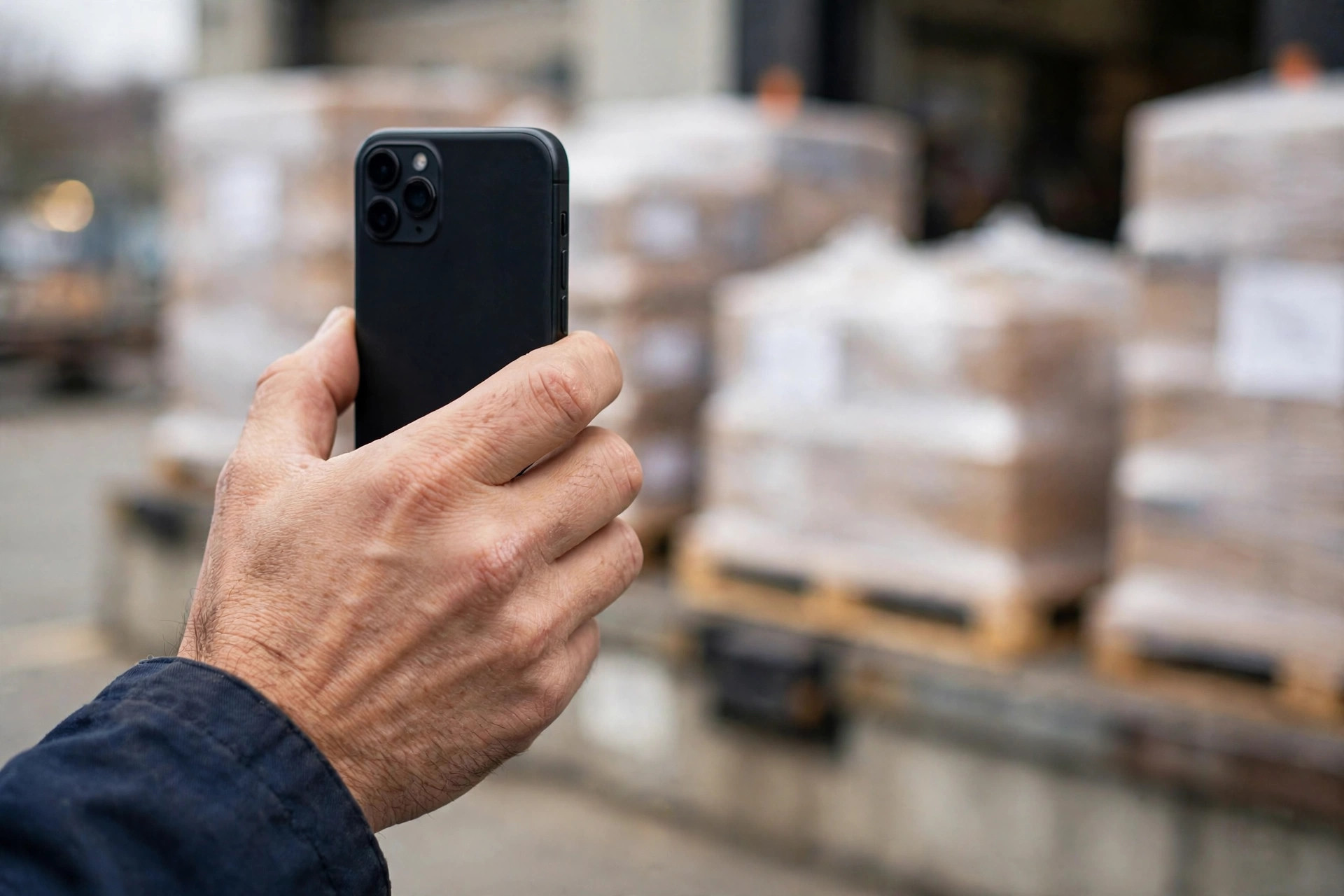
There's an old saying among drivers: talk is cheap, paper talks. These days nobody even bothers with paper — a photo talks. To my fellow drivers: don't begrudge those extra two or three minutes. Photo uploaded, and that run is truly closed out. Nobody can pin anything on you.
By Shifu Zhao, Trucking Veteran (15 yrs)


