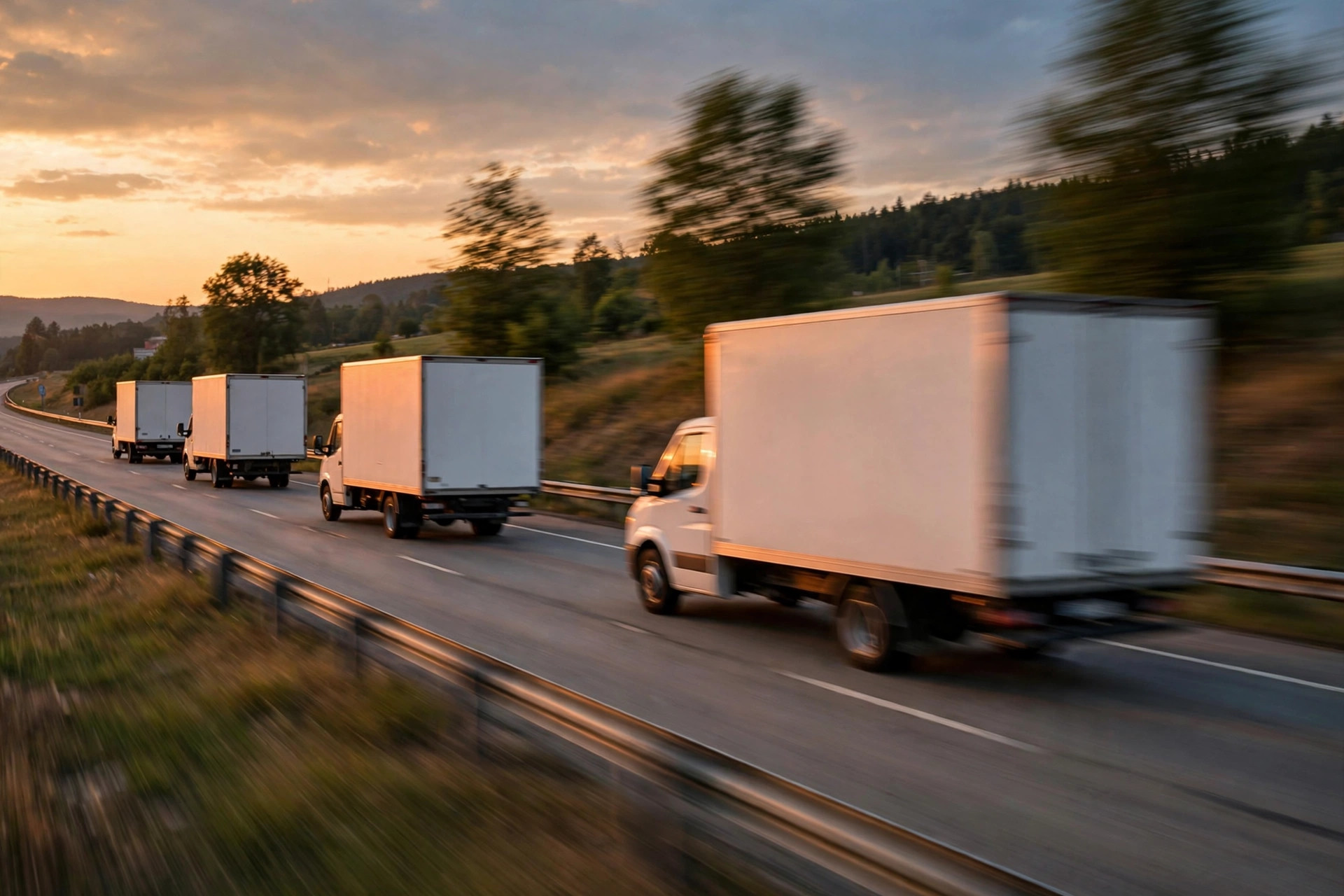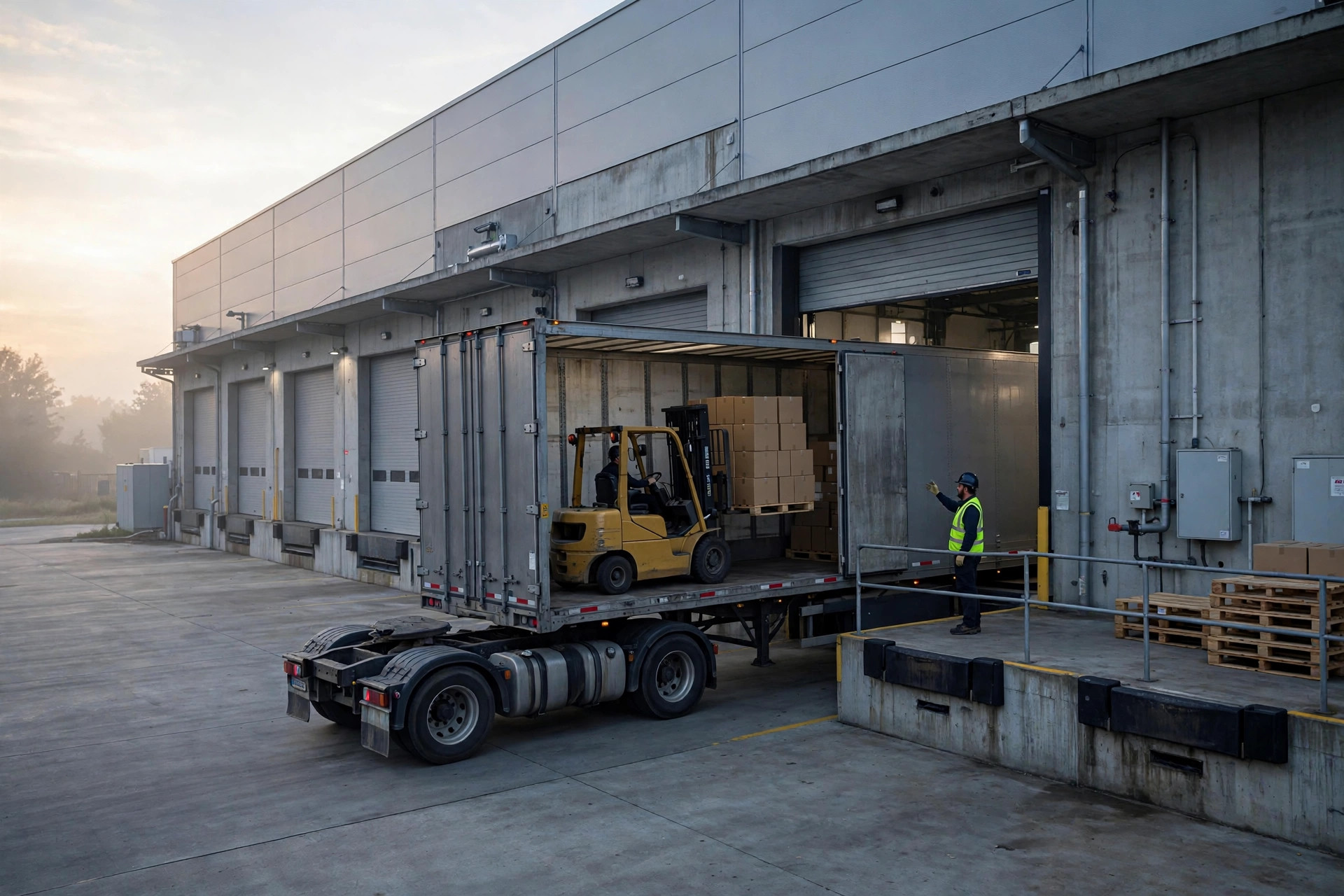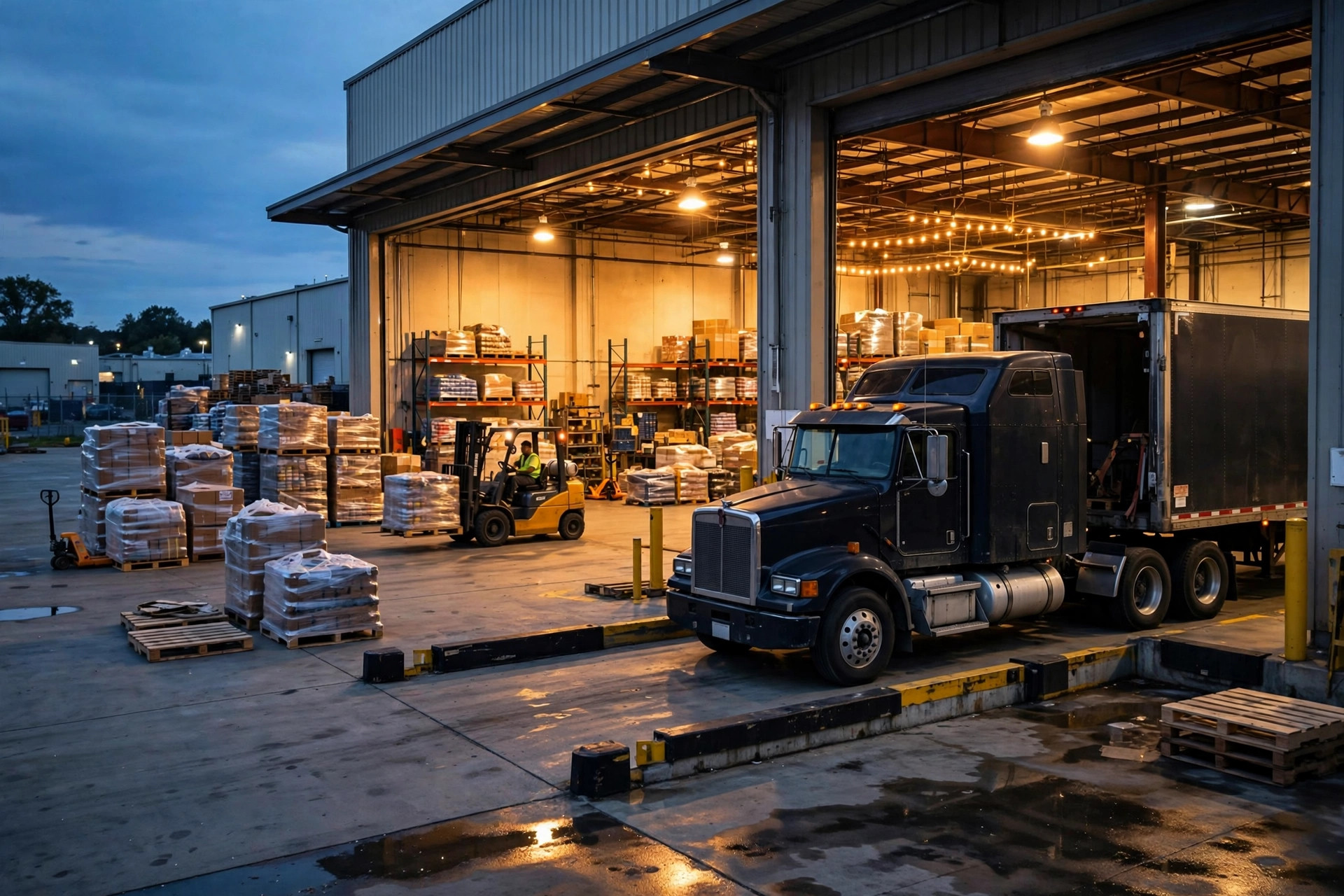
Let me tell you something. In all my years on the road, the biggest change I have seen is not better trucks. It is how the loads get assigned. It used to be a phone call: "Zhao, got a load, twelve pallets out of Fontana, be there by seven in the morning." Two sentences, and you knew exactly what to do. These days? My phone buzzes, and the TMS auto-dispatch has already decided everything: route, timing, dock door. Sounds great on paper. But I am telling you, when this thing goes wrong, it goes wrong on the driver.
A couple of autumns back, I took a system-dispatched load near Ontario. The shipper imported home goods, and the TMS auto-dispatch planned me a "shortest route": off the 10, through an industrial area in Fontana, straight to the warehouse gate. Something felt off the moment I saw it. I had run that road a decade earlier, and I knew trucks were restricted there during the day. I called dispatch. They said, "The system sent it, should be fine, go take a look." Halfway in, a traffic cop pulled me over. I had to turn around, lost over half an hour, and nearly missed my unload appointment. That day I learned the lesson: TMS auto-dispatch calculates the shortest route on the map, not the best route on the road.
Three Times Auto-Dispatch Blew It
First, the system does not know restricted roads. Navigation apps know about height and weight limits. But plenty of TMS dispatch modules never wired that data in. They only care about shortest distance and fastest time. A driver follows the system route, rolls into a truck-restricted zone, and the driver eats the ticket while the shipper's freight sits late. I have lived through this more than once. Around Southern California, every city has its own truck rules, and if the system does not keep that data current, every dispatch is guesswork.
Second, the system never lets a man eat. One time the system chained two loads back to back. Unload the first, and the pickup window for the second was right on its heels, barely any gap. Let me tell you, I pulled into a rest stop wanting one hot meal, and the system started flagging me yellow, pushing me to roll. A man is iron, rice is steel, as the old saying goes. The system does not care. It treats drivers like parts on an assembly line: one step ends, the next must begin instantly. When a human dispatcher assigned loads, they would glance at it and say, "Zhao just finished that run, give him a breather, push the next one back half an hour." That half hour keeps a driver warm inside, and it keeps the road safer.
Third, in peak season the system only trusts distance, never local knowledge. Every year-end, the freeways around the LA ports turn into parking lots. The system dispatched me onto a "shorter" route down the 60. After fifteen years out here, one look told me that road would be frozen solid after ten in the morning. The other route looked dozens of miles longer on paper, but it flowed freely, and the total trip was actually faster. The system has no such memory in its head. It only counts miles. I ran it my way and arrived on time. Later the dispatcher told me two other drivers who followed the system route both showed up late.
What Manual Dispatchers Know That the TMS Doesn't
I have talked with plenty of veteran dispatchers. Their biggest headache today is reviewing every system-dispatched load by eye. Why? Because some things in this business simply cannot be learned by software.
Take warehouses. There is one in Ontario with a ten o'clock appointment, but their forklift crew showing up at noon is just how things go there. Old dispatchers know this, and they build slack into any load going there. The system only reads the appointment time. Or take carriers: which drivers are reliable, which rookies get lost at the port gates. That whole "people ledger" lives in a veteran dispatcher's head, not in any database.
Let me tell you, the real value of manual dispatch is absorbing uncertainty before it hits the road. Auto-dispatch calculates for ideal conditions. But in trucking, when is a day ever ideal? Weather, traffic, warehouse staffing, the driver's condition, the variables are endless. A seasoned dispatcher carries those variables in their head when assigning a load, and their loads simply fail less often.
A Counterintuitive Take: The More "Perfect" the Dispatch, the Fewer Drivers Want It
This might offend the software folks, but it needs saying. Some TMS auto-dispatch setups optimize too hard: shortest miles, least empty running, tightest connections. Beautiful on a spreadsheet, and drivers shake their heads. Why? Because it squeezes a driver's day to the limit, with zero slack anywhere.
In this business, drivers choose to keep running for "solid" shippers. What makes a shipper solid? Reasonable dispatch, humane timing, and owning problems instead of dumping them on the driver. If auto-dispatch chases only the numbers, drivers figure it out after two runs: this account looks like good money, but it runs you into the ground. Next time the load comes up, the driver finds an excuse to pass. Every mile the system saved comes back as a load nobody wants to haul. Shippers need to do that math.
When to Let Auto-Dispatch Decide, and When a Human Must Look
After all these years, I keep coming back to one simple rule: let TMS auto-dispatch handle the standard, let people handle the exceptions. Here is the table I give to shippers and warehouse friends:
| Load type | How to dispatch | Why |
|---|---|---|
| Fixed lanes you run again and again | Let the system | Mature route, few variables, the math is right |
| Long-time carriers you know well | Let the system | Both sides are broken in, auto-dispatch is efficient |
| Standard pallet freight, nothing special | Let the system | Simple loading and unloading, few surprises |
| Oversized or odd-shaped freight | Human must review | Need to confirm equipment, route, permits; the system cannot think it all through |
| Routes through restricted or low-clearance areas | Human must review | System data is incomplete; one human check buys real insurance |
| First load with a new carrier | Human must review | Pick up the phone and confirm; do not just throw it at the system |
| Peak season or bad weather | Human must review | Too many road variables; the system prices it like an ordinary day |
| Warehouses known for slow unloading | Human must review | Build in buffer time; the system only reads the appointment |
The heart of it is a hybrid: auto-dispatch first, human review second. The system assigns, the dispatcher spends a few minutes a day scanning the flagged and unusual ones. Change what needs changing, call who needs calling. You keep the speed, and the failure rate comes down.
Four Pieces of Straight Advice for Shippers and Warehouses
First, before the system goes live, feed it what the road already knows. Restricted roads, warehouse unloading habits, peak-season chokepoints. If that data never goes in, TMS auto-dispatch is just guessing. Sit down with your longest-running drivers and dispatchers, turn that experience into data, and only then is the system truly on the road.
Second, keep a human review gate after auto-dispatch. You do not need to review every load. Set a few triggers: new carriers, odd freight, restricted zones, peak season. A dispatcher glancing at those takes a minute. What it saves could be a whole ruined day.
Third, give drivers a way to report back. A driver on the road finds a bad route or a slow warehouse. Can they flag it back into the system with one tap? If yes, the data gets smarter every mile. If no, the system will send drivers into the same ditch a hundred times.
Fourth, stop grading on dispatch speed alone. Grade on dispatching it right the first time. Some shippers score their dispatch teams on how many minutes pass between order and assignment. That metric pushes everyone toward full automation with zero review. What you should really watch is on-time rate, exception rate, and whether drivers actually want your loads. Drivers vote with their wheels, and that vote is more honest than any metric.
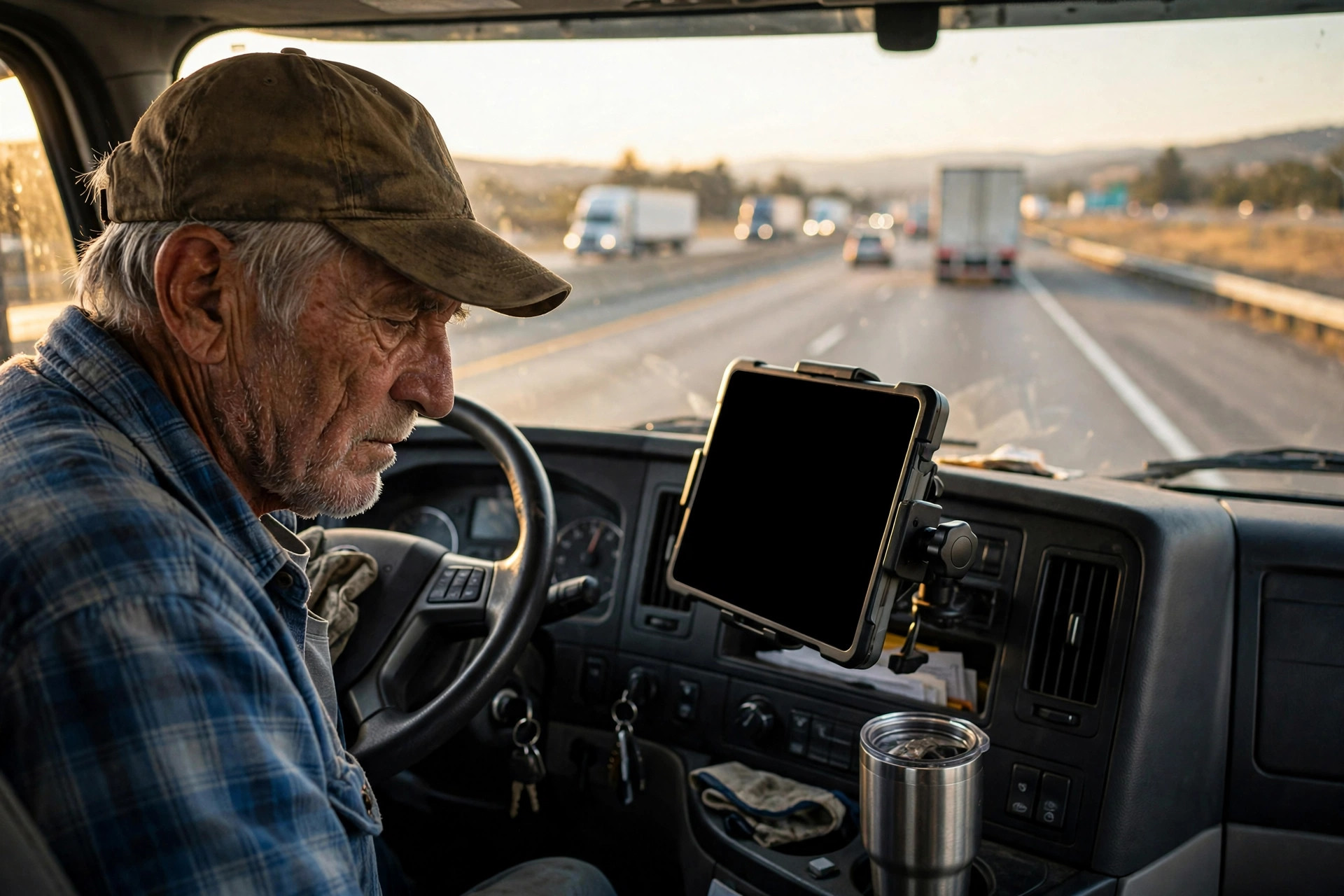
Let me tell you, technology is a good thing. TMS auto-dispatch made dispatching faster and cut empty miles. But trucking is still people doing the driving. No system will ever eat that hot meal for the driver, or recognize which road is under construction. The best dispatch is fast math plus a sharp human eye. There is an old saying: sharpening the axe does not delay the chopping. The few minutes spent on human review will save you every headache waiting down the road.
By Shifu Zhao, Trucking Veteran (15 yrs)