Let me be blunt: I couldn't survive Temu's fully-managed game anymore.
In the first half of 2024 I ran 30+ SKUs under fully-managed. Temu kept squeezing my prices—sometimes three times in a single day. A silicone phone case that should have sold at $4.99 ended up with a margin under 8%. Temu owned the pricing, the listing, basically the whole decision tree. Orders came in, but the money didn't. I was refreshing the backend watching my own prices get undercut.
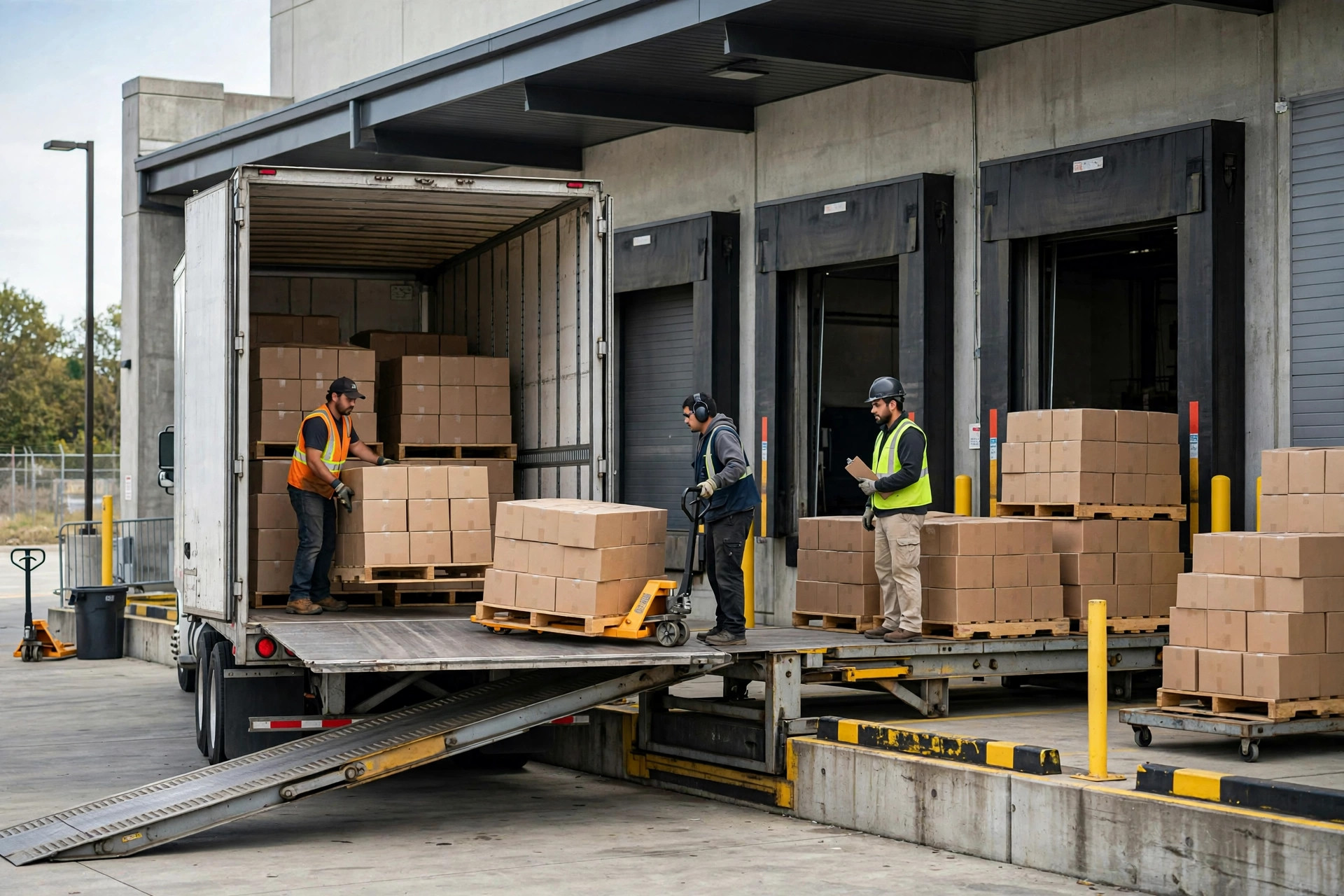
Then in March 2024, Temu launched semi-managed, starting with the US. The deal is simple: you stock your own US warehouse, you print labels and ship yourself, Temu brings the traffic. For a seller like me—already sitting on inventory in an FBA warehouse and a 3PL in California—it was a no-brainer. Two of my best sellers went from 12–15 day cross-border delivery to 3–6 day domestic delivery. Conversion jumped immediately.
Here's my whole playbook: onboarding, stocking, daily shipping, and returns. All real, all tested.
Fully-Managed vs. Semi-Managed: The Honest Comparison
| Fully-Managed | Semi-Managed | |
|---|---|---|
| Inventory | Ship to Temu's China warehouse | Stock your own US warehouse (FBA, 3PL, or your own) |
| Fulfillment | Temu handles international + last mile | You print labels, pack, ship, and handle returns |
| Delivery time | Usually 7–15 business days | Usually 3–6 days (1–3 near the warehouse) |
| Cash tied up | Low—goods just need to reach the China warehouse | High—you're floating 45–60 days of stock in the US |
| Barrier to entry | Low, factory-friendly | High, you need overseas stock + self-ship capability |
| Product freedom | Low, sample review and approval gauntlet | High, upload and manage your own listings |
| Margin flexibility | Low, platform price-matching crushes you | Better, but Temu still holds the pricing power |
Read that last row twice: semi-managed does not mean you set your own prices. Temu still polishes listings and runs price comparisons. Don't walk in expecting to be the boss—walk in expecting a fairer fight.
Getting In: The Four Steps That Actually Worked
This is the path I walked in late 2024. Temu changes its deposits, fees, and category requirements often—check the official seller portal for the latest numbers. I can only give you the route, not the tolls.
Step 1: Open the right store. Fully-managed and semi-managed are separate systems. If you're already a fully-managed supplier and want to switch, you open a new sub-store under your main account and select semi-managed. New sellers just pick semi-managed at signup.
Step 2: Prove you can ship locally. The entry requirement is literally "stocked overseas + ships domestically." In my experience, one of these works: inventory in FBA, a signed 3PL in the US, or a local entity that can self-ship. You'll typically need business registration (sole proprietor, LLC, or HK company all work), a US bank account matching the entity, and tax documents. Get category-specific compliance docs ready early—California Prop 65 warnings and the like—so you don't get stuck at listing time.
Step 3: List your products. Unlike fully-managed's product selection, sample shipping, and review gauntlet, semi-managed is light: upload products, fill in the basics, maintain your stock levels. Temu will polish the detail pages for you. Don't get lazy though—get your hero images, bullet points, and size charts to 80% yourself before handing it over.
Step 4: Sync your inventory. Feed your US warehouse stock numbers into the backend and set low-stock alerts per SKU. This is where semi-managed lives or dies. More on that below.
My Stocking Formula: Tie Up Cash, But Know Exactly How Much
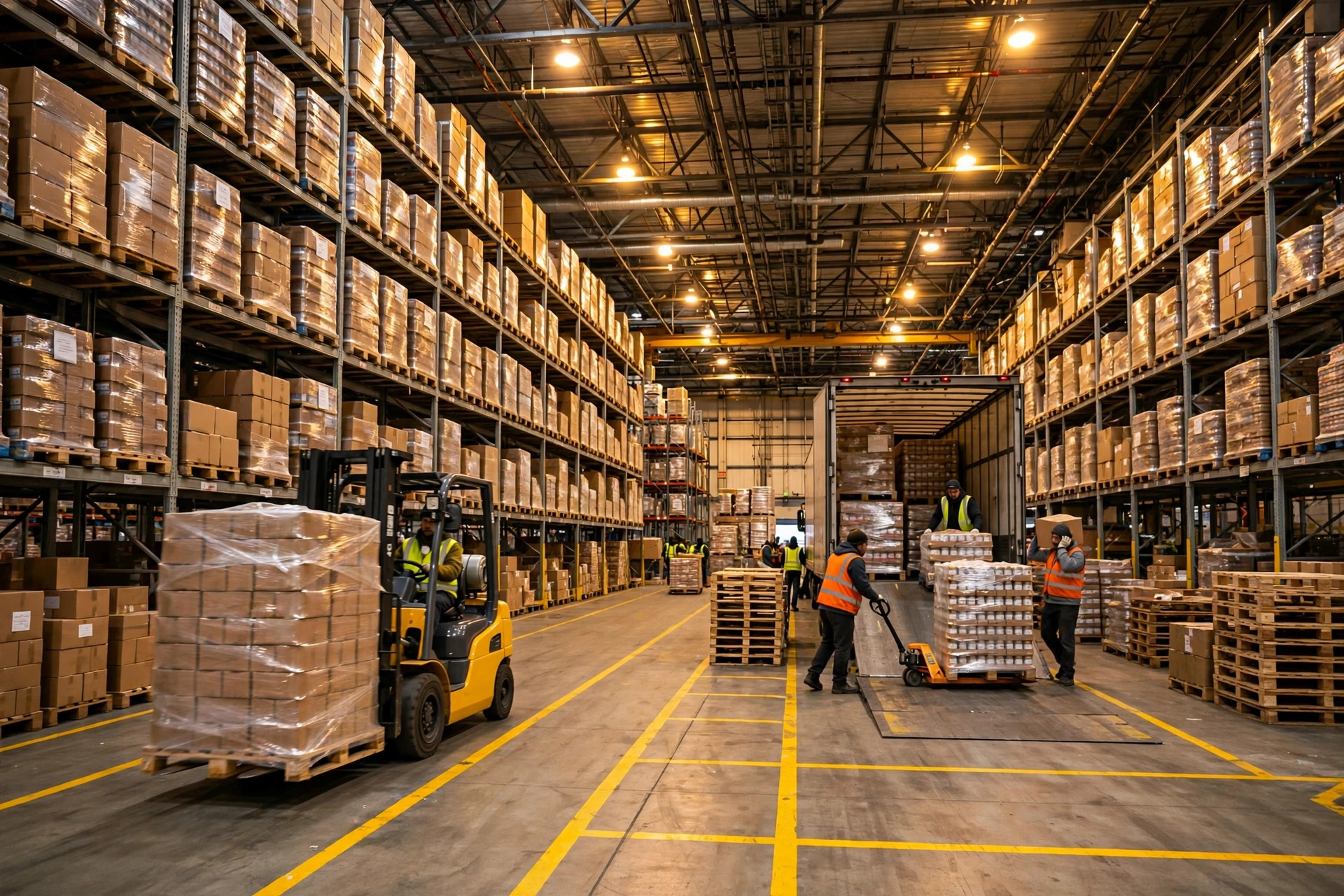
Semi-managed's biggest trade-off is capital: your money floats on the ocean and sits in a warehouse. Here's the counterintuitive part—I'd rather tie up cash than bleed margin. Fully-managed's price war burns profit; semi-managed's inventory burns turnover. Burned profit is gone forever. Slow turnover is still your goods.
My math for small electronics accessories (use it as a reference, not gospel):
Ocean freight takes 35–45 days, customs clearance 5–7, warehouse receiving 3. So it's roughly 50 days from purchase order to sellable. My safety stock formula: daily units sold × (50 + 15 buffer days). A phone case selling 80 units a day gets 80 × 65 = 5,200 units—about two months of stock.
My first shipment was only 3,000 units. In September 2024 a traffic wave hit, the SKU sold out in 21 days, and the replenishment was literally on a boat. I watched my listing sit out of stock for 19 days and drop two pages in rank. After that I raised my buffer from 10 to 15 days. Haven't stocked out since.

Money-saving trick: inventory already in FBA can fulfill semi-managed orders. I tested this in October 2024—routing Temu semi-managed orders through Amazon Multi-Channel Fulfillment. One inventory pool feeding two platforms' traffic. Just do the MCF fee math first—savings evaporate fast if you're not careful.
Daily Shipping: The Cutoff Time Is Your Lifeline
Since you print your own labels, I locked in a rigid SOP:
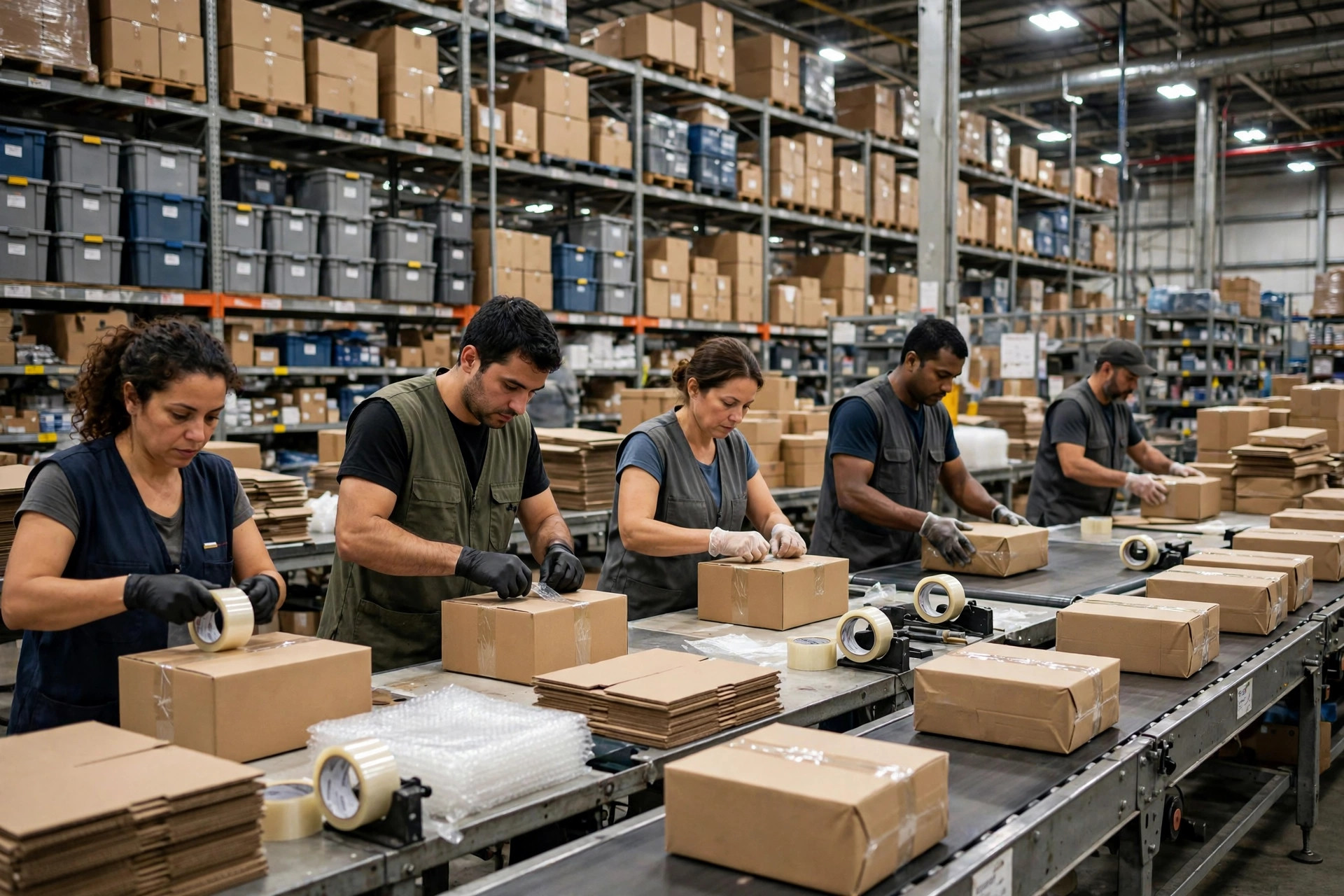
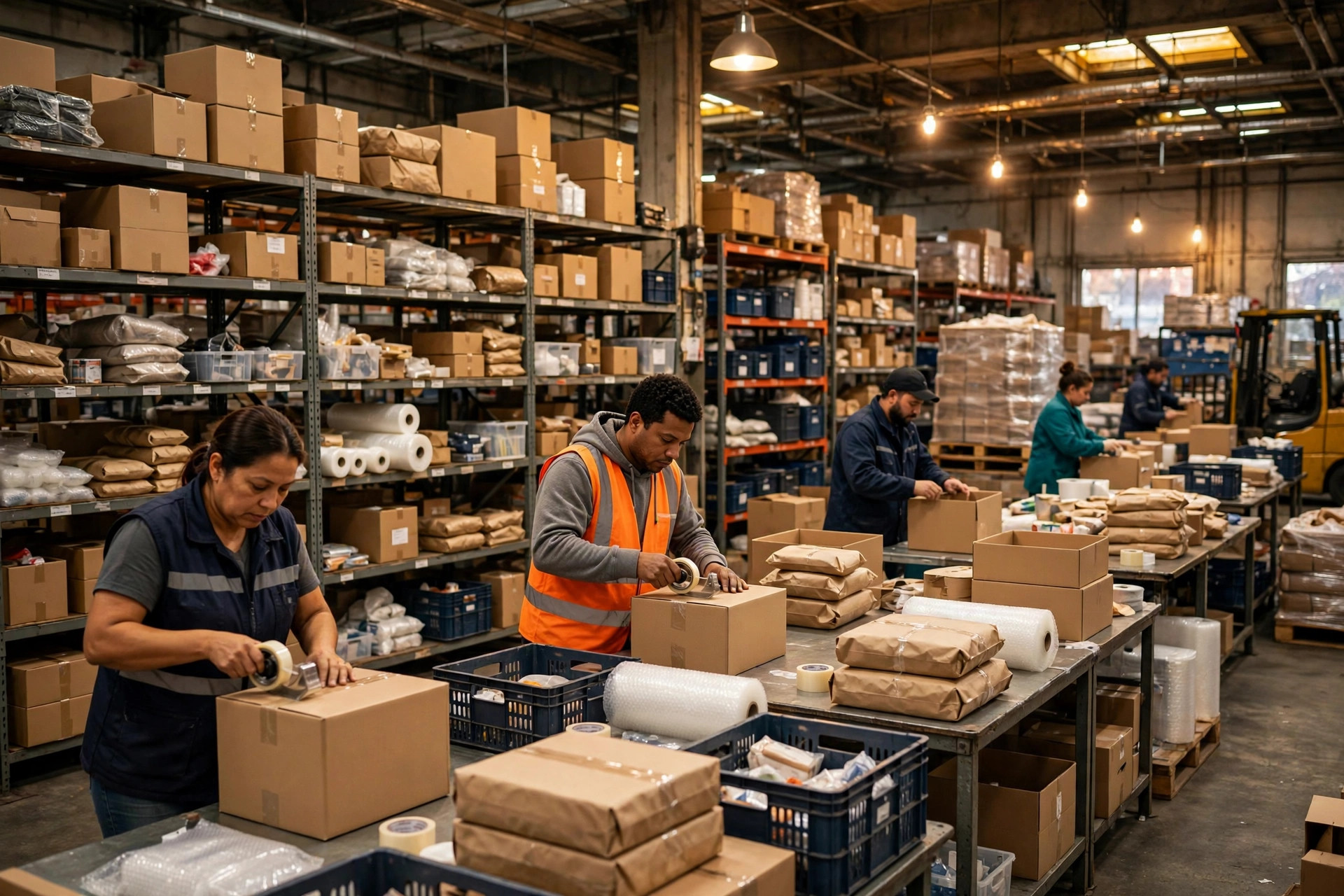
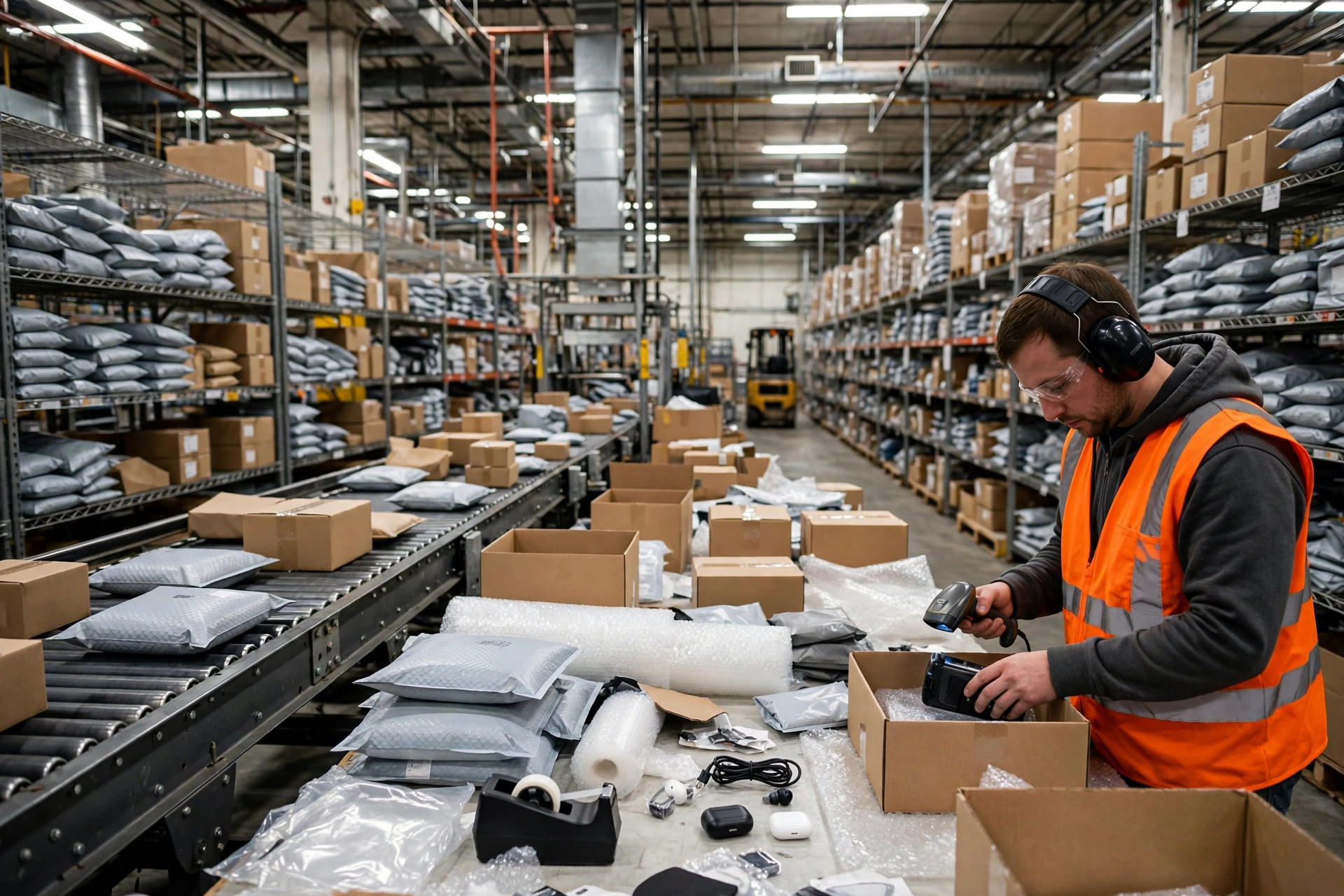
Every day at 2 PM Pacific, I pull the day's orders, print labels, pick, and pack. Everything is with the carrier by 4 PM. My workhorse is USPS Ground Advantage—cheapest for anything under a pound. West Coast orders land in 1–2 days, East Coast in 3–5, and overall delivery holds at 3–6 days. Compared to the 12-day minimum under fully-managed, "where is my package" messages dropped about 70%.
Pitfall #1: Logistics compliance was the biggest trap of 2025. In September 2025, Temu tightened US semi-managed shipping channels—phasing out self-imported waybills from several carriers and ultimately requiring everyone to use Temu platform labels. Around the same time, USPS enforced "electronic manifest first, delivery second" for Ground Advantage: parcels without a submitted manifest get intercepted. My setup now: 100% Temu platform labels, manifest submitted 1–2 hours before the daily carrier cutoff. Don't try to dodge it with gray channels—penalties run from throttling to fines to frozen accounts. Not worth it.
Pitfall #2: Write your cutoff into the SOP. During the 2024 holiday rush, my 3PL got slammed one day and packing slipped by 6 hours. 200+ orders missed the cutoff, late-delivery rate spiked to 11%, and my store rating dropped 0.3 points. Since then my warehouse contract has an SLA: everything out by 4 PM daily, or they pay per late order. Get the ugly terms in writing before things break, not after.
Returns: The Hidden Cost Nobody Prices In
Under fully-managed, returns weren't your problem. Under semi-managed, they're entirely yours. My small-item return rate holds at 2–4% (my own numbers, Jan–Sep 2025, accessories category). Every return lands back at the US warehouse, and my SOP is three steps:
- Grade on arrival: Grade A (unopened) goes straight back to sellable. Grade B (damaged packaging) gets repacked and relisted. Grade C (defective) goes to liquidation or scrap.
- Process within 48 hours. 3PL storage is billed daily—don't let returns rot on a shelf.
- Monthly root-cause review: My top return reason has always been "wrong size/spec." I added comparison photos to the detail page and that category of returns fell 40%.
Pitfall #3: Your return address must be in the US. I've seen sellers list a China return address to save money. Buyers see "ship back to China" and the one-star reviews write themselves. A US return address is table stakes for semi-managed—build it into your pricing model from day one.
The Numbers: 12 Months After Switching
Two hero SKUs (phone case + charging cable, Oct 2024 – Sep 2025), all from my own backend:
- Delivery time: 12–15 days → 3–6 days; shipping inquiry messages down ~70%
- Conversion: up ~25% after the "ships from local warehouse" badge appeared (traffic-bonus period, take it with salt)
- Return rate: 2–4%, and at least the data is transparent now—fully-managed returns were a black box
- Cash tied up: ~45 extra days of inventory, but gross margin recovered from 8% to ~22%
- Most expensive lesson: that 19-day stockout in September 2024 cost me roughly $12,000 in lost sales. When in doubt, add the 15-day buffer.
The counterintuitive conclusion, one more time: semi-managed isn't the easier model—it's the more profitable but more demanding one. You manage inventory, logistics, and returns yourself. It's three times the headaches of fully-managed. In exchange you get faster delivery, better conversion, and real margin. If you can't do that math, stay in fully-managed. If you can, semi-managed has been the biggest structural opportunity in Temu's ecosystem since 2024—and with US small-parcel duty rules tightening, the local-fulfillment advantage is only growing.
The onboarding path, the stocking formula, the shipping SOP, the returns triage—it's all above. The rest is execution. This one's battle-tested.
By Ah K, E-commerce Seller (5 yrs)