Every peak season, my phone starts ringing. A client asks if I can squeeze in two thousand more units, and the seller next door asks if my 3,000-square-metre warehouse still has a spare corner. A temporary warehouse sounds simple — rent some space, stack the goods — but it is a choice between three options: rent one, outsource the overflow, or stock up early and gamble. Pick the wrong one and the peak season's profit goes up in smoke.
We small warehouses cannot afford to burn that money. A big company rents an extra 10,000 square metres without blinking; my 3,000-square-metre warehouse renting 1,000 more for a quarter can eat half a year's profit. My rule is strict: I do the math first and sign second.
A temporary warehouse is not a rescue plan, it is a math problem
Many people hear the phrase and think it is a rescue plan: no space, rent space, problem solved. I thought that too, until I paid for the lesson. Two peak seasons ago, a client's shipment arrived early and my warehouse was already 80 percent full. I rushed to rent 800 square metres nearby for a few tens of thousands of yuan a month. Then the goods went in and the real story began.
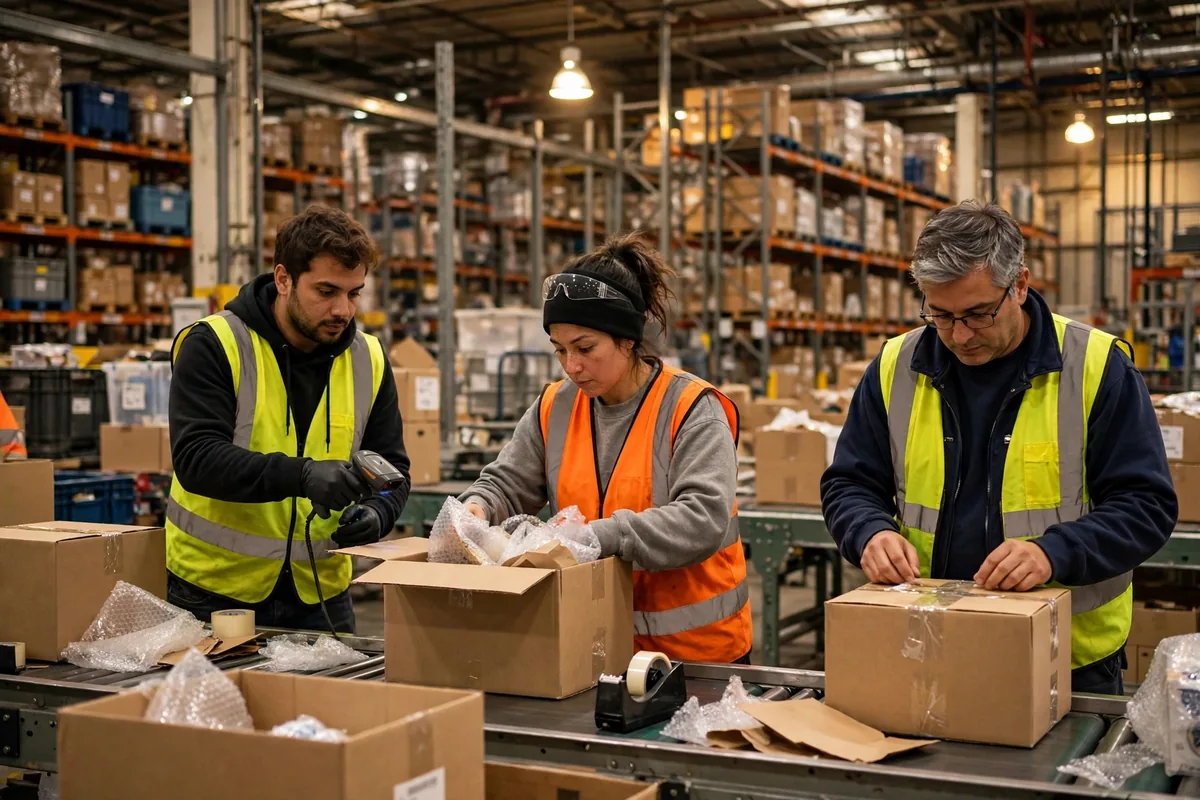
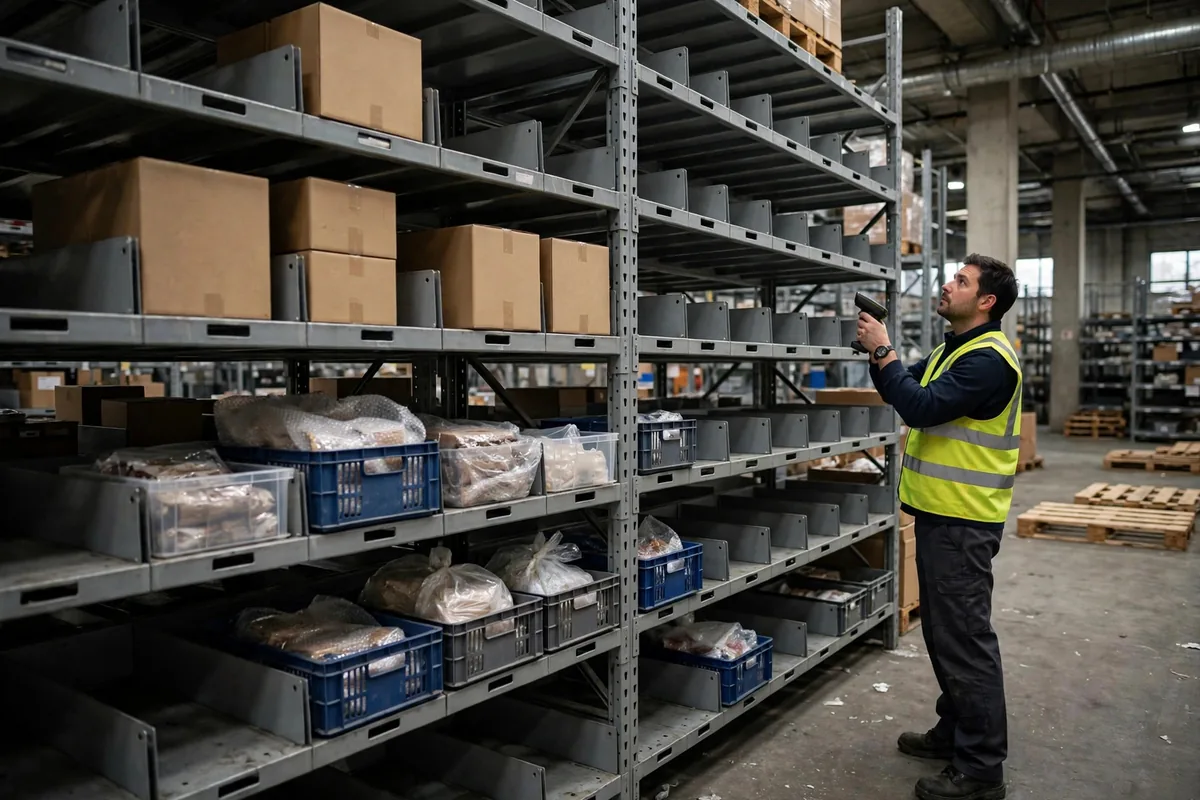
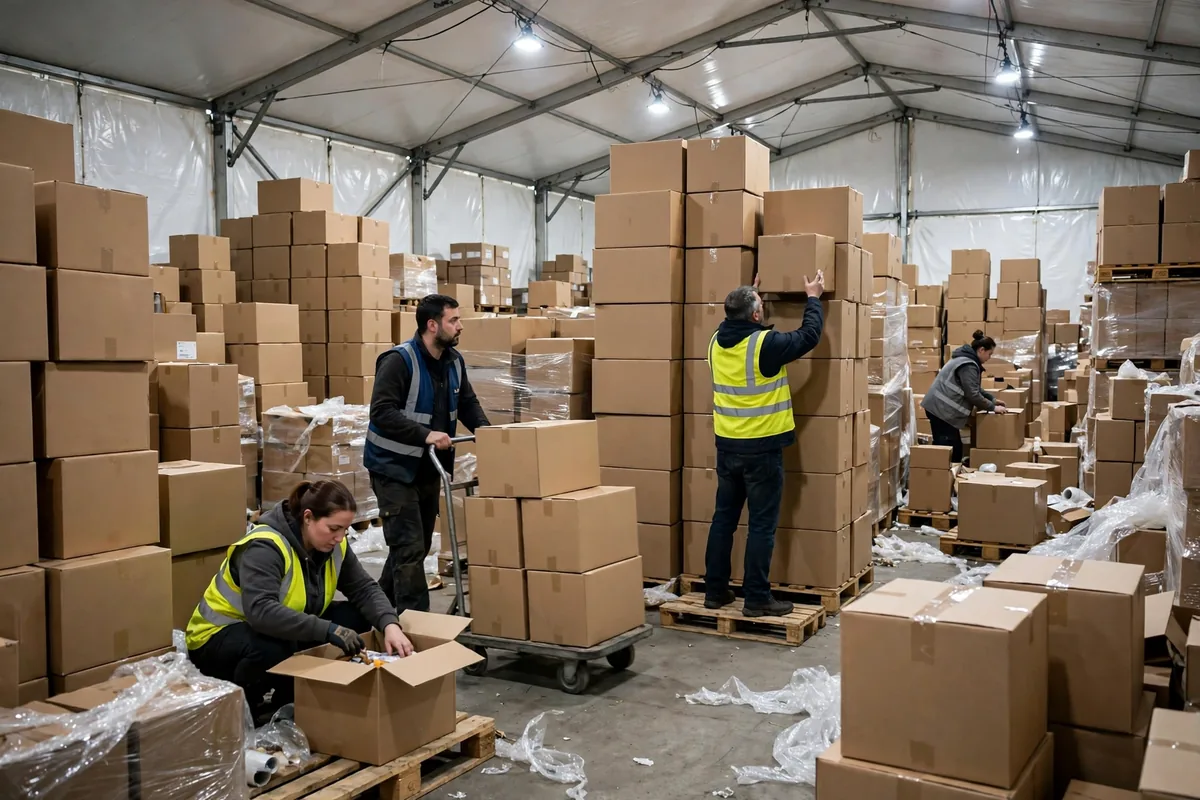
The space had no racking, so goods sat on the floor and pickers walked in circles, cutting picking speed by half. There was no WMS connection, so stock was tracked on manual spreadsheets and errors jumped. Worst of all, the place was a 40-minute drive from my main warehouse, and daily trips cost more in fuel and driver hours than the rent. When I added it up, the real cost came to almost twice the rent.
Market data backs this up. Cushman & Wakefield reported US industrial vacancy at 6.8 percent in the third quarter of 2026, with average asking rent at 10.40 US dollars per square foot per year. Small bays stay tight, though — in Denver, warehouses under 20,000 square feet ran at about 5 percent vacancy. A Detroit 3PL publishes short-term rates of 5 to 10 US dollars per pallet per month, and bulk floor space at 0.80 to 1.50 dollars per square foot per month. Those numbers look cheap until you add labour, transport and errors on top.
How I price a temporary warehouse, line by line
My rule: split the cost into five lines — rent, labour, transport, damage and errors, and handing the space back — and sign nothing until all five are filled in.
Here is an illustrative example. Suppose peak season means handling 5,000 extra units, needing 1,000 extra square metres for three months. Rent at 60 yuan per square metre per month comes to 180,000 yuan. Labour: with no racking, picking is slow, so suppose two temporary workers cost about 40,000 yuan for three months including social insurance. Transport: two trips a day between the two sites, about 20,000 yuan in fuel and driver hours. Damage and errors: suppose mis-shipments cost 1 percent of goods value — on 1 million yuan of goods, 10,000 yuan. Handing back: suppose another 5,000 yuan. The total is 255,000 yuan, and that is conservative, since temporary wages climb during peak season.
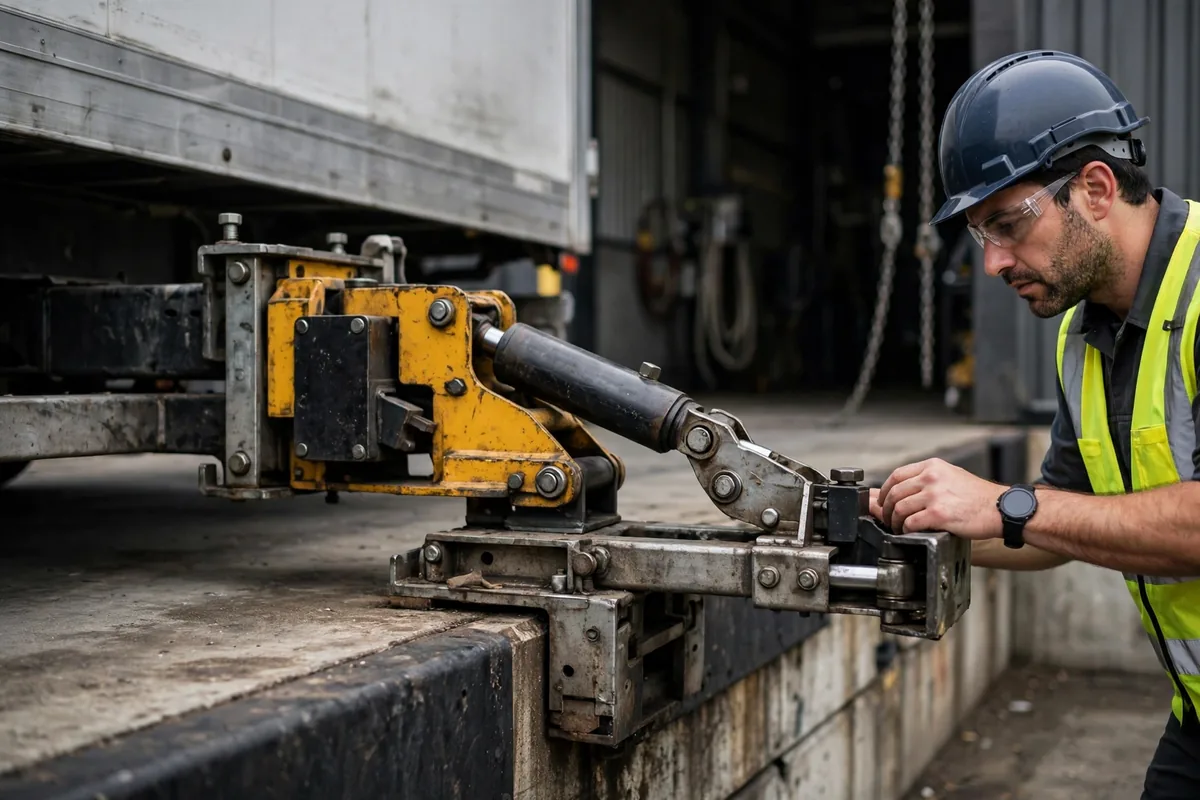
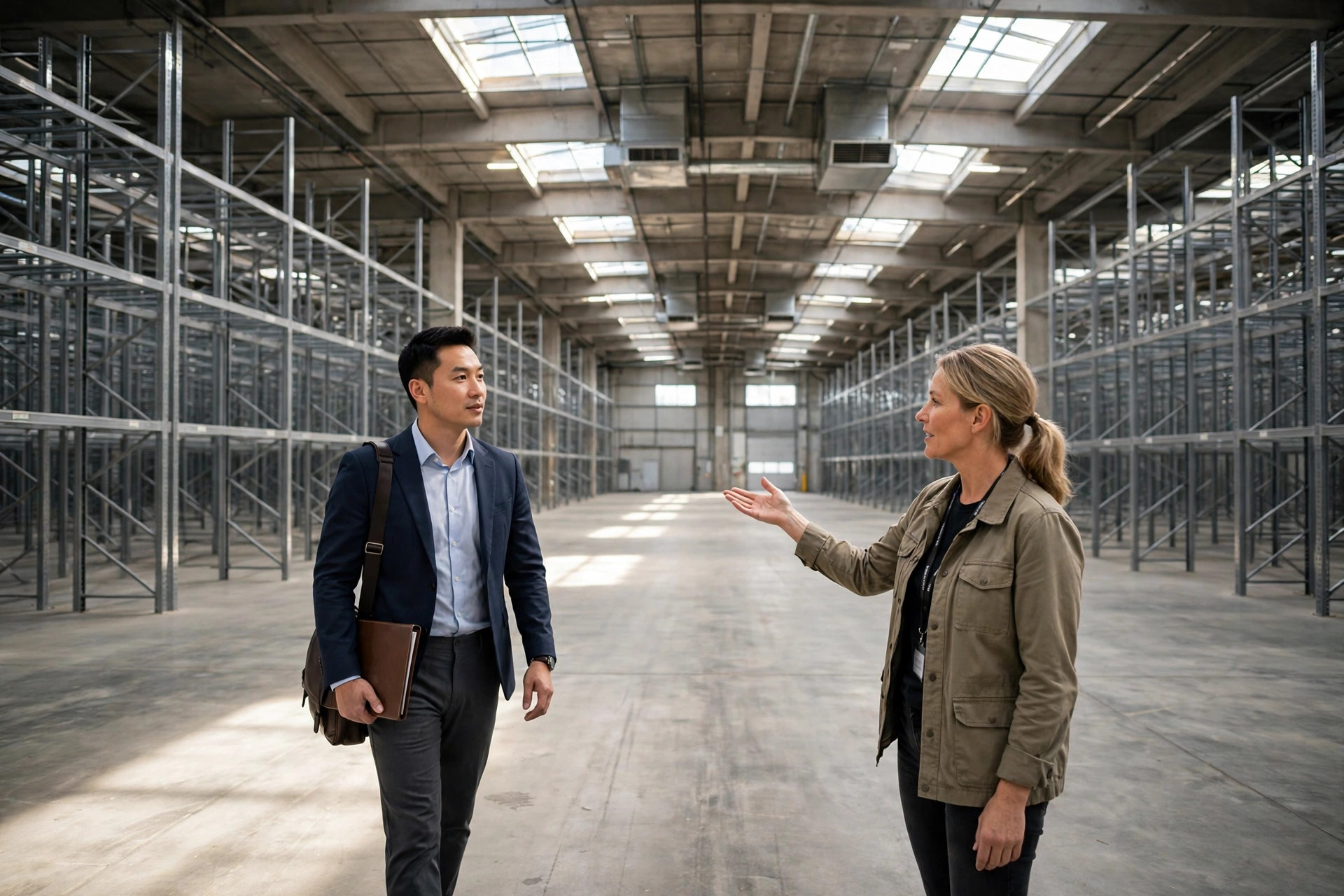
Here is a second illustrative example, adapted from a fellow small operator's real lesson. Last peak season he rented a cheap overflow space, an old factory with no loading dock. Trucks arrived and could not unload, so everything was carried in by hand, and unloading one truck took a full day. My friend then paid to build a makeshift dock, install lights and run a network cable, another 20,000 yuan on top of the rent. His advice: before renting, visit the site and check three things — the loading dock, whether the lights are bright enough, and whether the network is stable. Miss one and you will pay for it later.
My checklist now hangs on the office wall: how far is the site from my main warehouse — more than 30 minutes' drive and I walk away; is there racking, and if not I discount picking speed by 30 percent; can the WMS connect; can the lease end month by month; does hand-back require restoring the space, and at what price. If any line fails, I switch plans.
Outsourcing the overflow: easy on the nerves, hard on the wallet
I resisted outsourcing at first — handing my goods to someone else felt wrong. Then I ran the numbers and found it can sometimes cost less than renting extra space.
Published 3PL pricing tells the same story. Rush Order's 2026 guide puts US pick-and-pack at 3 to 5.50 dollars per order, storage at 15 to 25 dollars per pallet per month, and November–December surcharges at 25 to 50 percent. Those are US figures, but the structure is the same everywhere: outsourcing costs are visible, per order and per pallet, while overflow space costs hide in the dark.
Outsourcing is flexible. More goods, more orders sent; fewer goods, fewer sent. No idle staff, no empty space to pay for. The downsides are real too. The goods sit in someone else's hands, and during peak season the 3PL is busy too, so your orders queue behind theirs. Then there are hidden fees. The Rush Order guide warns that hidden fees can lift a quote by 15 to 30 percent — monthly minimums, long-term storage penalties, returns handling. Ask about every one before signing, or the invoice will surprise you.
My judgment runs like this. If the overflow lasts only two or three weeks, volumes are small and the product mix is messy, outsourcing wins, because the fixed cost of extra space cannot be spread thin enough. If it lasts two months or more, the products are few and fast-moving, renting wins. And if the goods are time-critical or high value, I would rather rent space and do the work slowly myself than outsource and carry the risk. There is no universal answer, only your answer.
The small-warehouse playbook: survive first, look good later
People ask which option I pick. My answer: all three.
My low-cost method is to split the work into layers. Core goods and fast movers stay in the main warehouse. Mid-frequency, bulky goods go to the overflow space. Low-frequency, one-off goods go to a 3PL. Split this way, pressure on all three sides drops, and the risk is spread out.
There is an even more old-fashioned trick: stock up early. A month before peak season I ask clients to send part of the goods early, in batches. That avoids peak-season prices, but ties up cash and space, and unsold goods get stuck. So I only do this with long-term clients and proven bestsellers.
Here is the counterintuitive part. Most people think the cheaper the extra space is, the better. I think the opposite. A suspiciously cheap space usually hides costs you cannot see — a remote location, no equipment, nobody managing the site — and you end up paying more than for a pricier one.
The table below is the three-way comparison I made before last peak season. The figures are an illustrative example, but the structure is real, and you can plug in your own numbers:
| Option | Illustrative case: 5,000 units, 3 months | Cost structure | Best for | | Rent extra space | Rent 180,000 + labour 40,000 + transport 20,000 + errors 10,000 + hand-back 5,000, about 255,000 yuan in total | High fixed cost, better at larger volumes | Overflow lasting 2 months or more, few fast-moving products | | Outsource the overflow | About 25 yuan per order for pick and storage, 5,000 orders at about 150,000–200,000 yuan, peak surcharges extra | Pay per use, flexible | Short peaks of two to three weeks, messy product mix, unstable volumes | | Stock up early | Off-season rent about 20 percent cheaper, saving about 30,000–40,000 yuan, but cash and space tied up | Saves rent, bets on sales | Long-term clients' bestsellers, reliable forecasts |
No option wins outright; each trades one thing for another. Renting wins on control, outsourcing wins on flexibility, early stocking wins on price. Which one you pick depends on your goods, your clients and your cash flow. Work it out a month early, leave time to negotiate and inspect the site, and when peak season arrives you can just get on with the work.
We small warehouses have no big-company budget, system or headcount. We still have our own way of surviving: calculate more carefully and tell clients the truth. There is no perfect answer to the overflow question, only an answer that does not lose money. Count the costs, spread the risks, and when peak season passes, your warehouse, your clients and your profit are still there. Small warehouses have their own way of making it, and staying alive is the skill.
By Xiao Ma, Small Warehouse Owner