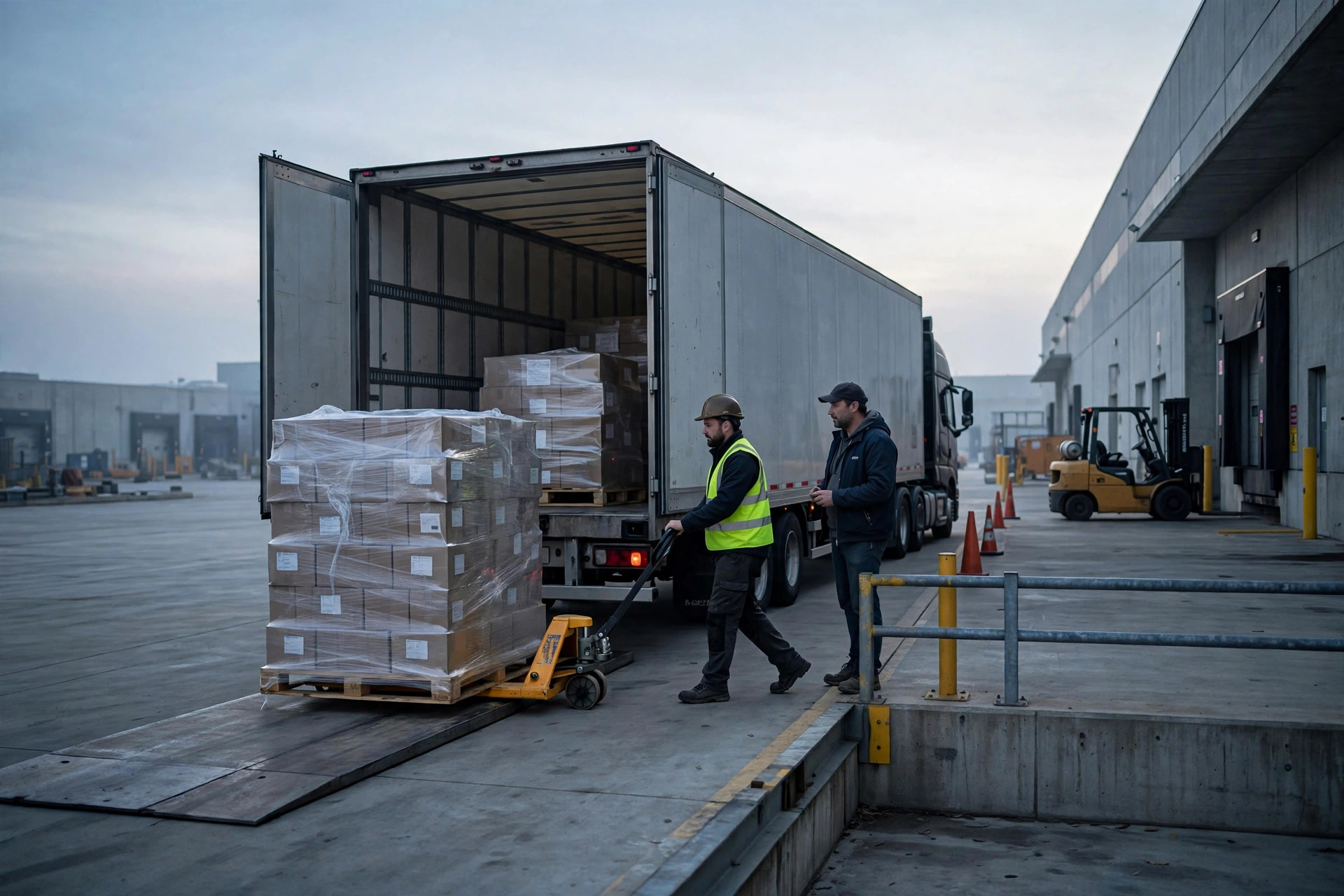
Fall two years back, I was walking a 3PL facility in the Inland Empire when the operations manager told me about something that had just happened. Peak season, they had brought in around forty temp workers. One of them slipped on a wet patch at the loading dock and broke his ankle. The ambulance took him away, he was fine in the end, but the paperwork dragged on for three months: the staffing agency said their workers' comp covered him, the warehouse's broker said the agency's policy didn't list that facility as a covered worksite, and the injured worker's lawyer argued the warehouse had failed on slip prevention and was going after employer liability. One fall, three parties pointing fingers at each other. The warehouse ended up fronting the money just to make it stop.
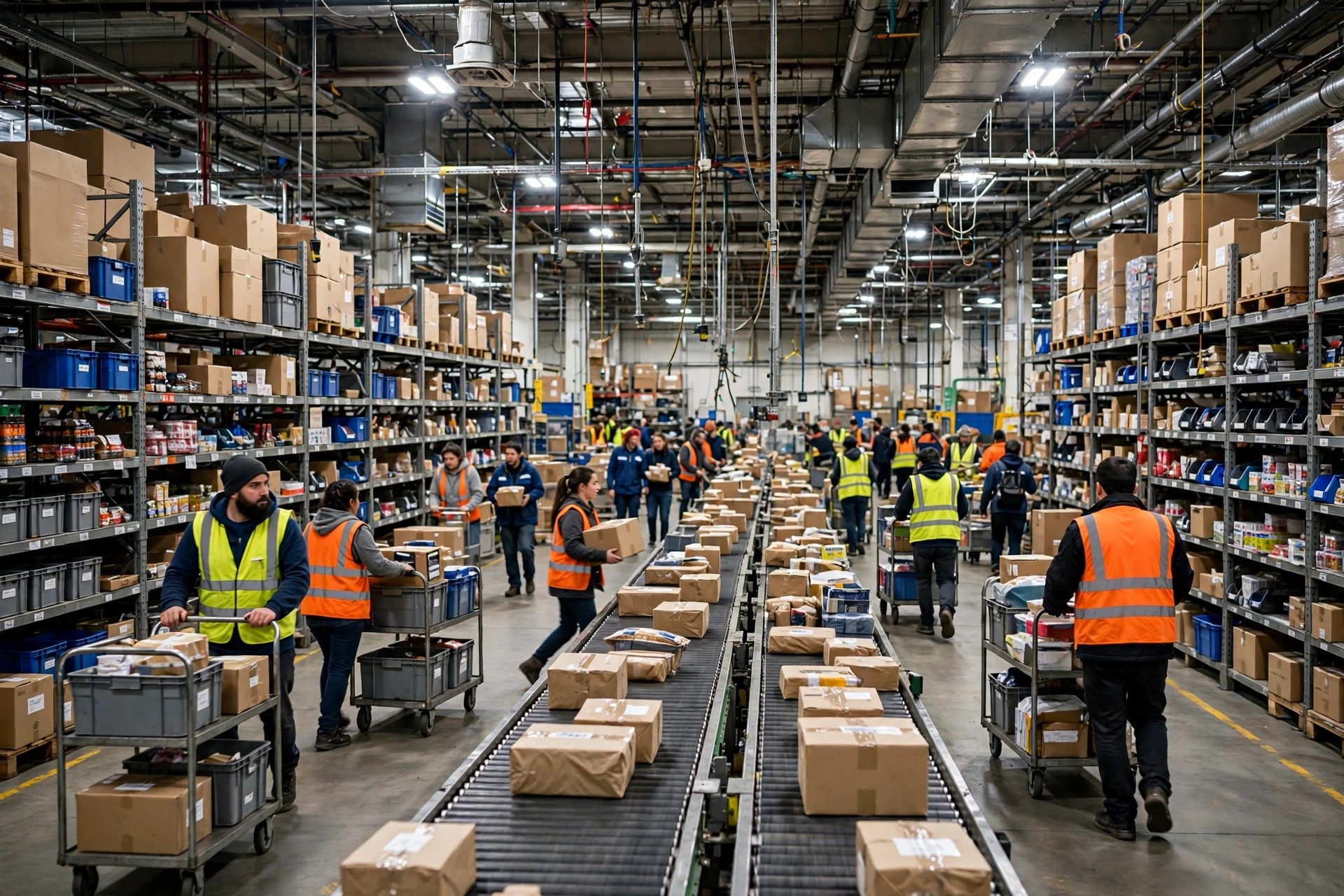
This isn't an outlier. Peak-season temp labor is the norm in American warehousing — in California and Texas logistics hubs, a 100,000-square-foot warehouse running thirty to fifty temps through the holidays is routine. Whose employee are they, whose insurance pays when one gets hurt, and how much liability sits with the facility? Most warehouse managers have never thought it through until the day it happens. After twenty years in this business, I've watched too many operations treat "outsourced labor" as "outsourced liability." Let me do the math.
When someone hits the floor, whose policy pays first
Here's a logic a lot of people get backwards. Every state runs a workers' compensation system, and the core principle is simple: the employer of record carries the comp. The temp is on the staffing agency's books, so in theory the agency's workers' comp should be the first payer for medical bills and lost wages. That's how the system was designed, and it's why so many warehouse managers sleep well at night — "they're the agency's people, the agency's insurance handles it."
Three real-world details break that comfort.
First, did the agency actually buy the right coverage — correct job classification, correct worksite, and currently in force? Agencies that lowball quotes usually shave insurance costs first. I know of an agency that filed its comp under a light-warehouse classification while actually supplying material handlers; the carrier denied the claim outright on misclassification. Worse: policies that lapsed and nobody noticed. Workers' comp isn't a checkbox — the classification, the listed worksite, and the renewal date all have to be right.
Second, does your own employer's liability and general liability coverage pick up non-employees? The temp's medical bills may run through the agency's comp, but if the accident involves your facility's housekeeping — wet floor, bad lighting, an unstable pallet stack — the injured worker can step outside the comp system and sue you directly as a third party. Then you're leaning on your own commercial general liability and employer's liability policies. If those exclude non-employees or carry thin limits, you're writing the check yourself.
Third, states don't agree. California and Texas read temp-worker comp and employer exposure differently; follow your state's rules and your actual policy language, not someone else's war story. Borrowing another warehouse's playbook for a different state is one of the most common mistakes I see.
Then there's the trap most people never think about: the agency switching carriers mid-contract. A food distribution warehouse in Houston in 2023 hit exactly this — the staffing agency changed insurers that month, the old policy had lapsed and the new one wasn't bound yet, and the injury landed in the gap. The warehouse manager was holding a three-month-old declarations page that said "active." The lawyer checked the policy number and it didn't match anything in force. The agency owner swore the new policy was "coming any day," it took two weeks, and the warehouse fronted most of the medical costs in the meantime. Lesson: don't check once at signing. Ask for proof of active coverage every month during peak season, by email, in writing. Five minutes.

Five insurance checks before you sign the staffing contract
After the fact is always the expensive way to audit insurance. When I do peak-season readiness checks for clients now, the staffing agency's insurance is item one. The checklist is short, and every item needs paper:
Get the current declarations page and confirm the policy is actually in force. "We have insurance" said out loud counts for nothing. Neither does a screenshot of an expired policy.
Match the job classification and the worksite. The filed job class has to match what you're actually using them for — picking, loading, and forklift work carry different risk ratings. And your facility's address needs to be listed as a covered worksite. Plenty of policies only list the agency's own office.
Demand additional insured status and a waiver of subrogation. These are hard contract terms, not nice-to-haves. Without them, the agency's carrier can pay the claim and then turn around and chase your warehouse.
Check limits and deductibles. The statutory comp piece has state minimums, but the employer's liability limit is where the real exposure lives. A 200,000-square-foot building pushing 20,000 orders a day and a small forward-stock location are not the same risk.
Pull the agency's loss runs. An agency with a long claim history is an agency whose premiums are about to spike — and after the spike comes either a rate hike on your quote or thinner coverage. Today's bargain quote becomes tomorrow's landmine.
Get all five in writing before anyone signs. Start this a month before peak season, not after the temps are already on the floor.
The first 24 hours after an incident
If it happens, panic is useless. Work the sequence.
People and scene come first — that's common sense, skip the lecture. Steps two through five are where cases are won and lost.
Notify both brokers, yours and the agency's. Late reporting can jeopardize the claim, and the deadline lives in the policy language. I've seen warehouses notify their own side and forget the agency's side entirely; the agency's carrier stalled on "late notice" and the warehouse had already fronted the cash.
Keep the dispatch records and that day's sign-in sheet. Was the injured worker formally dispatched to your site that day, when did they clock in, what was the assigned task? That's the raw material for comp determination and liability allocation. Peak-season temps turn over fast; without a sign-in record you can't even prove the person was on shift.
Don't make statements about fault on the scene. "Our floor wasn't swept" — once you say it, it lives in the claim file and the lawsuit. Caring is fine. Characterizing is not. Let the carriers and counsel do that.
Within 24 hours, ask: one-off or systemic? Was the puddle on the dock a fluke spill, or is the drainage just bad? If it's systemic, fix it and document the fix — good safety practice, and evidence of reasonable care if it ever goes to court.
And here's the trade-off nobody wants to hear. Some warehouses chase the cheapest staffing quote and wave through the insurance review to save a few bucks an hour. Do the honest math: the compliant-insurance portion of a legitimate agency's rate eats a real share of the hourly price. The few dollars you shaved off get wiped out by one broken ankle — medical, lost wages, legal — several times over. Insurance is the thing that always feels overpriced until the day it feels too small. One afternoon of these five checks before peak season is the highest-ROI afternoon your warehouse will spend all year.