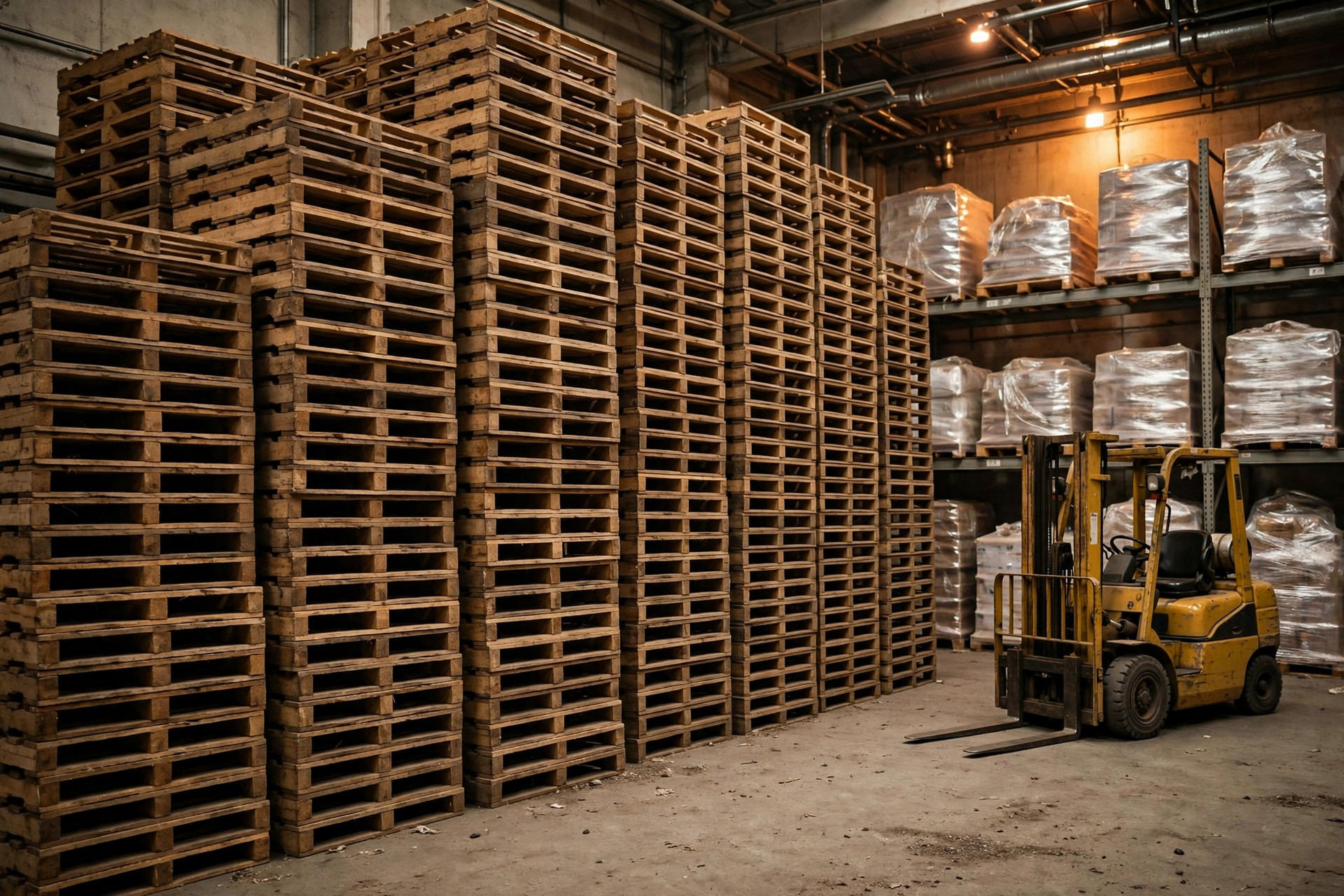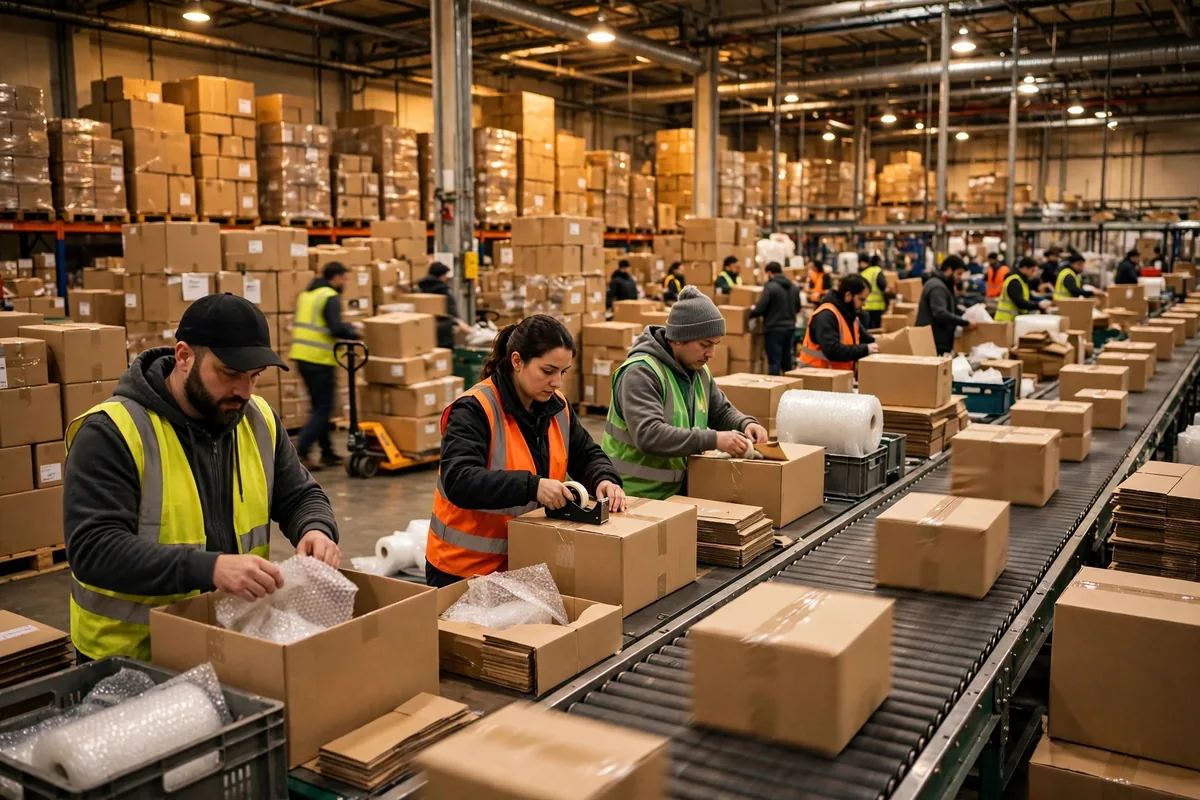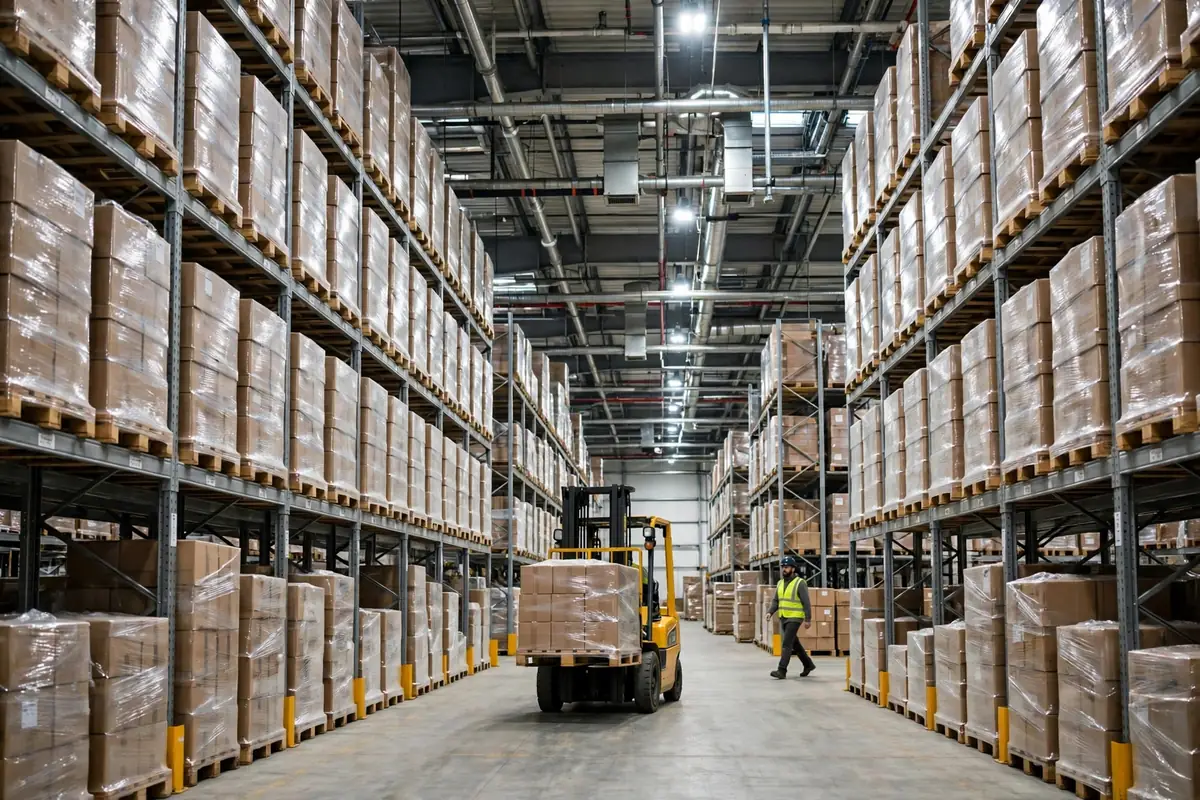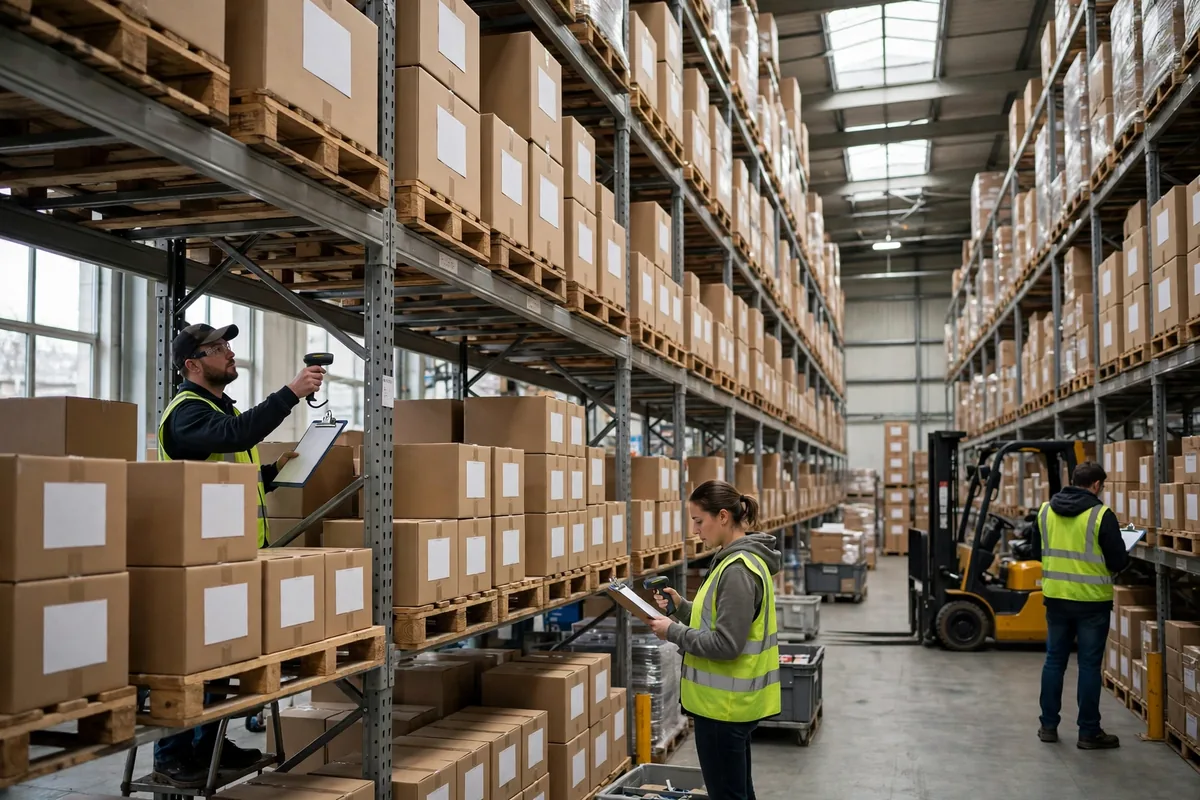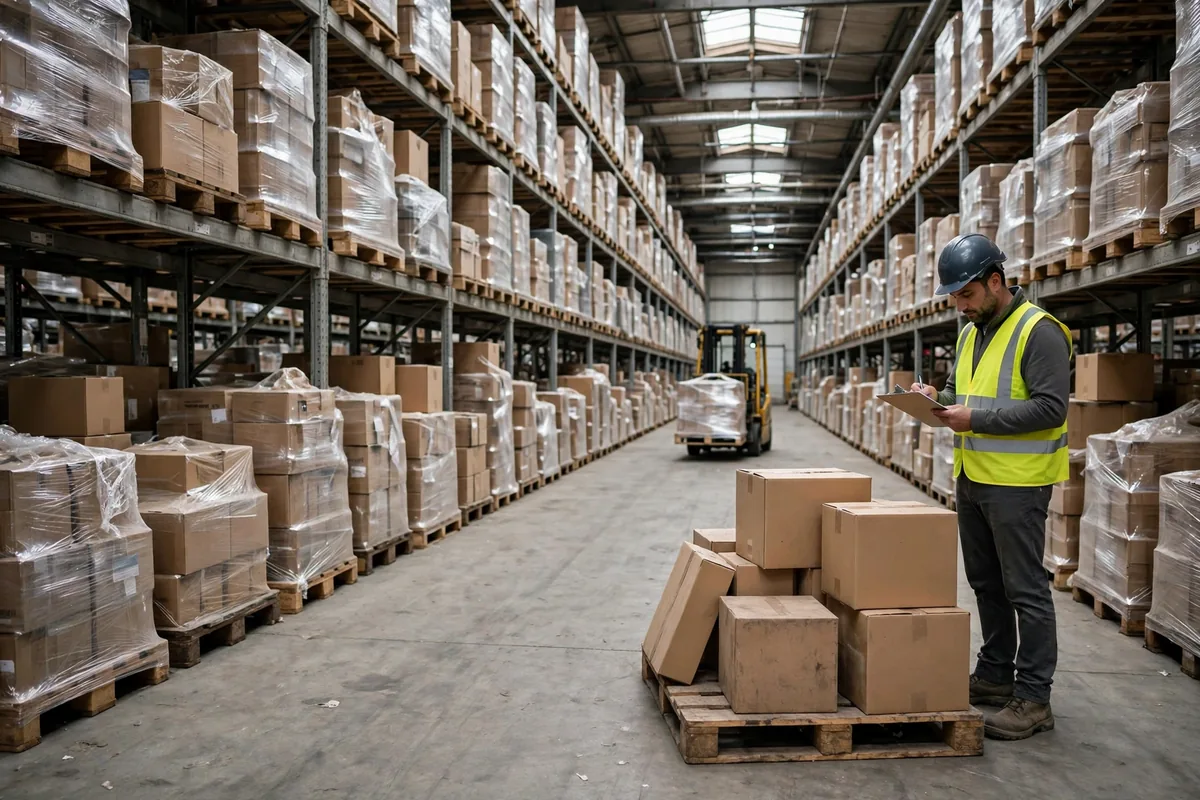
A few years ago, tariff frontloading belonged in trade-news footnotes. Today it decides warehouse rosters and truck appointment books. The logic is straightforward: when importers expect tariff costs to rise, the rational move is to bring future goods in early, even if that means paying now for storage, capital, and premium port-adjacent space for inventory that has not sold yet. One company frontloading is a cost trade-off. Many companies frontloading at once becomes a peak season that arrives early, lasts longer, and lands hardest on the warehouses closest to the ports.
Tariff Frontloading in the Data: Peak Season Did Not Get Bigger, It Moved Earlier
According to Descartes' September Global Shipping Report, United States container imports reached 2,603,709 TEU in August 2026, up 3.8% from July and 3.3% from a year earlier, making it the third-highest month on record, behind only May 2022 and July 2025. That figure deserves to be read in two parts. Year-on-year growth of about 3% means underlying demand did not explode. What changed was timing: cargo that would normally have spread across late September into November arrived in a compressed window. August volume also stood roughly one-fifth above August 2019, so frontloading piled an early surge on top of an already elevated base.
For warehouses, the timing shift matters more than the total. Growth of around 3% can mostly be absorbed with a few extra shifts. Cargo arriving in the same few weeks cannot, because it hits the same appointment windows, the same dock doors, and the same putaway crews. Port-adjacent warehouses feel it first: an import container does not become sellable stock the moment it lands. It must be pulled from the port, trucked inland, checked in, counted, and put away, and a queue at any one of those steps lengthens dwell time across the whole chain.
On the Ground: Inventory Piling Up Near the Ports
In early September 2026, a third-party warehouse operator in California's Inland Empire, serving home-goods importers, spent two consecutive weeks handling roughly a third more inbound appointments than usual. The problem was its calendar: shipments from the same customers that would normally have arrived gradually from late September into early November all showed up in September. Dock doors filled by mid-morning, while trucks were still queuing at the port for containers. The operations manager's answer was not simply to add headcount. Part of the full-container freight was diverted to rented overflow space for devanning and counting only, deliberately kept out of putaway, because the putaway crew was already fully committed to daily order picking, and forcing both jobs through the same crew would have slowed both.
That case exposes the first cost of this early buying: longer dwell. Every extra day cargo sits around a port gateway carries container detention exposure, storage charges, tied-up capital, and the risk of missing the next replenishment window. The burden is also unevenly distributed. It concentrates in a handful of gateway markets and within a few hours' drive of them. Warehouses nearest the port fill first with frontloaded freight; warehouses farther inland feel the second-order effect instead, as truck capacity gets pulled toward port work and becomes harder to book for everything else.
The Staffing Squeeze: Full Buildings, Slower Picking
A second warehouse, in the southeastern United States serving several small and mid-sized importers of seasonal goods, met a different version of the same squeeze in autumn 2026. Its customers' peak selling season falls in the fourth quarter. In a normal year, large-scale inbound flow would start in October. This year, autumn stock was essentially complete by late August. In practice the stock profile had deteriorated: a large share of inventory was held for sales weeks or months away, turning over rarely, yet sitting in prime locations near the pick face. Everyday orders then had to travel longer pick paths, average pick time stretched, and the seasonal labor budget was largely consumed before October had even ended.
Here is the counter-intuitive judgment at the heart of the story: the more completely a company frontloads, the more constrained its warehouse can become during peak season itself. Space and labor are rigid in the short run, and frontloading trades future sales certainty for present resource certainty. If sales run slower than forecast, or if tariff policy shifts again, frontloaded stock stops being an asset and becomes an encumbrance. What a warehouse manager really needs to control is not how much stock there is, but what kind: how much will move in the next few weeks, how much will release gradually with the selling season, and how much was brought in purely as a policy hedge. Those three kinds of stock should not share the same locations, pick priority, or cycle-count rhythm.
A Capacity Plan: Sort Stock by Time, Not Just by Product
The response to this early buying cannot be reduced to renting more space and hiring more people, because the underlying problem is a mismatch in timing, and the remedy has to be layered by time as well. The framework below sorts inventory by when it will move, and assigns each layer a different treatment:
| Inventory layer | Test | Location and labor treatment |
|---|---|---|
| Near-term movers | Clear orders or replenishment plans within 30 days | Near the pick face, normal pick priority |
| Seasonal build | Releases gradually over the next 30 to 90 days | Secondary locations, staged putaway, weekly release review |
| Policy-hedge stock | No clear movement date, brought in mainly to avoid tariff change | Peripheral or overflow space, low pick priority, separately counted |
On capacity, the three layers' shares should be calculated before peak season begins. If policy-hedge stock already accounts for more than roughly a third of capacity, accepting further full-container inbound flow simply borrows against peak picking performance. In that situation it is better to hold part of the freight in overflow space and feed it in batches. On labor, rosters should follow inbound waves rather than the calendar. Frontloaded arrivals typically run four to eight weeks ahead of the selling wave, so the labor peak moves forward too, and the window for recruiting and training temporary workers has to move with it.
One link in the chain is easy to overlook: the release agreement with the customer. Importers who frontload are often also the most anxious shippers, and they want everything available to ship at a moment's notice. The realistic alternative is to agree the release schedule at receiving time: freight releases in weekly tranches tied to the sales forecast, the pace is reviewed every week, and stock that misses its forecast window is downgraded to peripheral locations.
Tariff Frontloading Aftermath: The First-Quarter Destocking Test
Descartes' data also carries a warning about what comes next. Total United States container imports across the first eight months of 2026 were only slightly below the prior year, which means frontloading did not blow up the annual total. The real bill is likely to arrive in the first quarter of the following year. If peak-season sales fail to absorb the frontloaded stock, warehouses will face three pressures at once in the first quarter: normal inbound flow resuming, leftover seasonal stock still occupying space, and customers pressing for lower storage costs. Destocking then should start with location, not with price cuts. Clearing policy-hedge stock out of the pick face, even just to overflow space, immediately restores picking efficiency. Re-slotting by velocity comes second, so that the stock that genuinely needs to ship in the first quarter sits closest to picking again.
Looking further out, this early buying may be changing what peak season even means. It used to be a selling peak that could be forecast from the calendar. Increasingly it looks like an import peak driven by policy expectations, with a widening gap between the import peak and the selling peak, and warehouses caught in between: obliged to receive freight early and wait for sales to catch up. That gap will not close quickly even if tariff conditions ease in a given year, because once companies learn to use frontloading as a hedge against policy risk, they tend to keep it as a standing tool. Warehouse planning therefore needs to shift from rostering against a single selling peak to planning against two curves, an inbound curve and a sales curve, and the gap between those two curves is the cost that most deserves careful calculation in the next few years of warehouse planning.
Whether this early buying becomes permanent depends on policy direction and on how companies price risk, and warehouse managers cannot wait for that answer. What can be done now is to sort stock by time, write release rhythms into customer agreements, and move the labor peak forward. Those steps hold their value whatever policy does next, which is precisely why they are worth doing while the question is still open.
By Dr. Chen, Supply Chain Researcher