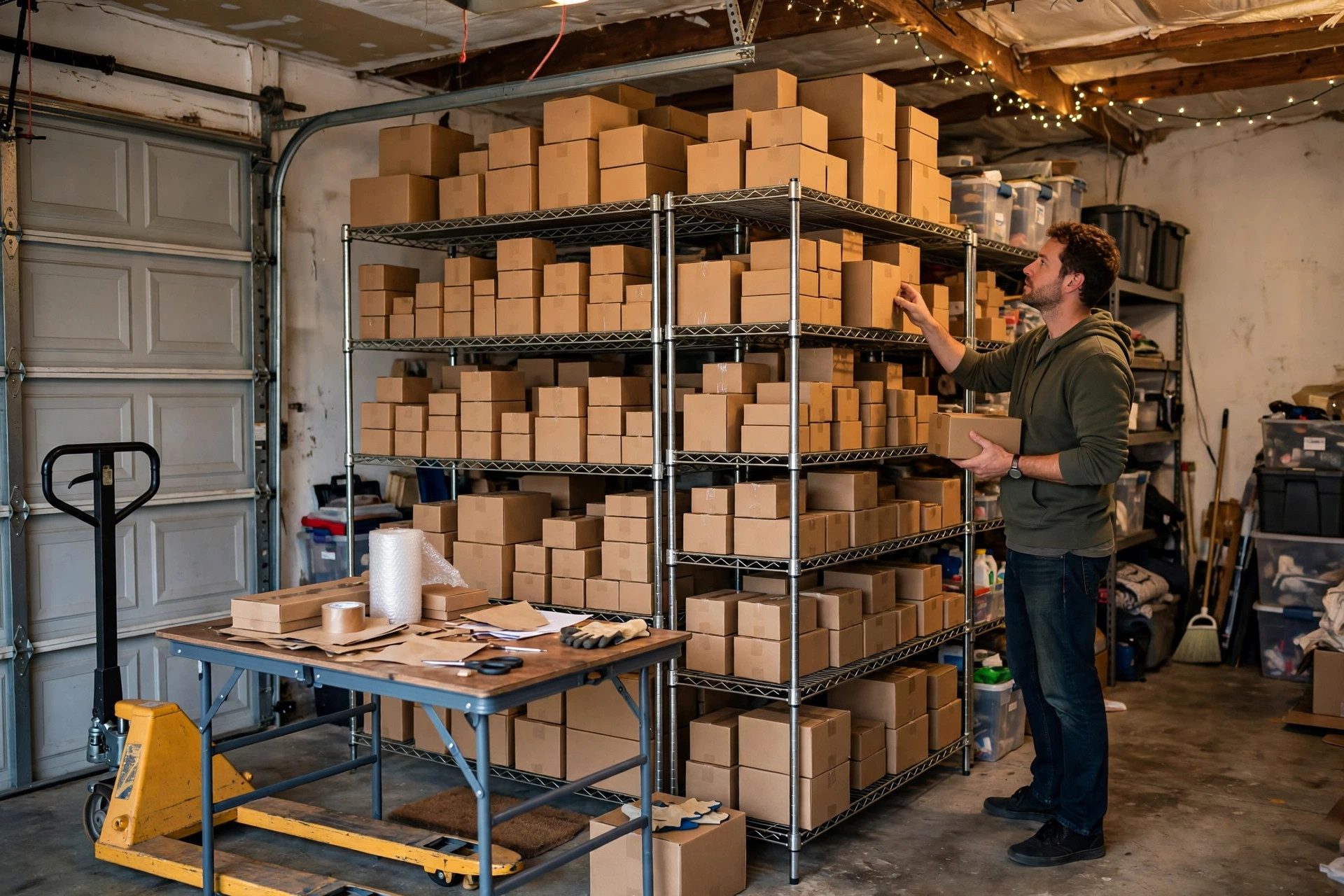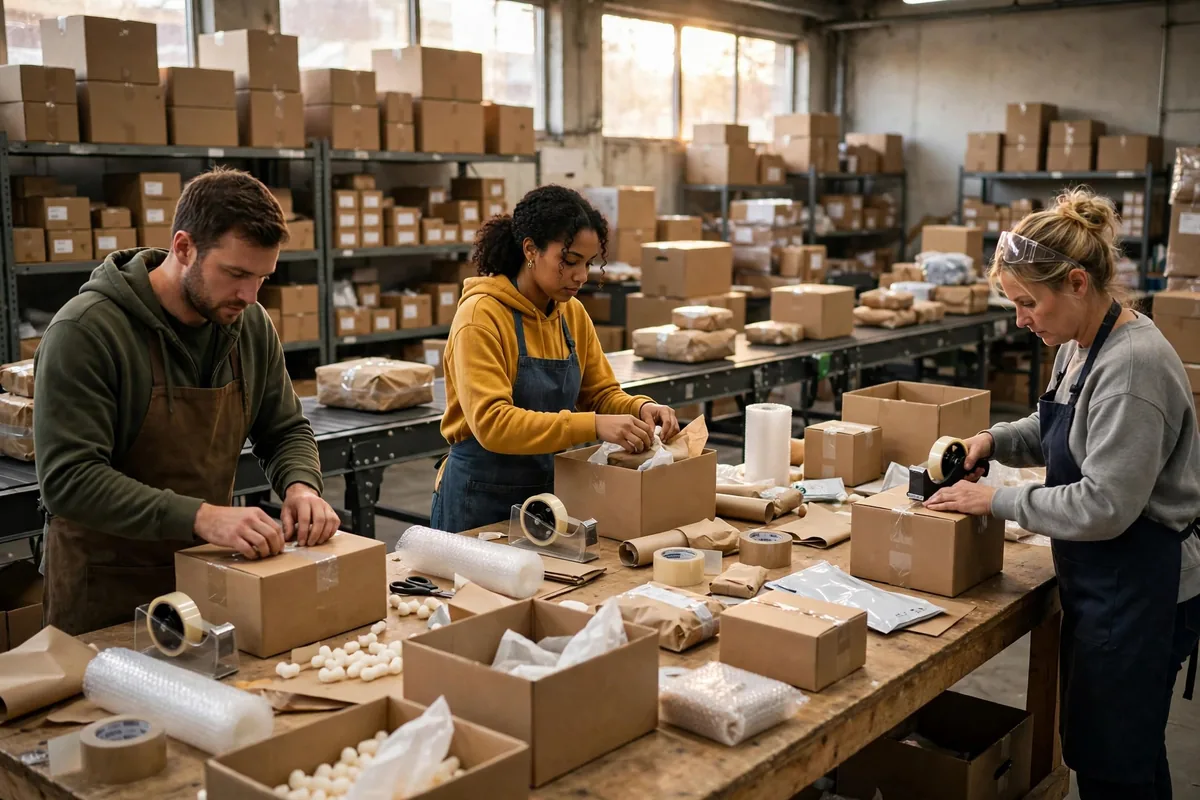
Let me tell you something about Etsy seller warehouse life. After all these years on the road, the most interesting load I ever picked up was at the front door of a regular house. An Etsy seller who made handmade candles had her garage door open and boxes stacked everywhere — candles, ribbons, bubble wrap, so much stuff I could barely get the truck in. She was loading boxes onto my truck and telling me she had gotten forty-something orders overnight, packed until three in the morning by herself, and sent the wrong color on three of them. The buyers were already messaging her about it. Her craft was first-rate, I could see that. But that garage was her whole Etsy seller warehouse — stockroom, packing bench, and shipping dock in one — and that setup was going to wear her down sooner or later.
She is not the exception. Over the years running local delivery, I have hauled plenty of Etsy seller freight — handmade leather goods, crocheted toys, custom wedding invitations. Eight out of ten started from home. Crafters all share the same habit: the product is excellent, and the stocking, picking, and shipping all live in their heads. That works fine when orders are few. When orders pile up, the head cannot keep up. Wrong items shipped, orders missed, twenty minutes spent hunting for one item — I have seen all of it.
How an Etsy Seller Warehouse Should Stock: Small Batches, Many SKUs
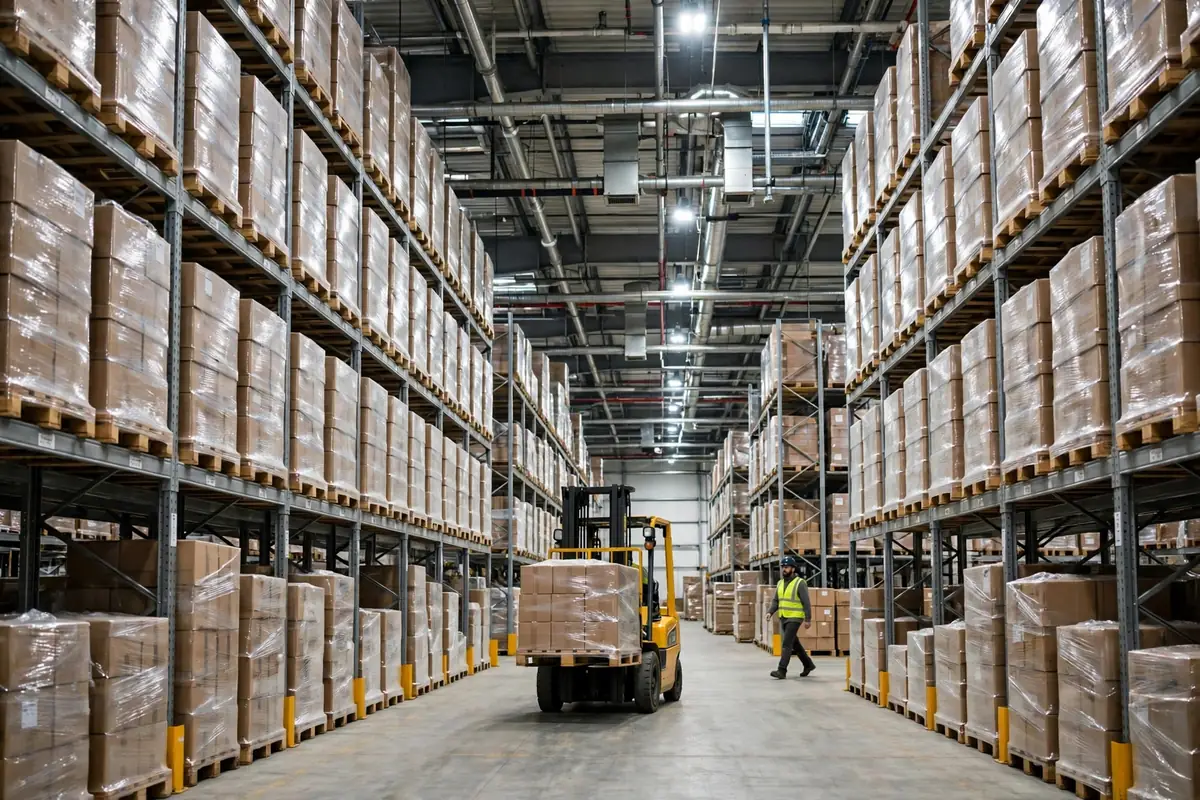
Stocking handmade and custom goods on Etsy is a different game from a big warehouse. A big warehouse is about one hot item stocked by the thousands, pickers walking a route with a list. An Etsy seller making handmade earrings can easily have two or three hundred SKUs, ten or eight pieces of each style, and some custom pieces that only get made after the order comes in. Take the big-warehouse playbook and force it onto that, and it falls apart fast.
The first rule of stocking is to separate your regular sellers, your custom orders, and your seasonal items. Keep a bit more of the regular sellers on hand, but not so much that your money sits on a shelf. Do not make custom pieces in advance — make them when the order comes in and ship them out. Stock seasonal items one step ahead, not the week the holiday arrives. I hauled freight for a leather goods maker in Ohio whose garage wall had a row of hooks, one style per hook, with a tag under each one showing the style name and how many were left. When an order came in, he grabbed from the hook and marked one off the tag. Crude? Sure. But he went over a year without shipping a wrong order. The method costs nothing, and it works.
The second rule is to give every SKU a fixed home. Do not pile goods on the floor or stuff them into a few boxes because you "roughly remember which box." Once you have real volume, "roughly" is a disaster. The shelves do not have to be expensive — secondhand racks or cheap store-bought shelving will do. What matters is that every spot has a number, and the numbers match your stock list. One minute to find an item versus ten minutes, across dozens of orders a day in peak season, is the difference between sleeping at night and not.
Three Ways to Grow an Etsy Seller Warehouse Out of the Garage
Every garage setup hits a limit eventually. There are three ways up, and here is how they stack up from what I have seen.
| Keep the garage | Rent a small space | Use a 3PL | |
|---|---|---|---|
| Monthly cost | Almost nothing | Rent plus utilities, a fixed bill | Per-order fees, pricier as volume grows |
| Managing stock | All on you, messier as you get busier | Room to organize, room to hire help | Hands off, no packing yourself |
| Best for | A few dozen orders a month, just starting | A few hundred a month, mostly local shipping | Over a thousand a month, no time to pack |
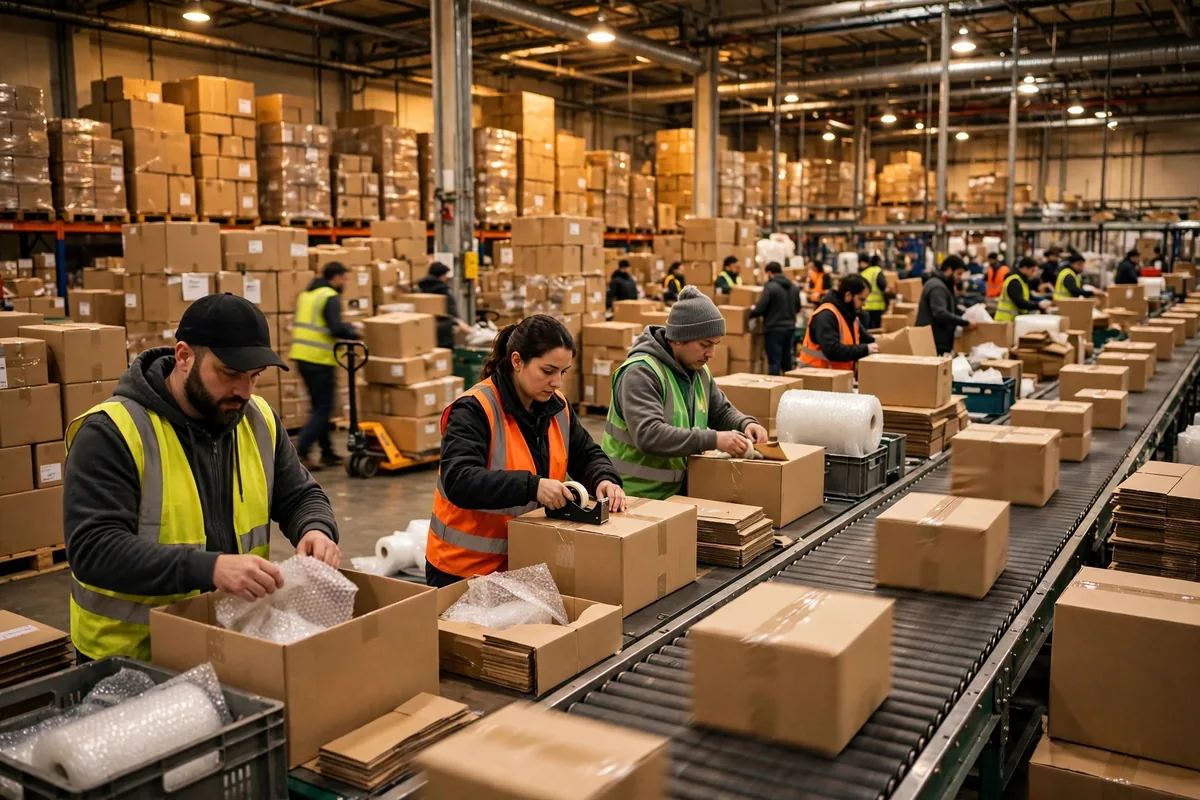
Here is a hypothetical example: a seller ships 300 orders a month, and packing plus labeling takes about 8 minutes per order. That is 40 hours a month on packing alone — a full work week gone. Spend those 40 hours making new products, taking photos, and answering buyers instead, and the money earned would very likely beat whatever you saved by packing everything yourself. Once you run that math, most people get it: upgrading is not spending money, it is buying your time back.
My advice is, do not rush to rent a space. Wait until your volume has stayed above what you can pack yourself for three straight months, then talk about renting or outsourcing. Before you rent, go look at a real small warehouse in person, see how they zone their shelves and pick orders, and copy the good parts back into your own garage — that might buy you another six months. And before you sign with a 3PL, ask three questions: do they charge per order or per item, is there a minimum monthly fee, and who pays when they ship the wrong item? If those three answers are not clear before you sign, the contract is a trap waiting to spring.
Holiday Rush: Stock Your Etsy Seller Warehouse One Beat Ahead
The Etsy holiday rush is not like regular freight. When a holiday comes, orders for handmade gifts and custom presents multiply. Christmas, Valentine's Day, Mother's Day — the two or three weeks before each one are chaos for sellers who did not prepare. I knew a seller of handmade scented candles who had all of December's stock ready in the first week of November — materials, boxes, ribbons, shipping labels, everything. While other sellers were packing through the night, she worked normal hours, and her reviews kept saying "fast shipping" all season.
Here is the counterintuitive part: the smartest money a small seller spends is not on stocking more, it is on stocking less and turning it faster. Inventory sitting on a shelf is money sitting on a shelf, and when a style goes out of fashion, that stock becomes dead weight. The stocking that actually makes money is two weeks of your regular sellers on hand, zero stock on custom pieces that get made to order, and seasonal items stocked early and cleared right after the holiday. You are not stocking goods. You are stocking turnover speed.
Shipping speed ties straight into buyer reviews. Etsy buyers are purchasing something handmade, something personal, and they wait differently than they do for mass-market goods. If your listing says three days, ship in three days. Ship in five, and the buyer will not care how busy you were — they will think you are unreliable. One slow shipment costs more than one order; it costs you that buyer's return business. My plain method: set one cut-off time every day. Orders before the cut-off go out the same day, orders after count as tomorrow. Buyers can see your rhythm, and that steadies them.
One more holiday rule: buy your consumables early. Boxes, labels, tape — stock up ahead of time. The most miserable moment in peak season is having the goods ready and no box or label to send them in. Consumables cost next to nothing. Keep a case on hand and save yourself the scramble.
After all these years on the road, I have figured out one thing: an Etsy seller warehouse is not measured by how big the space is, but by how fast the goods move through it. A garage, a small rented unit, or an outsourced shipper — none of these is better or worse on its own, only more or less right for where you are. Goods shipped out are money in hand. Goods stacked in the garage unsent are just boxes taking up space. The old saying goes, slow work makes fine work, but once the fine work is done, ship it fast — do not let good craft die on shipping.
By Shifu Zhao, Trucking Veteran (15 yrs)