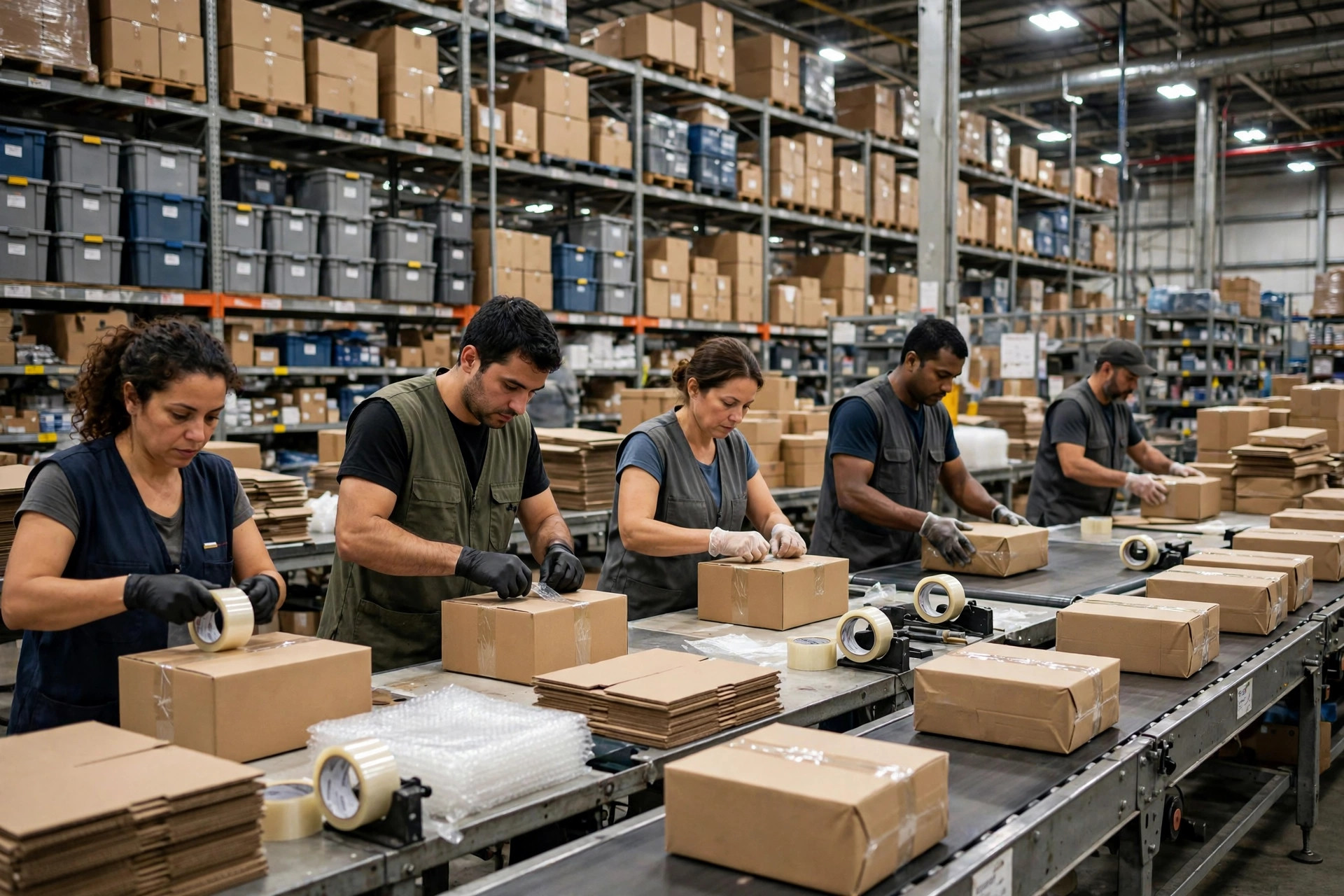
Here is my verdict up front: switching 3PLs is 30% picking the new warehouse and 70% surviving the transition without a stockout. I have seen too many sellers move for a rate 15% cheaper, then stock out for three weeks — and the ranking and ad weight they lost would have paid the warehousing difference for two years.
In early 2024, a home-storage seller moved from one 3PL in Los Angeles to another in Chino, California — 40,000 square feet of shared space at the old site, about 30,000 orders a month. The reason for the move was solid: the old warehouse blew up during peak season and missed shipments for two days during the previous Black Friday. But he made a fatal mistake — he signed the new contract and told the old warehouse to clear out by month-end, with zero transition overlap. The system integration with the new warehouse ran 9 days late, half the inventory had already left the old site, and neither side could ship. His Amazon store stocked out for 12 days. One hero SKU fell from the top 50 of its subcategory to below 300.
The core principle of a stockout-free switch is one sentence: run the old and new warehouses in parallel for 3–4 weeks, and move inventory in batches like a blood transfusion — never a clean cut.
Move the slow C-items first, and rehearse on them
Never move inventory shelf by shelf. Split it by velocity into three waves. Wave one is your C-items, the slow movers — if something goes sideways in transit, the main business does not feel it. Use this wave to rehearse the new warehouse end to end: inbound appointments, receiving, inventory sync to your systems, outbound labeling. Test every step for real.
Wave two is the B-items, the regular sellers — by now the process is proven, so move in bulk. A-items go last, and keep a portion back at the old warehouse as a "pilot light." My rule: hold at least 7–10 days of safety stock for A SKUs at the old site, and do not kill the pilot light until the new warehouse has shipped five straight days with zero errors.
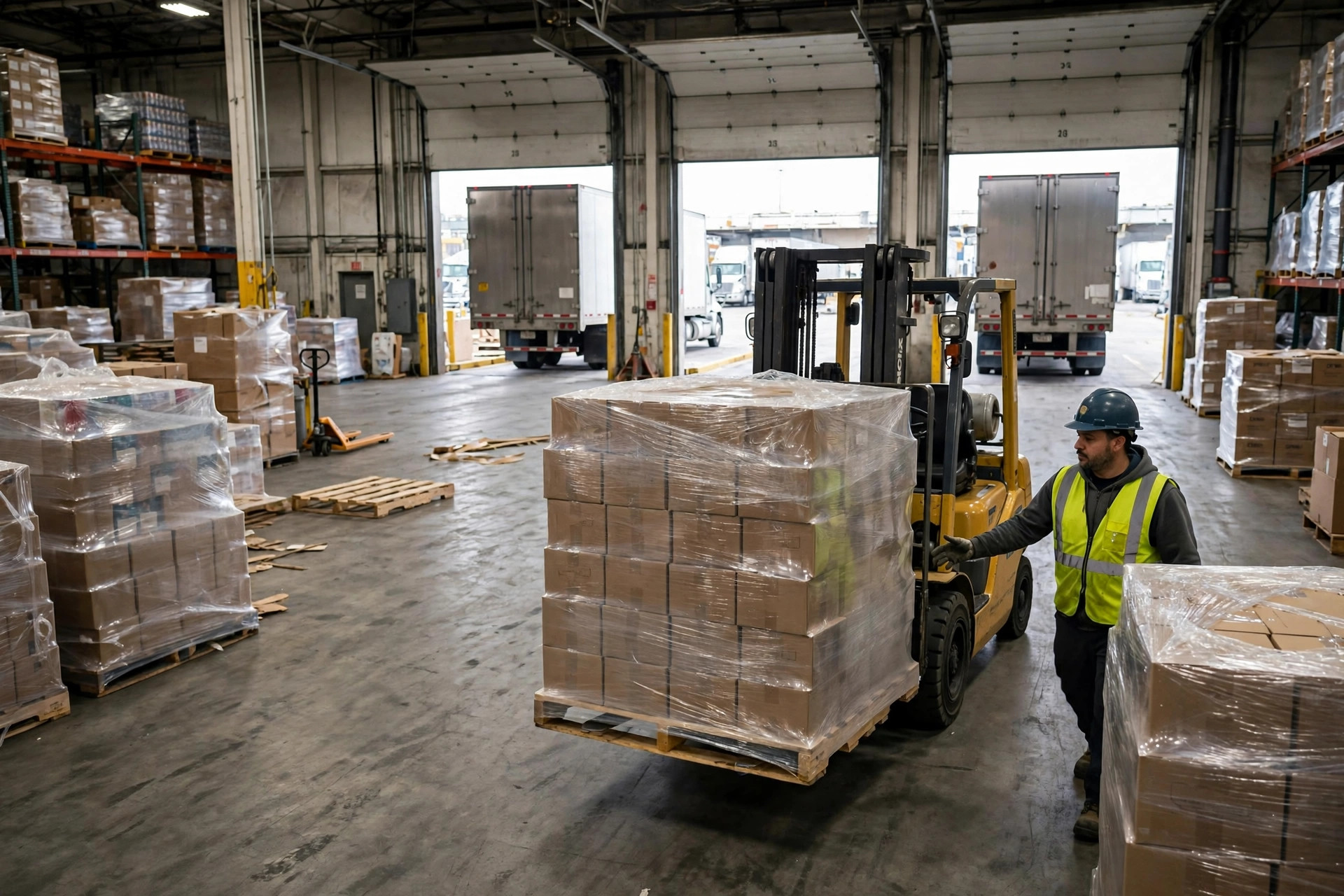
The physical move has its own craft. Same-metro transfers — say, within the LA basin — go by truck and arrive same-day; interstate moves need real transit-time math. I generally advise splitting the move across 2–3 truckloads rather than one. If something happens on the road, you do not lose everything. When each truck arrives, spot-check 10% before you sign off on the handoff. Do not skip this because it feels tedious.
The in-transit math matters too. While goods sit on a truck, they may show in neither warehouse's system — but your storefront keeps selling. My method: maintain in-transit quantities by hand on a sheet during the move. Sellable inventory = old-warehouse stock + new-warehouse stock + in-transit − sold-not-shipped. Update it daily. Oversold orders eat your account health, and this is not a number to be sloppy about.
Integrate systems first, and mind the calendar on account cutover
Many sellers think system integration means handing the new warehouse a store login. The reality is three layers: order flow (how orders from your store or ERP reach the new WMS), inventory flow (how real-time stock comes back to your ERP and storefront), and after-sales flow (return addresses, exchange processes, the permissions your support team needs to look up orders). Every layer gets a live test — run at least 20 real orders through the full cycle, and simulate one return too.
On timing: integration must be finished before the first batch of goods arrives. The smoothest switch I ever saw started integration six weeks early, with two weeks of test orders running before any freight landed. The worst: freight arrived, systems were not connected, and the warehouse hand-labeled 200 orders a day while 3,000 piled up. Support got flamed until reviews were turned off.
The calendar matters for cutover as well. Do not switch warehouses within six weeks of peak season, or within a month of Prime Day or Black Friday. If you must move, pick a quiet window — January–February or September — and give yourself room to make mistakes and fix them.
Return addresses are the easiest thing to forget. The default return address in your seller account, the return settings on each SKU, the removal-order address for FBA — every one of them has to be switched to the new warehouse, one by one. I know a seller whose returns kept going to the old warehouse for three months after the move; the old site charged per-piece return handling, and it cost him over $2,000 a month before anyone noticed. After cutover, place one test return and walk it through the whole flow to confirm it lands in the new warehouse's system.
Prep your support scripts for the transition too. During the parallel weeks, the same SKU may ship from two warehouses, delivery times can differ by a day or two, and support needs a clean line — "your order ships from the nearest warehouse" — that does not fall apart under questions. More important is the address problem: buyers will ask about the old warehouse's return address, so support needs an old-vs-new address sheet — which SKU ships from where, returns to where — on a single page. I usually have the seller keep a shared doc for support during the transition, updated daily with both warehouses' shipping status, so nobody has to guess.
The old warehouse's tail: where clean exits go to die
Most people think the job is done when the freight is moved. The old warehouse's tail end is actually where the disputes live. At final count, book inventory and physical inventory almost never match — there is in-transit stock, unreported damage, items in the wrong bin. My method: do a full count before the clear-out, confirm every variance on the spot, both sides sign. Do not reconcile after the trucks have left — when 50 units are missing, nobody can prove anything.
Decide tail-inventory handling in advance: sellable units get transferred, unsellable ones get destroyed by the old warehouse (get the destruction certificate and photos), and the awkward middle can be offered to the old warehouse — some 3PLs will buy tail stock at a discount to sell as promos, which beats paying freight to haul it back and destroy it yourself. Write the settlement timeline into the memo: how many days after final count the balance is due, when the deposit comes back. Verbal promises do not count.
The handover memo: get the ugly stuff in writing
Before the move, sign a handover memo with each warehouse. With the old one, pin down: the clear-out deadline, tail-inventory handling (destroy, transfer, or sell to them at a discount), and the settlement cycle for outstanding charges. With the new one, pin down: the free-storage period, receiving and putaway SLAs, the outbound cut-off time, and the compensation standard for mis-ships.
Watch one pricing trap: some 3PL quotes show a low receiving fee, then bill "system integration," "first-order processing," and "return handling" separately — and the total comes out higher than the old warehouse. Have the new warehouse model your first quarter's total cost against your actual order volume, in writing. On the old side, check for early-termination penalties — some contracts require 60 days' written notice, and short notice costs you a month's rent.
One more line item: insurance. Goods at the old warehouse, at the new warehouse, and on the trucks in between — whose policy covers each leg? Those 2–3 truckloads can carry over a million dollars of inventory. If something happens, the dispute costs more than the loss. Get both warehouses to state their coverage windows in writing, and buy your own cargo policy for the gap. A few thousand dollars a year. Do not skip it.
One last checklist item: during the transition, look at both warehouses' inventory snapshots morning and evening. Combined sellable stock for A SKUs must never drop below 15 days of sales. Glance at that number every day for two straight weeks, and only then is the switch truly done.
Switching 3PLs is not moving house. It is surgery on your supply chain. A good surgery is not judged by how cheap the new warehouse is — it is judged by whether the transition drew blood. The more generous the parallel window, the finer the batched transfusion, the safer your rankings and your cash flow. When does your current 3PL contract expire? If it is three months out, start looking at new warehouses now. Do not wait until the final month.