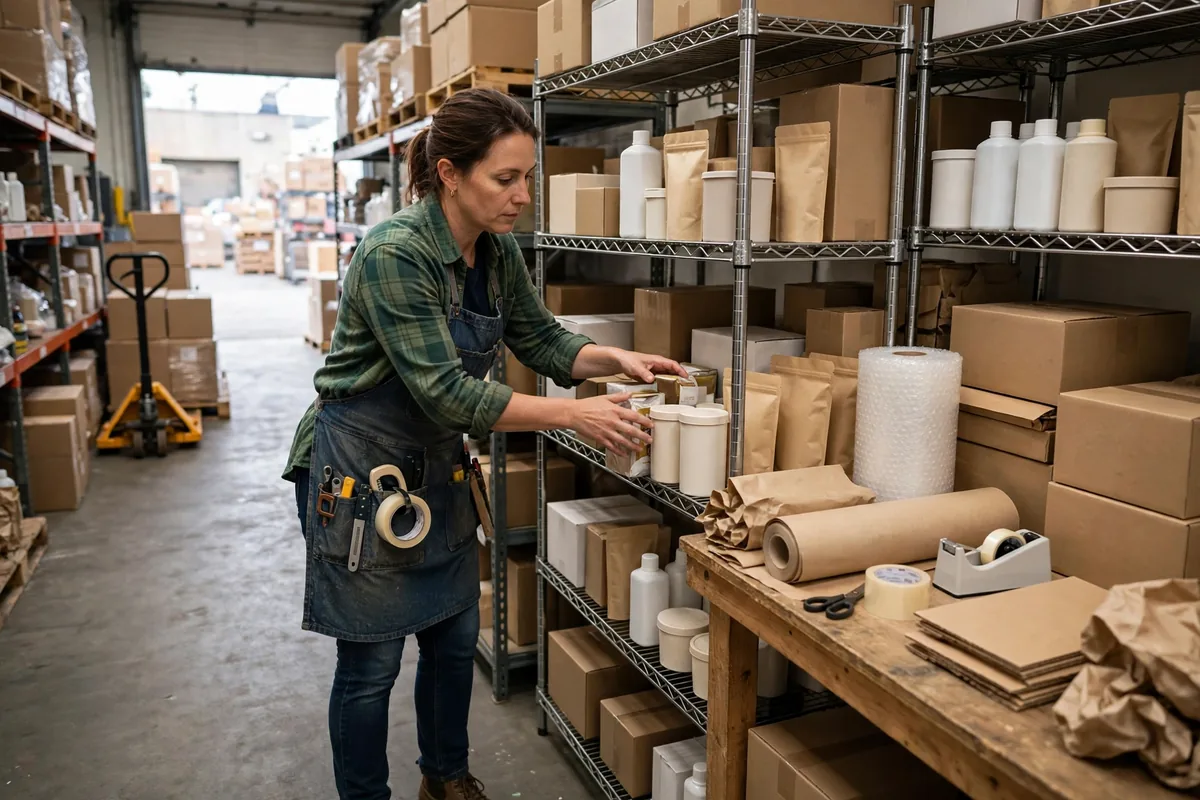
Let me embarrass myself first. My warehouse is under 3,000 square metres, my team is six people on a good day, and I am also the backup forklift driver. When someone tries to sell me expensive slotting software, my first instinct is to check my wallet. My second is to show them the door. We small warehouses cannot burn money like that.
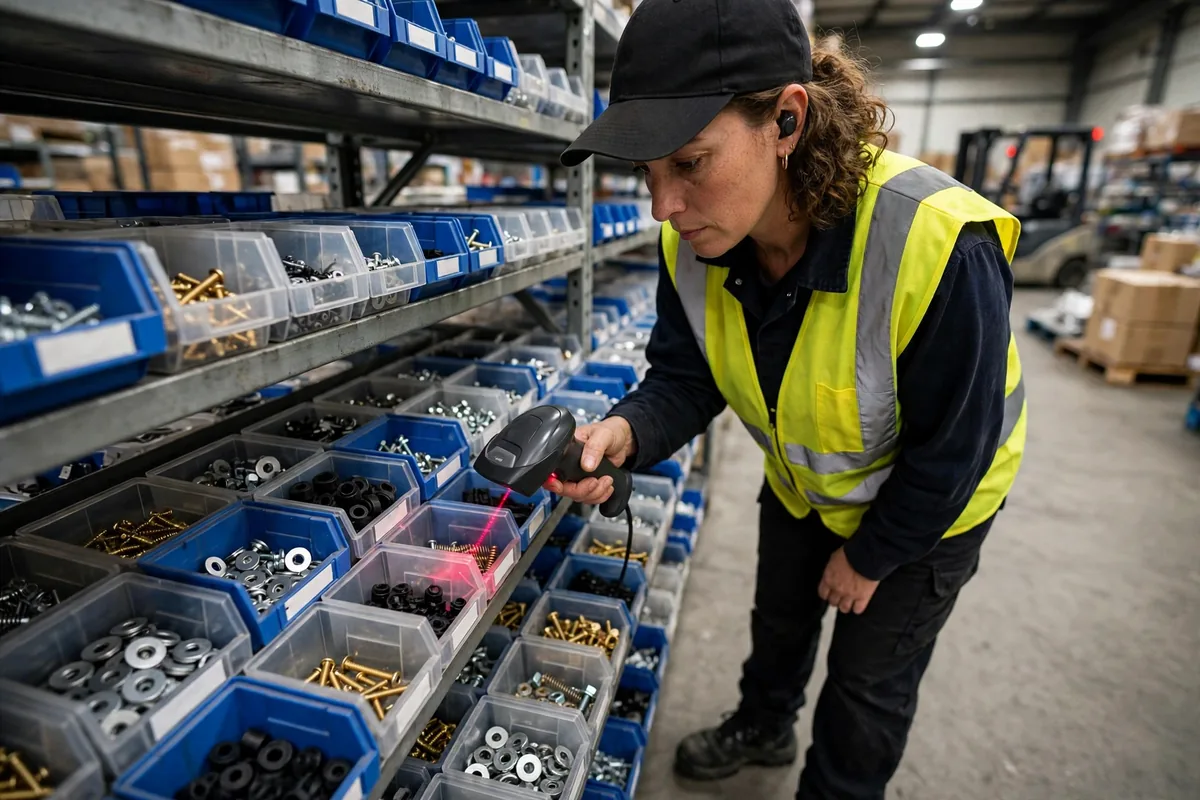
But bad slotting burns money too, just quietly. Last year I noticed one of my pickers kept disappearing to the far end of the building and coming back out of breath. I followed him for a morning. Our most frequently picked small accessory — the thing that went into order after order — was stored at the very back, on a high level. Why? Because that space happened to be empty on the day it arrived.
That is why I started using small warehouse slotting abc with nothing more than order history and a spreadsheet. No new system, no consultant. Just fix the dumbest mistakes first.
Rank by picks, not by price
When people hear ABC, they usually rank by sales value. Expensive items are A, cheap items are C. That makes sense for inventory finance. Slotting is different. Slotting is about legs and minutes, so rank by pick frequency — how many pick lines, how many actual trips, each SKU generated over a period you trust.
The method is almost embarrassingly simple. Export your recent outbound records, or build the list from your delivery notes if that is all you have. Take a normal period and a busy period rather than only a promotion week, because one crazy sale will distort everything. In a spreadsheet, total the pick lines per SKU, sort from highest to lowest, then look at the cumulative share. The small group at the top that accounts for roughly the first 70 to 80 percent of picks is your A group. The steady middle is B. The long tail that barely moves is C. Do not treat those percentages as a law — set the cut where it fits your catalogue, and use your own real data rather than copying anyone's threshold, mine included.
When I ran my first sheet, the number-one SKU was not our most valuable product. It was a cheap little accessory that went into almost every order and got picked dozens of times a day. And it lived at the back of the warehouse. We moved it to waist height beside the packing bench. That same afternoon the picker told me the day suddenly felt shorter. No software demo has ever convinced me as fast as that sentence.
Here is the counterintuitive part: A items do not always belong in the closest slot. They belong in the most comfortable slot. The nearest location is useless if it is on the floor under a heavy carton, or so high that every pick waits for a forklift. The golden zone is roughly waist to shoulder height, reachable by hand, with replenishment that does not block the aisle. A heavy A item is often better one bay further away at a low, safe level than right next to packing on a high shelf. Saving ten steps and then waiting three minutes for equipment is not a saving.
Two small warehouses tried it — one worked, one nearly blocked the door
My own move happened in 2024. We ranked the sheet, took the twenty or so most frequently picked A SKUs, and consolidated them on one side near packing, mostly at middle levels. B items went a row behind them. C items moved to the back and the high levels, where they could sit quietly and feel important.
We did the physical move in an evening. The next day I deliberately said nothing and just watched. At lunch the picker said the morning had felt less tiring. I walked a few orders myself and the backtracking was obviously reduced. I did not time it with a stopwatch, so I will not invent a percentage for you. In a small warehouse you can feel a bad layout in your knees, and you can feel a better one the same way.
A friend of mine runs an even smaller site selling household goods. He copied the spreadsheet part perfectly, then stuffed every A item into the single row nearest the door. It looked efficient on paper. In real life, replenishment came through that same door. Picking and replenishment spent peak season fighting in the doorway, and at one point cartons were creeping toward a fire exit route. I saw it on a visit and told him to move half of it before someone official saw it first. He split A into two homes: the very hottest SKUs beside packing, and the second tier in the next aisle. Still close, but no longer a traffic jam.
That failure taught me the limit of the spreadsheet. The sheet tells you what matters. It does not know your aisle widths, your delivery door, or which carton weighs as much as a small motorcycle. After the ranking, walk the floor twice before you move anything.
The one-table method I still use
This is the slotting table taped inside my office cupboard:
| Class | How to judge it | Where it goes | How often to review |
|---|---|---|---|
| A | Top group by cumulative pick frequency | Beside packing, waist to shoulder height | Monthly |
| B | Steady, occasional picks | One or two rows behind A, normal levels | Quarterly |
| C | Rarely picked, very long tail | Back of the warehouse, high or low corners | Twice a year |
| Seasonal | Dead for months, then suddenly hot | Next to A before the season, moved back after | Before each season |
The routine has four steps. First, pull the data and rank by pick count. A rough ranking beats a confident guess. Second, mark the A SKUs and go and find where they actually live today. This part is always a little shocking. Third, move only the A items first, and update every place where your team looks up locations at the same time. Moving stock without updating the lookup sheet is how you create a warehouse-wide treasure hunt. Fourth, re-run the sheet after a couple of weeks. New products climb, old heroes fade, and a five-minute adjustment keeps the layout honest.
A few small-warehouse warnings from experience. Do not store every unit of a hot SKU in one pick face. Keep a small reserve at the end of the same row so an empty front slot does not send someone to the back for replenishment. Clear your C items honestly — in many small warehouses the best slots are not missing, they are occupied by dead stock nobody wants to admit was a bad buy. And keep location codes boring: aisle, bay, level, written so a new starter can find the product without a guided tour. Boring codes beat clever systems every single day.
This spreadsheet approach does have a ceiling. If your order volume grows until the export itself takes half a day, or your records are too messy to trust, that is your signal to buy proper software. Do not be a hero about it. But until that day arrives, start with the free win: rescue your A items from the back of the building.
Small warehouses survive differently. We do not need to do everything at once. We just need to stop walking past our own money.
By Xiao Ma, Small Warehouse Owner