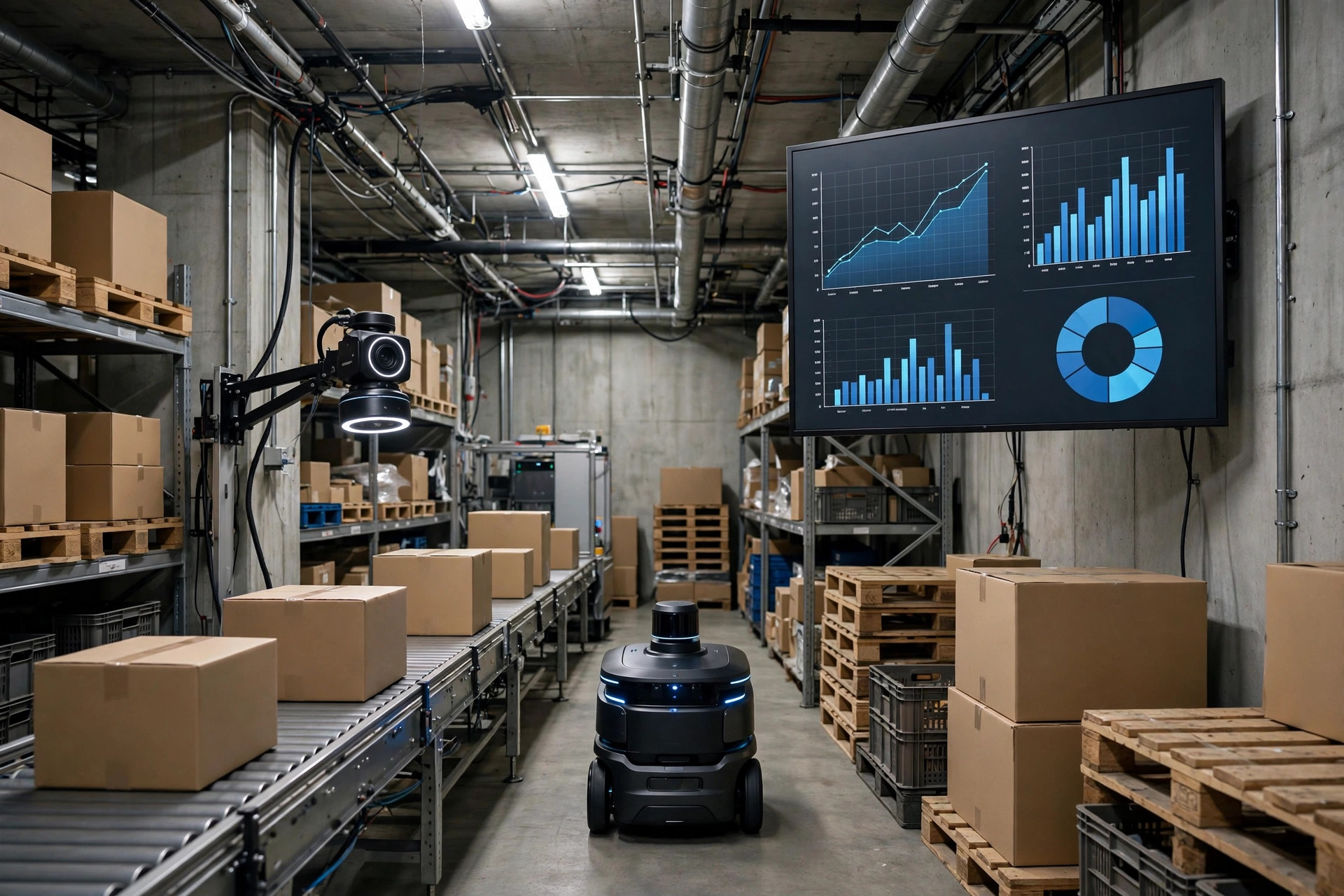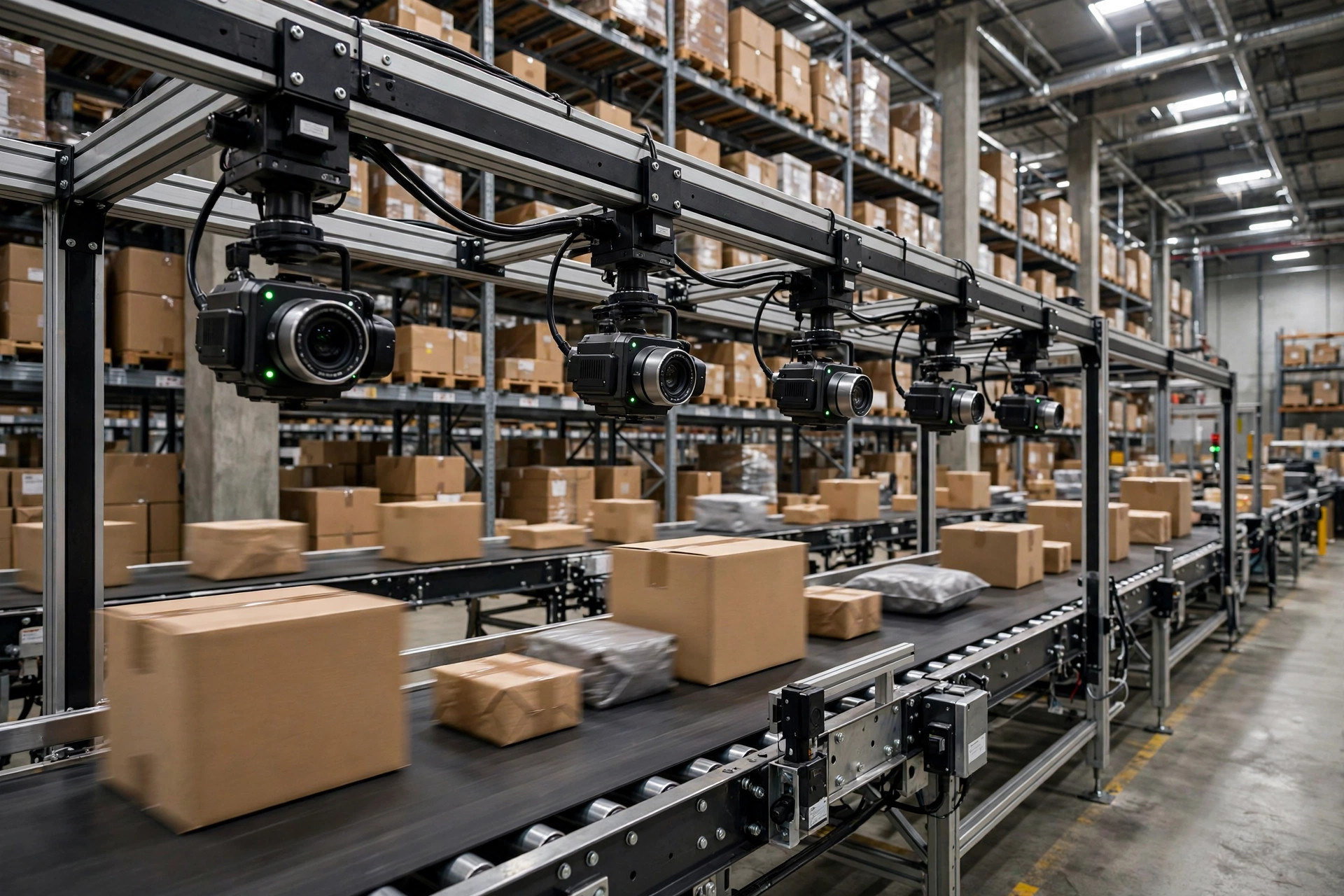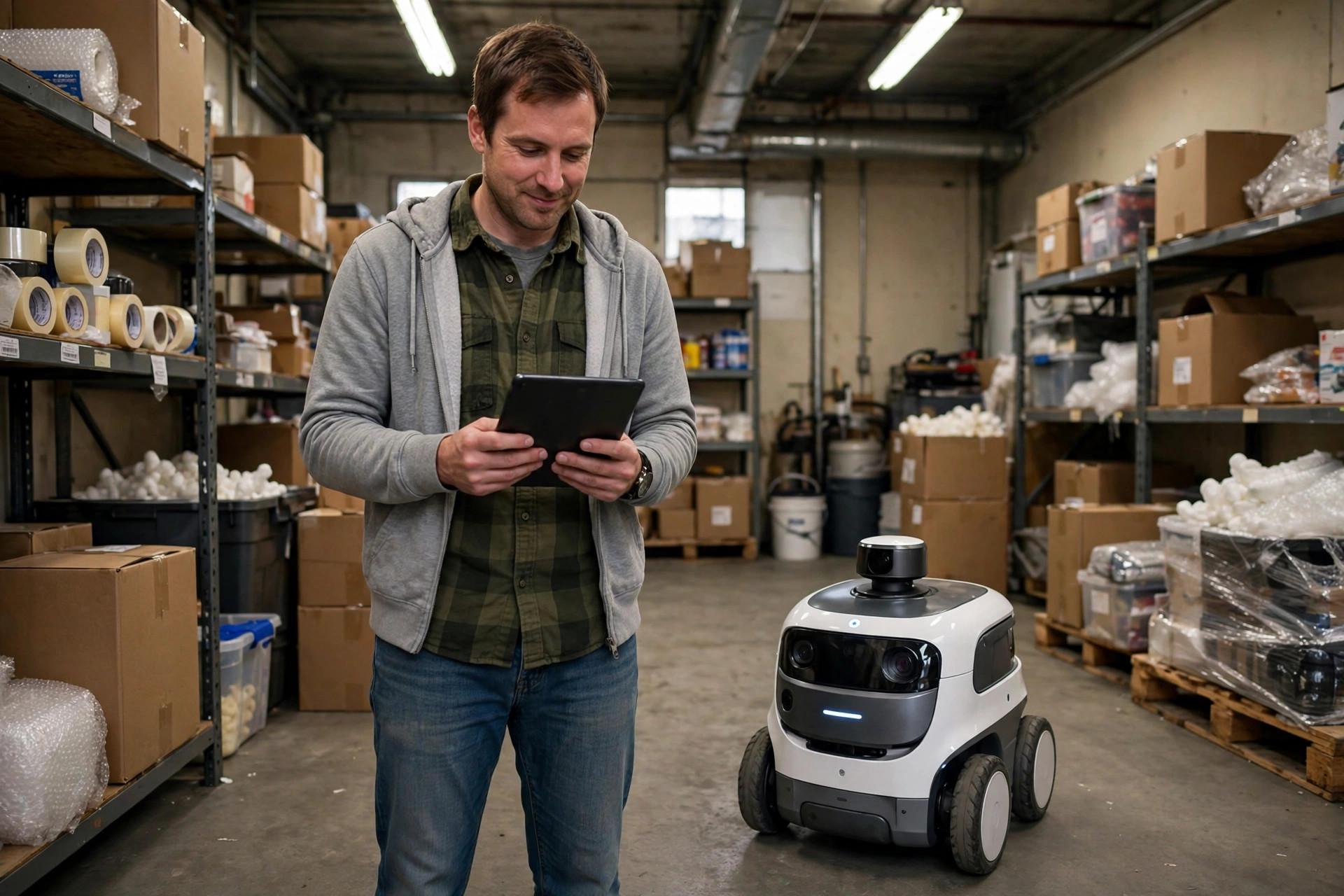
Here's my verdict up front: if your warehouse ships somewhere between a few hundred and a few thousand orders a day, the smartest AI move in 2026 is not buying a big, all-in-one AI platform. It's assembling three to five lightweight SaaS tools and bolting them onto what you already have. I've watched too many small operators sign up for the full platform, cheer through the demo, and then use about half of what they bought. The problem isn't the software. It's that a smaller operation doesn't have the volume or the data foundation to feed a heavy system. It's a fit problem, not a money problem.
I saw the expensive version of this mistake in 2024 at a 3PL in Fontana — about 40,000 square feet, roughly 800 orders a day. The owner had been talked into a six-figure "intelligent warehouse platform" by a consulting firm. A year later I visited again, and the only parts anyone actually used daily were the inventory dashboard and the exception alerts. The "predictive wave planning" and "digital twin" modules? Nobody had even logged in. The owner told me, half laughing: if he'd just bought those two modules, the savings would have covered two pickers' wages for three years. Nine out of ten warehouse tech regrets I hear come down to the same thing: they bought too big.
So where does a small warehouse actually start with AI?
Not with a platform. Start by turning your Excel chaos into an automated BI dashboard. It sounds boring, and that's exactly why it works — it determines whether every AI tool you buy later can survive.
Here's the thing: nearly every lightweight AI tool consumes the same raw material — structured data. SKUs, inbound and outbound volumes, on-hand inventory, order lines. If your spreadsheets can't answer "how many units of each SKU moved per day over the last 90 days," a forecasting tool has nothing to chew on. Spend two or three weeks wiring your receipts, inventory, and orders into a dashboard tool — the SaaS BI market is mature now, monthly billing, cancel anytime — and let it refresh every morning. You get two things immediately: anomalies you can spot with your own eyes (a slot whose turns just fell off a cliff), and a data source every future AI tool can plug into.
The cost of this step is typically in the low thousands of dollars, mostly implementation hours. Compare that to a platform whose starting price runs into six figures. And there's an even better property: it can't fail. Even if you never buy another AI tool, the dashboard is already a management instrument.
Then comes the dirty work nobody wants to talk about: SKU master data. Most small warehouses built their SKU naming on vibes — the same product under three names, cartons and eaches mixed in the same field. Forecasting models don't do vibes; they do codes. Before any POC, clean it up: one unique code per SKU, quantities normalized to the smallest unit of measure. Nobody can do this for you, not even an outsourced team, because only you know which name maps to which physical item.
What pays back first — and what should you stay away from?
My ranking for small-warehouse AI is blunt: do the things with visible, calculable returns first; leave the cool-sounding stuff alone.
Three categories earn their keep early. First, demand forecasting for replenishment and safety stock. For a small warehouse, the two most expensive invisible costs are stockouts and overstock — lost orders on one side, dead inventory eating slots on the other. Lightweight forecasting tools are SaaS and ready to go: feed them twelve-plus months of sales and outbound data and they return SKU-level replenishment suggestions. Don't expect perfection. If it beats your current "gut feel" purchasing by one notch, it has paid for itself. My acceptance test: run a POC for four to eight weeks, compare stockout rates and inventory turns against the same period under manual replenishment. Improvement means keep it; no improvement means cancel. With monthly billing, walking away costs you a few months of subscription.
Second, exception alerts. Receiving discrepancies, a sudden spike in mispicks, a slot that hasn't moved in months, a carrier whose on-time rate is sliding — small warehouses used to catch these with a veteran's instincts, and instincts take vacations and quit. Alerting tools automate the rules: set thresholds, get a push notification on your phone when one trips. It's not "intelligent," but it's reliable and cheap. This is the category with the easiest ROI math: one prevented bulk mispick covers a year of subscription in avoided claims and rework.
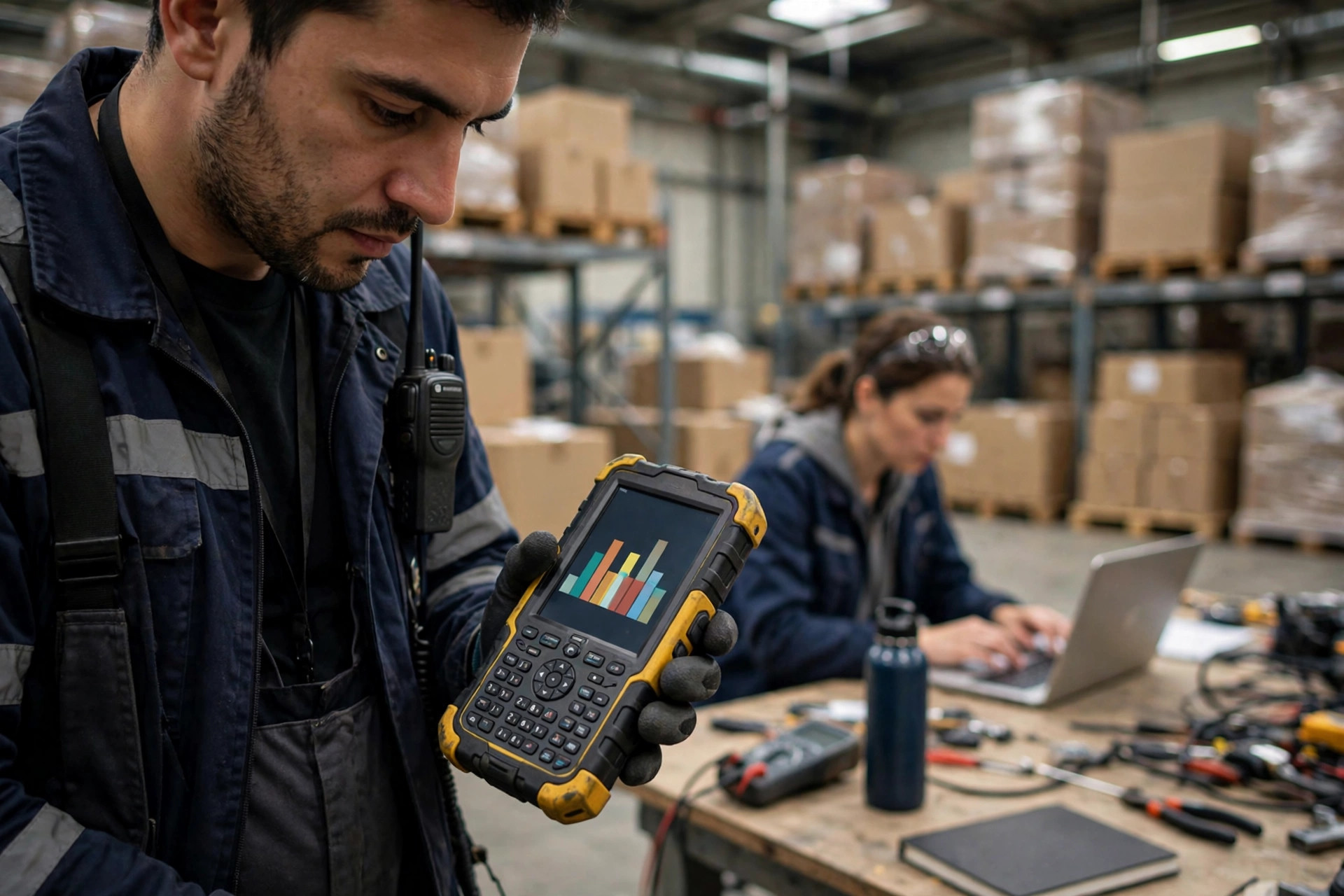
Third, voice-picking plugins. Note the word "plugin" — not a system replacement. Many WMS platforms support add-on voice modules: the picker wears a headset, carries a rugged handheld scanner, hears instructions, confirms by voice. For a small warehouse it attacks two specific costs: mis-picks from paper lists and the time it takes to train new hires. I visited an e-commerce warehouse in Chino in 2023, around 1,500 orders a day, that added a voice plugin and cut new-hire ramp-up from two weeks to three or four days. In peak season, when half your floor is temp labor, that gap is real money.
And three categories to avoid — at least until you're past ten thousand orders a day. Vision AI for cycle counting and quality inspection: the tech is fine, but small warehouses churn SKUs and packaging too fast, and the cost of constantly retuning models exceeds the labor it saves. Fully automated picking robots: at a few thousand orders a day, utilization never gets high enough, and depreciation per order ends up costing more than human pickers. I've run that math for several owners and the answer was always the same: fix your slotting and wave strategy first. And digital twins and simulation: spectacular demos, genuinely useful for justifying layout overhauls in big facilities — but a small warehouse can do layout with a tape measure and experience. Don't spend the money.
The trade-off is simple: a small warehouse buys AI to save labor hours and make fewer mistakes, not to be "technologically advanced." Any AI that can't be translated directly into "fewer labor hours per month, fewer mispick claims" goes to the back of the line.
How to actually roll this out
Four steps, each with a clear continue-or-kill criterion.
First, scope the project. Skip the fifty-page proposal. Answer three questions: which specific business pain are we solving (mispick rate, gut-feel replenishment)? Roughly how much does it cost per month today (labor, claims, capital tied up in overstock — an order of magnitude is fine)? What does success look like (mispick rate from X per thousand down to Y per thousand)? If you can't answer these, the pain isn't defined yet — don't buy anything.
Second, prepare the data. The three tables I mentioned — receipts, inventory, orders — plus cleaned SKU master data, in a shape where a vendor can start configuring the day they receive it. One trap to flag early: a lot of small warehouses keep their data in a WMS whose export API costs extra to unlock, or whose exports are a mess. Ask during vendor selection how data comes out and how fast, and put it in the contract. If data can't flow, nothing downstream matters.
Third, the POC. Test one tool at a time, four to eight weeks, on real data and real operations. Write three things into the POC contract: monthly billing, data exportability, and painless cancellation at term end. Don't let an "annual prepay discount" seduce you — in the POC phase, the freedom to walk away is the whole point. The worst case I've seen: a mediocre POC result, but a one-year contract, so the owner used it for twelve resentful months. Money and time both lost.
Fourth, do the full math and expand. Total cost means subscription plus implementation hours plus your team's coordination time, weighed against labor saved, mispick claims avoided, and working capital freed from overstock. If it pencils out, roll it across the floor; if not, stop. This is the core advantage of the lightweight route — each tool is evaluated on its own, and the one that doesn't perform gets cut. There's no "we already deployed the platform so we have to live with it" sunk cost.
One question to take home: is the most labor-intensive report in your warehouse still built by someone manually exporting data and pasting it into Excel every morning? If so, that's where your AI journey starts. Not because it's "intelligent," but because it's the dirtiest, most painful, most certain-return link in your data chain. Start there and you won't go wrong.