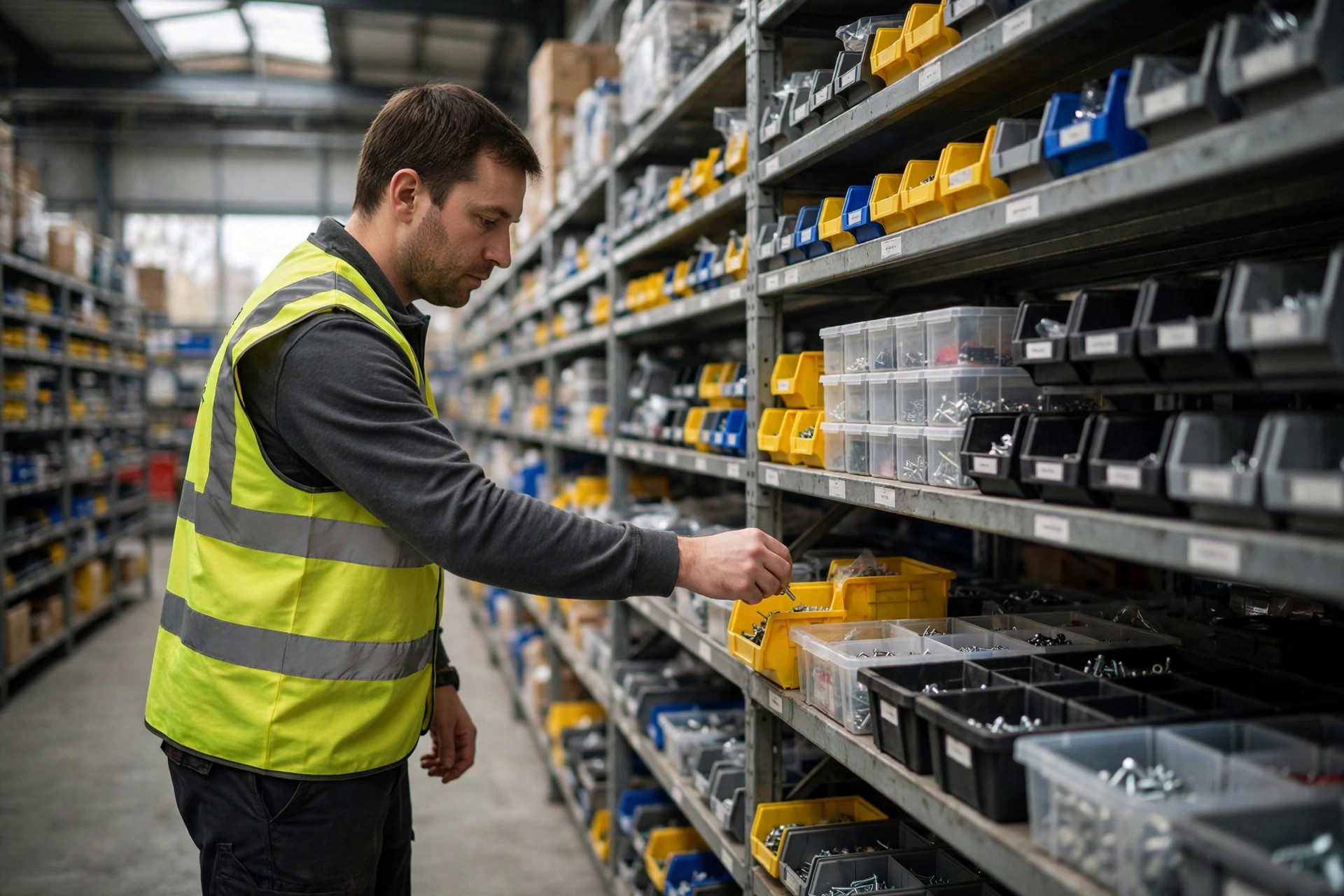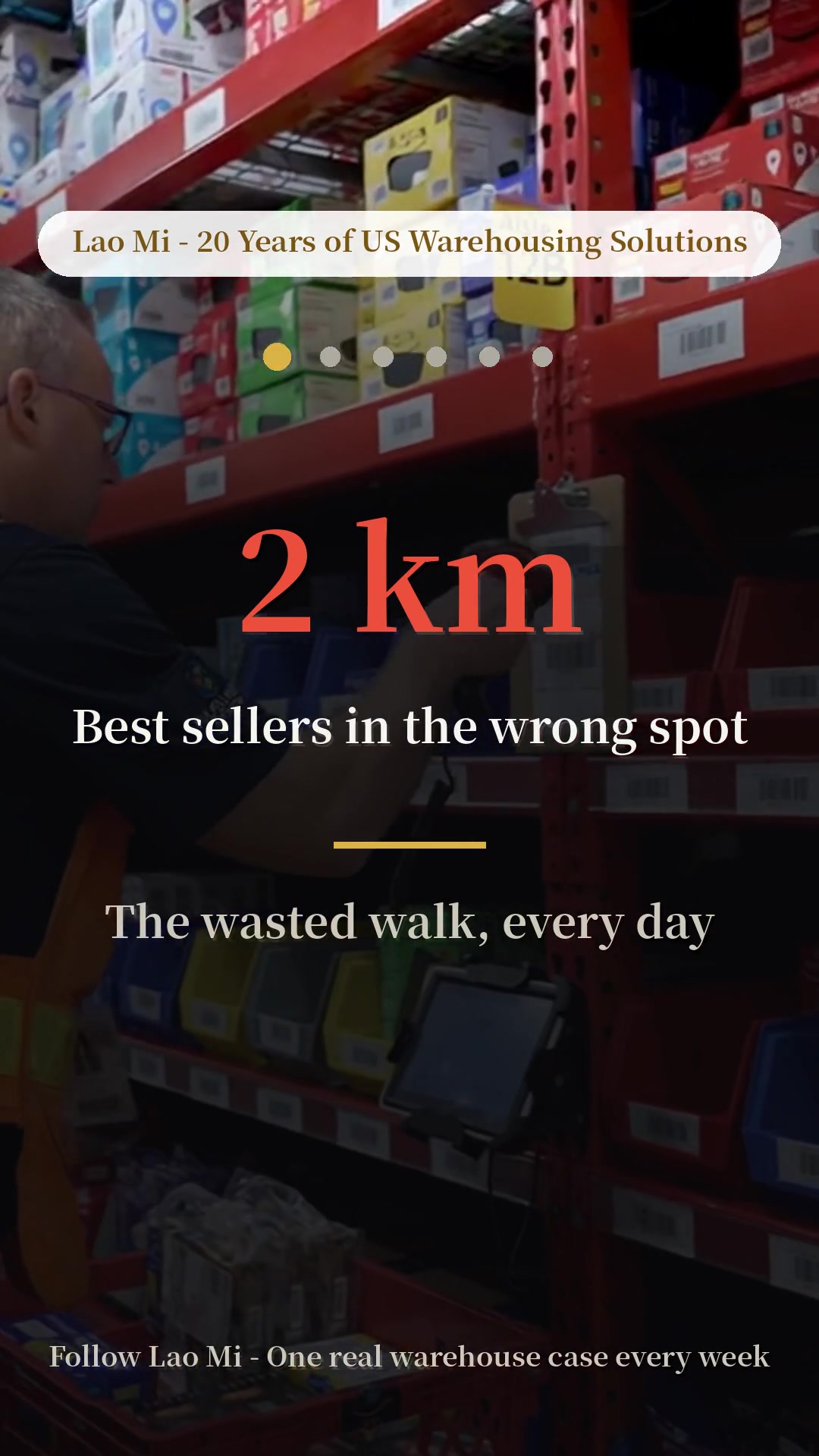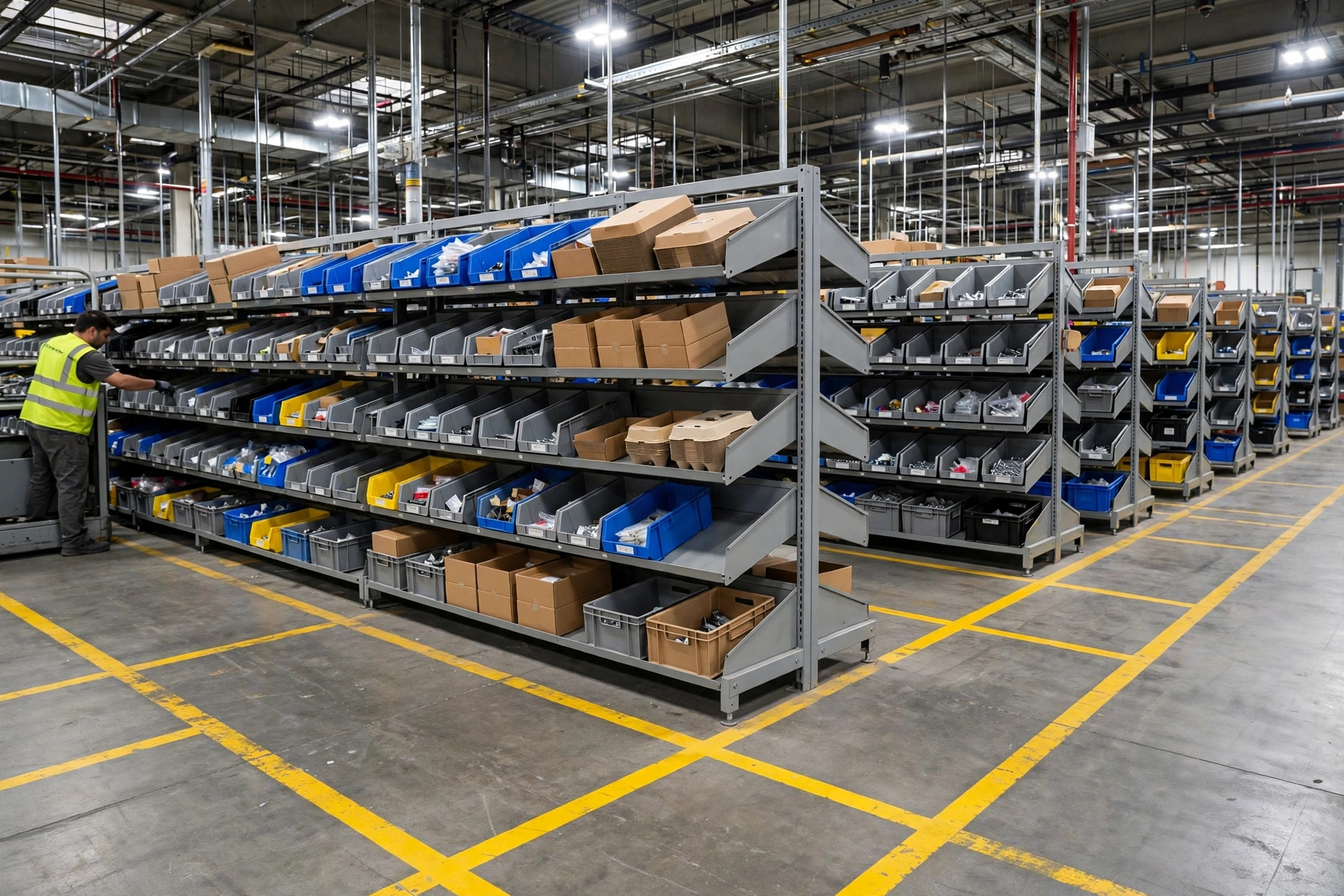
Last October I was doing a slotting review at a 3PL in Ontario, California. Their small-parts area was a thing of beauty: every SKU in its own bin, six thousand slots, all perfectly aligned — so perfectly aligned that the aisles could barely fit one picker with a cart. The manager's complaint was the opposite of what the neatness suggested: during peak, pickers walked all day, step counts that would make a fitness tracker proud, and the mispick rate refused to come down. I asked him to hold off on moving any racking and count with me: how many of those 6,000 SKUs had been picked more than ten times in the past month? The answer shut him up. Under twenty percent.
That is the classic small-parts disease: slots planned for tidiness instead of velocity. There is no universal answer to how many SKUs belong in one location, but there is a way to do the math. Here is the framework I keep coming back to.
A pick slot is not a shelf. It is footsteps and eyeballs.
First, kill a myth: a lot of people treat one-SKU-per-slot as a sign of professional management. Professionalism is not measured in neatness. It is measured in cost.
A forward pick location has three real costs. The first is rent — easy to calculate per slot per year. The second is replenishment labor: a slow mover sitting alone in its own slot still needs someone to check it and top it up. A bin that hasn't sold through in three months still costs a replenishment trip. The third is travel distance: when every SKU claims its own slot, the pick zone balloons, the bestsellers get pushed toward the far end, and every extra step lands in overtime pay.
So "how many SKUs per slot" translates to a plain question: how much rent and labor are you willing to pay for the convenience of "grab it at a glance"? For high-velocity SKUs, that price is worth it. For slow movers, it is pure waste.
One-SKU-per-slot: reserved for the real runners
My rule of thumb: only SKUs with more than about 100 pick lines per month — lines, not units — earn a dedicated slot in the golden zone. True bestsellers can even get two: one normal pick slot plus an overflow slot for promo season. Pickers can find these SKUs blindfolded, and every second saved per pick, multiplied by hundreds of picks a day, is real money.
Below that line, one-SKU-per-slot is a luxury. Example: a fastener distributor I worked with moved 2,000 bags of M6 nuts a month — four flow-rack slots, fully justified. But the oddball M3 nut next to it moved 30 bags a month and still held its own slot. Spread that slot's rent, replenishment, and cycle-count cost across 30 bags and the per-unit cost is absurd. Worse, once you accumulate enough of these slow slots, the runners get squeezed toward the far end and pickers walk extra distance on the orders that matter most.
The test is simple: pull 90 days of pick lines from your WMS and rank SKUs. The top 20% will account for roughly 80% of lines — the old ABC rule holds brutally true in small-parts areas. Those are your one-SKU-per-slot candidates. Everything else goes to the next tier.
Multi-SKU slots: the space you save gets billed elsewhere
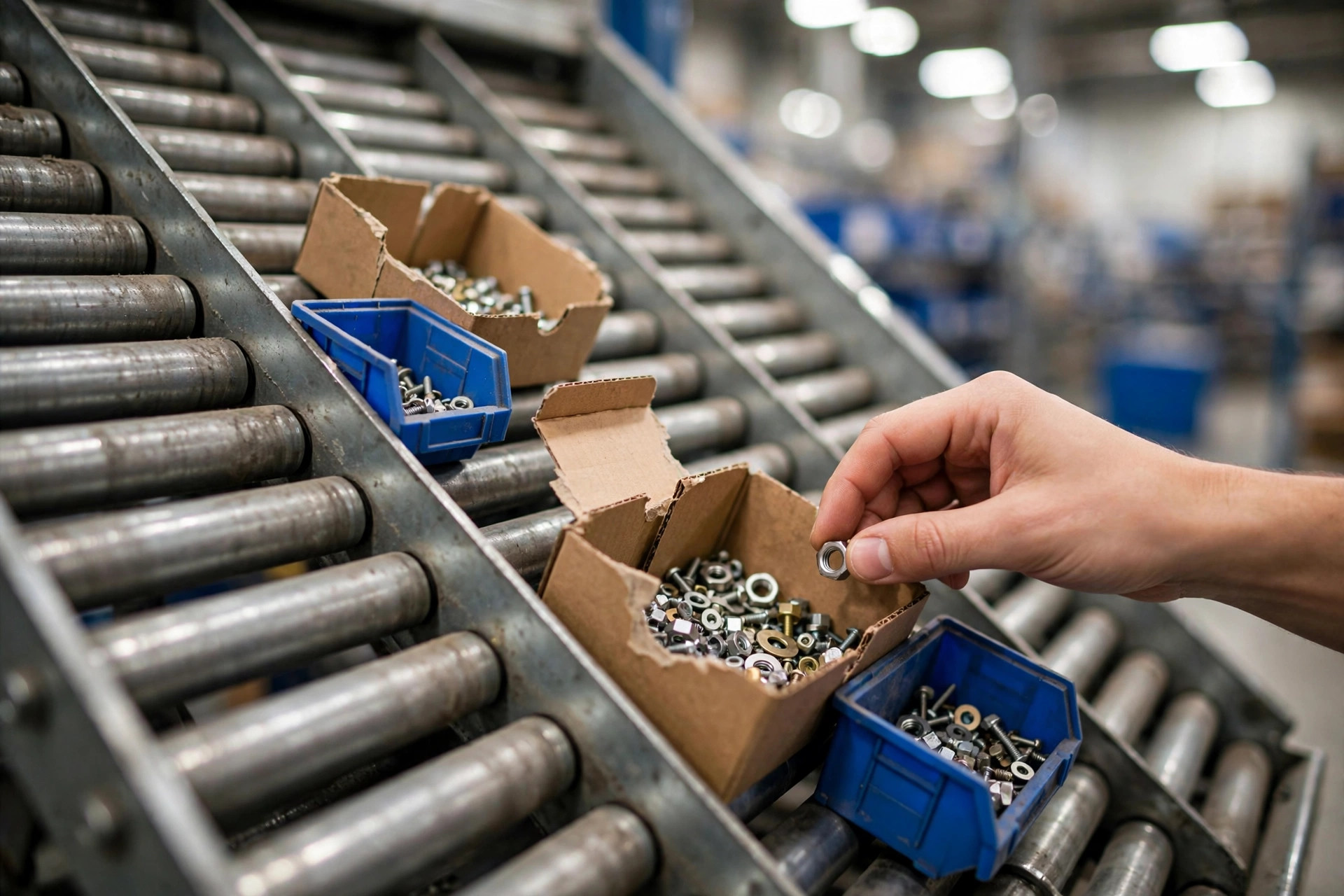
For the middle 60 to 70% of SKUs, I slot two to four SKUs per bin or per flow-rack opening. But be clear about one thing: this is not tossing several SKUs into one box and calling it a day. The space you save on the rack gets collected somewhere else — in mispicks.
Multi-SKU slotting only works when three hard conditions are all met. Miss one and don't do it.
First, physical label separation. Every SKU in the slot needs its own card holder with a printed SKU barcode — never handwritten. Handwritten cards fade and smudge within months, and then pickers start guessing. Guessing means mispicks.
Second, the system must natively support multiple SKUs per location. Plenty of older WMS setups assume one SKU per slot in their location master data, so multi-SKU slotting ends up tracked in spreadsheets and notes. Anything tracked in a spreadsheet falls apart within a quarter. The right way: scan the location barcode plus the SKU barcode on every pick, with the system directing the picker to the exact card position inside the slot.
Third, the items must be visually distinct at a glance. Never co-locate look-alikes: two colors of the same phone case, M5 and M6 nuts. I watched a warehouse put two silicone cases that differed only in color into the same slot; the mispick rate doubled, and the rework labor cost several times what the saved slots were worth.
Slow movers don't belong in the pick zone
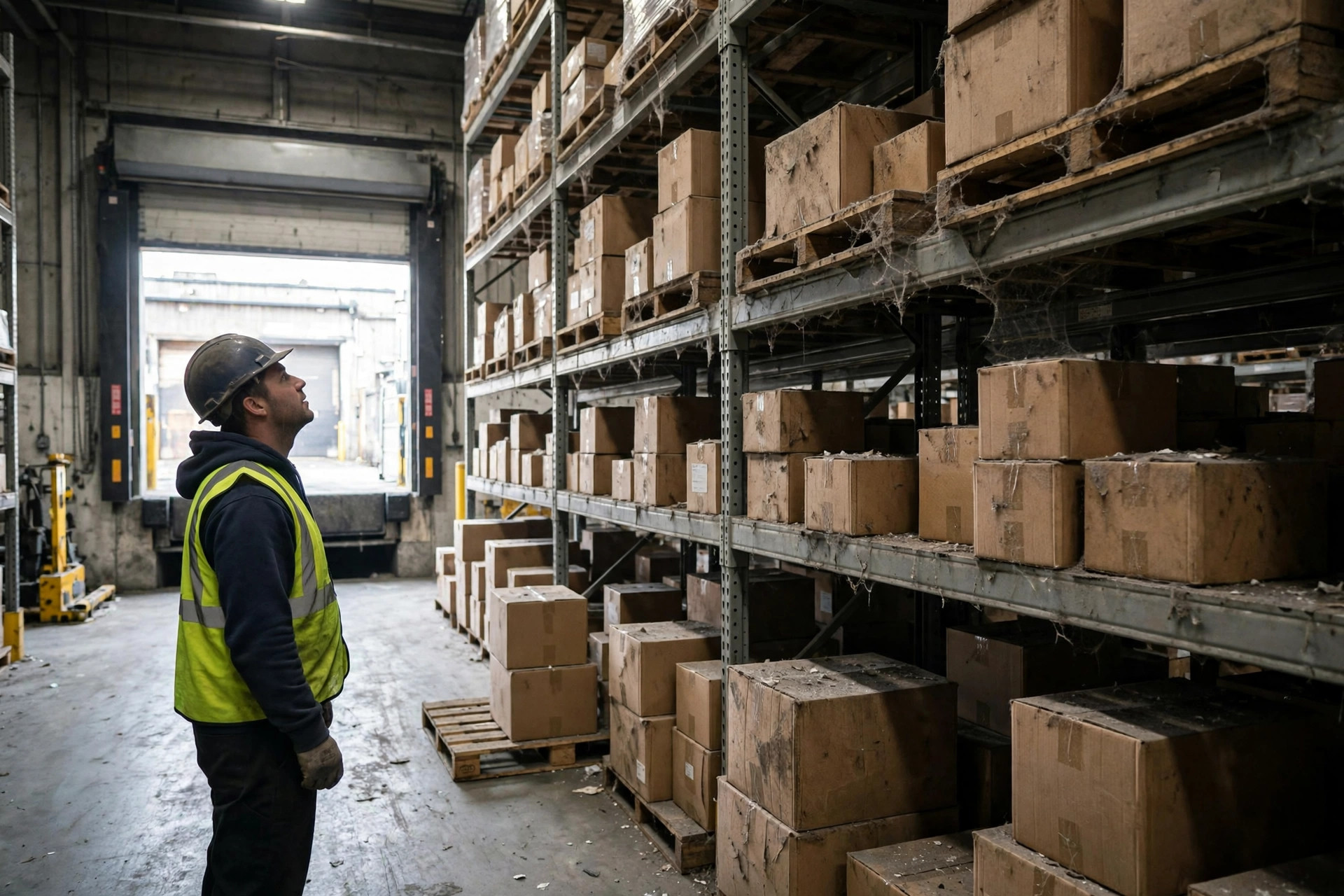
The bottom 10 to 20% — SKUs that barely move all year — should not be in the forward pick area at all. Put them in bulk storage or drawer cabinets in the back. Pick them discretely when an order comes in. People hate this because "what if it suddenly takes off?" If it takes off, the velocity alert in your WMS tells you, and moving it into the pick zone takes half an hour. Holding golden-zone slots hostage for a "what if" is the real waste.
Replenishment cadence follows the same tiers: check A items daily with automatic top-up triggers, walk the B items weekly, and pull C items only when an order demands it. Don't guess the trigger points — calculate them as daily pick volume times lead time times a 1.5 safety factor. Whatever the math says is what it is.
There is no set-and-forget slotting plan. My advice: cut along these three tiers once, run it for a quarter, then tune with fresh velocity data. A warehouse is alive — the SKU mix shifts every quarter, and slotting has to shift with it. The one principle that never changes: slots always yield to velocity, never to tidiness.