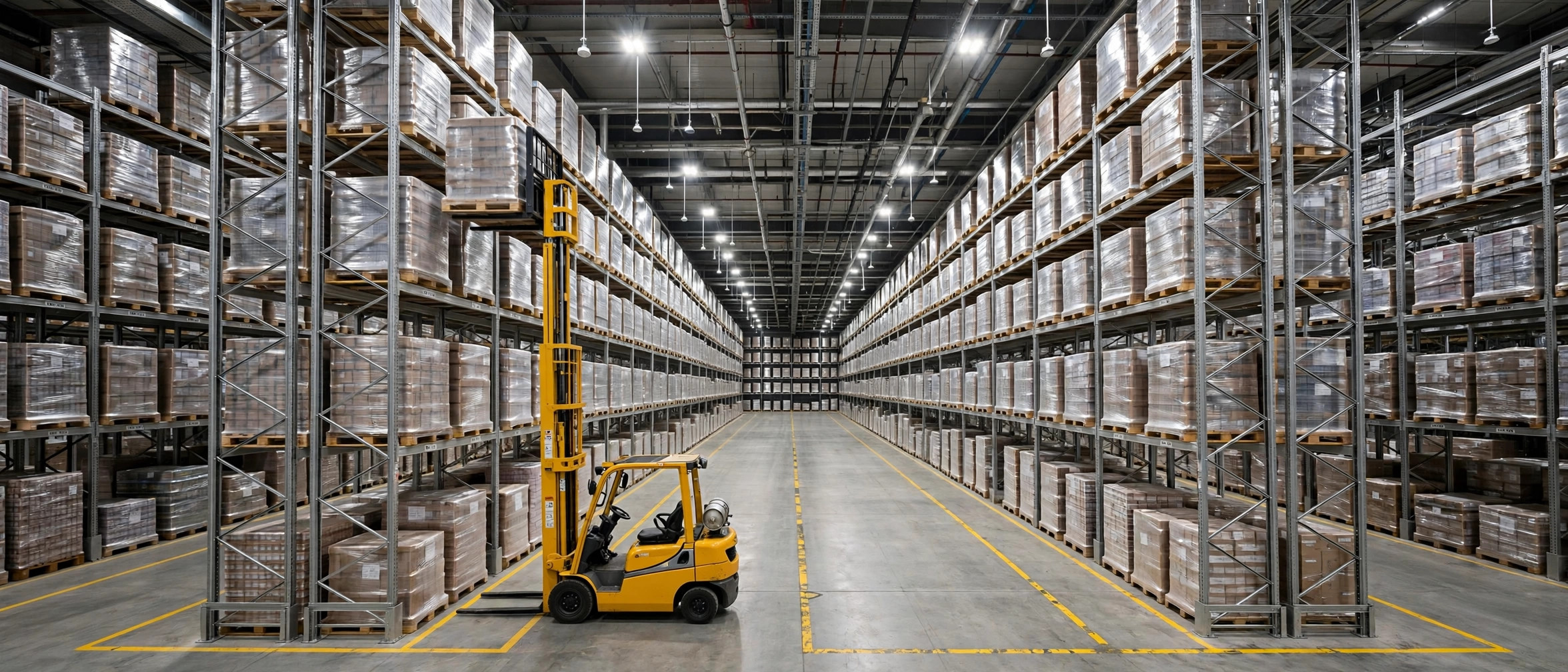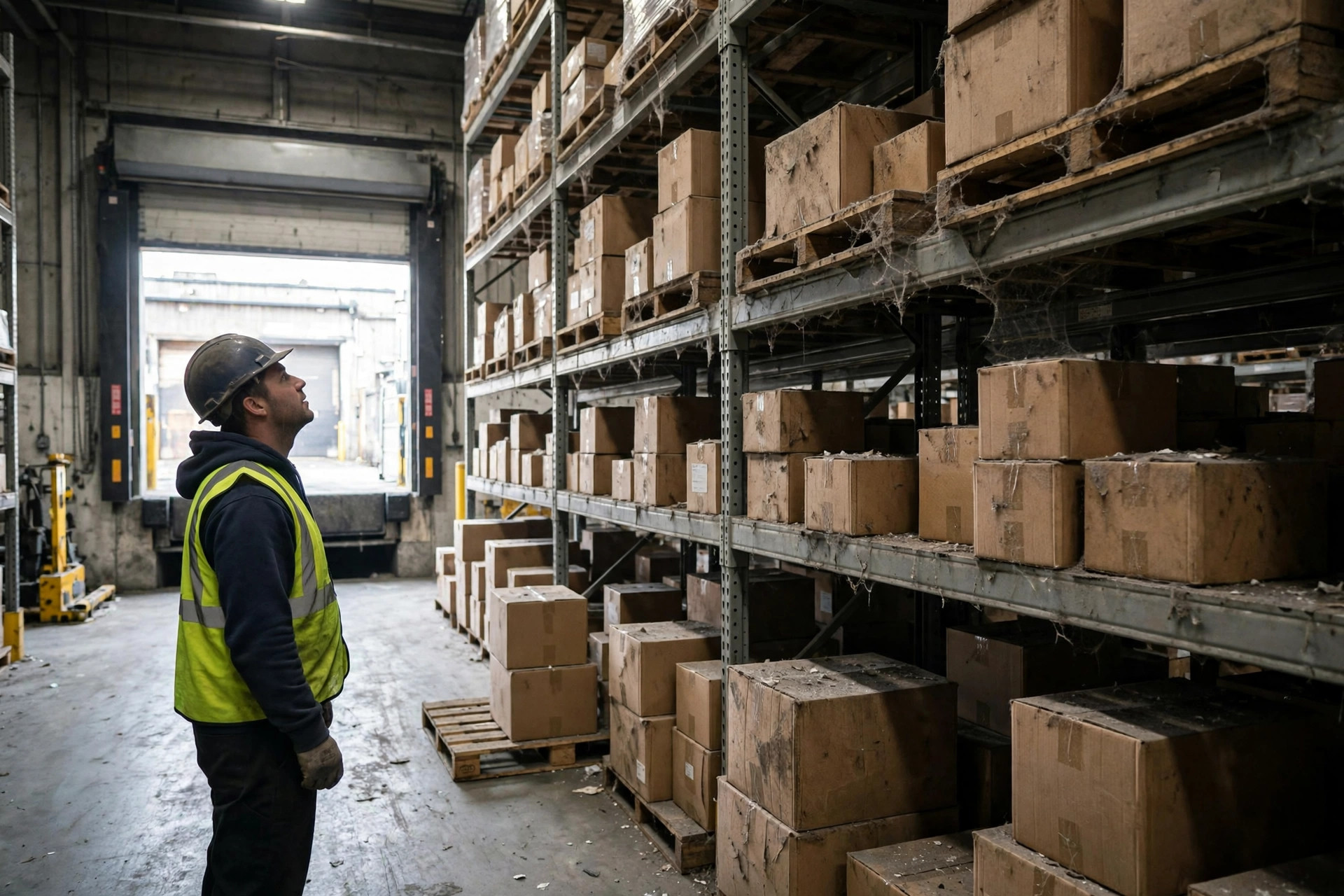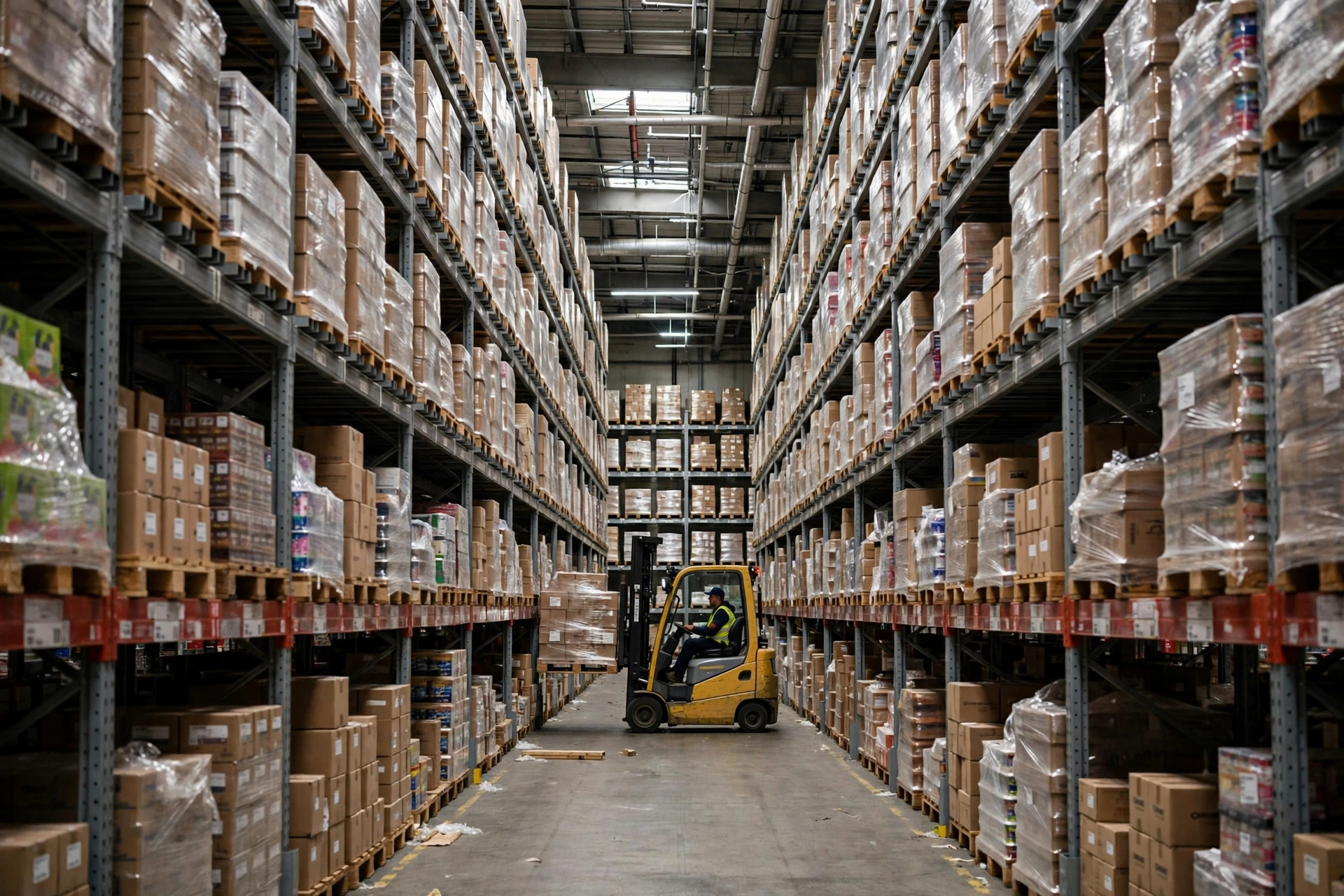
Walk into enough warehouses and you start recognizing this scene on sight. The golden pick zone — closest to pack-out, waist height, grab several units without stretching — is occupied by SKUs that move three or four times a year. Meanwhile the actual bestsellers send pickers hiking to the far end of the building, every single order, all day long.
I saw it in an 80,000-square-foot e-commerce warehouse in Ontario. The pick supervisor was asking for more headcount for peak season, so I had him pull the slot velocity map: of the top 20 golden-zone locations, 11 held SKUs with fewer than 10 picks in the last 90 days. That's not a staffing problem. That's a slotting problem — the bestsellers had been banished to the back forty while the dead stock held the capital.
Slotting downgrade is the correction: slow movers voluntarily give up the good ground and hand it back to the fast ones. No new system, no new equipment. One round of re-slotting and the results show up immediately.
Define "slow" with a number, not a feeling
The first step isn't moving product, it's setting the standard. "This doesn't sell well" means nothing — everyone in the building has a different definition of "well." The standard has to be a number, and one you can pull straight from the system.
The metric I use is picks in the last 90 days. Note: picks, not units shipped. One wholesale order that picks 100 units in a single trip and a hundred one-unit e-commerce orders mean completely different things for slot value. Slotting is about how many trips a human makes, so count pick lines or pick tasks.
Where to set the threshold? Let your own distribution decide. Rank every SKU by 90-day pick count, draw the line at the bottom 30%, and everything below it goes into the downgrade candidate pool. Don't invent an absolute number like "fewer than 5 picks a month" — a warehouse with 5,000 SKUs and one with 500 have nothing in common when it comes to what "slow" means.
One exclusion to carve out first: seasonal goods. Christmas decor has zero picks in a 90-day window ending in July, but you don't banish it to the back forty in September. Flag seasonal SKUs separately and handle them on a seasonal calendar, or the algorithm will do damage.
The downgrade path: three moves to the back forty
With the standard set, the downgrade runs in three moves. Don't try to do it in one. Rushing a full-building re-slot is how you end up with pickers memorizing wrong locations and a week of mis-picks. Each move is a separate decision with its own verification: after move one, walk the golden zone and confirm every location holds a top-quartile SKU before you touch the high bay. Slow and verified beats fast and wrong — a re-slot done right happens once a quarter, not once in a panic.
Move one: evict from the golden zone. The golden zone is roughly the locations nearest pack-out at waist height — second and third shelf levels — the most productive real estate in the building. Any downgrade candidate sitting there gets moved out, and top-ranked movers take its place. This step pays off fastest; in the warehouses I've worked with, this move alone cuts average pick travel by ten to twenty percent.
Move two: up to the high bay. The upper levels of the same racking — fourth level and above — are slow to pick because they need a ladder or a lift, but the storage density is the same. Slow movers go from waist height to the high bay, where an occasional trip is acceptable and the cube isn't wasted. Watch your weight limits and keep the safety aisles clear — don't stack heavy product high just to get it out of the way.
Move three: the corners and the floor. The deepest reaches of the building, the awkward spots by the columns, the floor-stack areas outside the racking — that's the final destination for slow movers. These are the least productive locations in the building, but a SKU visited a few times a year doesn't care. Floor stacking suits bulky slow movers and saves the putaway labor entirely.
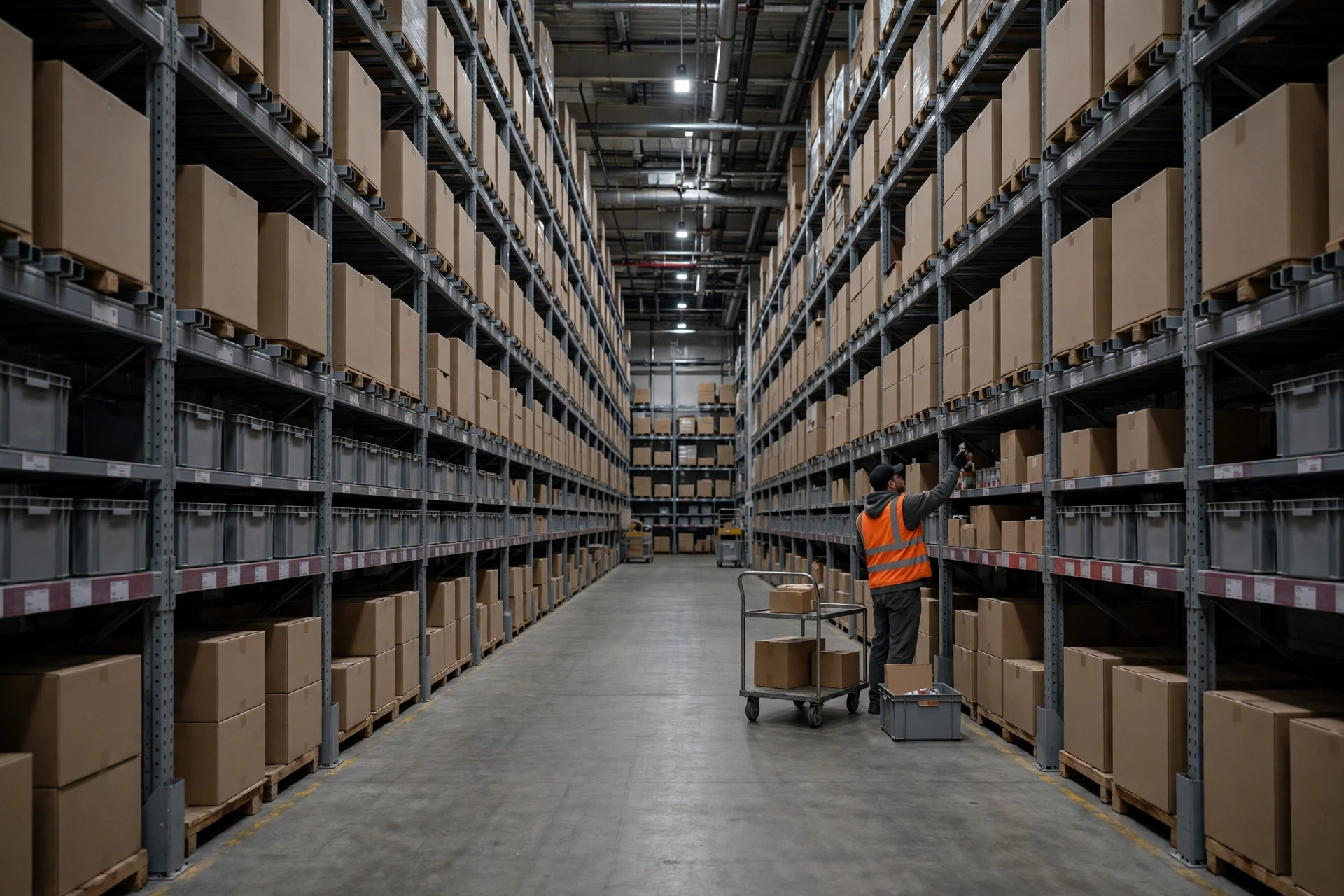
A downgrade without a way back turns toxic, so build in a revival mechanism. Re-run the downgrade list every quarter; any SKU whose velocity climbs back into the top 70% automatically earns its slot level back. Promotions, new-product ramp-ups, seasons returning — any of these can resurrect a SKU. Without revival, downgrading hardens into a caste system and eventually nobody dares touch slotting at all.
Then prove it worked, or the next round won't happen. Before the first move, record your baseline: average pick travel distance per order line, or simply picks per labor hour in the affected zone. Measure again 30 days after the re-slot. In my experience the golden-zone swap alone shows up in the numbers within two weeks, and that measured win is what gets you permission — and labor hours — for the quarterly rhythm going forward. Slotting downgrade isn't a project with an end date; it's maintenance, like changing the oil. Skip it for a year and the golden zone fills up with squatters again, and you'll be paying pickers to hike past dead stock to reach the products that actually pay the rent.
One more piece of timing advice: do the physical moves in the off-season or on weekends, never during peak. Every relocated SKU needs a system update, a cycle count to confirm it, and pickers who have to re-learn the map. Doing that in peak season is volunteering for chaos. And tell the pickers why the move is happening before it happens — nothing kills trust in a re-slot faster than a picker walking to a familiar location and finding a stranger's product there with no explanation.
One thing for next week: pull 90-day pick counts by SKU from your WMS, rank them, and look at how many "connected" slow movers are squatting in your golden zone. That number will very likely startle you.