The morning my shipping platform account got suspended, I nearly threw my coffee mug across the room.
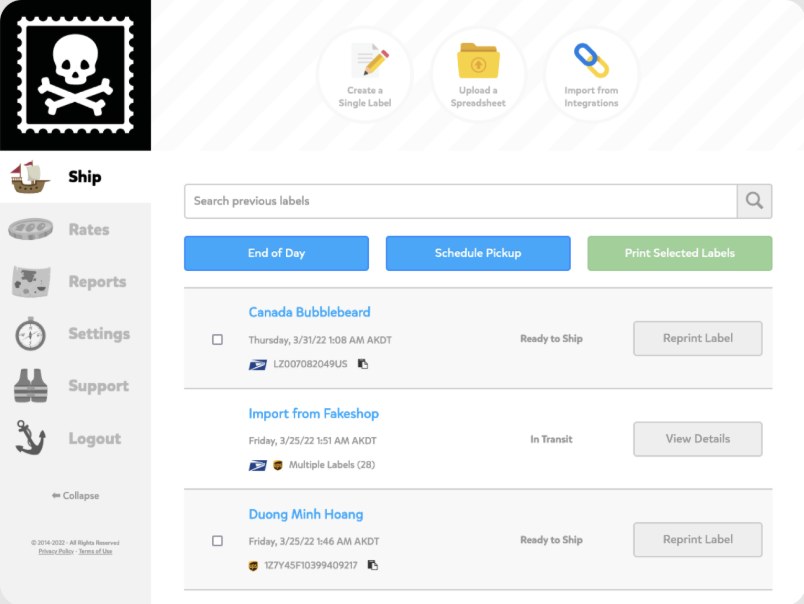
It was 9 AM. Three hundred orders waiting to be labeled. I opened Pirate Ship, and instead of the familiar dashboard there was a cold little banner: account suspended for suspicious activity. New browser, cleared cache, incognito — nothing. Support ticket went into a black hole. That day's shipments went out half a day late through a backup Stamps.com account, and rush fees alone cost me over $200.
If you make your living printing labels, this one's for you. I'm laying out everything: what actually trips account risk controls at Pirate Ship, Shippo, Stamps.com and the rest, and the appeal script that got my account back. Five years selling cross-border, and I've collected every scar in this game.
How I Got Suspended: The Real Story
November 2025, peak season. I was doing 40 to 50 orders a day, nothing crazy. Then one of my TikTok product videos blew up, and I woke up to 300+ orders in a single day.
I was thrilled — until my account locked mid-batch. The platform's fraud system did exactly what it was built to do: a quiet account suddenly blasting out 300 labels for the same product to addresses across the entire country looks exactly like a stolen card or a label-reselling scam. That's a textbook recipe for an account suspension.
My buddy in a seller group had it worse. He used one credit card to top up five different shipping platform accounts. One of them got a chargeback dispute. The platform linked all five and nuked every single one. It took him two weeks of appeals to recover just two of them.
The lesson from both cases: risk controls don't suspend bad people, they suspend weird-looking behavior. You can be an honest seller, but if your activity pattern looks like a fraudster's, you're gone. No trial, no warning.
The 5 Moves That Trigger an Account Suspension
Here's my field-tested list of the five riskiest things you can do on a shipping platform. I'm not a platform insider, so treat exact rules as "check the platform's latest policy" — but these five are the repeat offenders in every seller community I'm in:
1. Sudden volume spikes (or drops)
The number-one killer. Forty orders a day, then suddenly 400. Or a big account goes dead silent for a week and then blasts a huge batch. Volume whiplash is the single thing fraud models are most sensitive to.
What I do now: any predictable spike — Prime Day, a TikTok live, a big email blast — I message support beforehand and give them a heads-up with expected volume. Haven't been false-flagged since.
2. Ship-from addresses changing all the time
California warehouse today, Texas tomorrow, back to California next week. Or bulk-importing thousands of recipient addresses you've never shipped to before. To the system, that smells like a hijacked account.
Keep your ship-from address stable. Update your profile before you switch warehouses, not after. And stage big recipient imports in batches instead of dumping thousands of rows at once.
3. Payment problems: chargebacks, declined cards
This is the deadliest one. A chargeback on your funding card reads as a fraud signal to the platform, and a couple of them will end your account. My friend's five-account wipeout started exactly here.
Use one dedicated credit card with plenty of headroom just for postage — never mix it with personal spending. And if your bank flags a suspicious transaction, resolve it immediately before it turns into a chargeback.
4. Sketchy label data: fake weights, shady bulk label imports
Some sellers shave postage by declaring 1 lb on a 5 lb package, or bulk-import cheap labels from gray-market sources. When the carrier catches underpaid postage, the bill lands on your platform account — and after a few strikes, the platform bans you.
Enter real weights and dimensions. The few cents you save aren't worth gambling your whole account. Buy labels only through official platform channels.
5. Linked accounts: same device, same IP, same card
A lot of sellers open a second account as a "backup," then log into both from the same laptop, same IP, same payment card. The platform links them instantly — and when one gets flagged, they all go down together. Your risk hedge becomes a risk multiplier.
If you're going multi-account, isolate completely: different devices, different networks, different payment methods. Half-hearted isolation is the same as no isolation.
The Counter-Intuitive Part: Longer Appeal Letters Lose
When sellers get suspended, the instinct is to write a 2,000-word epic — your founding story, your family, how much you love the platform. Pour your heart out.
It doesn't work. It has never worked.
The support agent reading your appeal processes hundreds of these a day. They skim for 30 seconds and decide. A long letter means low information density, which means they skip it. My first appeal was 800 words of pure emotion — silence. My second appeal was 200 words following the template below — account restored the same day.
The platform only wants three sentences from you:
- Who I am (account, store name, how long I've shipped normally)
- What happened (admit the anomaly, explain the legit reason)
- What I'll do differently (so it doesn't happen again)
That's it. Every extra sentence is dead weight.
The Appeal Template That Actually Worked for Me
Copy, adapt, send:
Subject: Account Review Request - [your account email]
Hi support team,
I'm the owner of account [email], store [store name]. I've shipped normally on your platform for about [X] years, averaging [X] orders per day.
On [date], my account was suspended after a sudden volume spike. The cause was [one sentence: a TikTok live that drove one-time viral orders / switching to a new fulfillment warehouse] — not fraud or abuse.
Attached are [store backend sales screenshots / the promo event page / the new warehouse lease] proving the volume is legitimate.
I understand the platform's risk policies and will notify support before future promotions to avoid false flags. I'd appreciate a re-review of my account. Thank you.
[Your name] [Phone]
A few things that make this work:
- Attachments beat words. Sales screenshots, promo pages, contracts — anything that proves you're a real seller. Support trusts evidence, not tears.
- Acknowledge, don't argue. "I did nothing wrong" is something they hear 800 times a day. "I know this volume looks alarming — here's why, and here's the proof" is ten times more credible.
- Give them an exit ramp. "I'll notify support before future promotions" tells the agent: release me and I won't cause you trouble again. They need a defensible reason to reinstate you — hand it to them.
- Don't bank on a timeline. Platforms generally don't commit to a review SLA, so check the latest official policy. In my experience, a complete evidence package gets answered within hours to a few days — but that's my experience, not a promise.
If nothing comes back in 48 hours, don't just wait. Push through another channel — ticket plus email plus live chat — but don't resubmit the identical message, or it'll get flagged as spam.
Three Things I Did After Getting My Account Back
First, back everything up. Export your address book, saved recipients, and label history. If your account ever gets hit again, you can be operational on a new platform in ten minutes instead of panicking.
Second, keep a warm backup platform. Never put all your volume on one platform. I run Pirate Ship as my main now, but I keep a Shippo account logged in and print a few labels a month to keep it active. Real failover, zero drama.
Third, notify support before big promos. This trick genuinely works — I've tested it myself. Since I started giving support a heads-up before every spike, I've gone through two peak seasons with zero suspensions. Risk systems fear the unexpected. Turn the unexpected into the expected, and they have no reason to touch you.
Getting an account suspension feels like the end of the world, but it isn't. Audit yourself against the five triggers above, write the appeal with the template, attach your proof — odds are good you'll be back. Remember this: platforms don't hate sellers. They hate behavior they can't understand. Explain your behavior clearly, and they want you back printing labels more than you want to be back — because every label you print is money in their pocket too.
This trick worked for me. May your account live long and prosper.
By Ah K, E-commerce Seller (5 yrs)