The Duty Bill Was Four Times My Freight: What Importing Automation Gear from China Really Costs in 2026
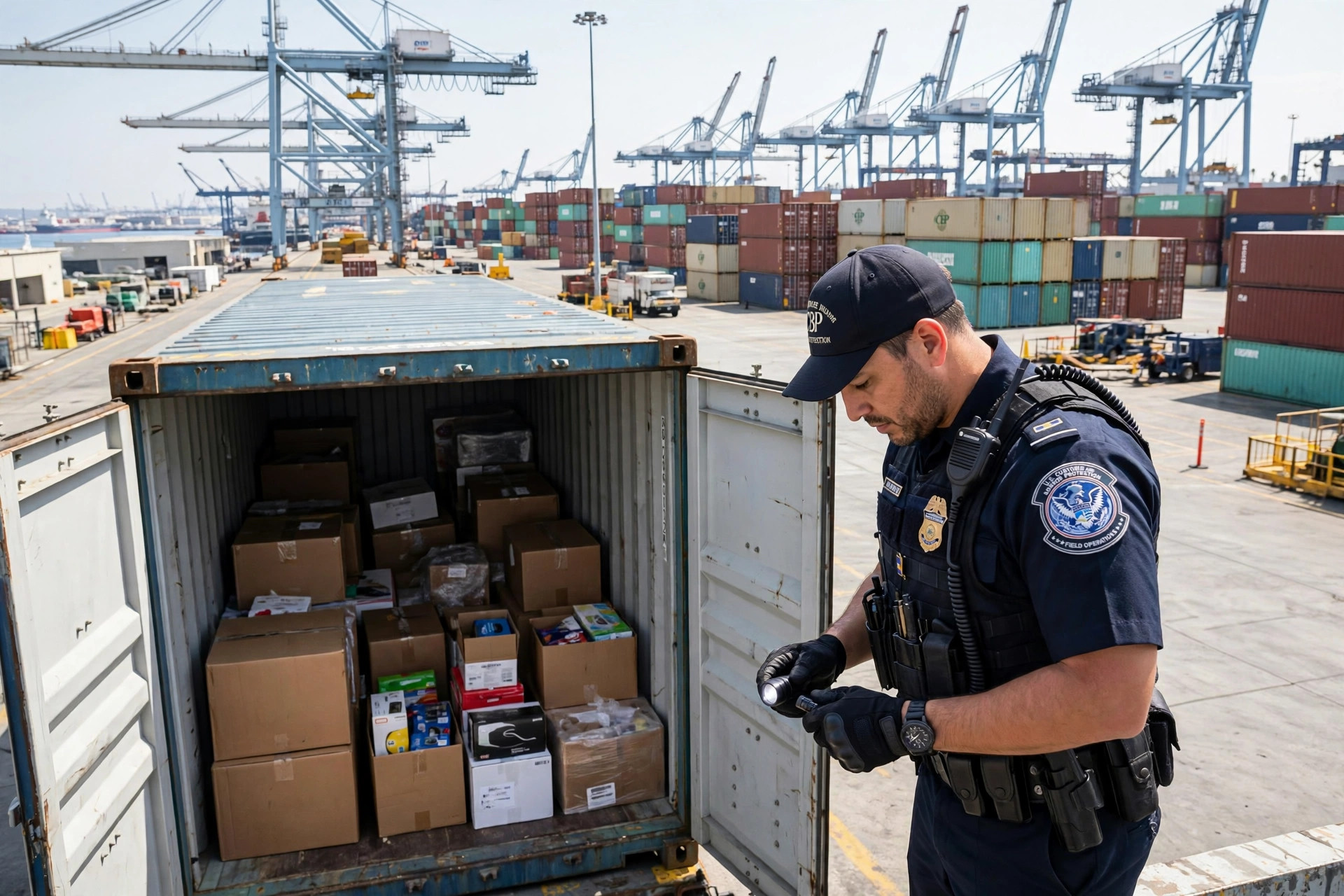
I imported a small conveyor line from Dongguan in the spring of 2025 for my own packing warehouse in Ontario, California. When the broker's invoice landed, I just stared at it: $24,000 in duties against $5,500 in freight. The tax was more than four times the shipping.
And it got worse. On July 24, 2026, Washington stacked another layer of Section 301 tariffs on top — 12.5% more on Chinese goods. So here's the real 2026 math on importing automation equipment from China, paid for with my own money and priced out again just last month.
My conveyor line: how I paid 45%
My own story first.
April 2025. The equipment was $48,000 FOB. Ocean freight plus insurance ran about $5,500, putting CIF value at roughly $53,500. Then the duty stack:
Section 301 List 3, 25%: belt conveyors under HTS 8428.33 have sat on List 3 since 2019. $53,500 × 25% = $13,400.
IEEPA surcharge, 20%: the fentanyl emergency tariff rolled out in early 2025, applied across the board to Chinese goods. $53,500 × 20% = $10,700.
Total: $24,100 in duties — a 45% effective rate. A $48,000 machine landed at $77,600. It stung. Badly.
But here's the plot twist: on February 20, 2026, the Supreme Court struck down the IEEPA tariffs as executive overreach, and the Court of International Trade ordered Customs to refund the money. That $10,700 IEEPA portion? Theoretically recoverable. My broker is now digging through the liquidation status of that entry to file a protest. The process is a mess — nobody will promise whether the money comes back or when — but if you paid IEEPA duties in 2025 and don't file, that money is gone for good.
The October 2026 duty stack: 37.5% before you blink
IEEPA is dead, so the administration switched plays. The new global Section 301 program — launched under a forced-labor investigation and effective July 24, 2026 — hits 60 economies in tiers. China landed in the 12.5% tier, stacked directly on top of the original Section 301 duties.
So a shipment of Chinese automation equipment today looks like this:
| Layer | Rate | Notes |
|---|---|---|
| MFN base rate | Usually zero | Most 8427/8428 handling equipment is duty-free; verify at hts.usitc.gov |
| Section 301 (Lists 1/2/3) | 25% | The original 2018–2019 China 301; conveyors and robots are on it |
| Section 301 (2026 global program) | 12.5% | China tier, effective July 24, 2026 |
| MPF | 0.3464% of value, $34.58–$670.86 cap | FY2027 schedule, in effect since October 1, 2026 |
| HMF | 0.125% of value | Ocean freight only |
Bottom line: 37.5% in ad valorem duties plus a few hundred in fees.
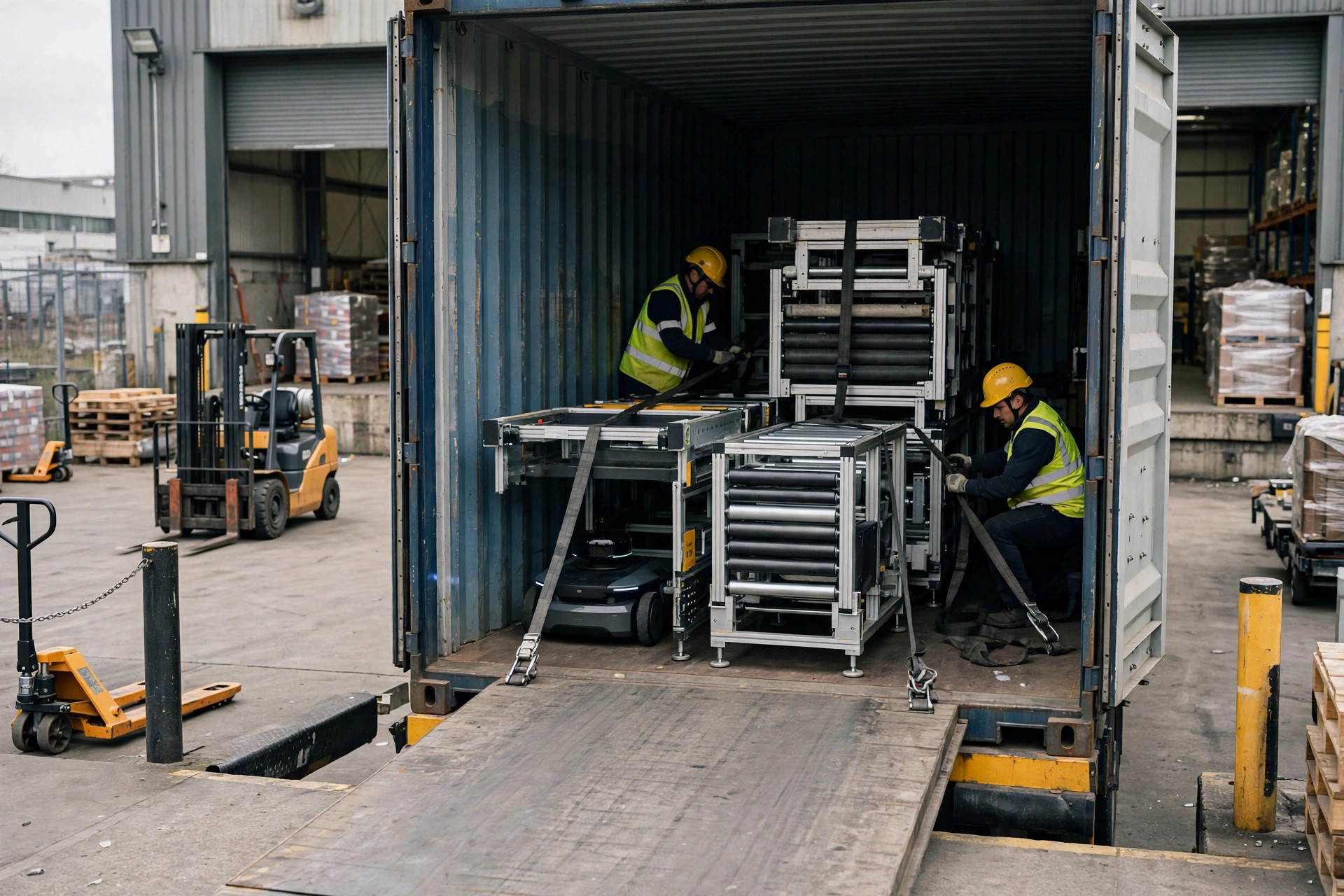
A friend just priced this out for real. He's fitting a 3PL warehouse in Dallas with six AMRs from a Shenzhen factory: $168,000 FOB, $11,000 freight and insurance, $179,000 CIF.
Old 301 at 25%: $44,750. New 301 at 12.5%: $22,375. MPF: $179,000 × 0.3464% = $620. HMF: $179,000 × 0.125% = $224.
Duties and fees total $68,000. Landed cost: roughly $247,000 — 1.47 times the quoted price. He looked at the math and pushed the project back two months.
Where the legal savings actually are
To be clear: everything below is above board. If a broker hints at some "all-in DDP, don't ask questions" arrangement to make the 301 disappear, walk away — your EIN is on that entry, and the penalty lands on you.
Start with exclusions. USTR extended the Section 301 product exclusions through November 10, 2026. Have your broker check whether your HTS code is on the exclusion list before you pay a cent of that 25%. It's the fastest money in this whole game, and most people never check.
Then classification. Automation gear lives or dies by its tariff code: AGVs were classified by CBP in 2026 under 8427.10.8050, conveyor systems mostly under 8428, robot arms potentially under 8479.50. The wrong code means overpaid duties or a penalty. A binding ruling costs a few hundred bucks and beats a back-duty bill every time.
Here's the sharper play: attack the tax base, not the rate. Duties multiply against dutiable value. If you buy through a multi-tier structure — factory to Hong Kong trading company to you — the first-sale rule can let you declare the first transaction price, provided the deals are arm's-length and fully documented. Shave 10% off the dutiable value and you've effectively cut 3.75 points off the rate. Get your broker to vet it first; don't freelance your valuation.
And chase refunds. Paid IEEPA duties in 2025? Check whether your entries are liquidated and whether the protest window is still open. Re-exporting equipment? Duty drawback refunds 99% of the duties.
Two things everyone gets wrong, plus three traps
Wrong thing number one: "just move assembly to Vietnam." Dead strategy since July 2026. Vietnam sits in the same 12.5% tier of the new global 301. Unless your product undergoes substantial transformation and genuinely earns Vietnamese origin, that 12.5% follows you. Moving the supply chain now dodges the old 25%, not the new layer.
Wrong thing number two: in 2026, the biggest risk on Chinese AMRs might not be the duty — it might be market access. On July 27, 2026, the FCC put foreign-made mobile robots, AMRs and AGVs included, on its Covered List, freezing new equipment authorizations. You can model the tariff perfectly and still not get the machines in. Ask your integrator for FCC compliance paperwork before you wire a deposit, and check the FCC's own notices for current status.
Trap one: de minimis is dead — killed for China in May 2025, globally that August. Splitting shipments into small parcels to dodge duties doesn't work anymore; everything goes through formal entry now.
Trap two: don't budget on "tariffs will come down." I budgeted that way in 2025 and watched rates climb instead. Model at the full 37.5%; if it drops, that's a bonus.
Trap three: never compare on FOB price alone. After this tariff wave, Chinese equipment still wins — just not on sticker price. It wins on lead time and customization. Run the landed-cost math before you compare quotes. Everyone who thought they found a bargain on the factory price ended up crying over the duty bill.
This one I can vouch for from experience: before you place the order, spend $500 having your broker do a classification review plus an exclusion check. It can save you tens of thousands in duties. After paying $24,000 in tuition, that $500 was the best money I ever spent.
By Ah K, E-commerce Seller (5 yrs)