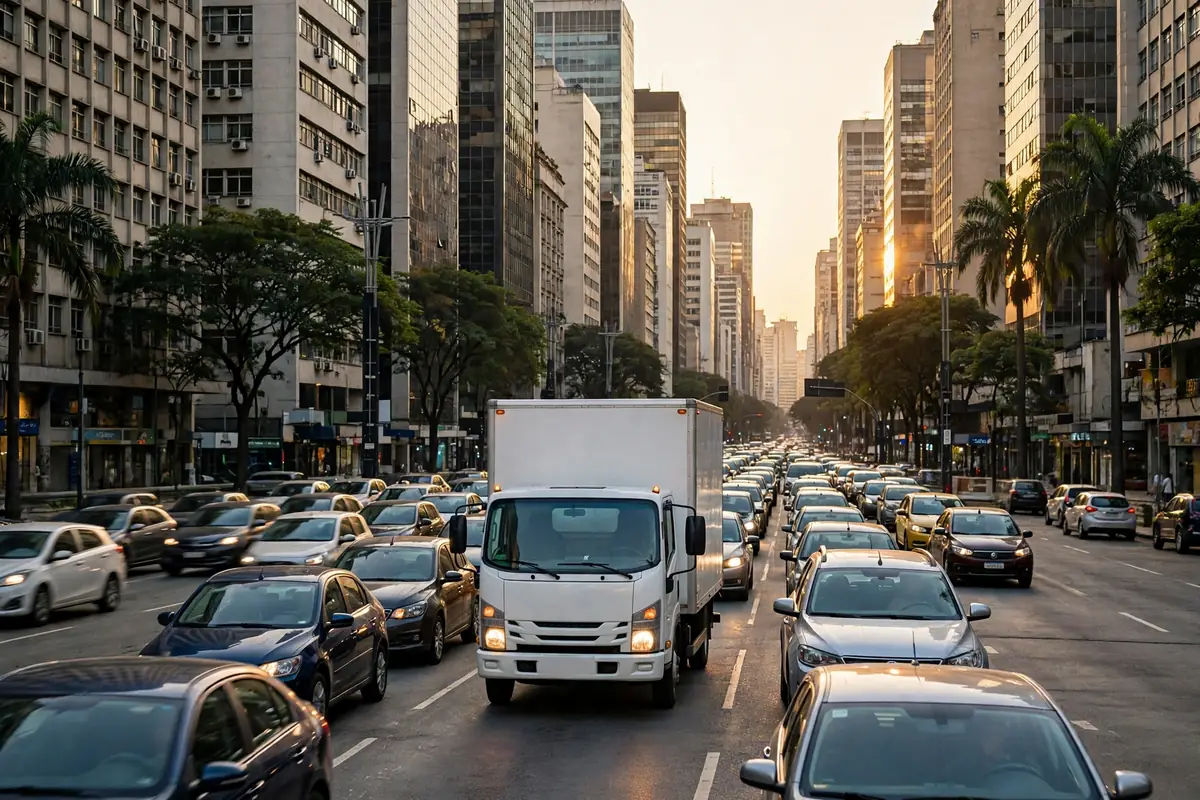
Let me tell you something. After all these years on the road, I have seen traffic jams everywhere, but São Paulo traffic is something else entirely. It is not one road jammed up. The whole city turns into a giant pot, and at rush hour, every vehicle in town is slowly simmering in it. My first delivery run in São Paulo was with an old friend who ran South American routes. He said something on that ride I still remember: "In this city, how close your warehouse is to the customer does not matter. What matters is what time you leave."
São Paulo is Brazil's largest city, one of the biggest in South America, home to well over ten million people in the city proper and far more across the metro area. The freight volume is enormous. On paper, urban delivery here should be a gold mine — dense orders, short distances. In practice, plenty of logistics companies arrive in year one and leave in year two. The reason is always the same: the numbers do not add up. The volume looks great until you realize the trucks burn more time on the road than they spend loading at the warehouse.
My friend told me about a real job from mid-2024. His company won a replenishment contract for a supermarket chain with more than a dozen stores across central São Paulo, delivering every day. The warehouse sat west of the city, an average of twenty or thirty kilometers from the stores — half an hour without traffic. But at morning and evening peaks, the same stretch took ninety minutes. One run was the worst: a dozen or so kilometers from the warehouse to the first store took more than two hours, and by the time the driver arrived, the receiving staff had gone home. That delivery missed its window, and the driver managed only three trips that day instead of the usual six. At month's end, the fleet manager did the math: the trucks had run no fewer kilometers and burned no less fuel, but completed only half the planned deliveries.
Where to Put the São Paulo Warehouse Is a Technical Decision
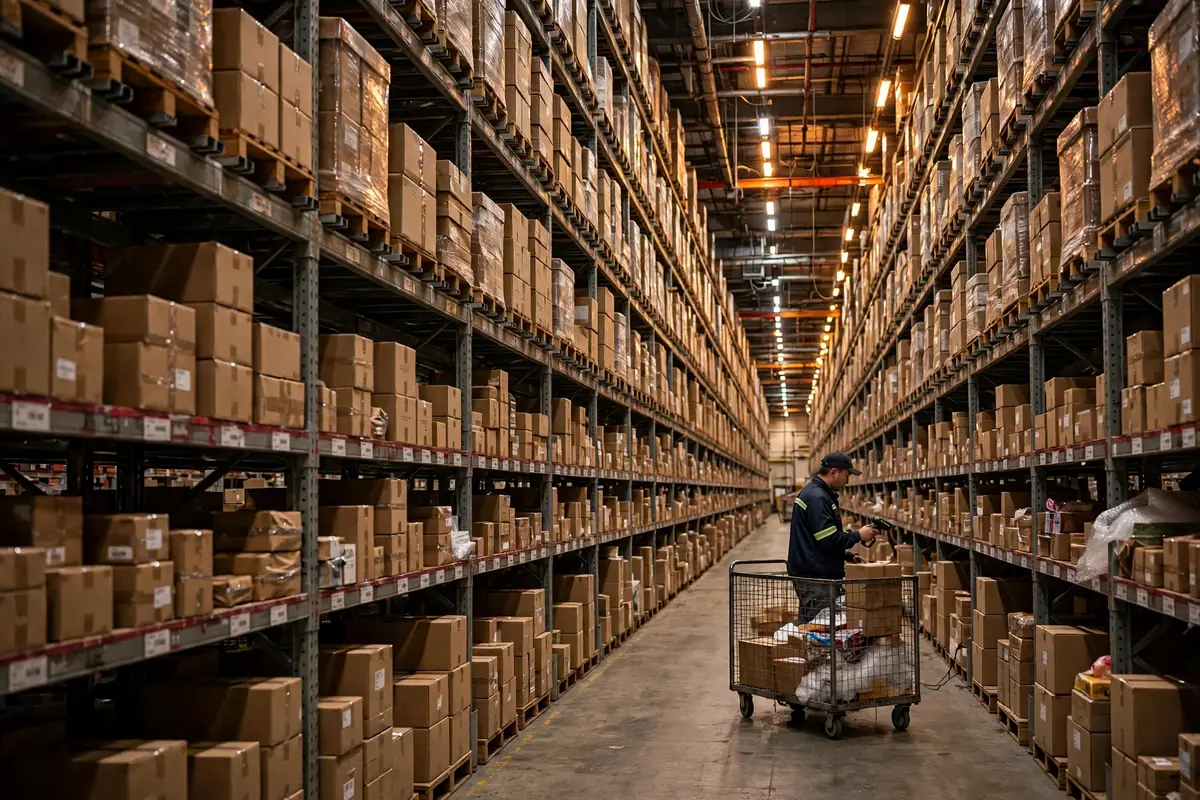
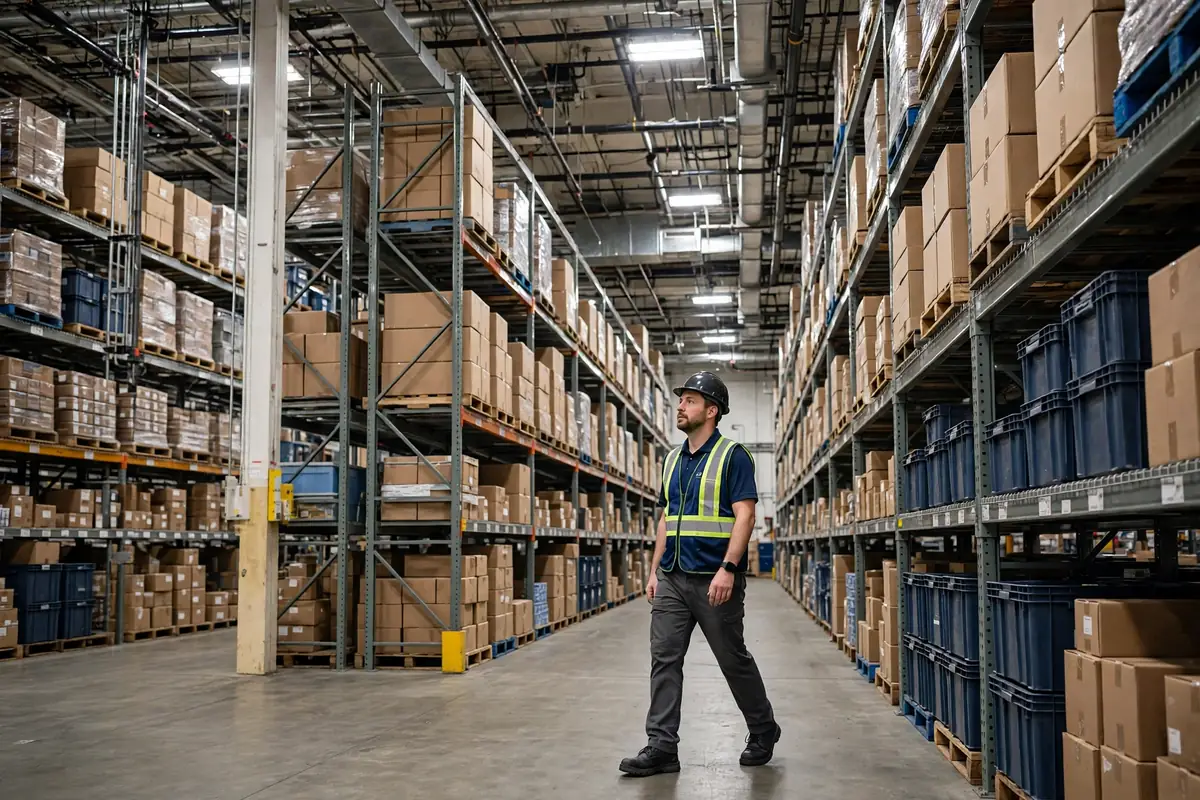
Warehouse rent in central São Paulo is expensive — that is no secret. A downtown warehouse sits close to the stores but costs a fortune, and height and weight limits often keep big trucks out. A suburban warehouse is cheap and spacious, with easy access for large vehicles, but every trip into town means joining the whole city in traffic. Many newcomers rent the cheap suburban space and discover that the money saved on rent goes straight into fuel burned in jams and driver overtime.
My friend's company did not move the warehouse. They changed the distribution method instead. They kept the big suburban warehouse and added a small cross-dock point — a few hundred square meters — at the edge of the city center, with one job only. Big trucks ran in the early hours while the roads were empty, moving the day's freight to the cross-dock in one shot. During the day, small vans ran from the cross-dock to the stores. The vans were nimble, could use side streets, and could enter restricted zones. Daily trips per vehicle doubled. The cross-dock added rent, but the savings in driver hours and fuel far outweighed it.
Here is the counterintuitive part: in São Paulo, a warehouse closer to the customer does not necessarily deliver faster. What decides delivery time is not distance, it is the time window. A truck leaving at 4 a.m. and one leaving at 8 a.m. can take two or three times as long on the same route. The value of a cross-dock is not that it is "close" — it is that it lets you stage freight before dawn. Newcomers who calculate only kilometers and ignore time windows learn this lesson the hard way.
São Paulo also runs a license-plate restriction on weekdays, with different rules by area and time of day. Drivers from out of town who do not know it collect fines one after another. Our fleet's rule was simple: check the day's restriction before dispatch, and assign restricted trucks to night shifts or suburban routes. The rule sounds like a nuisance, but once you learn it, it becomes an edge — while competitors sit at the roadside with fines, your freight is already delivered.
Last-Mile Delivery Is Won on Scheduling, Not Speed
In São Paulo, urban delivery comes down to scheduling. Every afternoon, the fleet manager plans the next day around three questions: which trucks leave at what time, which stores each route hits first, and which driver covers which area. Done well, one truck runs six trips a day. Done badly, three trips and the day is gone.
A local fleet manager I know has a simple method: he splits the stores into "morning accessible" and "afternoon only." The morning group sits on main roads with easy unloading — trucks leave before dawn and clear those first. The afternoon group hides in narrow streets where unloading means queuing, so those go after midday when traffic eases. There is no high tech in this, just deep familiarity with the roads and the stores. Over a year, his fleet's on-time rate ran visibly ahead of competitors, and when renewal time came, his customers thought of him first.
Two honest suggestions for shippers and warehouse operators eyeing São Paulo. First, do not look at warehouse rent alone. Add the cost of time lost in traffic, driver overtime, and late-delivery penalties. The combination of a suburban warehouse plus a small urban cross-dock often beats one big downtown warehouse. Second, partner with a local fleet instead of bringing your own trucks from elsewhere. Local drivers know the roads, understand the restrictions, and know which stores receive at which hours. That experience cannot be bought quickly, at any price.
This market has real volume and a real barrier to entry. Run it right, and a few hundred orders a day is nothing special. Run it wrong, and trucks burn fuel on the road while money burns on the books. As the old saying goes, roads are made by walking — but in this city, you had better work out the route before you walk it.
By Shifu Zhao, Trucking Veteran (15 yrs)