Let me give you the conclusion first: when you pick a Rotterdam port warehousing location, do not start with rent. Start with how fast your goods actually move. If your freight turns quickly, vessel schedules swing, and your customers are scattered across Western Europe, being close to the port pays. If your freight moves slowly, ships in big batches, and mostly heads for the German hinterland, a site dozens of kilometres inland, sitting next to a barge terminal, usually produces the better total bill. Put bluntly, this is a time-cost calculation, not a per-square-metre comparison.
I have seen too many people start by circling warehouses inside the port area. In the autumn of 2023, a home-goods client leased port-side space less than ten minutes' drive from the container terminals, on the logic that "the moment the vessel berths, the goods can be in the warehouse." Then peak season arrived. Port roads jammed, truck appointment slots got fought over, and trucks queued for most of a day just to get into the port. The goods did get into the warehouse — but the outbound trucks to Germany were then the hard part to book. The awkward bit was that their freight was not urgent at all. Most of it was standard stock ordered two months ahead. They paid for port-side speed they never used, and they absorbed every bit of port-side congestion. That deal confirmed something for me: look at your freight's rhythm before you look at the map.
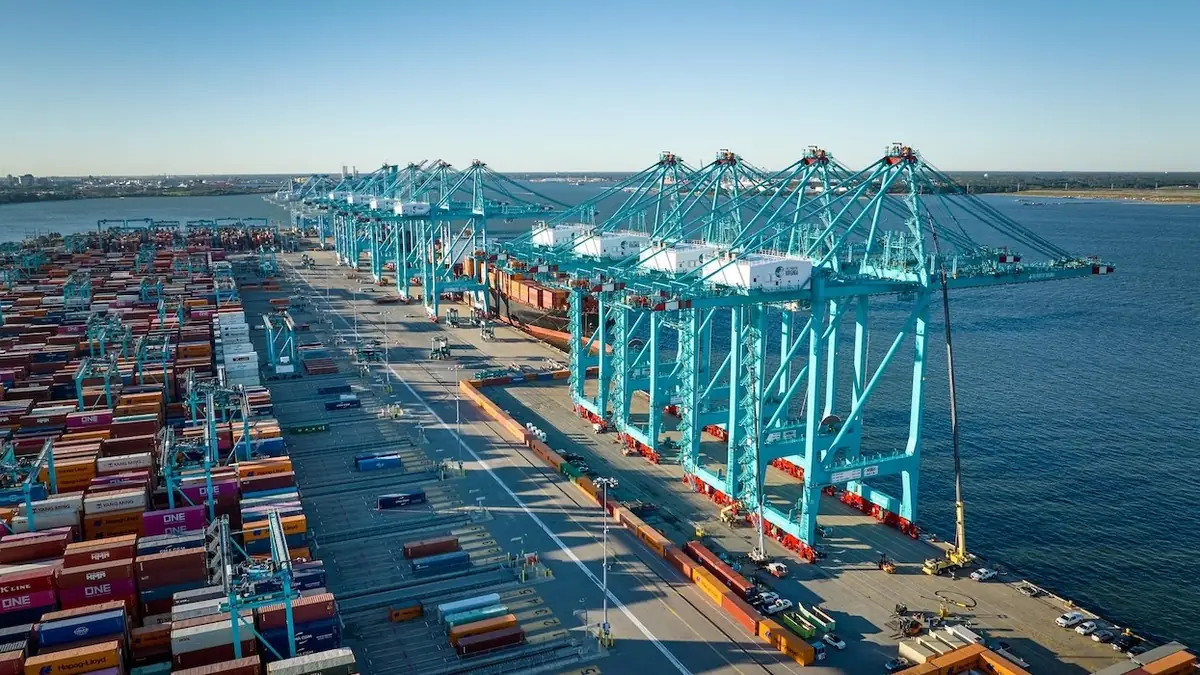
This cuts both ways. The case for the port is real: when vessel arrivals slip, you are closest to the goods, and customs clearance, devanning, quality checks, and redistribution can all happen on the shortest possible chain. For e-commerce replenishment and emergency reallocation, nothing beats port-side reaction speed. But the price is real too. Port land is scarce, space is tight, truck movements are governed by port traffic and appointment systems, and peak-season volatility gets amplified. Step back, and the overlooked benefit appears: an inland site on the Rhine barge corridor lets one barge carry well over a hundred containers in a single movement, at low unit cost and on a fixed schedule, immune to highway congestion. The catch is an extra leg on the water, which urgent orders cannot afford. So the question was never "which location is better." It is "can your freight afford that extra leg?"
Rotterdam Port Warehousing, First Calculation: Closer to the Quay Is Not Always Better
Port-side space fits three kinds of freight. First, freight whose arrival times are unreliable, where proximity is what lets you react. Second, freight that must be devanned, sorted, and relabelled the moment it lands, where every extra link adds damage and delay. Third, freight serving all of Western Europe, where a port-side departure offers the widest choice of trunk routes. Flip it around: if your goods are pre-positioned standard stock in large batches, headed for a handful of countries, paying for port-side speed is paying for something you will not use. There is also a point people miss: a port-side warehouse peaks at exactly the same time the port peaks. On the days vessels bunch up, your labour, your trucks, and your appointment windows are all under strain at once, and your outbound plan becomes the hardest thing to execute.
The Barge Corridor Calculation: A Day Slower, a Whole Chain Steadier
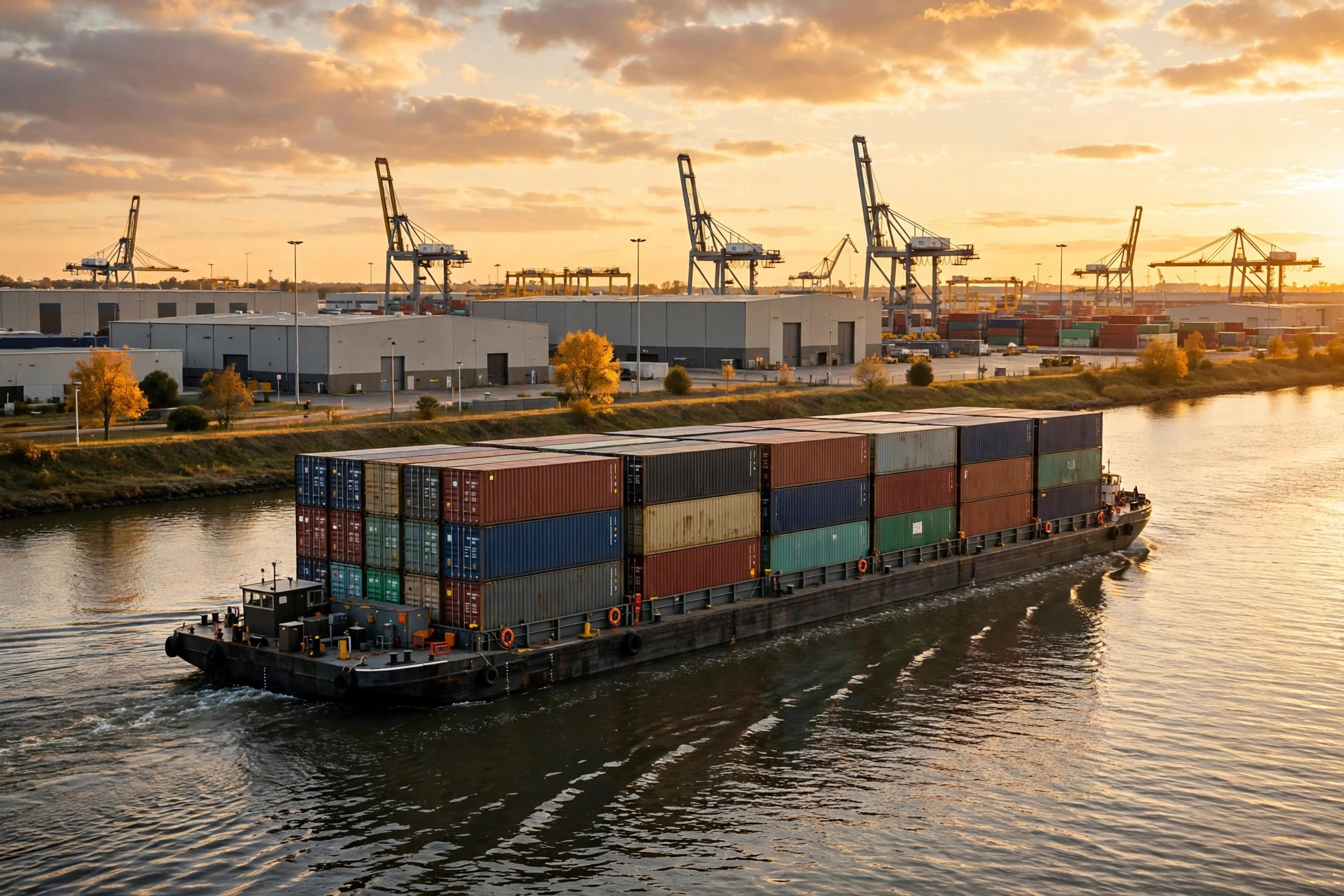
Another client took the opposite road. In early 2024, they put their European distribution warehouse about an hour's drive inland from Rotterdam, next to a barge terminal. Freight left the port by barge along the inland waterway network on a fixed timetable, almost like a bus service. Their goods were not time-critical, and they planned with generous lead time, so the extra day or two on the water sat comfortably inside the plan. What they got in return was real: a transport cost structure that stopped swinging, largely untouched when highway rates spiked and trucks went scarce in peak season, and a warehouse rhythm no longer hostage to vessel bunching, so shifts could be planned on a fixed beat. Add it up and what they saved was not one leg of freight cost — it was certainty across the whole peak season. Here is the counterintuitive judgement: for a lot of shippers, the best Rotterdam port warehousing answer is not in the port at all, but on the barge corridor. A little further from the port, and the chain actually gets steadier.
Barges are not a cure-all, of course. Urgent orders, tight cold-chain windows, and destinations far from the waterway network should never be forced onto a barge. Barges suit freight that is planned, predictable, and big in batch. Before choosing a site, sort your own freight by three questions: how urgent, how big, and where it is going. Then match the location.
The Distribution Trade-off Framework: Three Questions Set the Location
Here is a decision framework you can use as-is. Question one: from vessel arrival to customer delivery, how many days does your customer actually give you? Three days or fewer points to the port; a week or more puts an inland barge site first. Question two: are destinations concentrated or scattered? Concentrated on Germany and the Benelux countries, and an inland site shipping direct usually runs smoother; scattered across Europe, and the port or hub location's trunk-route advantage grows. Question three: is your volume steady? Steady, large-batch volume lets barges and inland sites deliver their full economies of scale; volatile volume with swinging vessel schedules makes port-side flexibility worth more. Answer those three and the location largely picks itself. Only then do you negotiate rent, lease term, and expansion space.
| Option | Fits | Biggest cost | Right rhythm |
|---|---|---|---|
| Port-side warehouse | Urgent orders, swinging vessel schedules, scattered destinations | Peak congestion, tight space, high flexibility cost | Fast in, fast out, reaction first |
| Inland barge-corridor warehouse | Large batches, planned freight, concentrated destinations | An extra water leg, no good for urgent orders | Steady beat, cost first |
| German hinterland distribution warehouse | Germany-focused freight, heavy local delivery | Far from port, costly to feed back to port | Local delivery first |
One last piece of advice: do not pick a warehouse on the map. Pick it inside your order rhythm. Pull last year's arrival times, delivery windows, and destination mix and look at them first, and the location will present itself. In Rotterdam port warehousing, getting your freight's rhythm right matters more than getting the rent right.
By Lao Mi, Supply Chain Veteran (20 yrs)