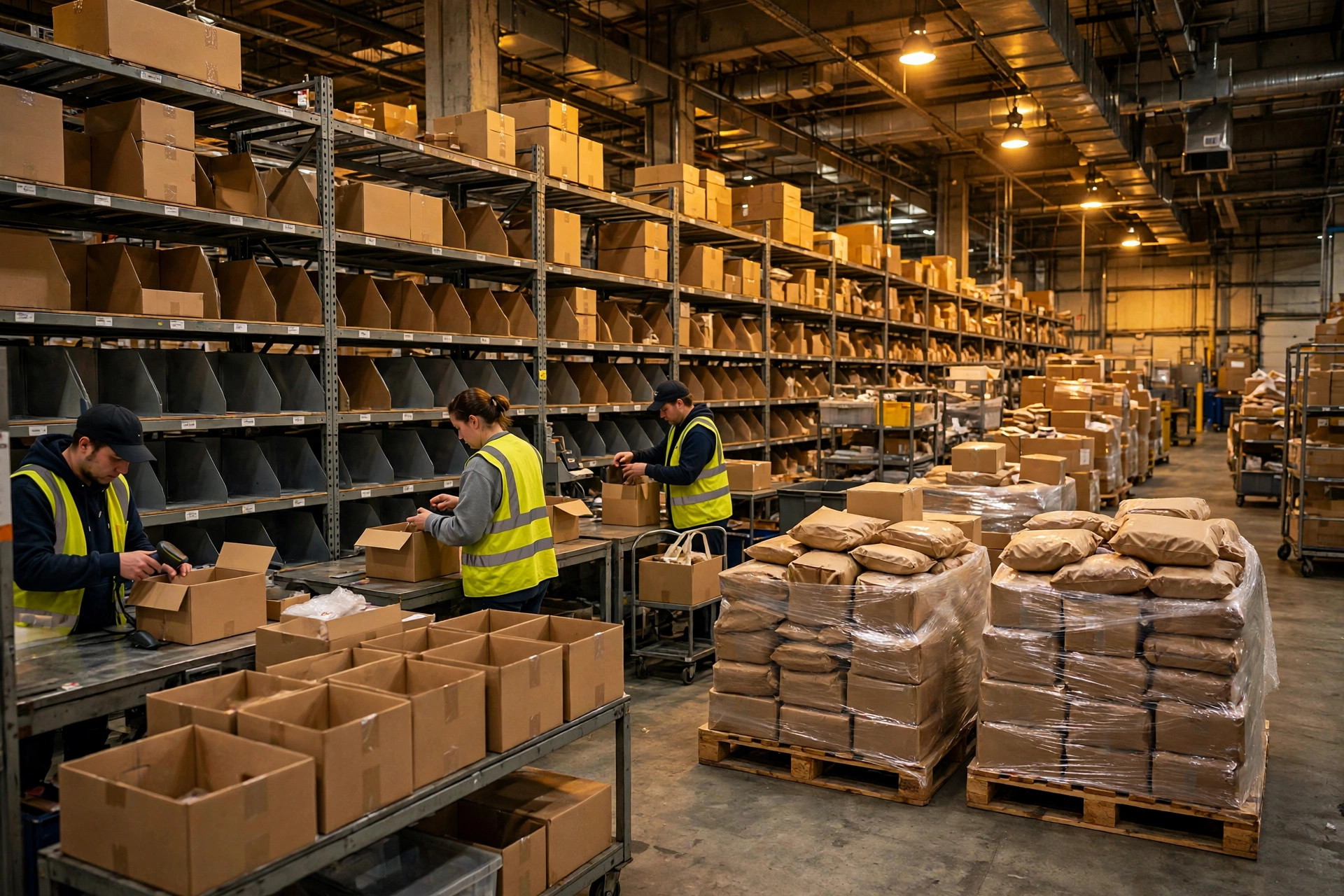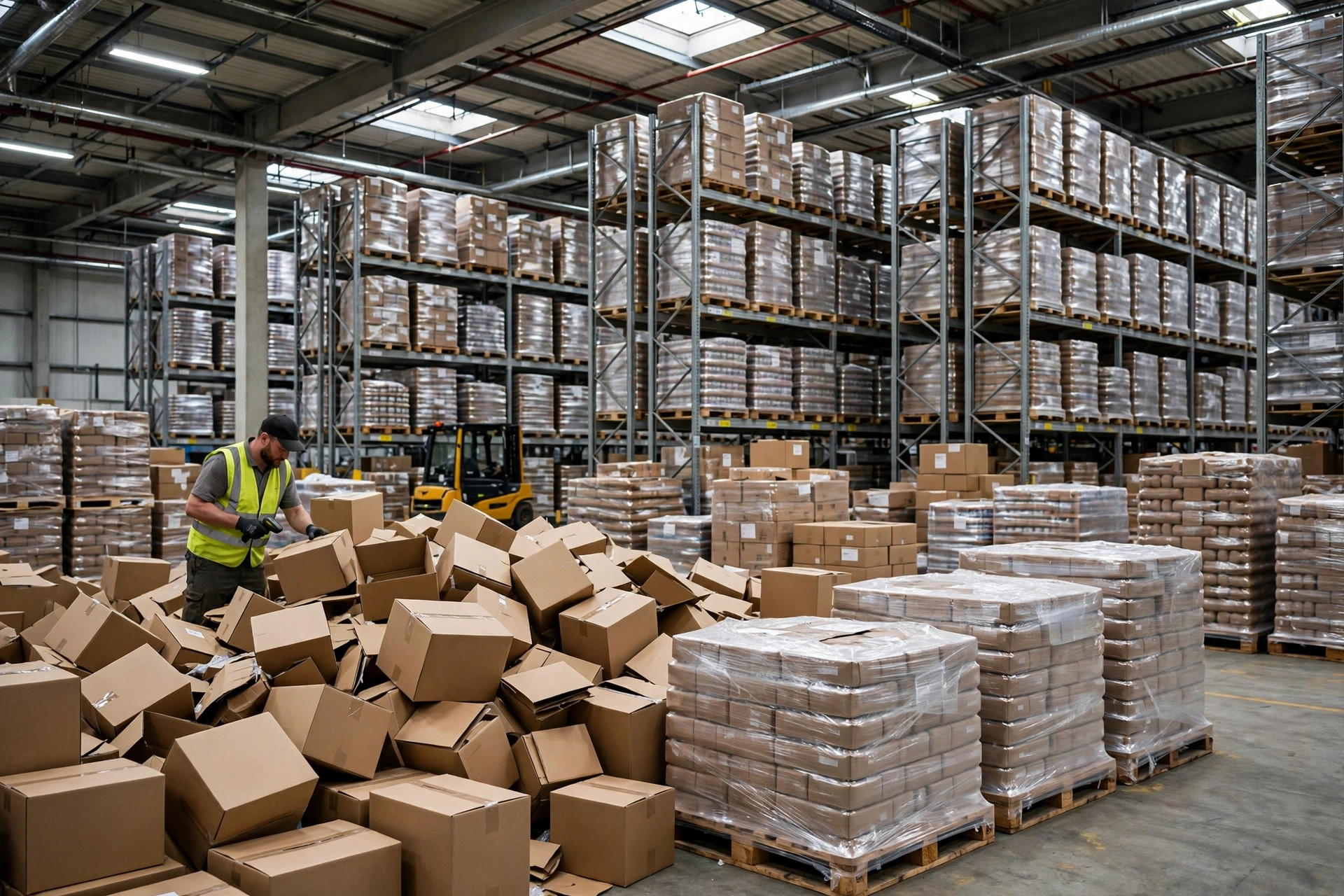
Here's my verdict up front: mixing your returns area with regular inventory saves rent in the short term and destroys inventory accuracy in the long term. I've seen more than one warehouse where returns were "temporarily" stacked next to the receiving staging area — three years later, that corner had become the number-one source of cycle-count variances across the whole building.
In 2023 I visited a 60,000-square-foot apparel 3PL in Chino with a return rate hovering around 18%. Their "returns processing area" was a patch of floor marked off with yellow tape next to receiving. During peak season the tape meant nothing, and return cartons spilled straight into the adjacent regular staging locations. At count time, the system showed 200 units of one SKU, the shelf held 140, and the other 60 were "probably somewhere in the returns pile." Pickers dug through three stacks of boxes twice just to find one order.
What Mixing Actually "Saves": An Honest Calculation
The case for mixing is straightforward: a dedicated returns area eats 200 to 300 square meters, and at Inland Empire rents of a little over a dollar per square foot per year, that's many thousands of dollars annually. Returns processing generates no revenue, so to an owner that space looks like pure cost.
The problem with that math is that it counts the rent and ignores what mixing costs you. Mingling returns with regular stock creates at least three hidden bills:
First, count variances. A returned item sits in a 3-to-5-day processing window between "received" and "sellable," and in a mixed setup it can bounce between "pending QC," "pending putaway," and "sellable" statuses in the system. The screen says sellable; the physical unit is still in the returns pile. In high-return categories like apparel and footwear, that kind of账实不符 — book-to-physical mismatch — can pile up hundreds of lines a month.
Second, picking efficiency. A picker walks to a regular location, finds the shelf empty, then goes digging through the returns pile. Ten minutes per dig, a dozen digs a day, and a picker's productive hours quietly leak away. Worse, even when they find it they can't ship it — uninspected returns might be missing tags or accessories, and nobody wants to be the one who shipped a defective unit.
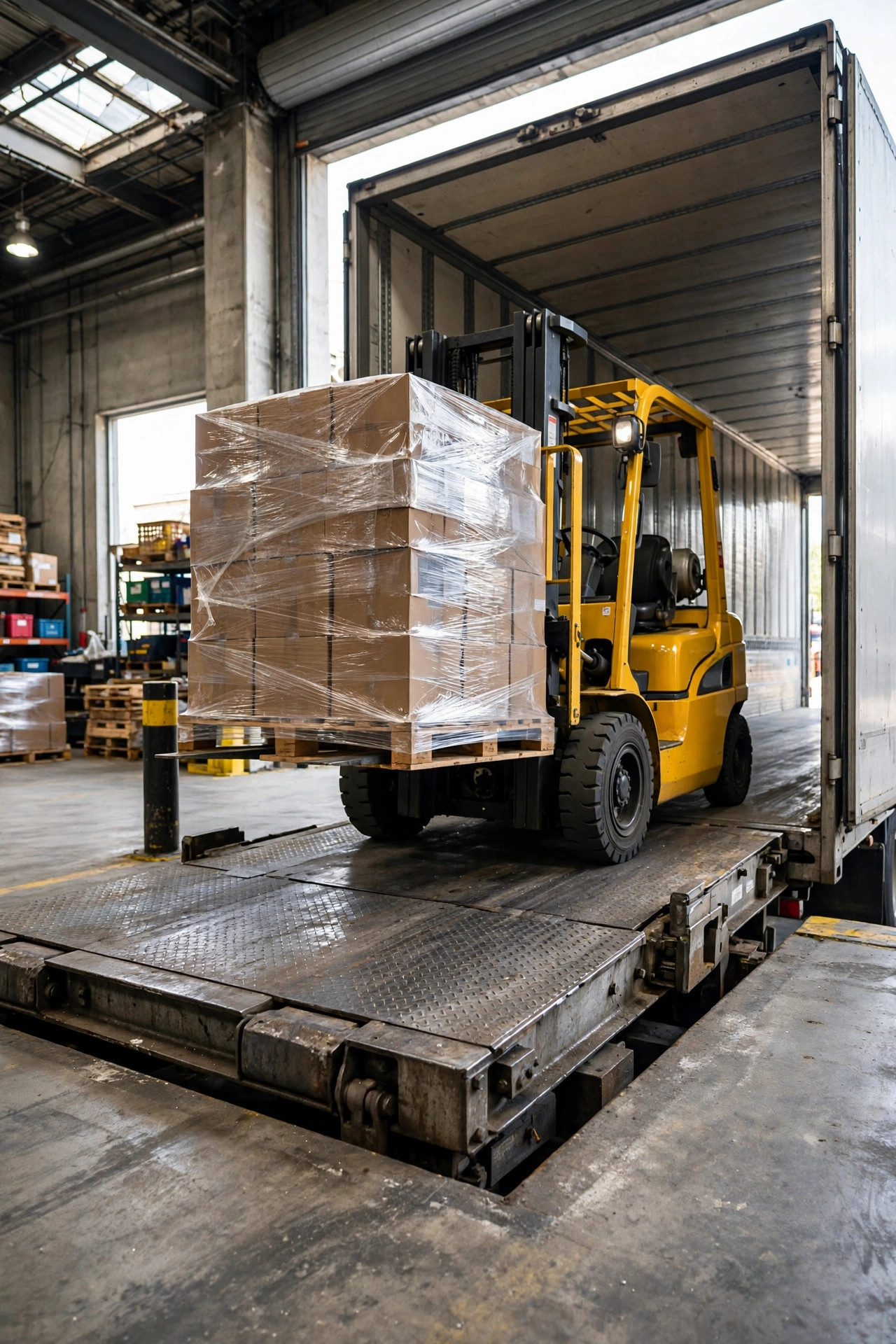
Third, secondary damage. Returns waiting for QC — including fragile goods and battery products — get clipped by a passing forklift in the aisle, and grade-A stock becomes grade-B, grade-B becomes scrap. That Chino warehouse later calculated that unexplained shrinkage in the returns zone ran about twice the rent of a dedicated returns area.
A Usable Returns Area Needs Four Things Minimum
I'm not saying every warehouse needs a luxury returns center. But even at 200 square meters, a functional returns zone needs four basics:
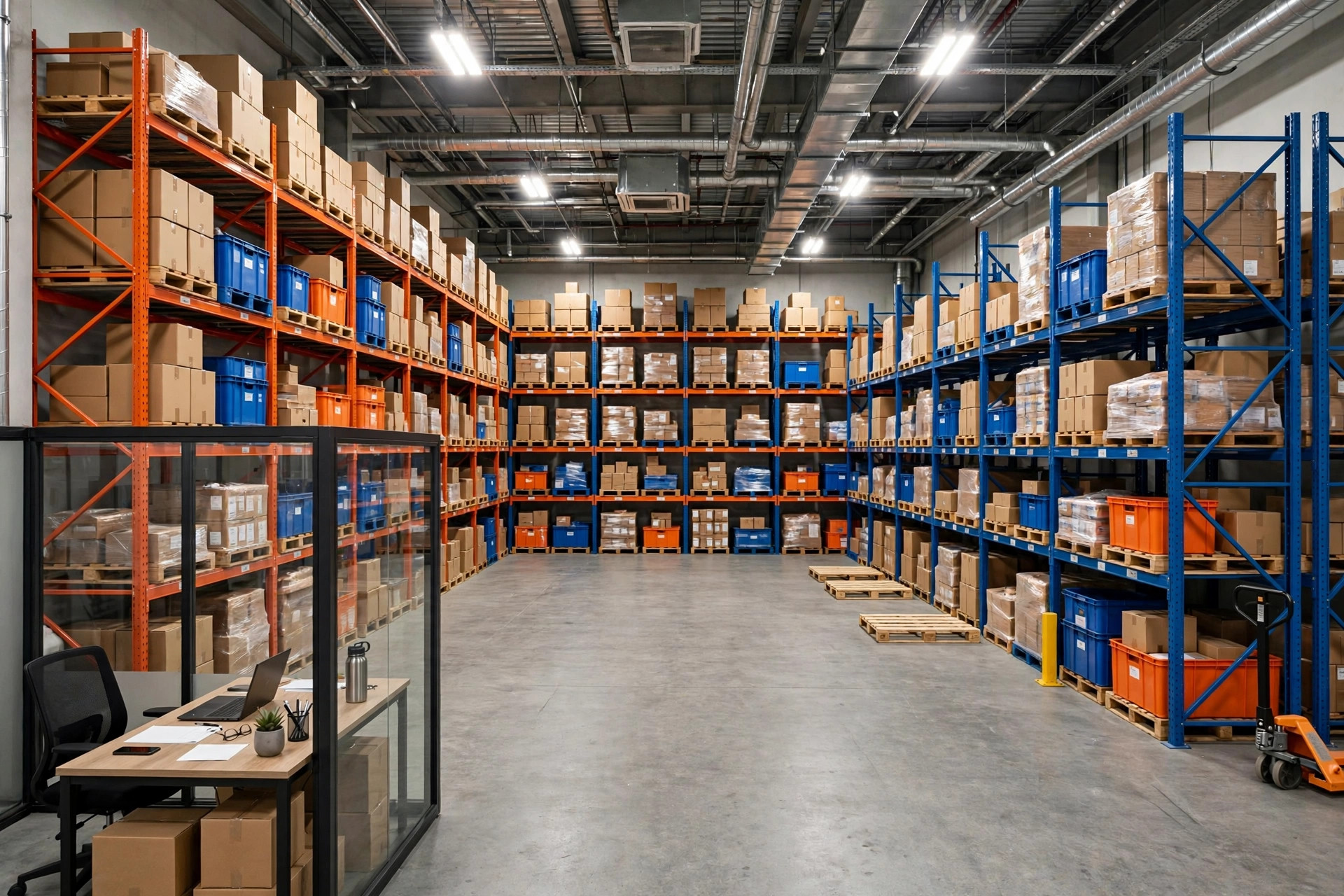
Physical separation. It doesn't have to be a wall — wire mesh partitions, 1.2-meter guardrails plus clear floor markings all work. The point is that everyone can see at a glance: inside this line is returns, outside is regular stock, and product doesn't "temporarily" cross it.
Defined flow. Returns come in through one door, QC-passed units go out another, rejects take a third to repair or disposal. Those don't have to be literal doors — three marked travel paths work. The nightmare scenario is returns entering and leaving through the same lane, with product circling inside forever.
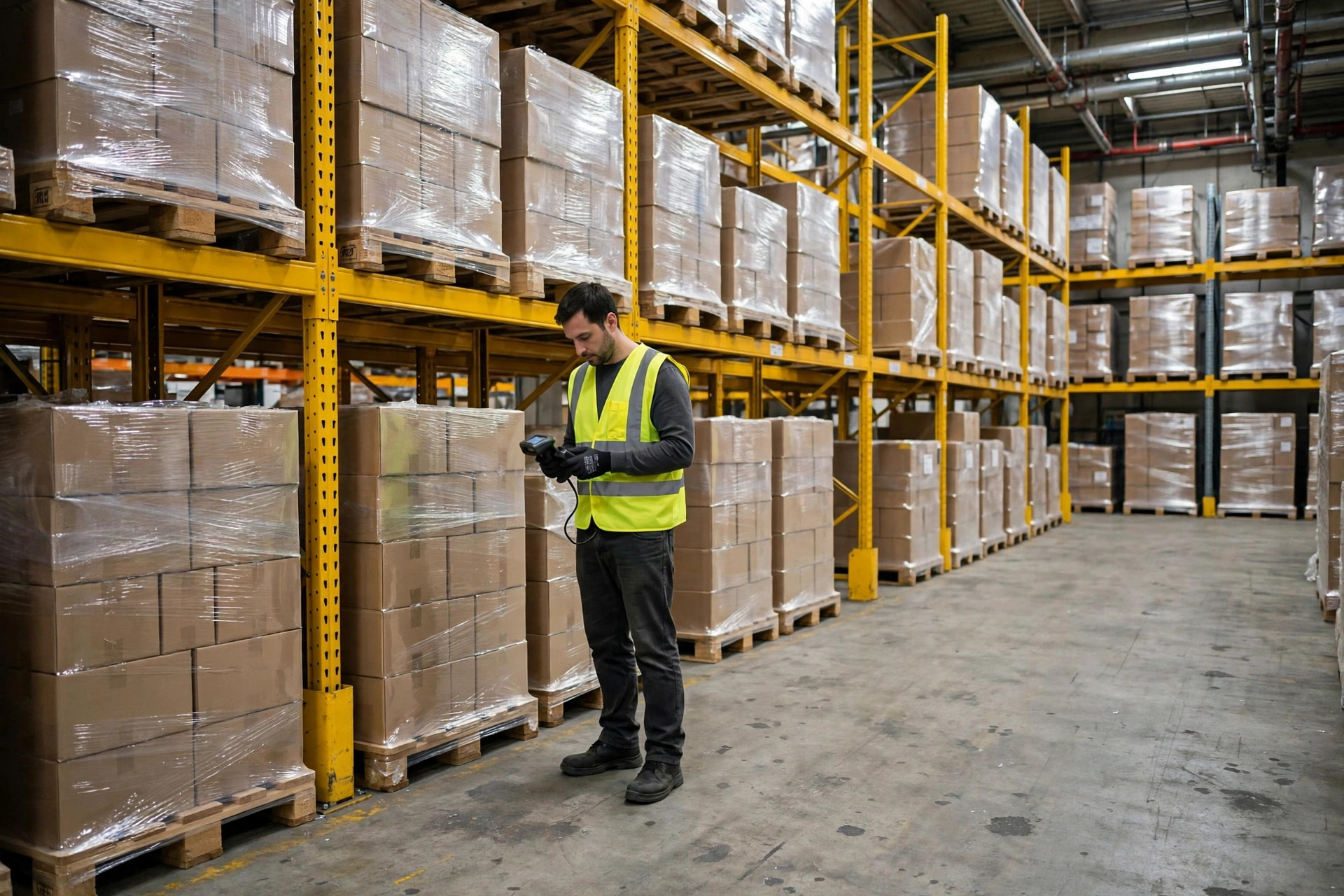
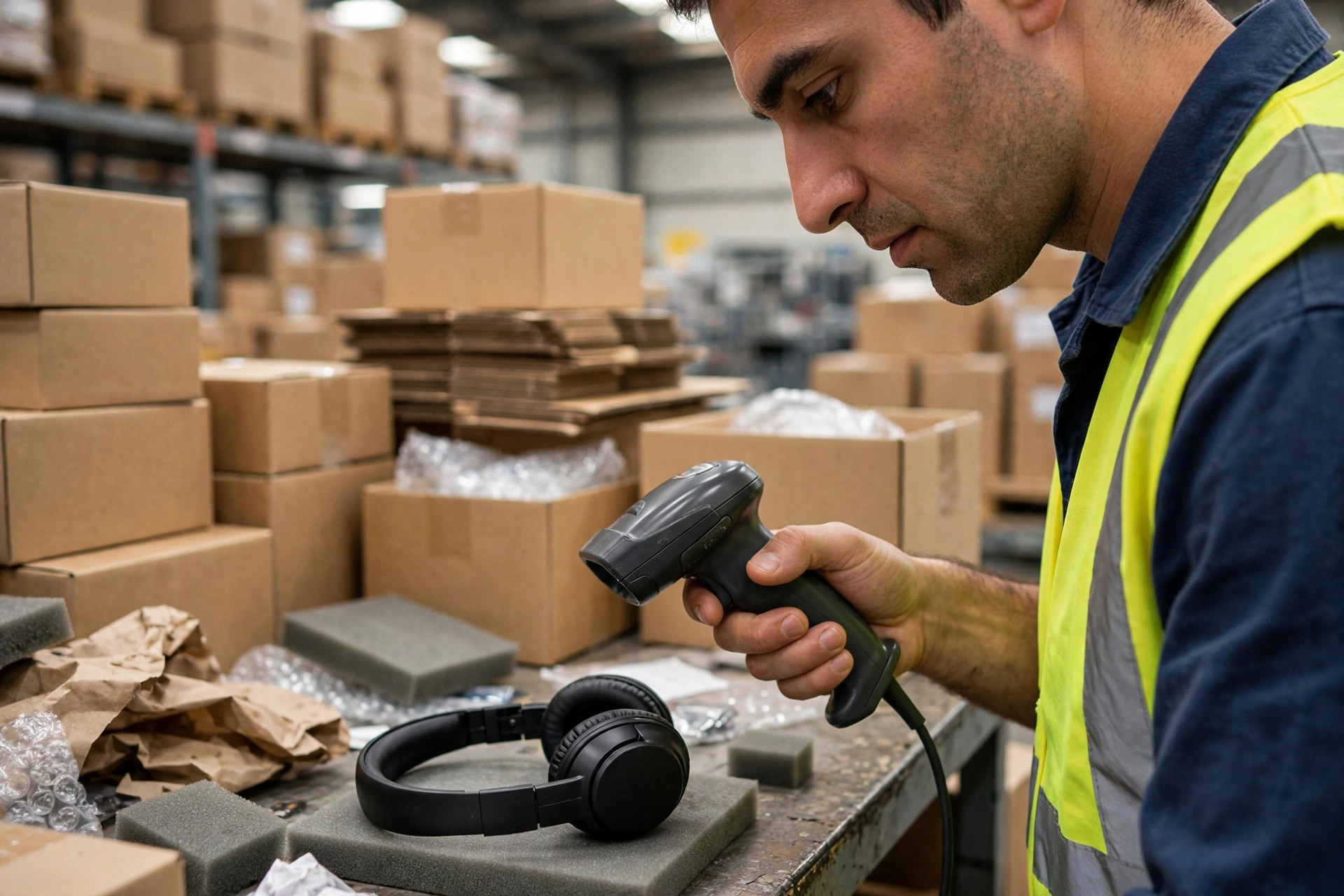
A QC station. At minimum, a 2-meter bench, a barcode scanner, and a terminal connected to the WMS. Returns processing is really just three actions: scan to confirm identity, inspect appearance and accessories, update the status in the system. Without a station, those three actions get replaced by "stack it for now, deal with it when it's quiet."
Status zones. Subdivide the returns area into three: pending QC, returned-to-sellable, and pending disposition (repair/scrap/vendor return). Mark them with different colored floor tape, and keep the corresponding location types separate in the WMS — don't lump "pending QC" and "sellable" locations into the same location group.
The Cheapest Way to Move from Mixed to Dedicated
If you're already mixed, don't try to fix it in one shot. Move in this order to minimize downtime:
Claim the space first. Over one weekend, consolidate all returns into the planned area and paint the floor markings in one go. This step needs no WMS configuration changes — pure manual labor.
Then split by status. Sort the piled-up returns into "pending QC / sellable / pending disposition," create three matching virtual locations in the WMS, and route all incoming returns into the right one from then on.
Finally, fix the travel paths. Watch for two weeks to see the actual routes returns take from receiving to disposition, and reroute anywhere they cross regular-stock paths. Once that's done, the mixing problem is essentially solved.
Prioritizing Returns Back to Sellable Stock
Once the returns area stands on its own, the next question arrives immediately: when QC-passed goods flow back to regular locations, which ones go first?
My advice: prioritize by sales velocity, not by processing order. After a return passes QC, check whether it's a top-20% SKU by trailing-30-day sales — if yes, it must flow back to a pick location within 2 hours; if not, it can wait for the day's consolidated putaway wave. The logic is simple: every extra day a hot SKU's return sits in the returns zone is a day the regular location risks stocking out, triggering yet another replenishment order.
One more detail: when flowing back, which location? The returned unit's lot will usually differ from the original lot — don't merge it into the original location just to save effort. Follow the WMS lot-management rules: separate what must be separate, first-expire-first-out where it applies. For apparel with no lot tracking, merging is fine; for food and cosmetics with lot control, merging plants a landmine for the next recall.
That Chino warehouse later adopted a simple three-line rule: hot SKUs flow back within 2 hours, regular SKUs same-day, lot-controlled SKUs by lot. After three months, average returns-zone dwell time fell from 6.2 days to 2.8 — and the returns area stopped feeling crowded.
At the end of the day, whether returns get their own area isn't a question of warehouse size — it's whether management is willing to admit that returns aren't "stuff we'll put away later" but a real business process that deserves a real workflow. The rent on 200 square meters is visible. Inaccurate inventory, pickers digging through boxes, and secondary damage are invisible — and the invisible part is always more expensive.