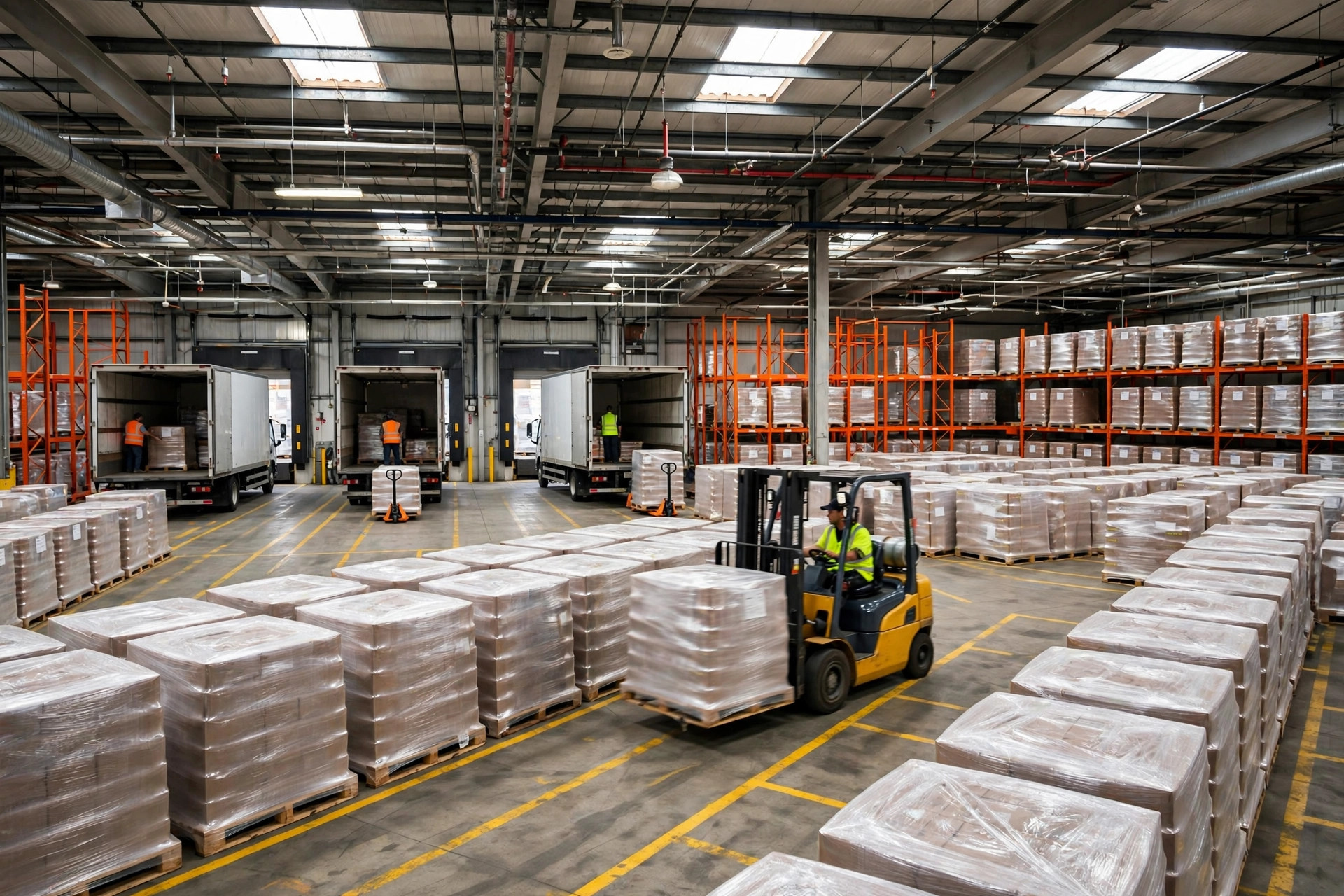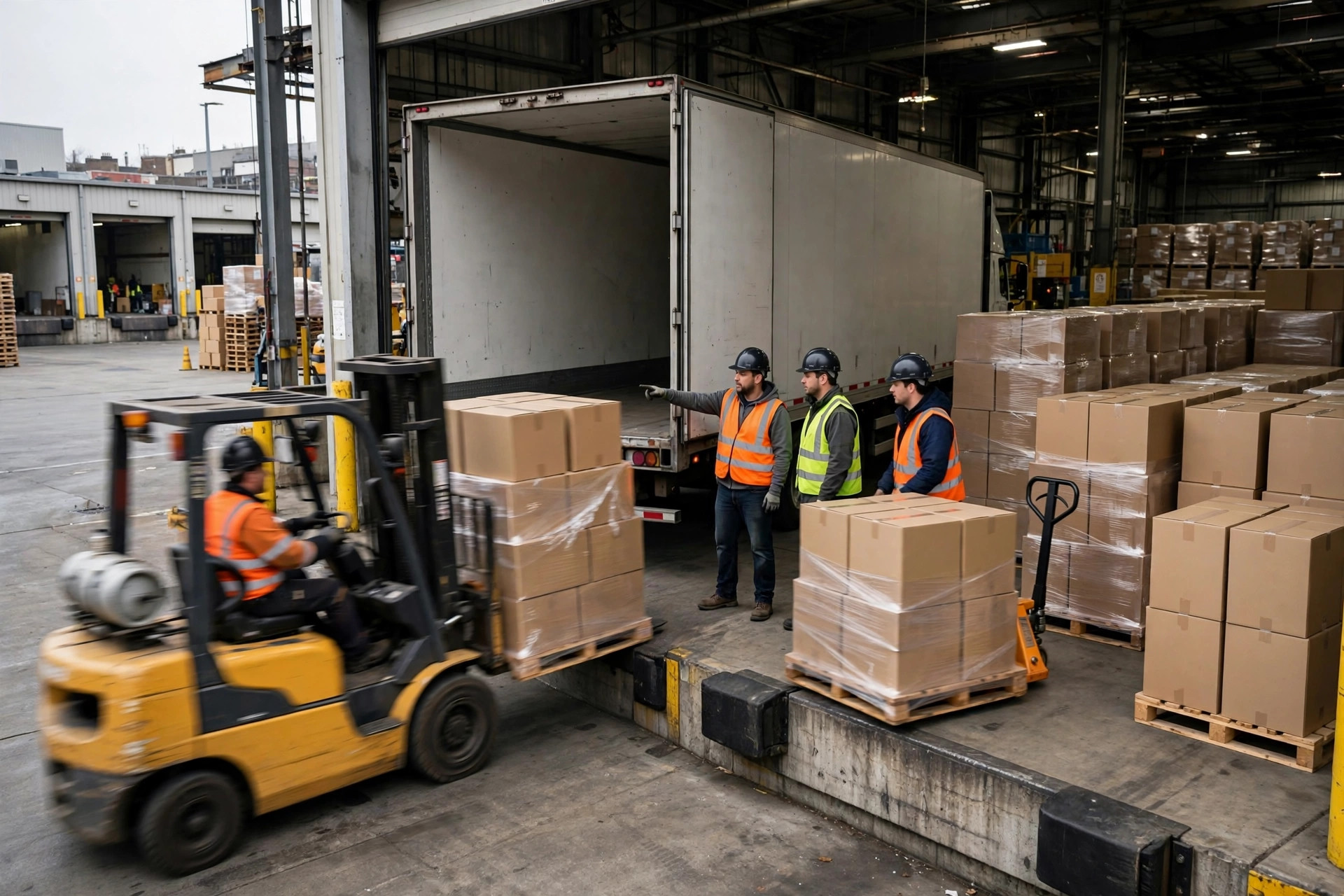
Does your building have one of these corners? Pallets stacked near the sprinklers, labels half-applied, the packing slip buried under some pallet nobody can identify. Every warehouse has one. It's called staging. I call it the black hole — freight goes in and disappears, and comes out purely by luck.
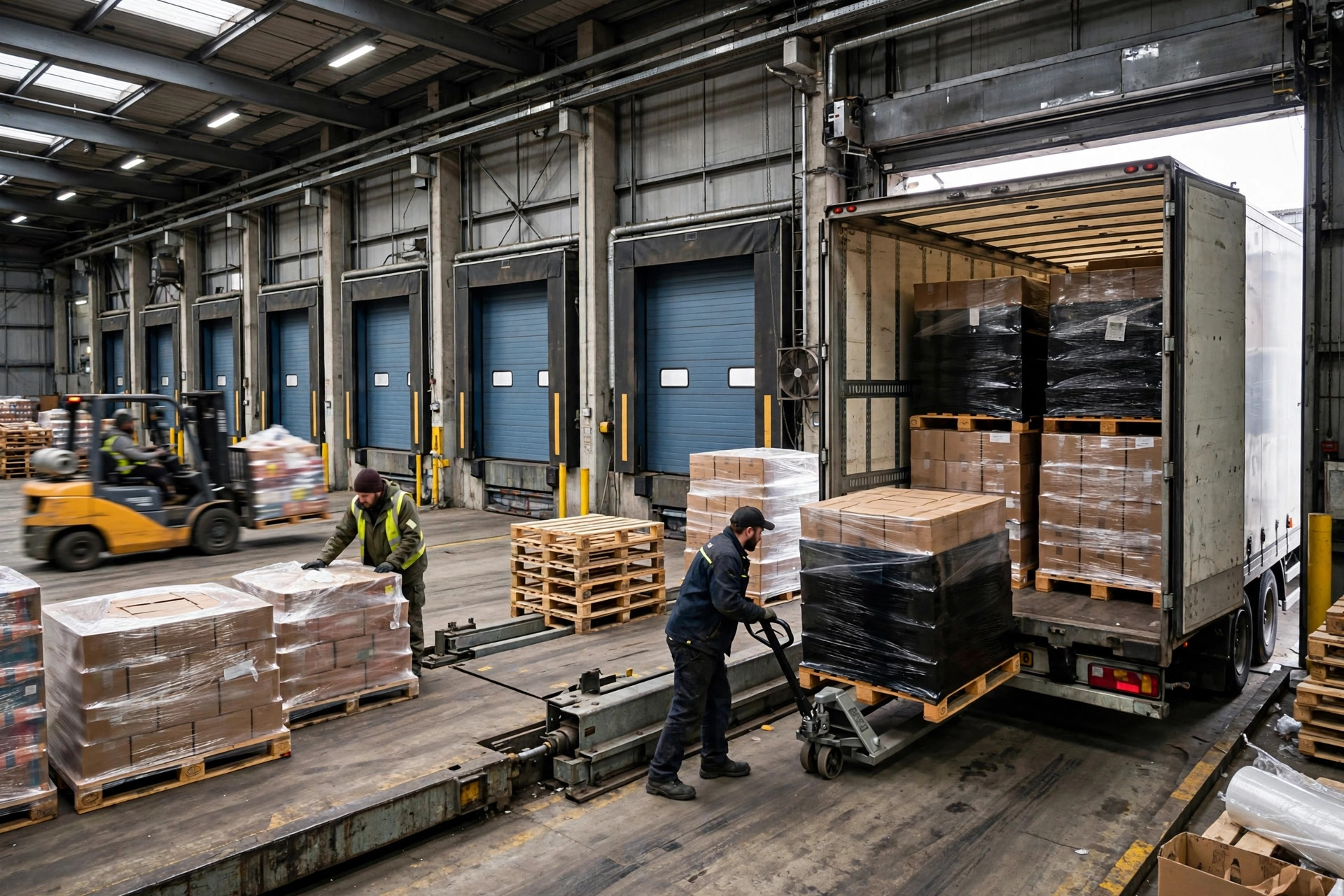
Staging is a monument to broken process. Unloading is one crew, counting is another, labeling a third, and putaway waits in line for a forklift. Between every two crews, freight sits on the floor "for a bit." Four "bits" add up: at a 120,000-square-foot DC in Dallas I measured once, freight averaged 6.5 hours from trailer to slot — two days in peak season. The fix isn't mysterious: connect the four breakpoints into one continuous flow so freight moves through instead of piling up. That DC did it in three weeks and got average putaway under 2 hours.
First, Do the Math: How Long Does Your Freight Sit on the Floor?
Diagnose before you redesign — with data, not gut feel. Pull 20 random pallets that already made it to slots and check three timestamps in the WMS: unload complete, putaway complete. Calculate the gap per pallet and take the median — the median, not the average, because the average gets dragged around by the three pallets that sat for three days.
When I run this diagnostic for clients, I usually see three patterns. One: clustered at 2 to 4 hours — the flow basically works, there's a single bottleneck to fix. Two: clustered at 6 to 10 hours — classic breakpoint process, queueing between every step; this is the prime candidate for continuous-flow redesign. Three: bimodal — half at 2 hours, half at 20. That means the process depends on who's working and what kind of day it is: good crew fast, bad crew slow, fine on quiet days, collapsed on spikes. That's the most dangerous pattern, because management keeps believing "we can do 2 hours" while selectively ignoring the other half.
Then do the money math: how many square feet does staging occupy? At your building's rent level (for owned buildings, use the surrounding market rate), how much does that black hole burn per year? The Dallas building's staging ate 15,000 square feet — nearly $100,000 a year in rent cost alone. Put that number on the page and the retrofit budget request writes itself.
Building the Flow: Four Steps, One Motion
Continuous flow has one core idea: freight never waits. Not literally untouched by the floor — but no waiting between steps. Four moves to build it.
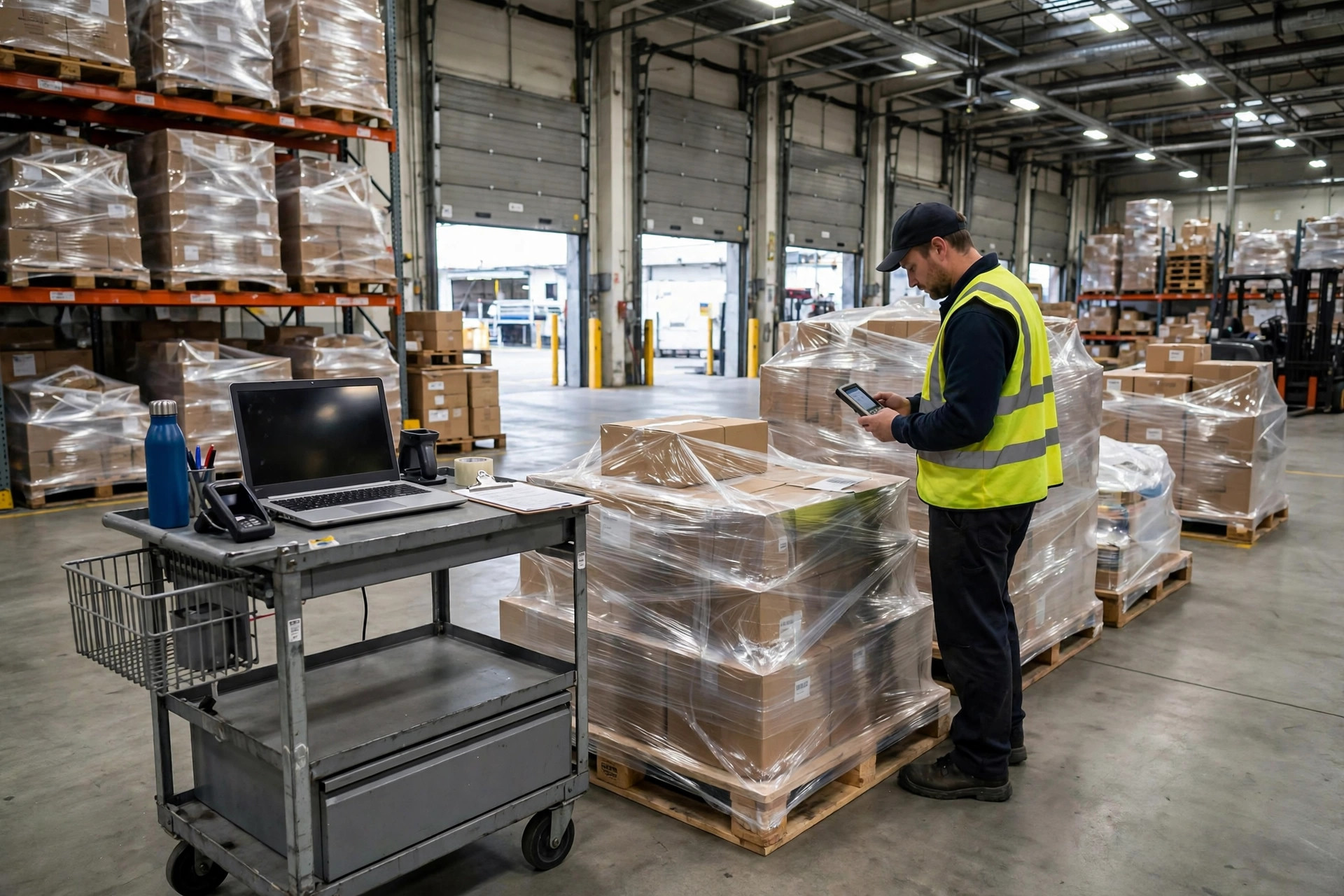
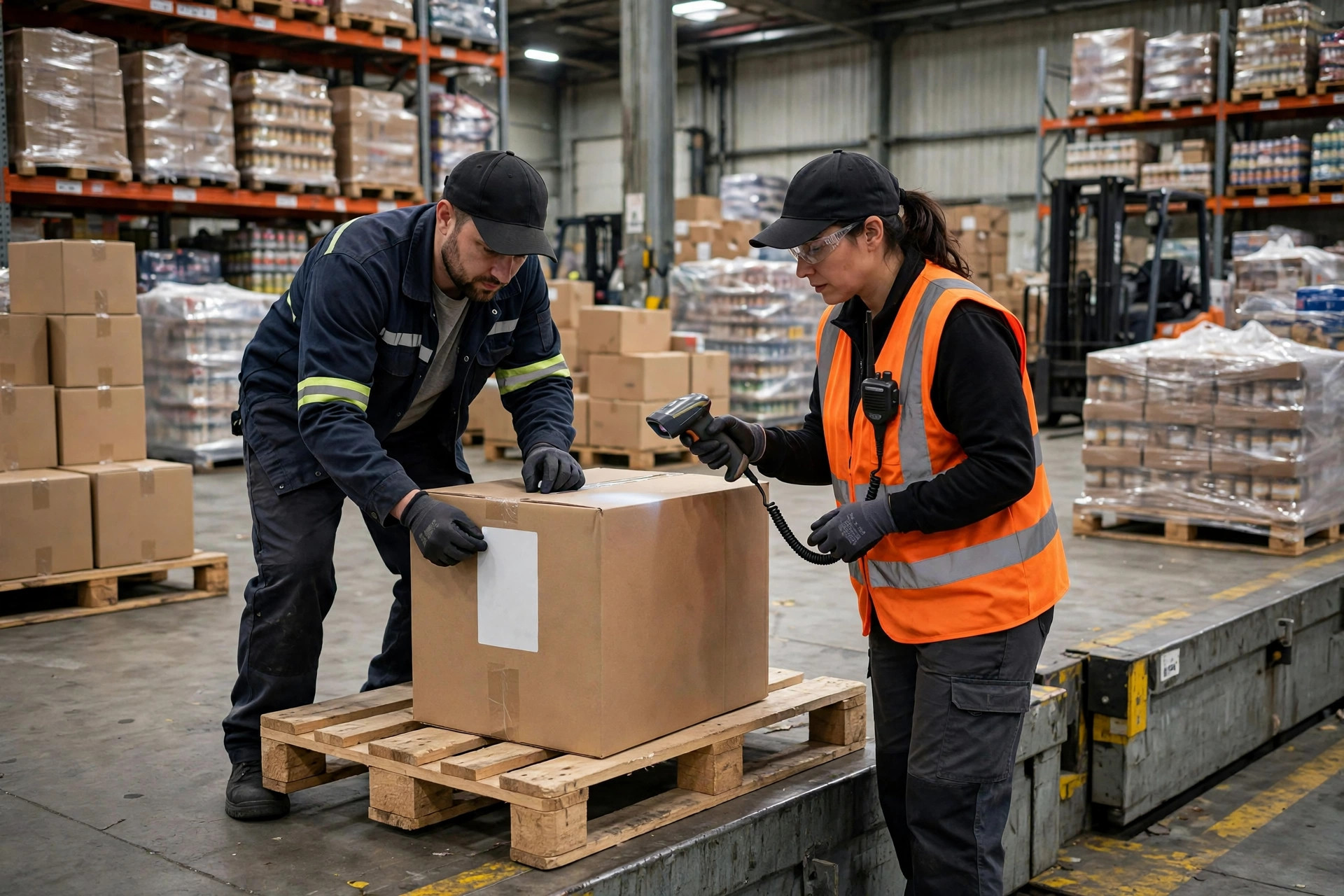
Step one: scan at unload. When the truck arrives, the receiver works the trailer with a handheld — doesn't leave until it's empty. Every pallet gets scanned and matched to the PO line the moment it comes off, exceptions logged on the spot. The traditional way unloads all 26 pallets first, then counts — by which time pallet number one has been sitting for an hour. Working the trailer costs about 20% more labor but zeroes the wait between unload and count.
Step two: count at the dock, not in staging. Set 2 to 3 count stations right at the dock doors; counted freight flows straight to the next step. Put a label printer at each station — print and apply on the spot. A label printer is the cheapest equipment on the whole flow, a few hundred dollars, and "labels aren't printed yet" is what jams the line most often.
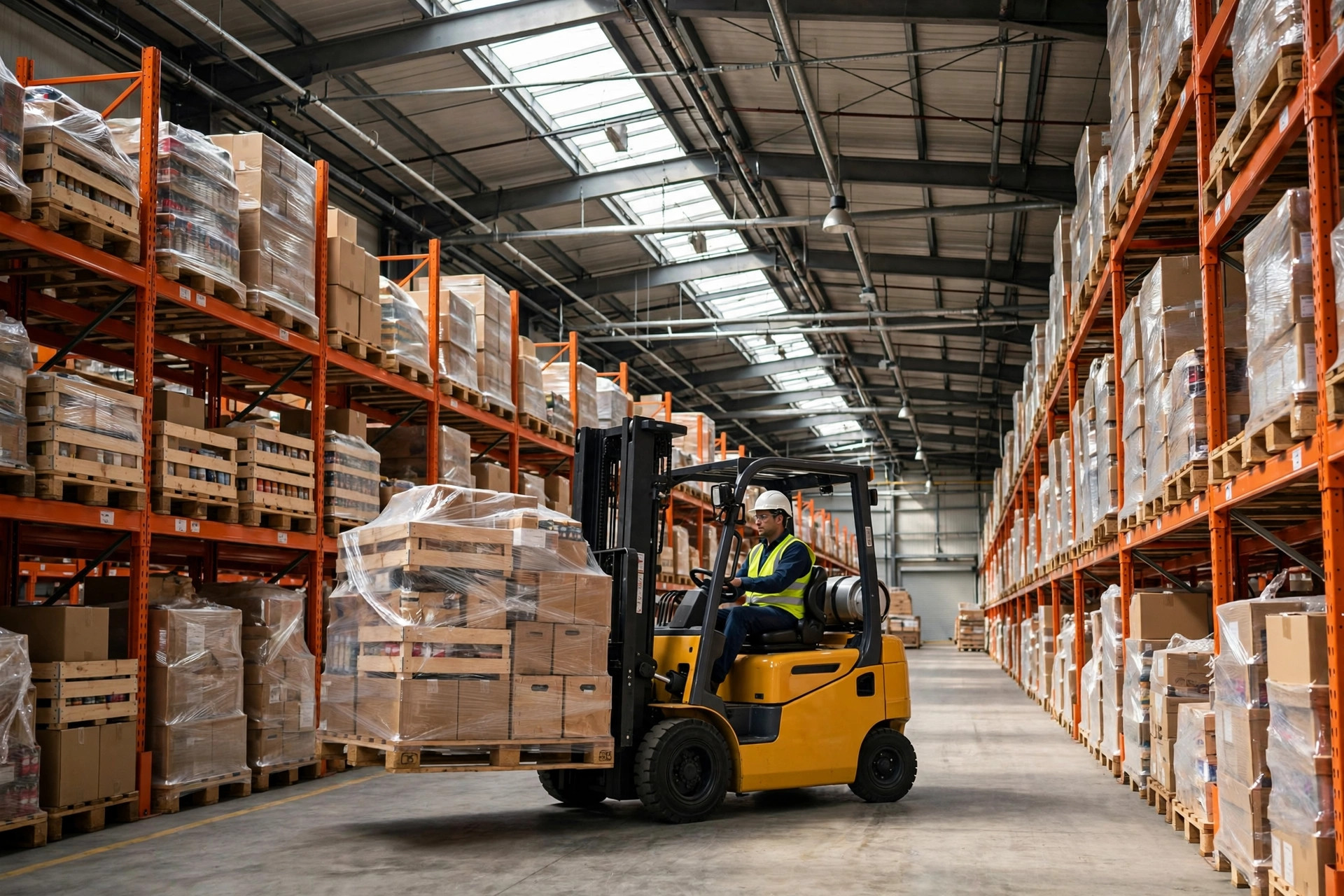
Step three: label on the move, putaway direct. Labeled pallets skip staging entirely and go straight to putaway. The key is pre-assigned putaway tasks: the WMS generates the putaway task the moment receiving is confirmed, so when the driver scans the label, the target slot is already on the handheld. In the old flow, putaway crews "came to pull freight when staging looked full" — reactive. In continuous flow, the putaway task is triggered by receiving — proactive. What this eliminates isn't just time, it's finger-pointing.
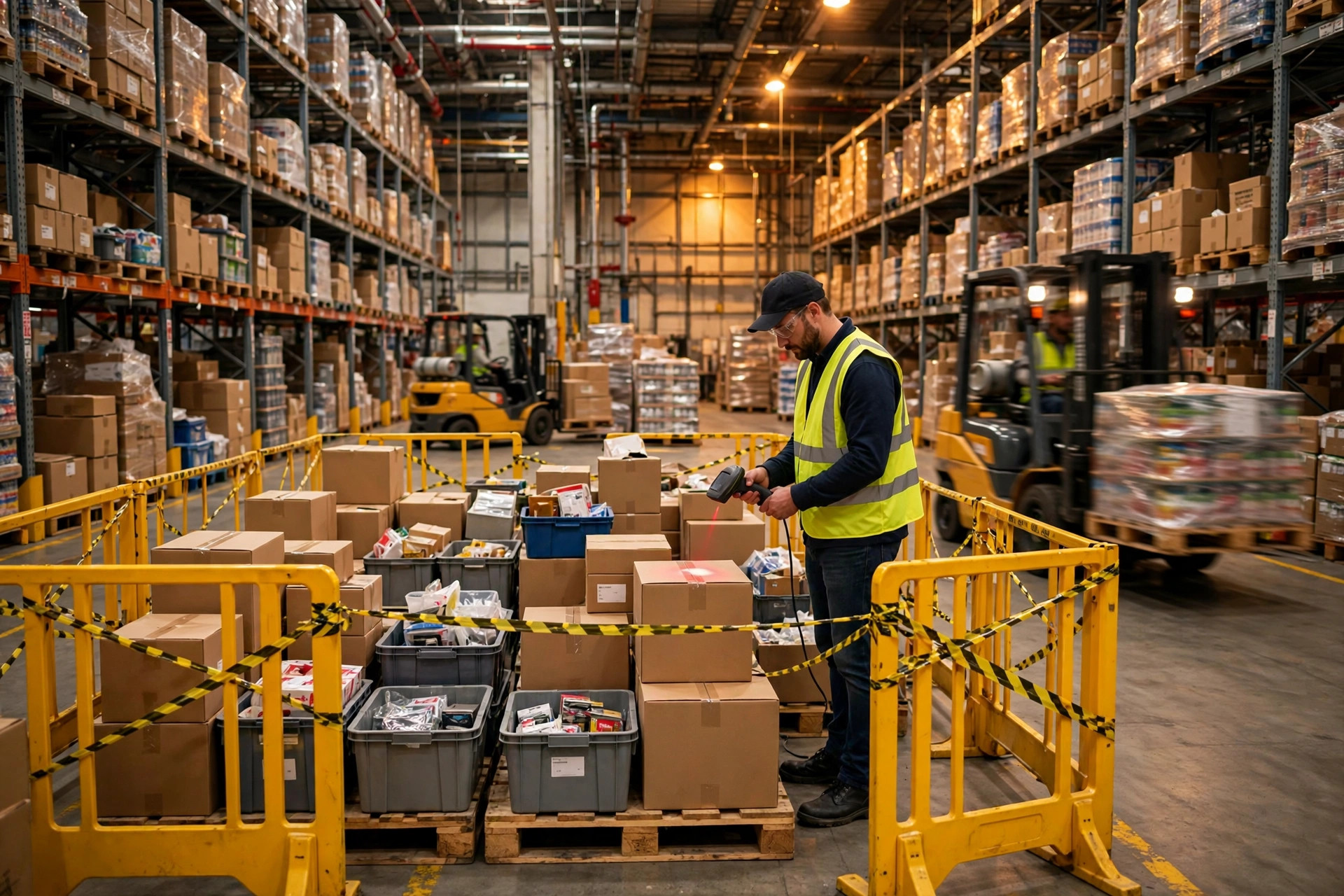
Step four: keep a 10% buffer, but call it the "exception fast lane," not staging. Continuous flow isn't zero buffer — damaged, short, or hold-for-inspection freight needs somewhere to go. Carve out a small zone for exceptions only, sized for at most 10% of daily receipts; overflow means something upstream broke — and that metric becomes a management dashboard by itself. The name matters: call it "staging" and people will pile freight there with a clear conscience; call it the "exception fast lane" and a full lane is an incident.
Slimming Staging: From Parking Lot to Passing Lane
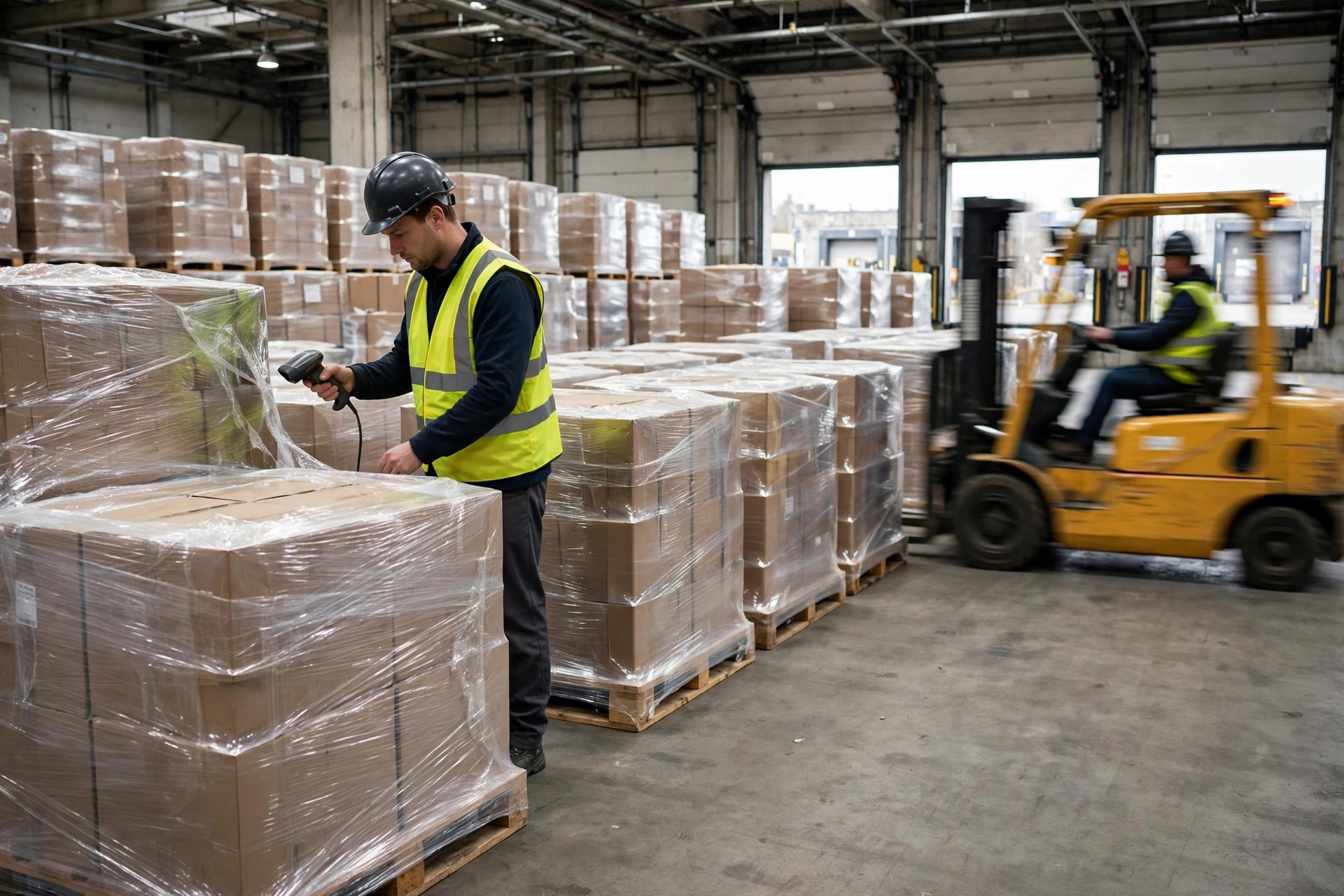
Once the flow is running, staging slims down on its own — but don't expect it to vanish by itself. My method drains it over three weeks: week one, fence off half the staging area with barriers — less space forces people to keep freight moving. Week two, cut what's left in half again. Week three, keep only the exception fast lane. People ask: what about volume spikes? Answer: borrow outbound staging temporarily during spikes, but return it within 24 hours. Rules set in stone don't slide in execution.
The Dallas numbers after three weeks: average unload-to-slot time from 6.5 hours to 1.8, staging from 15,000 square feet to 2,000, receiving crew from 9 people to 7 (the two freed up moved to picking support). The surprise was accuracy: labeling errors dropped from 40-plus tickets a month to single digits — because labels are printed, applied, and scanned in one motion, triple-confirmed, with no "we'll get to it in two days."
Continuous flow isn't a universal cure, though. Two cases where you shouldn't force it: first, buildings with extreme SKU complexity where every pallet gets broken down for piece-picking — the flow's takt gets murdered by breakdown; build a dedicated receiving sort zone first. Second, buildings where daily receipts swing more than 5x — sizing the flow for peak is too expensive, sizing for average collapses on spikes; fix planning first (appointment-based receiving), then talk flow.
One thing for tomorrow's morning huddle: pull 5 pallets received yesterday at random and check how long each took from unload to slot. Write the five numbers on the whiteboard. If the median is over 4 hours, you have a black hole worth redesigning — and the first step costs nothing: start with scanning at the trailer.