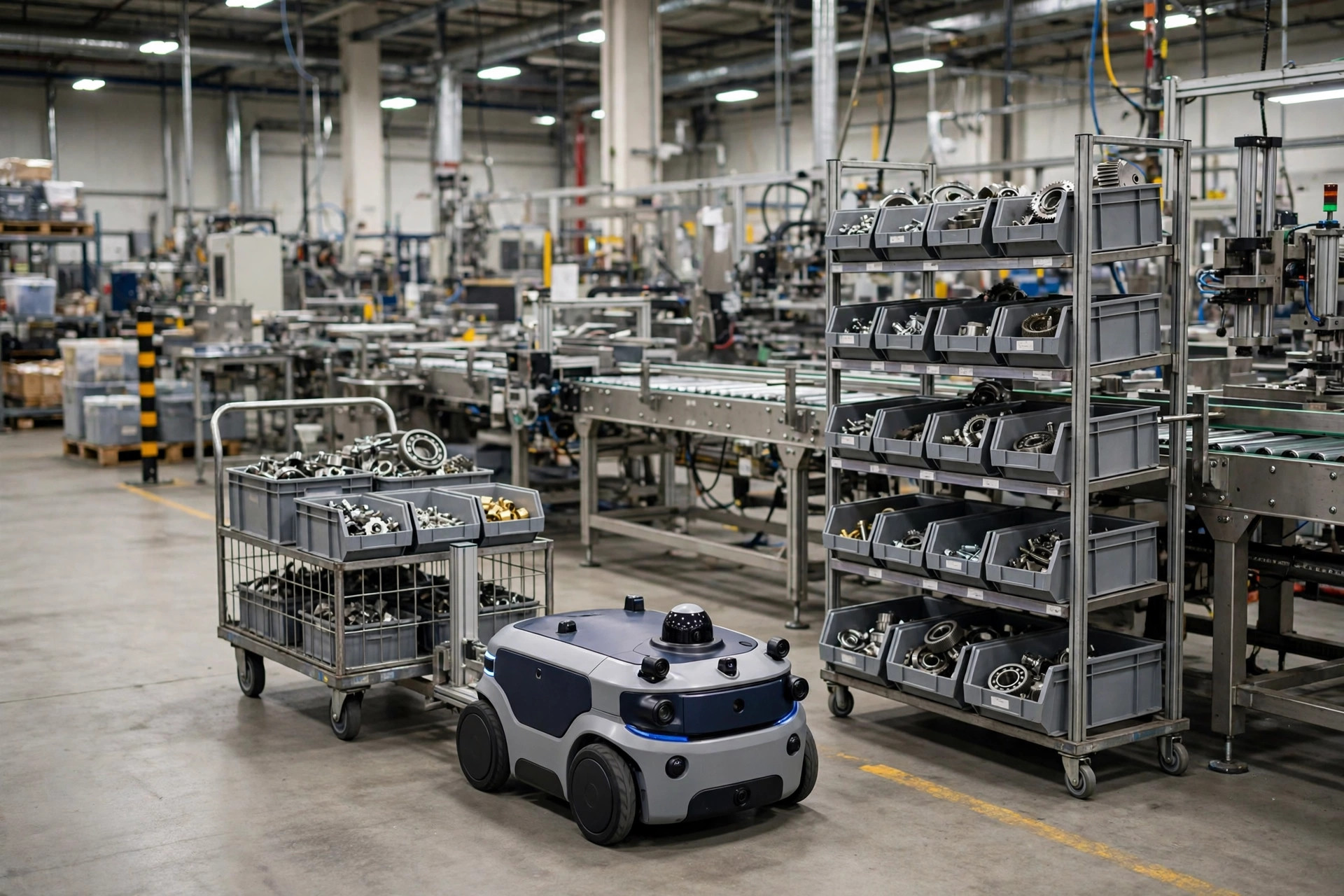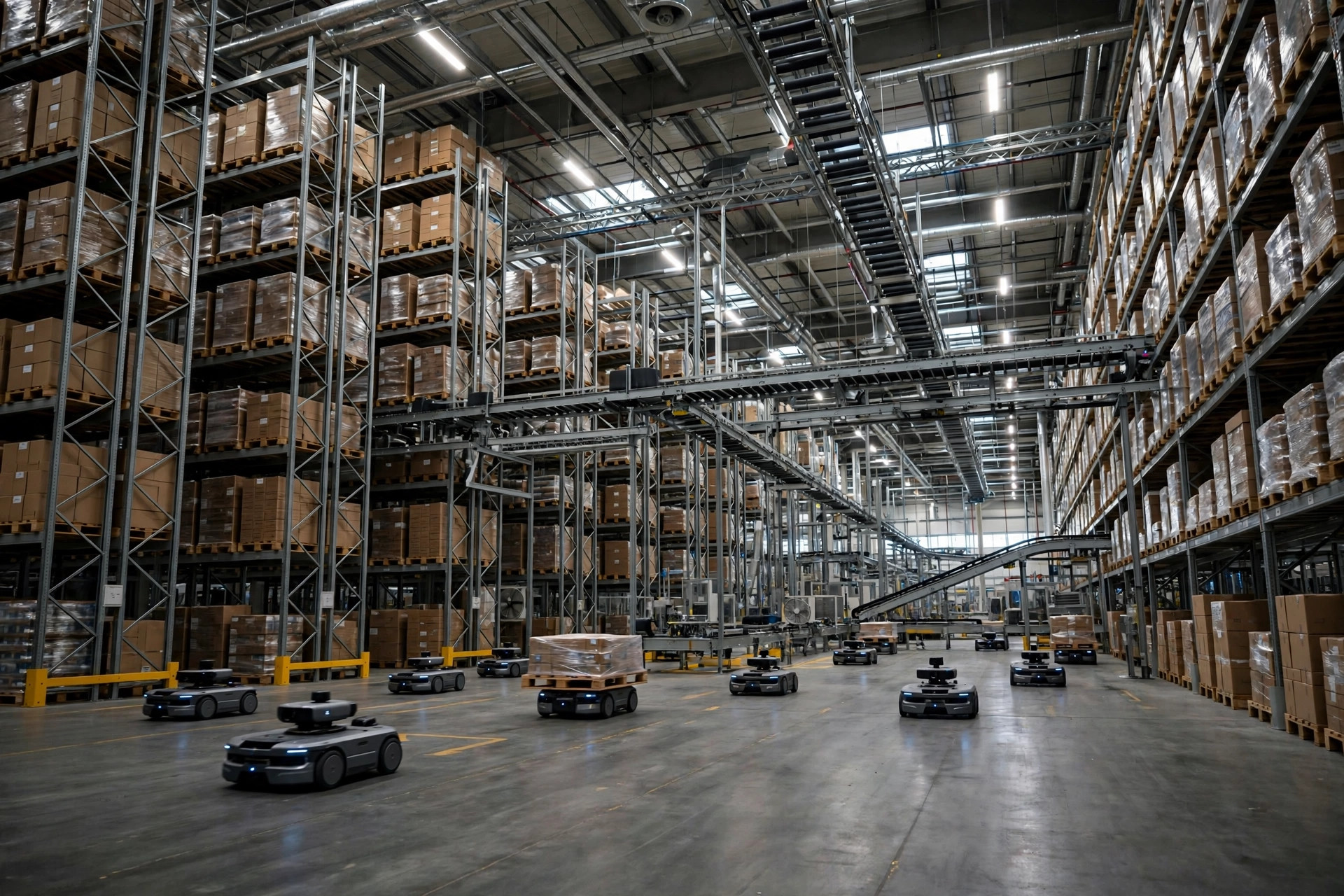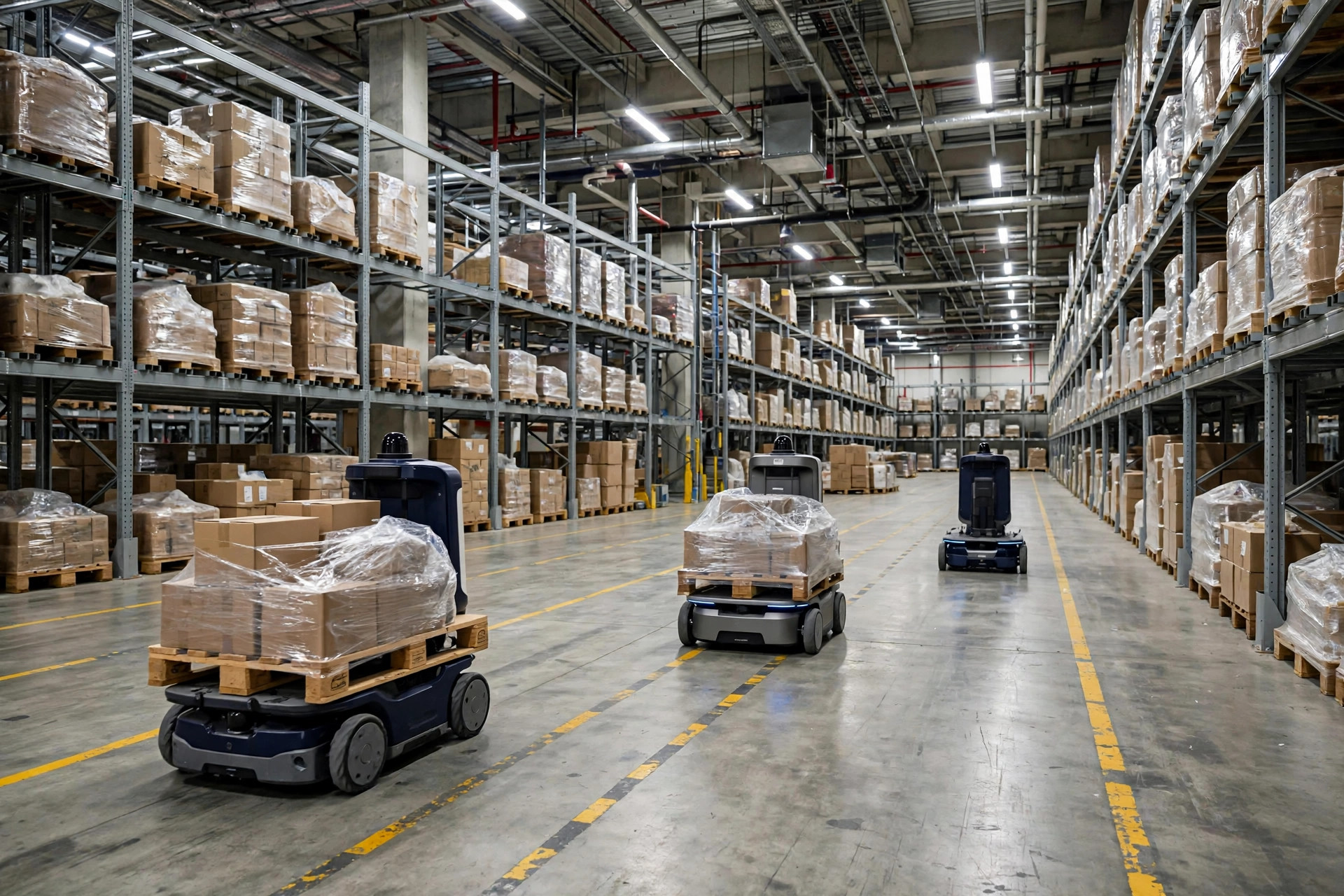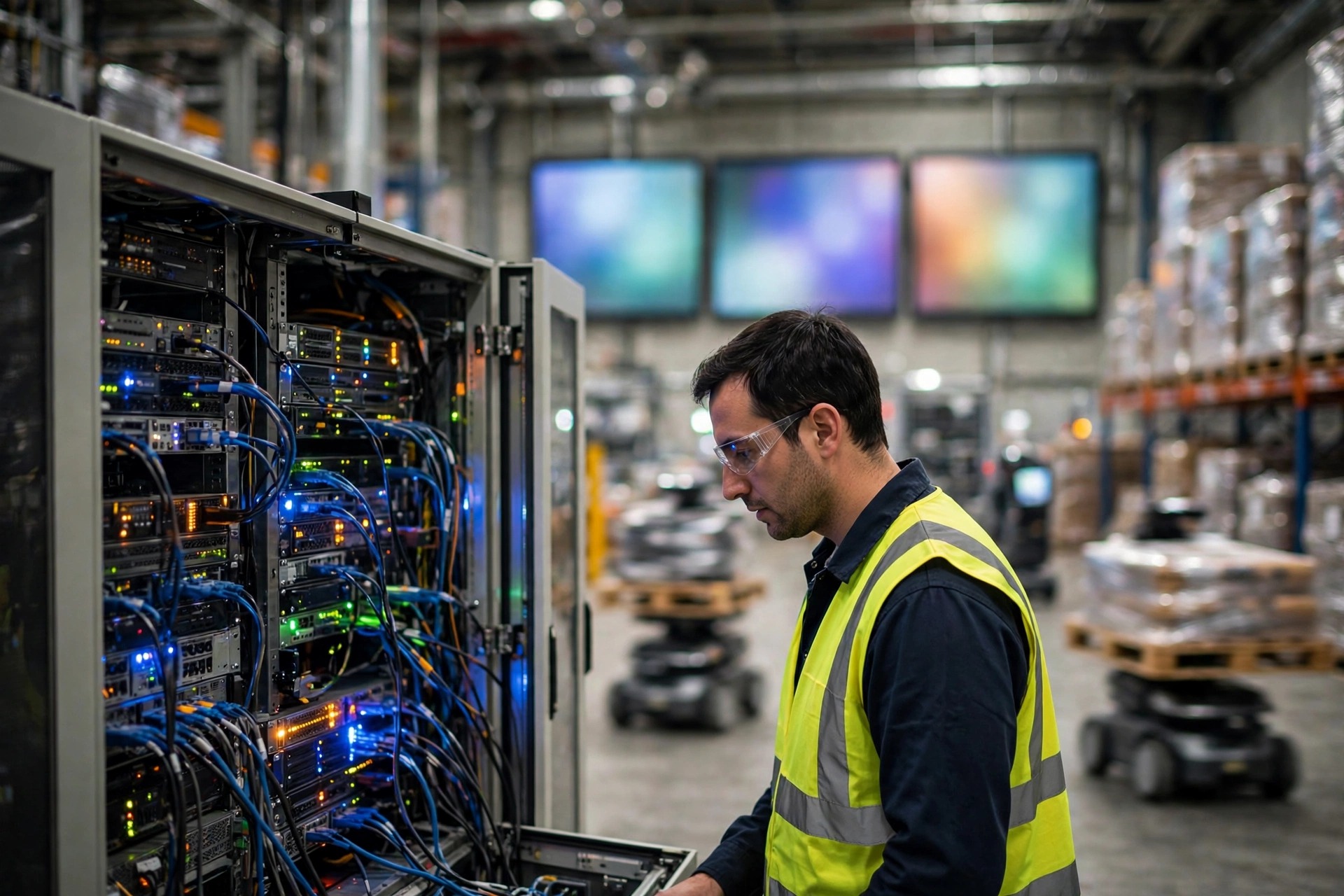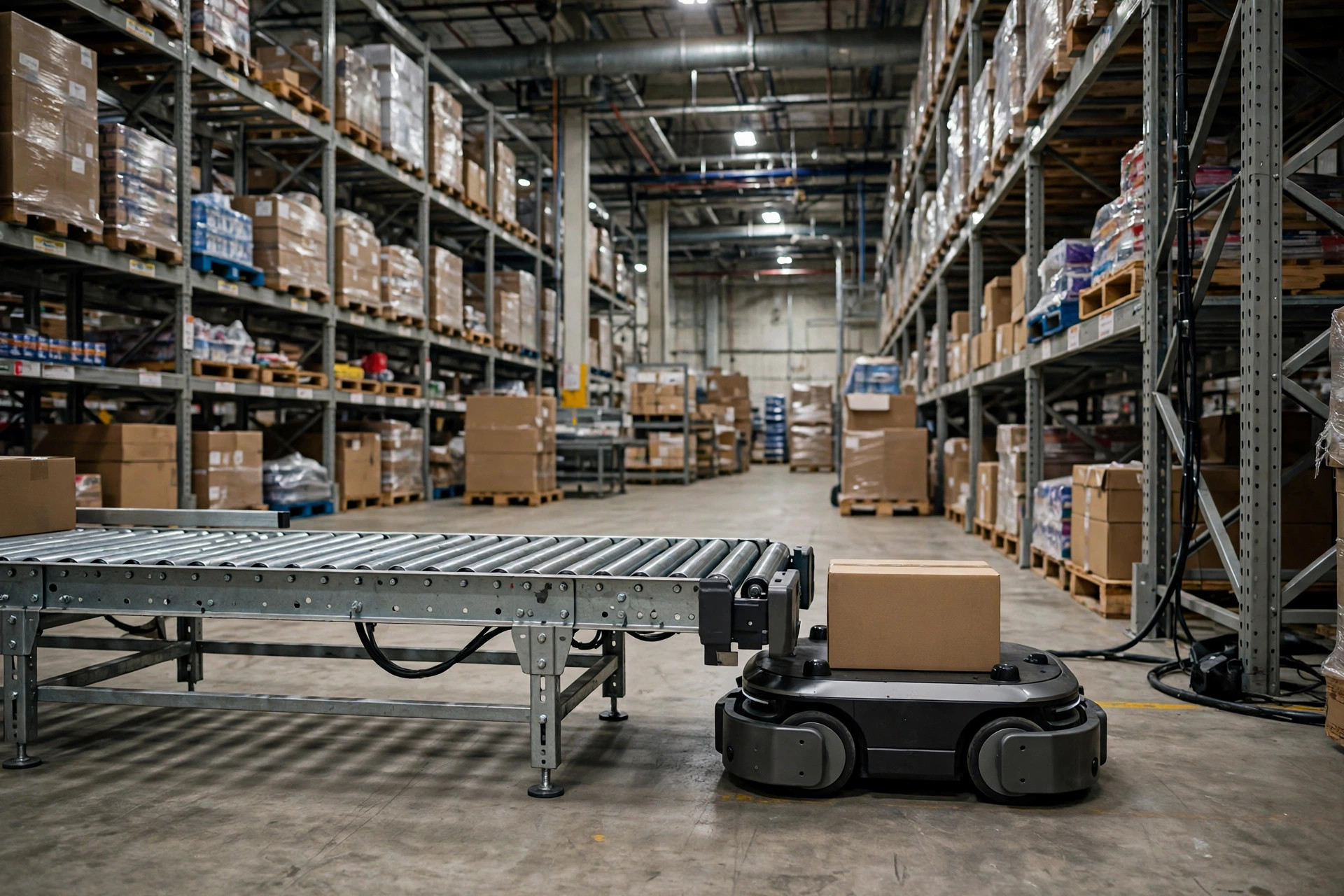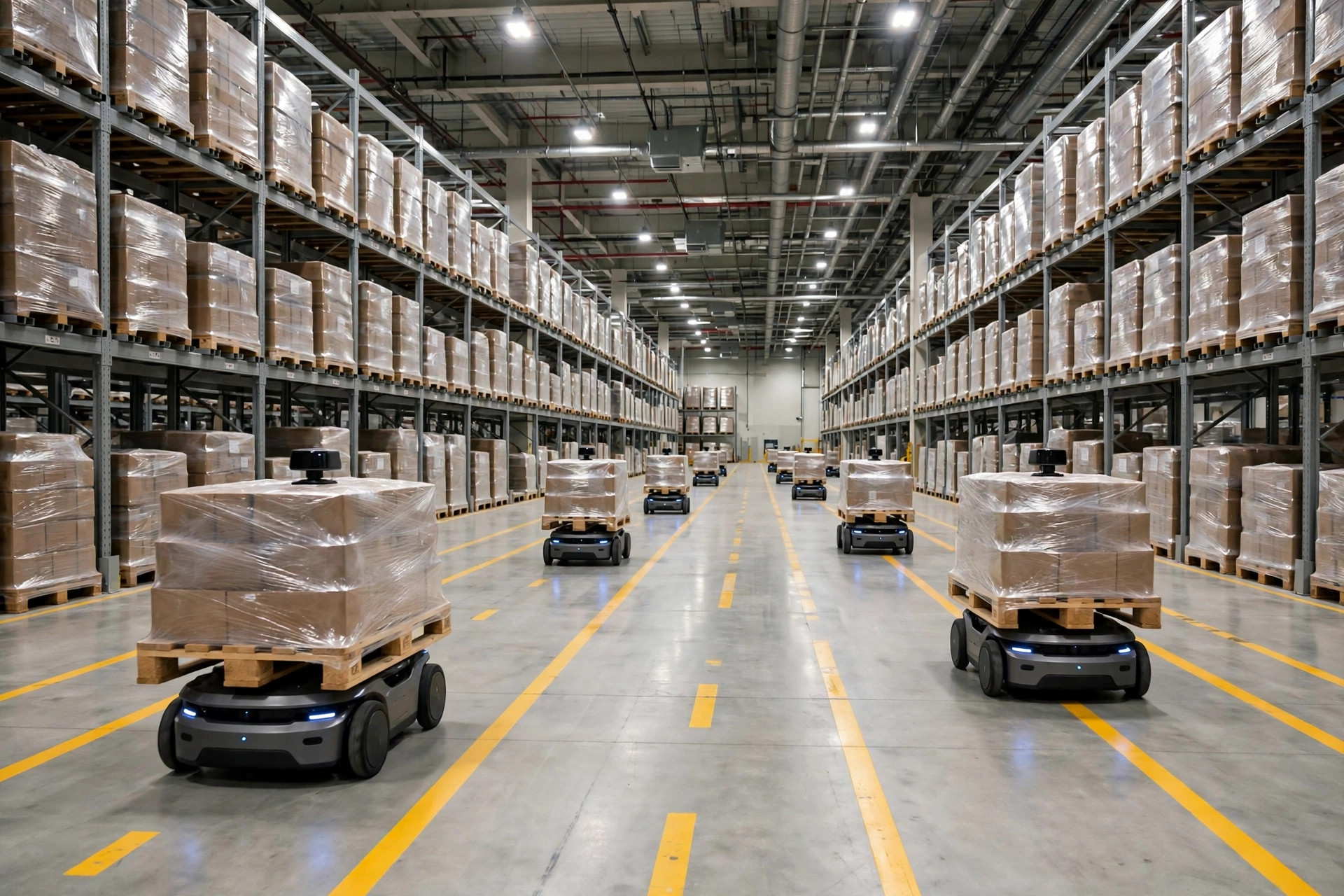
I have sold online for five years, and here is the lesson I keep relearning: the most expensive warehouse mistake is not buying a bad robot. It is buying a bunch of robots with nobody clearly in charge of them.
A friend of mine learned this during a sales peak last year. His warehouse had 20 AMRs from two brands. One brand's robot reached an aisle crossing and waited. The other brand's robot reached the same crossing and also waited. Neither would move first. The aisle stayed blocked for 40 minutes while orders piled up in picking and customer messages piled up in our chat group. He told me later that he wished he had settled the scheduling layer before he bought a single robot.
RCS fleet manager selection answers one plain question: who tells all these robots what to do, in what order, and who fixes it when the plan breaks? Get that answer wrong and every new robot makes the warehouse harder to run, not easier.
RCS Fleet Manager Selection Option One: Vendor-Built Scheduling
Vendor-built scheduling is the easy start. You buy the robots, you use the vendor's scheduler, the interfaces already match, and when something breaks you call one company.
I know a home-goods seller who took this route in Dongguan in 2024. He installed 12 AMRs from one brand, all on the vendor scheduler. Within three months the operation ran smoothly, and outbound picking was clearly faster than manual picking. At that point, the deal looked like a win.
The trap showed up in year two. He wanted to add eight more robots. Another brand was about 20 percent cheaper and performed just as well on his tests. But the vendor scheduler would not manage the outsiders. His choices were to buy only the original brand again, or run a second scheduler beside the first one and split tasks by hand. That second option was just a new headache with a price tag.
Vendor-built scheduling fits one kind of buyer: a small robot fleet, no plan to mix brands soon, and a strong need to get running fast. The real cost is not the first-year price. It is the bargaining power you lose every time you expand or switch brands later.
RCS Fleet Manager Selection Option Two: Third-Party RCS
A third-party RCS is a neutral dispatcher. No matter which brand made the robot, one system assigns tasks, manages crossings, and sets priorities.
Another friend chose this route in early 2025. His warehouse had 18 robots from two brands. The third-party RCS took more than two months to go live, and interface tuning went through three rounds of fixes. On paper, the first-year cost was clearly higher than vendor-built scheduling, and he almost backed out halfway through.
The peak season told a different story. Mixed-brand robots stopped blocking each other at crossings. The system assigned work by order priority instead of by brand. Traffic jams fell noticeably during the busiest hours. More important for him, later robot purchases did not depend on brand loyalty. He could buy whichever robot offered the best value, because the scheduling layer did not need to be rebuilt.
Here is the comparison I use when sellers ask me which route to take:
| RCS option | Upfront effort | Freedom to mix brands | Who owns a failure | Best for |
|---|---|---|---|---|
| Vendor-built scheduling | Low | Low | The robot vendor | One brand, small fleet |
| Third-party RCS | Medium to high | High | Mainly the RCS provider | Mixed brands, planned growth |
| In-house scheduling | Highest | Highest | Your own team | Large scale, strong tech team |
Do not judge an RCS only by its first-year quote. Replacing a scheduling layer costs far more than replacing one robot. You can swap robots one by one. You cannot swap the brain of the whole warehouse without stopping work to do it.
RCS Fleet Manager Selection Option Three: In-House Development
In-house scheduling sounds cool, and I have seen it work once. I have seen it fail more often.
A high-volume seller built his own scheduler in 2023 because none of the products on the market matched his workflow. After about six months, the system worked the way he wanted: task assignment and path planning followed his process, not a vendor template.
But the bill did not stop after development. Every robot firmware update could change an interface. Every change meant follow-up work for his team. When a key engineer left, troubleshooting slowed down right away. He later worked out that keeping that small team cost more each year than buying a third-party RCS, and it also ate up his own time managing a system that was not his core business.
Here is the counterintuitive point sellers often miss: the more robots you have, the less the scheduler should be treated as a free add-on. Many buyers negotiate the scheduler as a throw-in during a robot purchase and feel clever for saving money. When the fleet grows to 30 or 50 robots, the scheduler decides whether the warehouse can run at all. Robots are the hands and legs. The scheduler is the brain. You can add many hands, but the warehouse still has only one brain.
RCS Fleet Manager Selection Decision Framework: Three Questions
My own decision framework has only three questions. Answer them before you sign anything.
First, will you mix robot brands within three years? If yes, do not choose vendor-built scheduling. Second, will the fleet grow past 20 robots? If yes, you need one scheduling layer for the whole fleet, not two brains competing with each other. Third, can you afford a real in-house team for years, not just for launch? If not, do not build your own. Buy a third-party RCS and spend your time selling instead.
Two contract traps deserve attention, because both cost real money. First, the contract should state who is responsible when a new robot brand is added, and how fast that integration must happen. Second, it should state what happens when the scheduler goes down. Can manual dispatch take over immediately? If a scheduler outage stops every robot, that risk must be priced into the decision before peak season, not discovered during it.
This approach worked for me in practice: decide the scheduling layer first, then talk about robot brands and quantities. Reverse the order and the money you saved at purchase time will come back as traffic jams, expansion trouble, and brand lock-in, usually at a higher price.
By Ah K, E-commerce Seller (5 yrs)