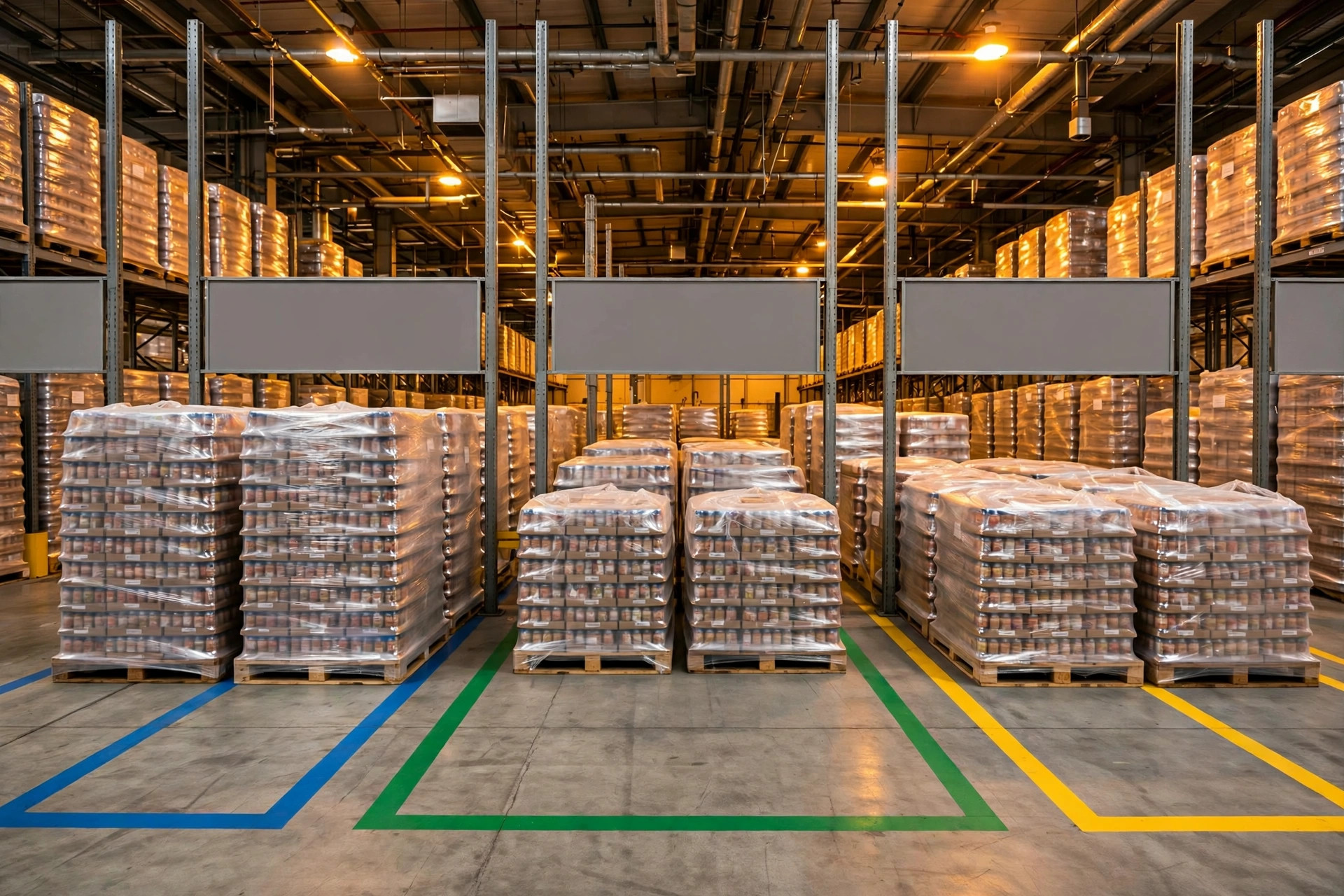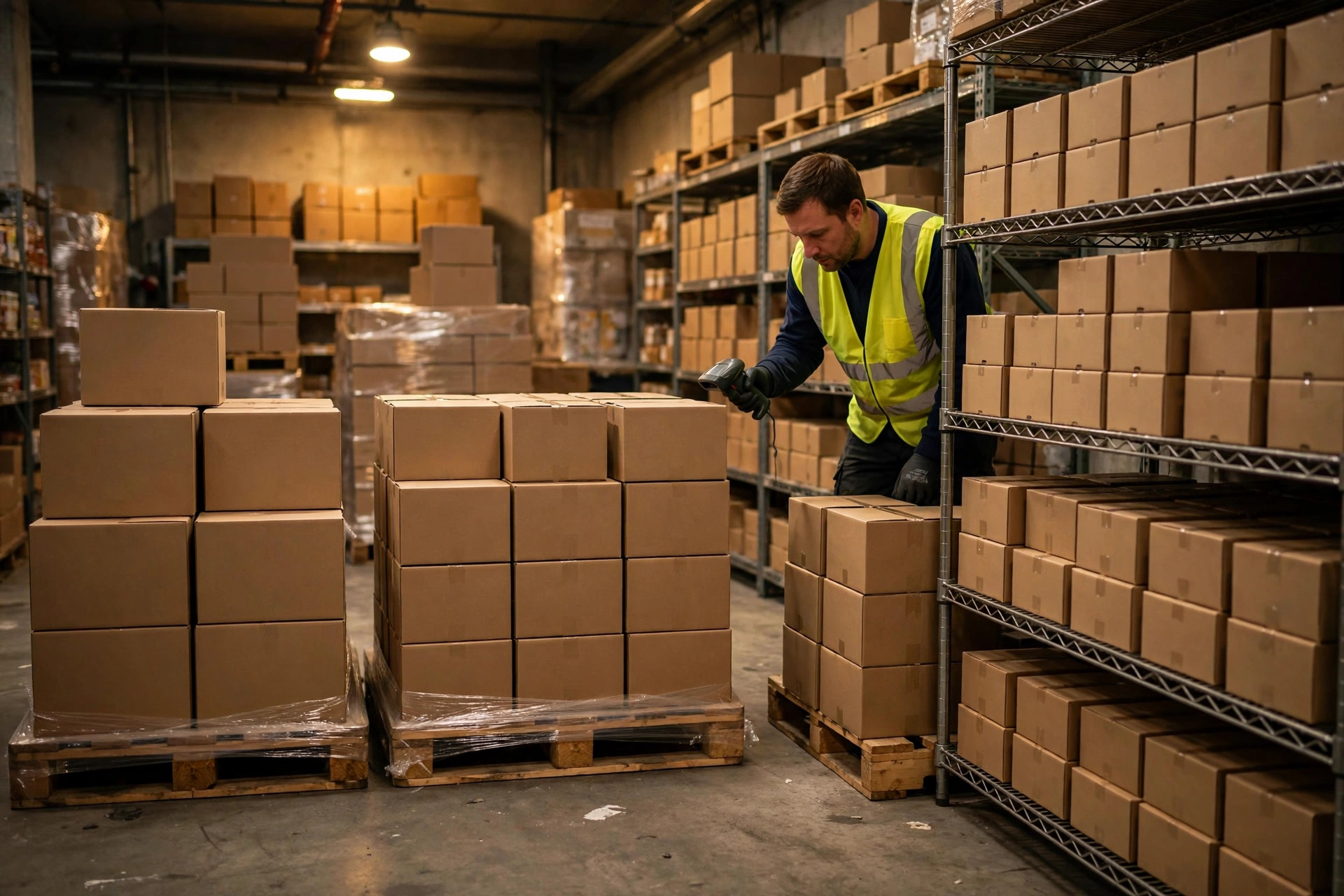
Last summer, at 10:40 PM, I was already horizontal on the couch scrolling my phone. Then a client who stores protein bars with us called, voice shaking: "Ma, that peanut butter batch you received last week — the supplier says the raw material might be contaminated with salmonella. Don't touch it. Wait for instructions."
I sat straight up. We had taken in 320 cases, and most had already shipped that week. I asked myself three questions: How much went out? To whom? What's still sitting on which pallet positions?
I couldn't answer the first two. That night I spent three hours in the warehouse flipping through shipping slips under a flashlight, eyes burning. That's when it hit me: a recall isn't won on the day it happens. It's won months earlier, in the records you kept when nothing was wrong.
It turned out to be a false alarm — the contaminated batch belonged to another co-packer. But I couldn't sleep. First thing the next morning, I started building a traceability chain for our little 3,000-square-foot warehouse. No big money, no big system. Just a scrappy homemade setup.
The Big Guys Have a Compliance Department. I Have a Used Scanner
I did some asking around first. A big 3PL's traceability system starts at seventy or eighty thousand dollars, with a six-month implementation and annual service fees on top. I laughed out loud. Our little warehouse's whole annual profit wouldn't cover the down payment. That playbook is not for us.
So what do we have? Let me take inventory: three people (me, Da Liu on receiving, Xiao Wu on shipping), two handheld barcode scanners bought used on eBay for eighty bucks each, a thermal label printer, a group chat, Excel, and a heart that got thoroughly scared by that phone call.
Here's the truth I landed on: a traceability chain is not software. It's a habit. Whether the chain holds depends on whether somebody writes it down at every step — not on how fancy the system is. The big guys have a steel chain. Ours is rope. Rope still holds things, as long as every knot is tied tight.
Our Scrappy Chain: Scan Once In, Scan Once Out
Our rule is embarrassingly simple: scan once when it comes in, scan once when it goes out.
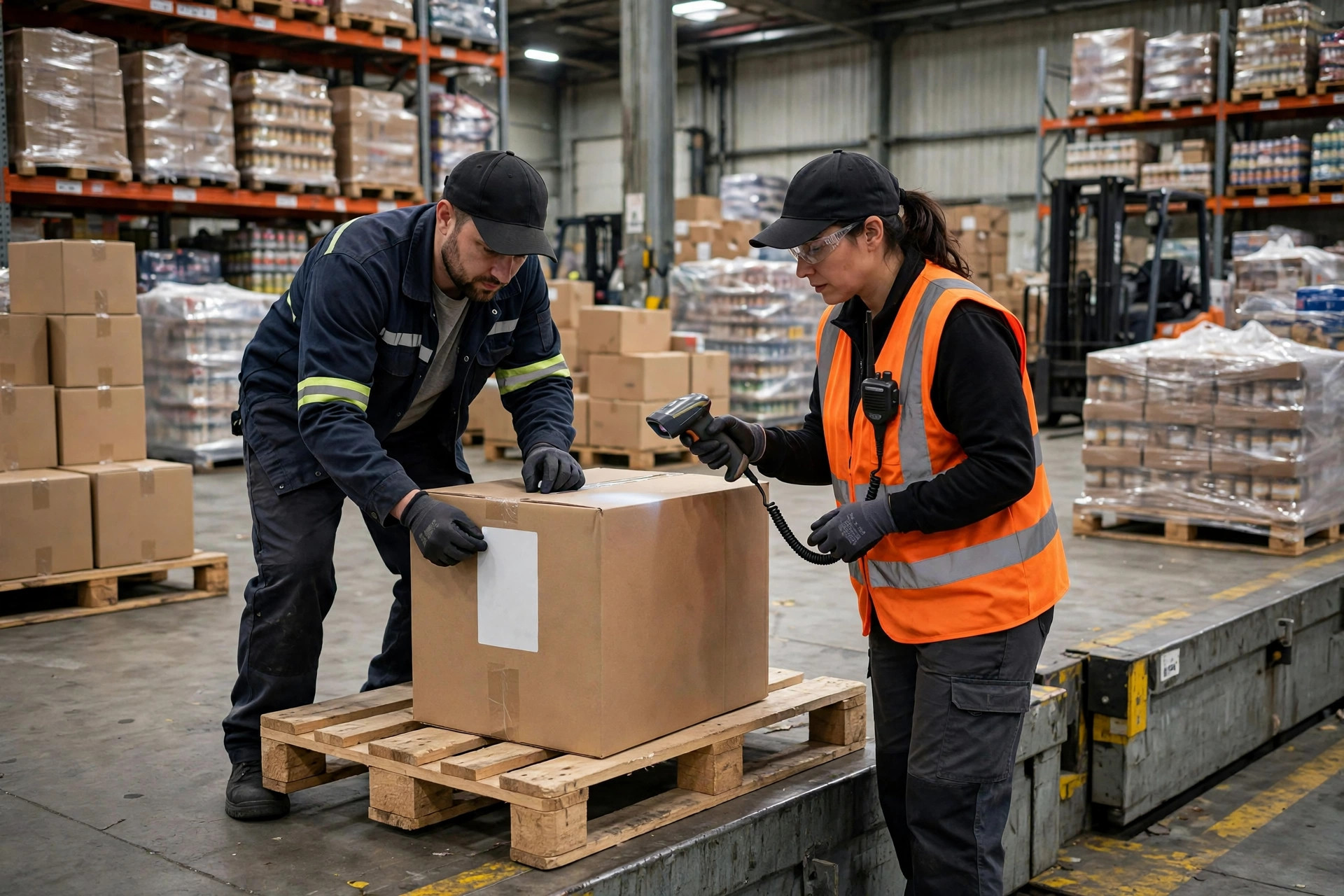
On receiving, no matter what the supplier's cartons already say, we print our own label and stick it on. Three lines: our internal lot number (date + supplier code + sequence, like 20260814-ABC-007), an abbreviated product name, the expiry date. Scan it with the gun, and one row goes into the spreadsheet: lot number, SKU, quantity, pallet position, receiving date.
On shipping, even simpler: the picker scans the label on the carton before it can leave. We record which lot number went out, how much, and to whom (consignee name + order number). Returns get the same treatment — scan it back in, match the lot against the shipping record.
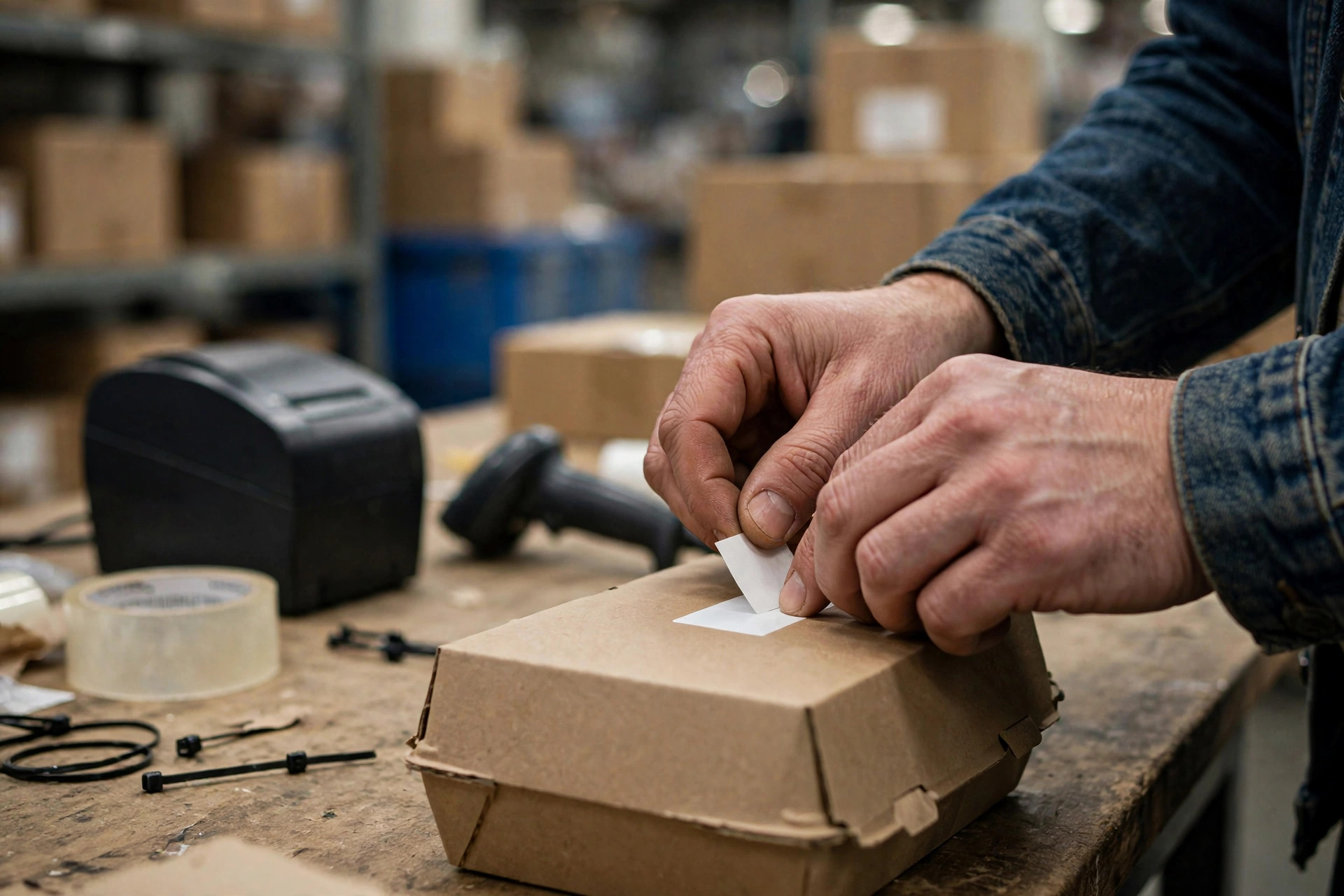
The whole process has exactly two "scan gates," like two water locks on a canal. What happens in between — moving, combining, repalletizing — we don't track. Why only the two ends? Because a small team can't remember a complicated process. Xiao Wu told me straight: "Ma, I can remember three steps. Give me five and I'll start making things up." Lesson learned: the first rule of process design for a small warehouse is: never test human nature.
One more detail that matters: if a supplier delivers mixed lots on one pallet — several production batches mixed together — we break it down, separate them, and label each one. Mixed lots are the enemy of traceability. If one mixed case turns out bad, you have to count the whole pallet as suspect. Ten extra minutes of sorting at receiving saves you ten times the pain on recall day.
Let's Do the Math: What This Homemade Setup Costs Us Per Year
Everyone assumes traceability means burning money. Here's our actual warehouse ledger (our numbers — don't copy them blindly):
| Item | One-time cost | Annual cost | | Used scanners (2) | approx. $160 | $0 | | Thermal label printer | approx. $220 | $0 | | Label rolls (approx. 10/year) | — | approx. $140 | | Excel / Google Sheets | $0 | $0 | | Labor (approx. 10–15 extra minutes per shipment for labeling and scanning) | — | approx. $900 | | Total | approx. $380 | approx. $1,040 |
A little over a thousand dollars a year. Now weigh that against the alternative: a real recall where we can't answer "where did it go" — the client's claim, the FDA inspection, and the client walking away to another warehouse, costing us tens of thousands in annual storage fees. Which is more expensive? We sure can't afford the "no records" kind of money.
And here's the counterintuitive lesson it took me two years to figure out: the most expensive part of a traceability chain isn't the equipment. It's the discipline. The scanner was eighty bucks used, but the rule "scan every single shipment" took me three months of policing to stick. Da Liu kept skipping it at first — "too much trouble" — until I caught two mismatches in the spreadsheet and he owed me two rounds of barbecue. He hasn't skipped once since. You can buy software. You can't buy habits.
Our 48-Hour Drill Day, and How We Crashed
Process alone isn't enough — you have to rehearse. In May 2026, I ran our first "recall drill": pretend a client's lot of oat bars failed testing, and give me 48 hours to lock down every shipment. My own standard: a complete list — what shipped, to whom, what's left — within two hours.
We crashed. Halfway through the spreadsheet I found two lot numbers typed wrong — Xiao Wu had entered "20250602" instead of "20260502," month and day flipped. One return was scanned but never logged, so the lot matched but the count didn't. It took five and a half hours to assemble the list. We "passed," but I gave us a failing grade.
That crash was worth it. We changed three things: lot numbers switched from "date + code" to a compact YYYYMMDD-plus-sequence format to cut typing errors; returns must be logged the same day — overnight makes it a violation; and we drill every quarter, with the next target set at four hours. In our September drill, we delivered the full list in 3 hours 20 minutes, zero errors.
I also carry a cautionary tale from a fellow warehouse owner, Lao Chen — I use it to scare myself straight. Last fall he got hit with a real recall on a seasoning sauce in his warehouse (E. coli, the Class I kind, the worst kind). He'd been sloppy: same-SKU lots stored mixed together, shipments logged without lot numbers. When the recall order came, he couldn't isolate anything — so he had to freeze the entire SKU across the building. A recall that should have touched 200 cases ended up freezing 1,900. The client switched warehouses. A year later he told me: "The recall didn't kill me. Not keeping records did."
Three Pieces of Advice for Warehouses Like Mine
Two years in, my verdict is one sentence: the barrier to traceability isn't money — it's whether you can turn "write it down" into muscle memory.
First, start with food and consumer goods; the rest can wait. A small warehouse carries a messy mix of SKUs — you can't cover everything on day one. Build the chain first for the stuff people eat and put on their skin. That's what regulators watch most closely (the FSMA food traceability rule has requirements here; the compliance dates and timelines have been revised more than once, so check the FDA website for the latest — don't trust any secondhand summary, including this article).
Second, don't try to do it all at once. Our records still live in Excel — we haven't moved to a WMS lot-tracking module. It's good enough. When your annual shipments triple and the spreadsheet starts choking, then think about upgrading. A small warehouse spends its money where it hurts most, and the place that hurts most is "getting the chain running."
Third, put drills on the calendar. A chain looks solid until you pull on it. Run at least two drills a year, with a real lot, for real, on the clock. Crashing a drill costs you nothing. Crashing a real recall costs you everything.
I'll never forget that night under the flashlight, flipping through shipping slips. Since then, our warehouse has one rule: if anyone asks "where did this lot go," the spreadsheet must have the answer within ten minutes. If it can't, the chain is broken, and we fix it that same day.
We don't have a compliance department. We don't have an eighty-thousand-dollar system. We have a scrappy method, an eighty-dollar scanner, and discipline bought with barbecue. When a real recall comes, the winner isn't the warehouse with the priciest system — it's the one whose books are tight.
Small warehouses have their own way of surviving.
By Xiao Ma, Small Warehouse Owner