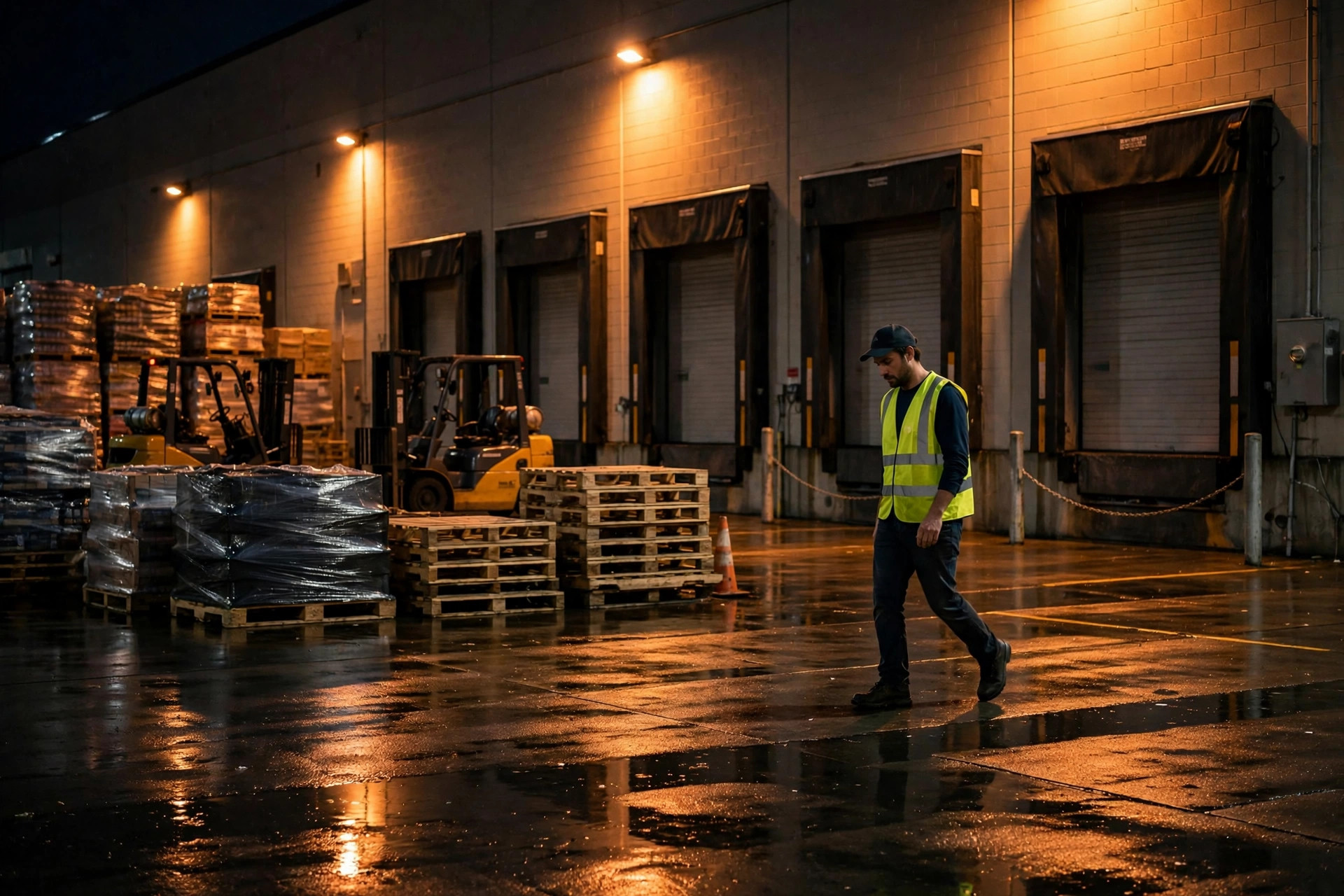
If I had to bet on which warehouse job generates the most workers' compensation claims, I would put my money on order pickers. Every time. Not forklift operators. Not dock crews. Pickers.
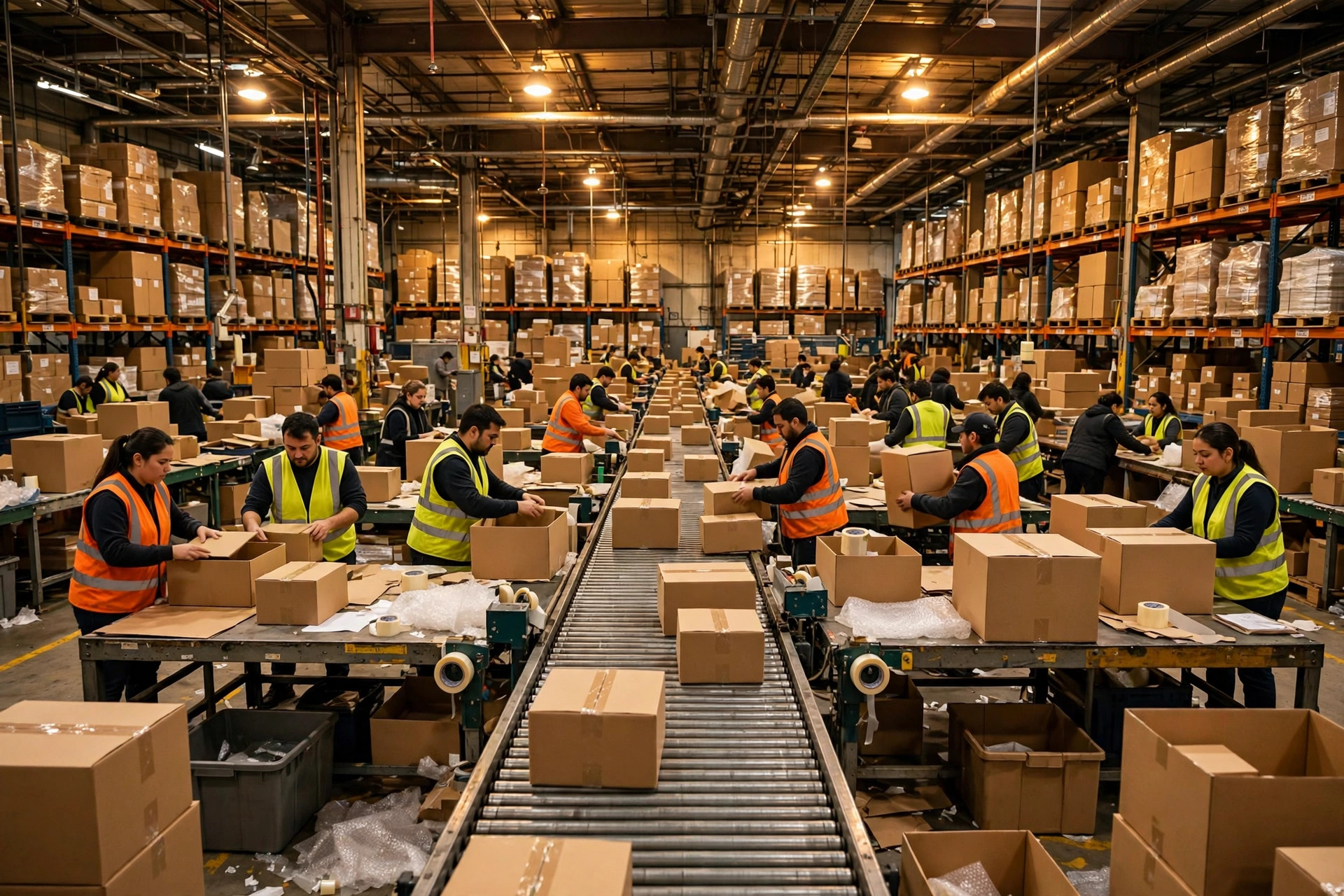
Last year I walked a 200,000-square-foot fulfillment center in Fontana with a 60-person pick team. The operations manager was proud of his pick rates. Then he showed me the incident log: eleven musculoskeletal injuries in twelve months, nine of them backs and wrists. His pick rates were fine. His people were breaking.
Here is the uncomfortable truth: most of those injuries were not bad luck. They were designed into the job. Fast movers on the bottom shelf. Pack stations built for nobody in particular. A scanner that forces a thousand awkward wrist flicks a day. When the job is built that way, injuries are not accidents. They are scheduled.
The golden zone is not a poster on the wall
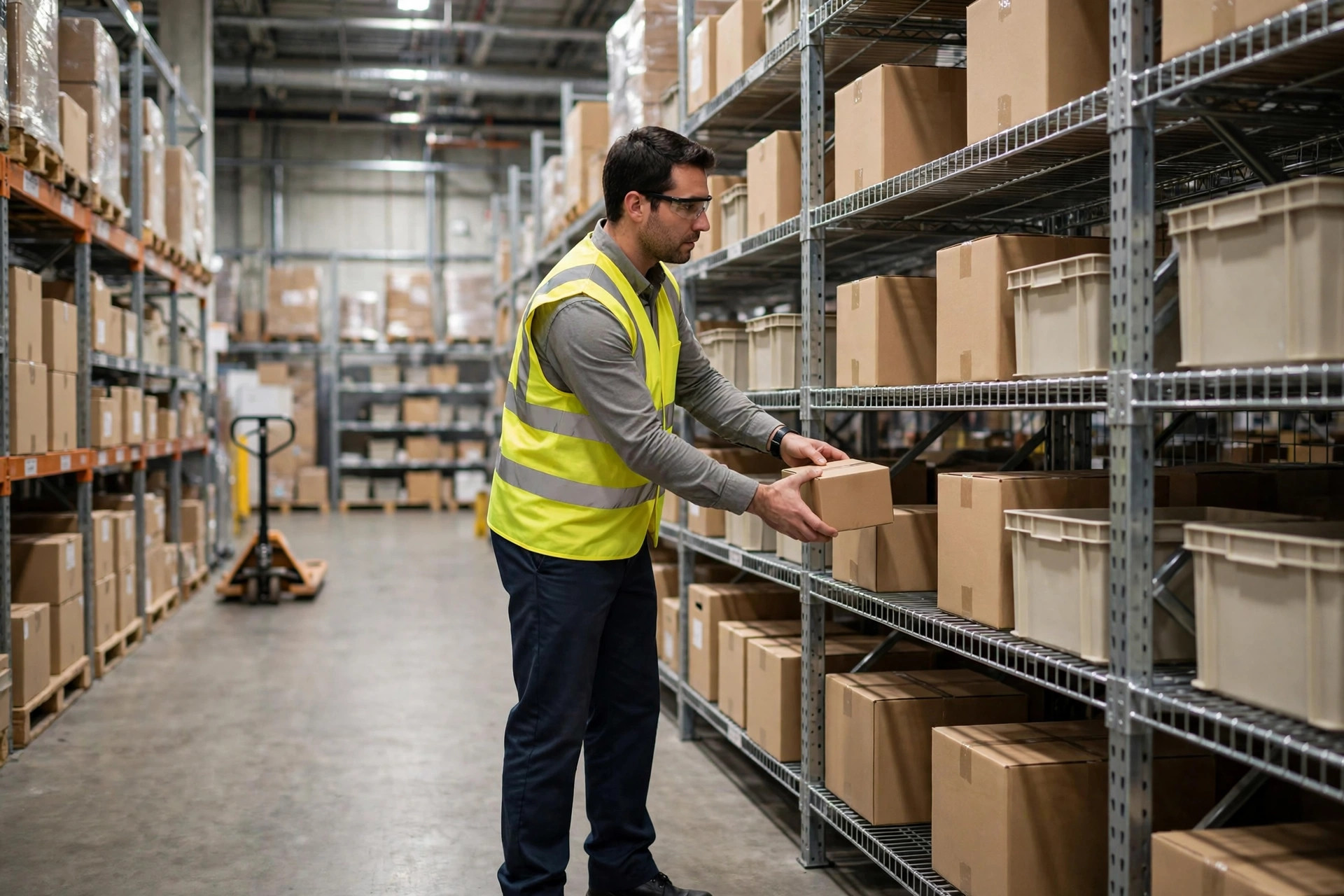
Ergonomists talk about the "golden zone" — roughly waist to shoulder height — where the human body lifts and reaches with the least strain. Every warehouse has the poster. Few warehouses actually slot their inventory that way.
In Fontana we did a reslot based on ninety days of velocity data: top movers into the waist-to-shoulder bands, slow movers to the floor and the top. Two weekends of labor. Within a month, pickers were telling their supervisor their backs felt different at end of shift. Nothing about the building changed. The work moved to where bodies work best.
The floor and top levels still have a role, but they need rules. Floor level gets light, infrequent items, ideally on tilted flow racks so product slides toward the picker instead of forcing a deep reach into the rack. Top level is for slow movers only, and it comes with a step stool — never a cardboard box, never a pallet, and never "just this once." I have seen too many "just this once" falls.
Conveyors and pick carts matter just as much. The top shelf of a pick cart should line up with the rack's golden zone so workers slide product across instead of lifting it up and over. I once saw a conveyor takeaway set barely two feet off the floor; every carton required a full deep bend. Hundreds of times a shift. That is not a workstation, that is a workout nobody signed up for.
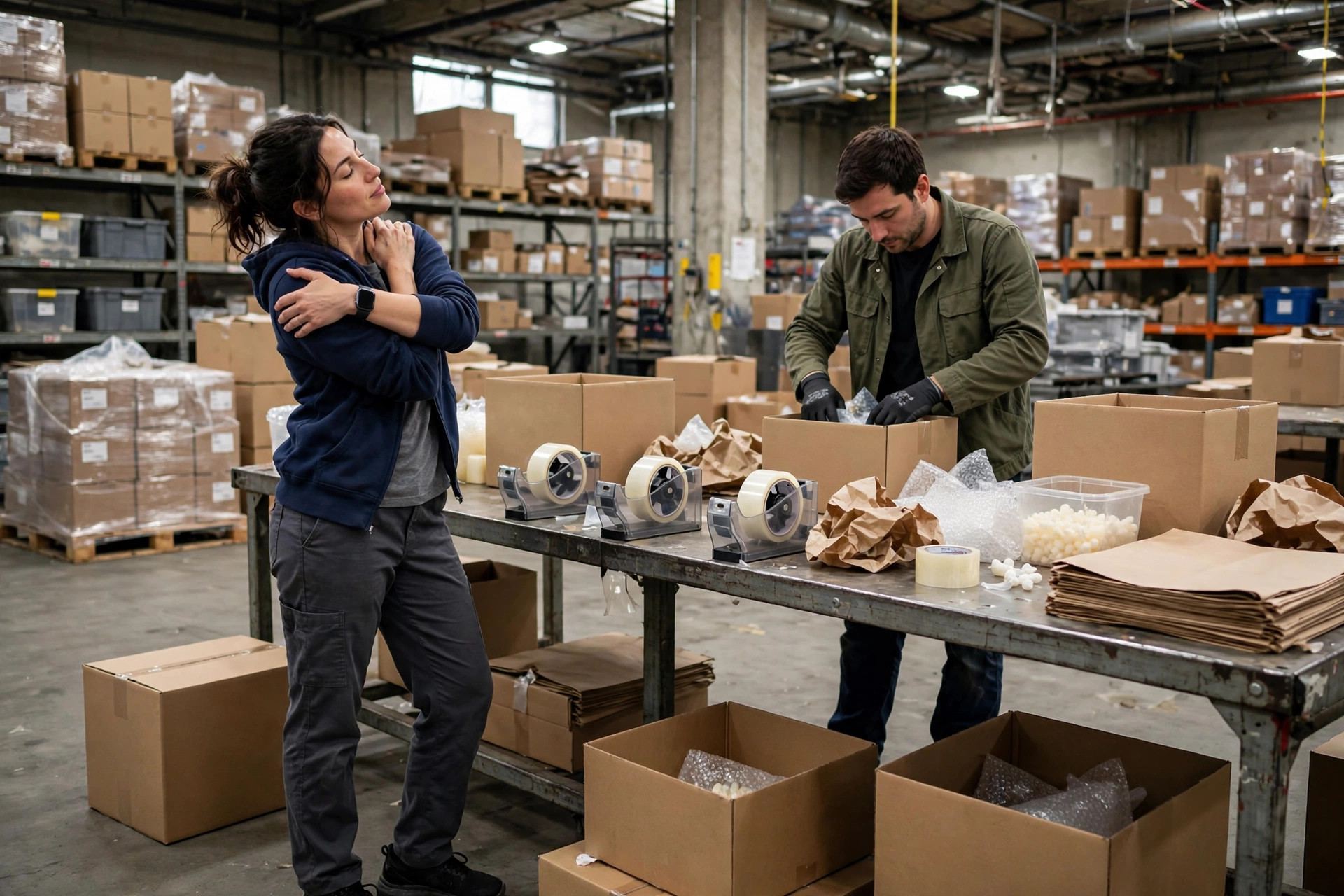
Pack stations deserve the same attention. The bench should meet the worker at the waist, with an anti-fatigue mat underfoot — cheap, and transformative across an eight-hour shift. Tape, labels, and printers belong within a natural arm's reach, not a half-turn away. Every twist is a small tax on the spine, paid thousands of times a week.
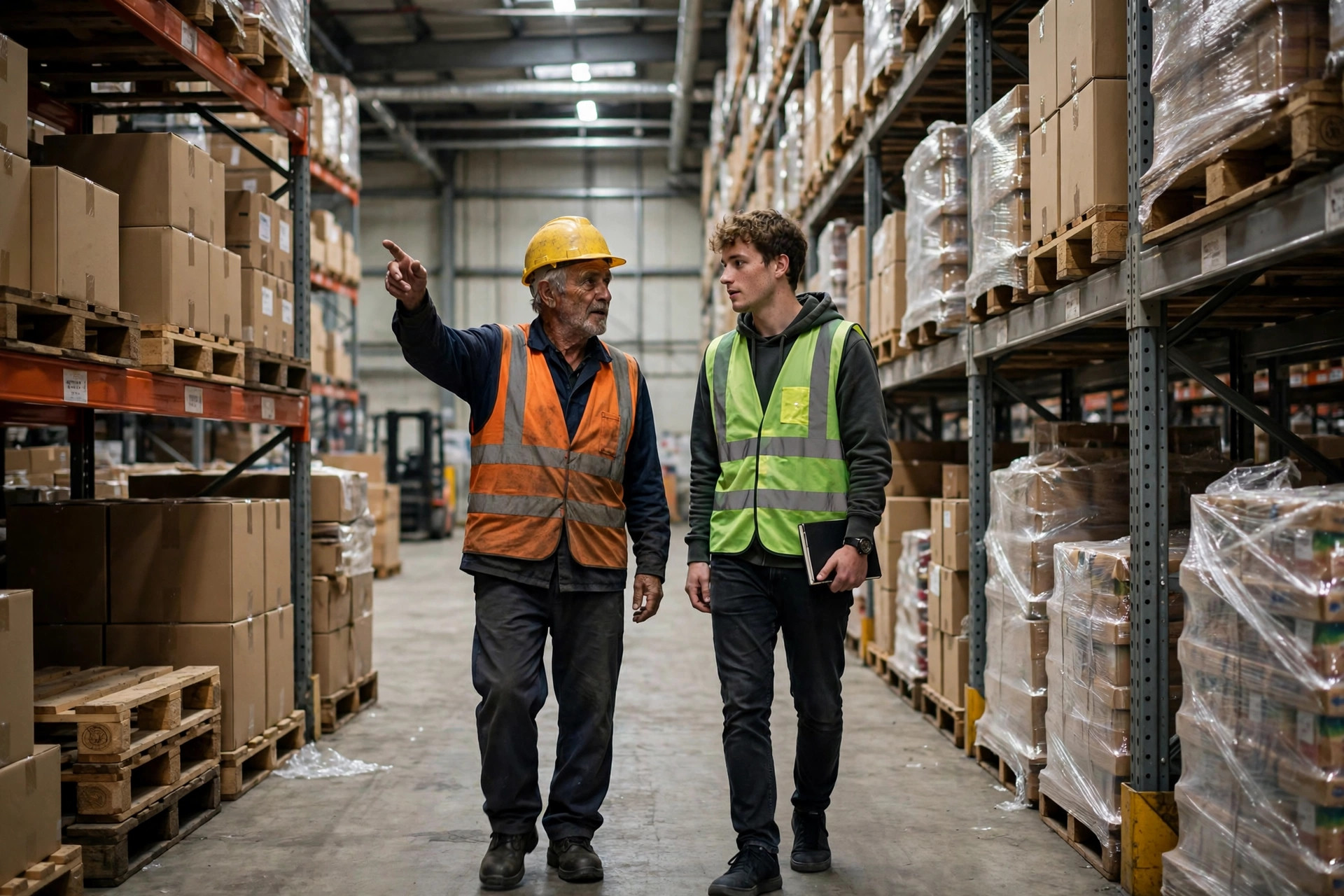
And give new hires fifteen minutes on lifting form: knees bent, load close, pivot with the feet instead of twisting the waist. Veterans roll their eyes. But a disproportionate share of back injuries happens in the first ninety days, when new people work the hardest with the worst form. Fifteen minutes of training is the cheapest insurance you will ever buy. Seasonal temps are the extreme case — I restrict them to golden-zone picks for their first two weeks. Bodies need a ramp-up period, and peak season is the worst time to discover that.
Wrists go quiet before they go bad
Back injuries announce themselves. Wrists and shoulders whisper. A scanner trigger pulled a thousand times a day. A labeling wrist flipping several thousand times a day. Repetitive strain builds silently, and by the time someone says "I can't grip the scanner," you are looking at months off, not days.
Shoulders usually suffer from reaching. Put fast movers above shoulder height and you have just scheduled hundreds of overhead reaches per shift. Rotator cuff problems follow as predictably as sunrise. The fix is the same as for backs: velocity decides the height.
Three things actually work, in my experience. First, rotation. Picking, packing, receiving, putaway — rotate every two hours. The schedule takes ten minutes to draw up. Besides resting muscle groups, it cross-trains your crew, which pays off every time someone calls in sick.
Second, five minutes of stretching before the shift. I know how it sounds. A supervisor I know runs neck, shoulder, and back stretches with the team every morning, no exceptions. Six months in, musculoskeletal claims dropped noticeably. It is not about perfect form. It is about never skipping.
Third, tools that fit humans. Light scanners with grips shaped for actual hands. Auto label applicators where volume justifies them. And do not forget the pack station computer — a badly placed keyboard and mouse means thousands of awkward clicks a day and a shoulder that pays for it. A ten-minute adjustment by IT beats three months of physical therapy.
Run the numbers on one claim first
Most owners treat ergonomics as a nice-to-have because they have never itemized a claim. Let me give you the framework: one serious back injury — ER visit, physical therapy, lost-time wages, plus the workers' comp premium increase the following year (check your carrier's current policy for exact figures) — costs roughly what it takes to ergonomically retrofit a pick line twice over. That is before the hidden costs: recruiting, training replacements, running short during peak.
The retrofit itself is not expensive. Reslotting is labor. Raising a bench is carpentry. Mats, step stools, lighter scanners, and a rotation schedule land in the low thousands. Against a single claim, the math is not close.
One more thing: OSHA's General Duty Clause, Section 5(a)(1), requires employers to keep the workplace free of recognized hazards, and ergonomic hazards are showing up in inspections more every year. Do not wait for an inspector to start the conversation.
If you are going to spend, spend in tiers. Tier one costs nothing: reslot and a rotation schedule, this week. Tier two is small money: mats, stools, better scanners, station by station. Tier three is capital: adjustable-height benches, a rebuilt pack line. Most warehouses see injury numbers drop after tier one alone, which makes tiers two and three easy budget conversations.
One habit separates the warehouses that sustain these gains from the ones that slide back: tracking. Put musculoskeletal incidents on the same weekly scorecard as units per hour. When the team sees the injury line trending down next to the productivity line holding steady, the program stops being "the safety guy's project" and becomes how the building runs.
This week, pull your pick velocity report and walk your fastest aisle. Count how many of your top twenty SKUs sit below the waist or above the shoulder. Every one of them is a small daily injury wearing a barcode. Fix those twenty first, and your team will feel it before the month is out.