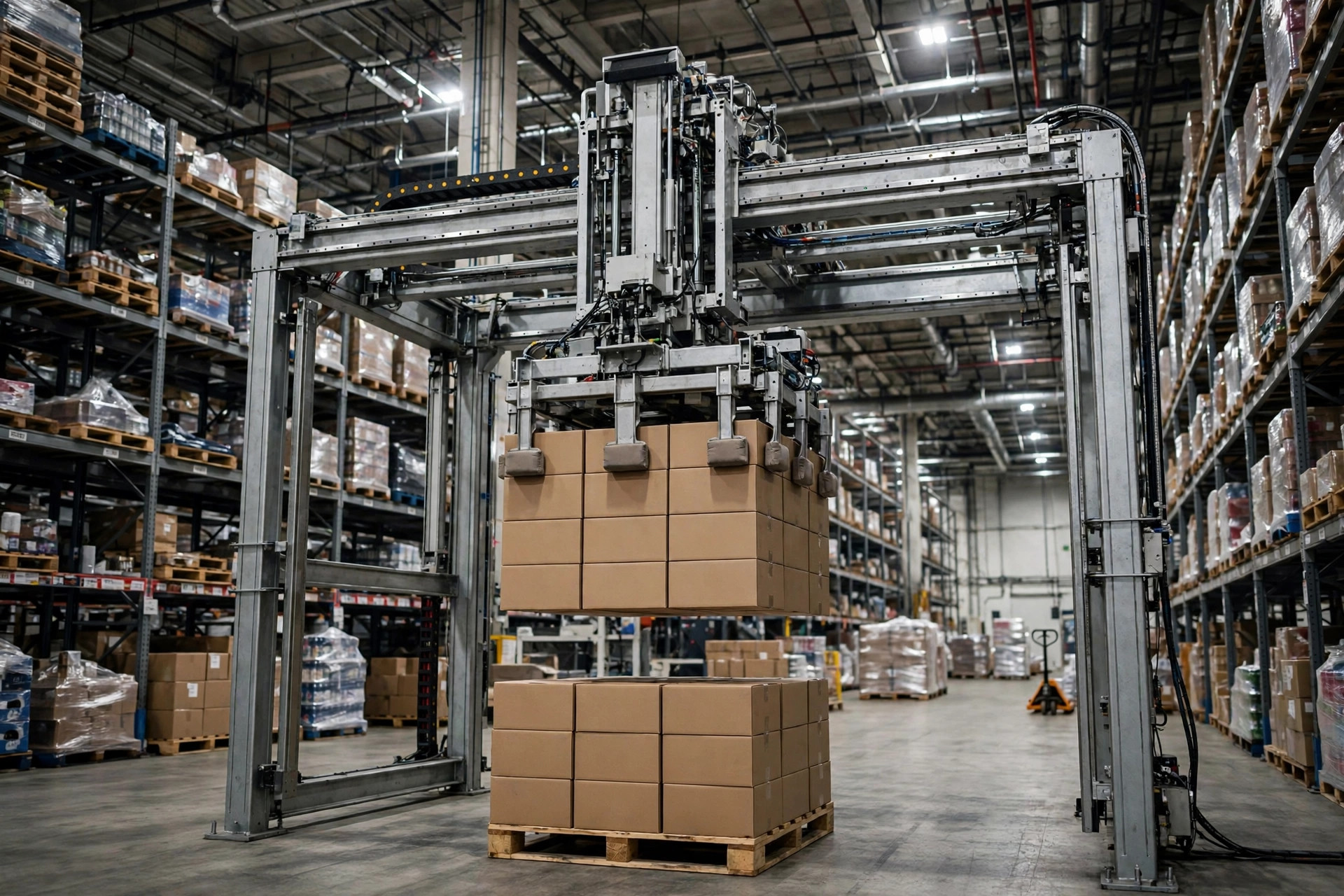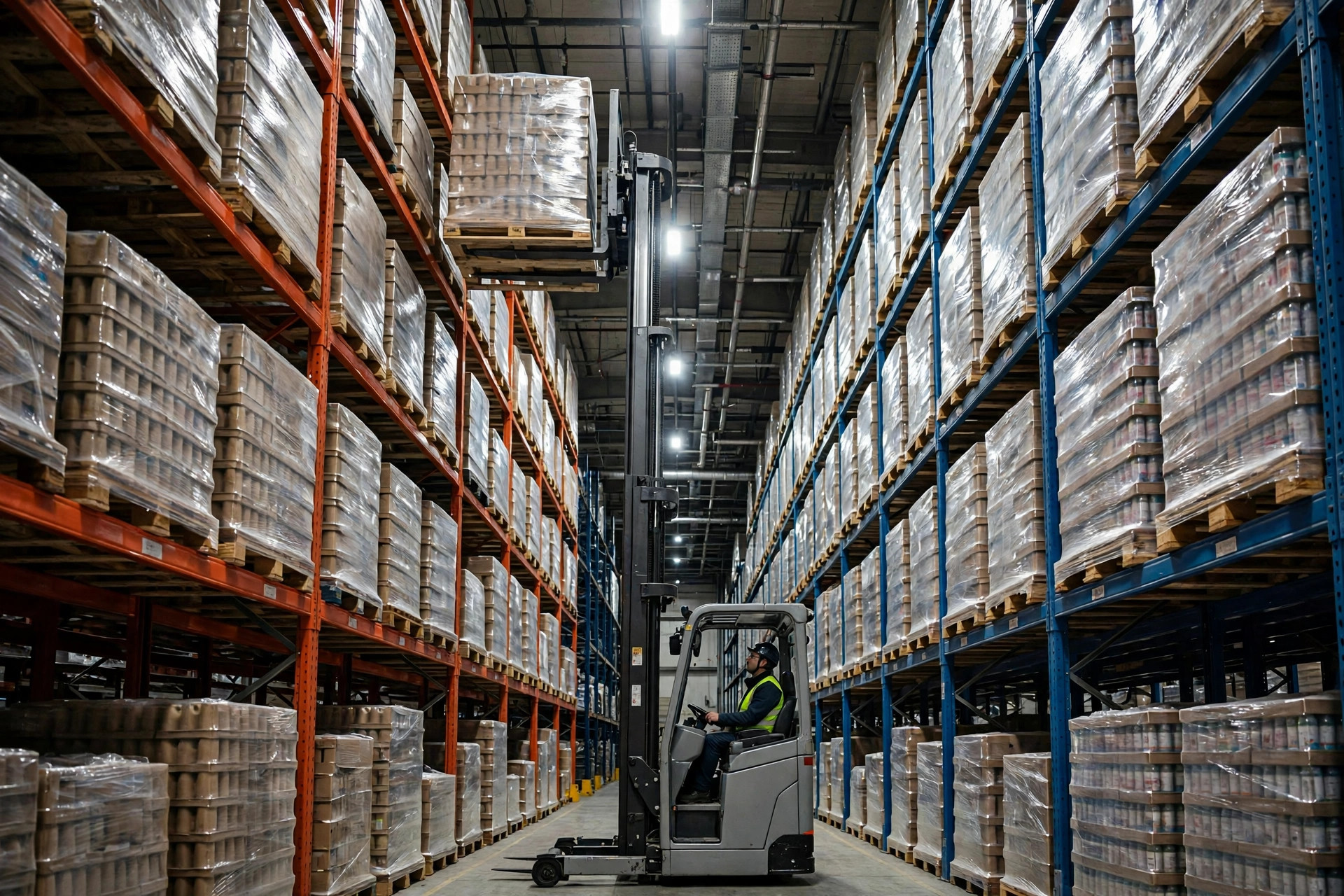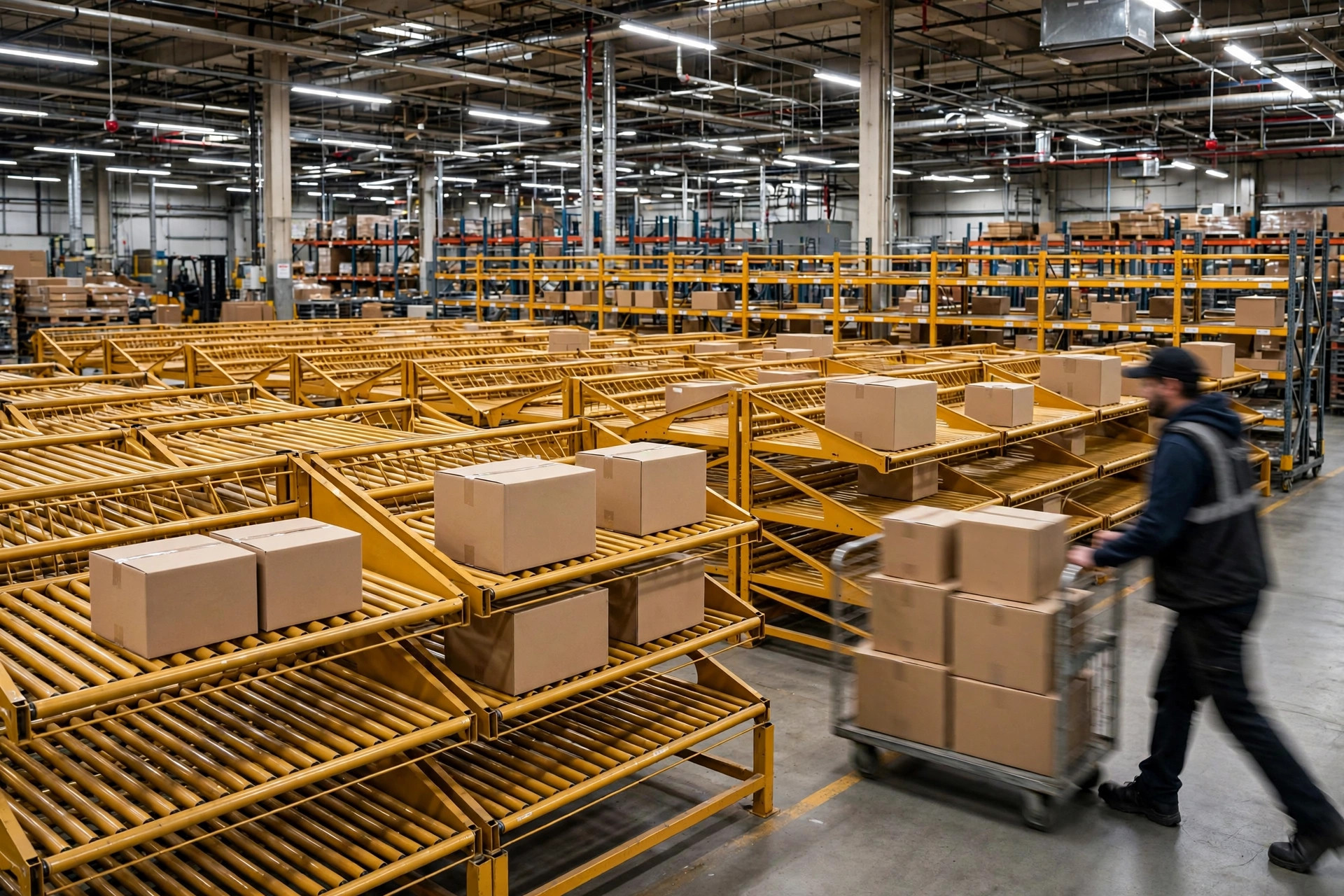
Last month I walked a client's e-commerce warehouse in Ontario — a couple hundred thousand square feet, pushing one to two thousand orders a day in peak. The operations manager was complaining that pick rates had been slipping. I glanced at the racks as we walked: the golden pick positions, closest to the main aisle at waist height, were holding dozens of SKUs that hadn't moved in six months. Meanwhile the real movers, the SKUs shipping dozens of lines a day, were buried at the back of the farthest aisle on the second level, where pickers had to stretch or crouch to reach them.
I asked when they'd last re-slotted. "When we opened, three years ago. We did an ABC analysis back then."
That's what this piece is about. Your ABC classification is a moving target — order mix shifts every month — but plenty of warehouses keep a pick-face layout that was set years ago and never touched again. The result: A-items parked in the boonies, C-items squatting on the best real estate, and pickers walking hundreds of extra meters every shift. Multiply a few extra minutes per picker per day across a whole crew and a whole year, and the wasted labor gets ugly fast. I'll let you do the math with your own order volume and labor rates.
Pick-face maintenance isn't a capital project. No new system, no new equipment. One spreadsheet and a quarterly rhythm will do it.## Look at the Data Before You Touch Anything
Before moving a single box, answer one question: is your ABC classification still from this year?
A lot of warehouses compute ABC once at startup, or once a year in December. E-commerce order mix can turn over two or three times a year — seasons, viral products, new launches all move the needle. Slotting this year's faces with last year's ABC is like driving with last year's map.
My recommendation: re-run ABC every quarter, using the last 90 days of outbound order lines. Rank by lines or by units depending on your operation. For break-pack e-commerce picking, rank by lines — otherwise a bulk-shipped SKU looks like an A-item when a picker barely touches it. For case-pick B2B operations, units or pallets make more sense.
Don't use twelve months of data — it smooths a dead fad into "looks okay" and dilutes rising products into noise. Ninety days flattens promo-week spikes while staying current.
Print the new A-list and walk the floor. A good third of your A-items won't be sitting in golden positions at all. That gap is your to-do list.
One more thing people miss: the B-items. Everyone obsesses over A and C, but B is where the biggest wins hide — decent volume, mediocre positions, and a small move pays off across a lot of picks. As for C-items, stop wasting prime pick-face space on them. Push them to the far ends of aisles or to bulk storage.
Slot the New Faces Like You Mean It
One principle for the new layout: put the frequent movers where hands naturally reach, and let the slow ones fend for themselves.
The golden positions are the ones closest to the main aisle, between waist and chest height. A picker turns into the aisle and grabs without bending, stretching, or climbing. Reserve these for the top of the A-list by line count. Not enough golden spots? Push the weaker A-items back to B-zone rather than letting C-items keep camping in the good seats.
Then there's the replenishment-versus-travel trade-off. My rule of thumb: for A-items, go deeper and taller (double-deep flow rack) rather than splitting one A-item across two aisles. What kills pickers isn't a few extra steps — it's visiting two locations for one SKU.
Put SKUs that sell together near each other — phone cases and screen protectors, pet food and pet treats. If your system has order-line affinity data, use it when slotting. Small step, visibly shorter pick paths.

Once the new layout is drafted, don't just hand out move orders. Build an old-versus-new sheet — SKU, old slot, new slot — and walk the floor to verify every new slot is empty, fits the carton, and hasn't been claimed by something else. Skip this and the night shift finds someone else's product in the "new" slot. Half a shift wasted.
Move Faces Without Breaking Outbound
The biggest fear with re-slotting is disrupting shipping. The way I do it: move in small batches, at night or on weekends, one aisle at a time.
Don't try to flip the whole building in a weekend. Before each batch, clear the pending pick tasks in that aisle or pause task release for it. While a batch is moving, freeze the aisle — flag the slots "under adjustment" so no new tasks dispatch there.
After each batch, do three things: scan-verify every moved SKU against the system; move the slot labels with the product and kill the old ones; update the slot master data, including pick paths and replenishment rules.
Of those three, labels are where teams blow it most often. Product moved, labels didn't follow. The picker walks to the new slot per the system, finds no label, and hesitates. Or the old label is still up and replenishment keeps feeding the old slot. My low-tech fix: print every new label twice — one for the rack, one for the aisle end cap — and stick them on the spot. No "we'll label it tomorrow."
And don't have your pickers do the moving as a side job. They're slow and sloppy at it. Assign a person or two, or use idle night-shift hours — the moving labor is a one-time cost, while the walking you save pays off every day.
Leave the Seasonal SKUs Alone
Finally, the boundary: not every SKU deserves to play the quarterly game.
Highly seasonal SKUs — pool supplies, holiday decor — will just whiplash on a quarterly rhythm: A-items in season, C-items off season. Give them a fixed seasonal zone instead. Stock it once before the season, lock it down after, keep it out of the quarterly re-slot. Park the zone in B-territory — not on golden real estate, not in the far corner either.
Then there are promo SKUs — "this month's push" items whose volume explodes for a month and vanishes. Keep a few flex slots next to the golden zone: slide the promo SKU in during the push, pull it out when it's over. Flex slots normally hold B-items, so borrowing them costs you nothing.
Be ruthless with dead C-items: nothing moved in six months goes out of the main pick area, into bulk storage or back to the vendor. Every pick-face position is money. I've seen warehouses where dead SKUs occupied nearly half the main pick zone, pickers weaving through dead stock to find live product.
The boundary in one sentence: re-slot the SKUs with predictable high frequency; leave alone the unpredictable and the motionless. Quarterly maintenance manages the steady state; seasons and promos are variables and get their own mechanism.
Quarterly Pick-Face Maintenance Rhythm
Here's the whole thing as a wall-chart table for the ops office:
| When | Action | Output |
|---|---|---|
| Week 1 of each quarter | Pull 90 days of outbound data, re-run ABC | Fresh A/B/C list |
| Week 2 of each quarter | Walk the floor, compare the list against actual slots | Adjustment to-do list |
| Week 3 of each quarter | Draft the new layout, build old-vs-new table, verify slots on site | Approved move plan |
| Week 4 of each quarter | Move in batches, scan-verify, move labels, update the system | Move completion sign-off |
| One month before peak | Stock the seasonal zone, reserve flex slots | Seasonal zone ready |
| Monthly | Sweep C-items, clear anything dead for 6+ months out of the pick zone | Dead-SKU cleanup log |
No system upgrade needed — a spreadsheet runs this whole thing. What matters is that someone owns it and it happens on schedule. Most warehouses don't skip ABC maintenance out of laziness; they skip it because nobody put "re-run ABC" on the calendar, and three years go by.
Pick-face maintenance is one of the highest-ROI chores in warehouse operations: no equipment, no software, no headcount — just putting product where it belongs. It's also the easiest to ignore, because it doesn't make noise or headlines. My suggestion: start this quarter. Pull one 90-day data set and see where your A-items are actually sleeping. You'll know whether it's time to move them.