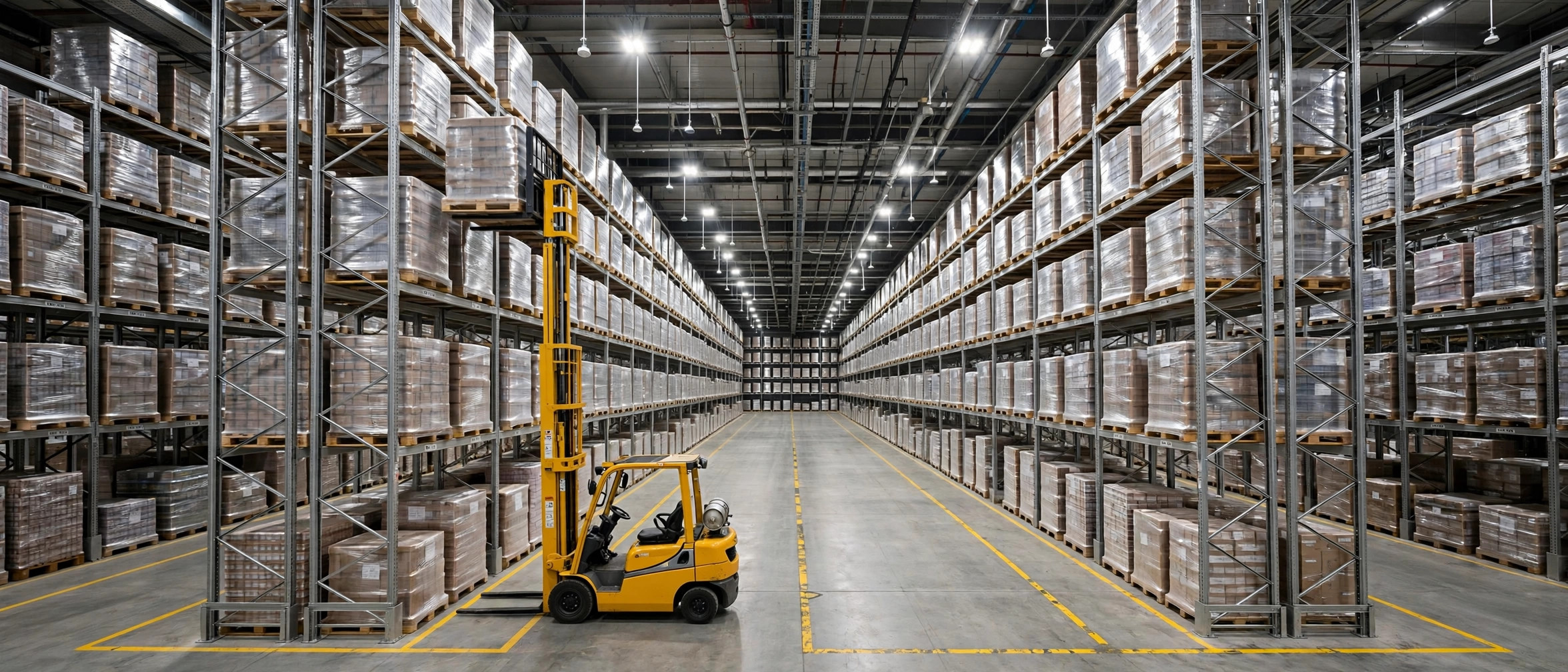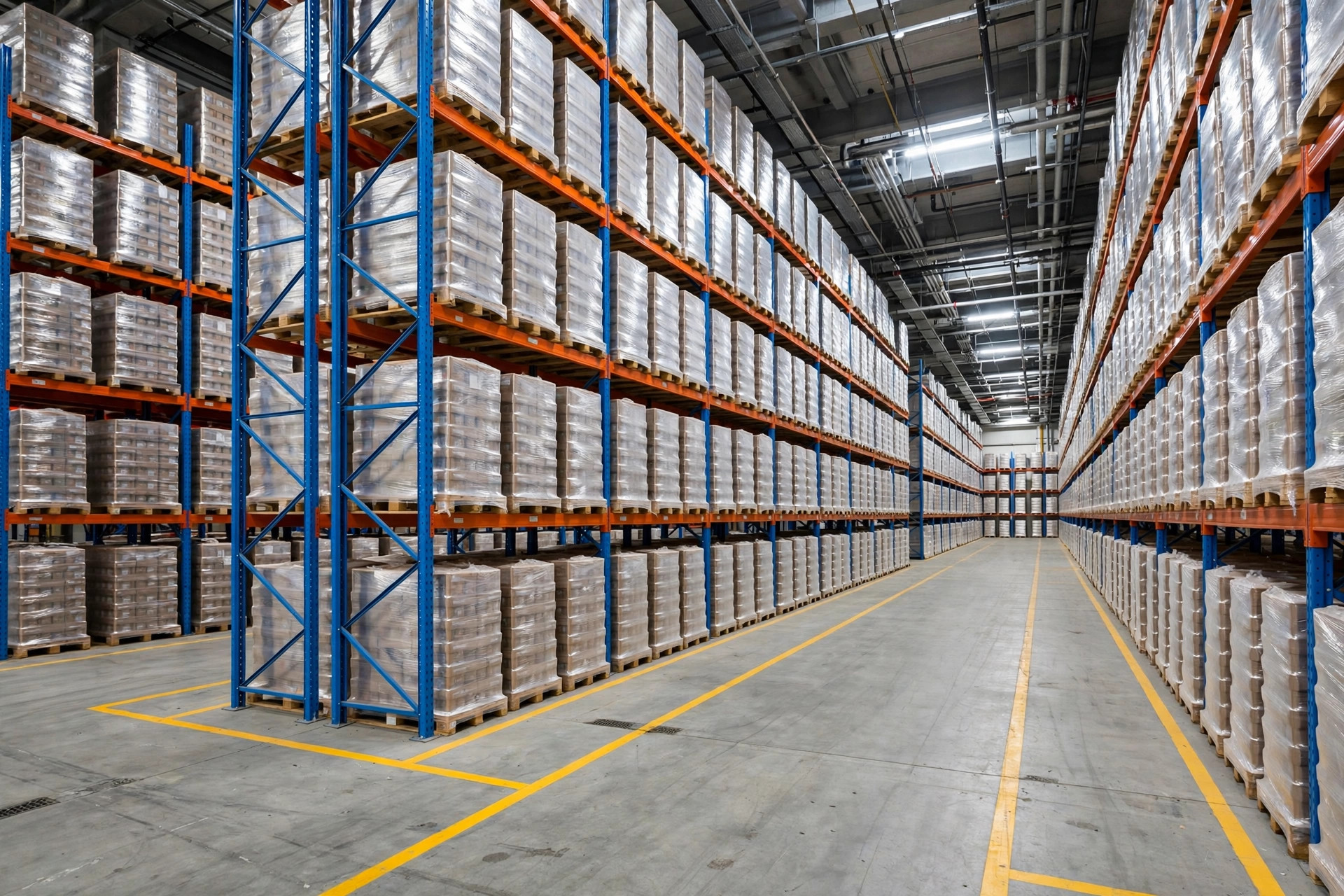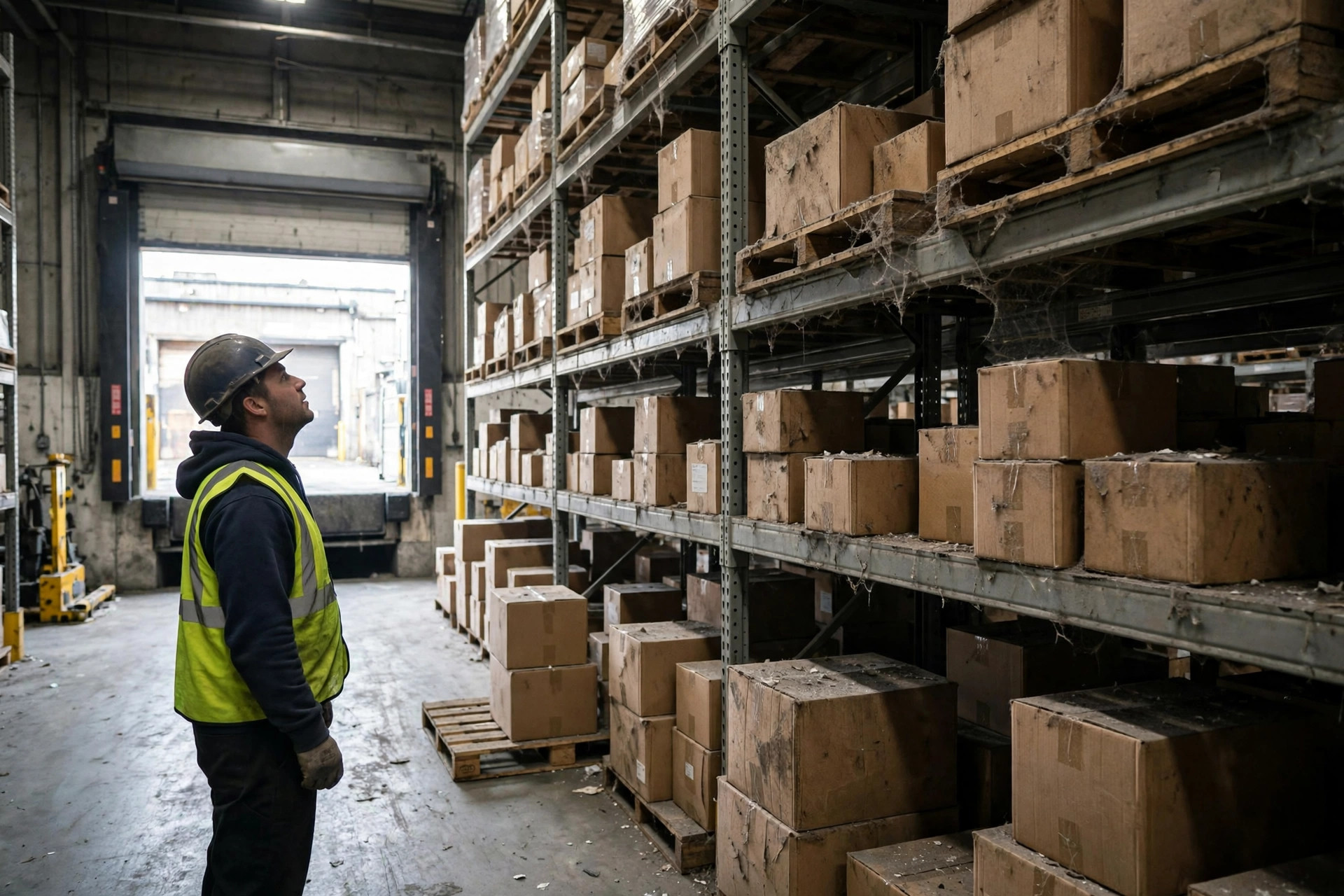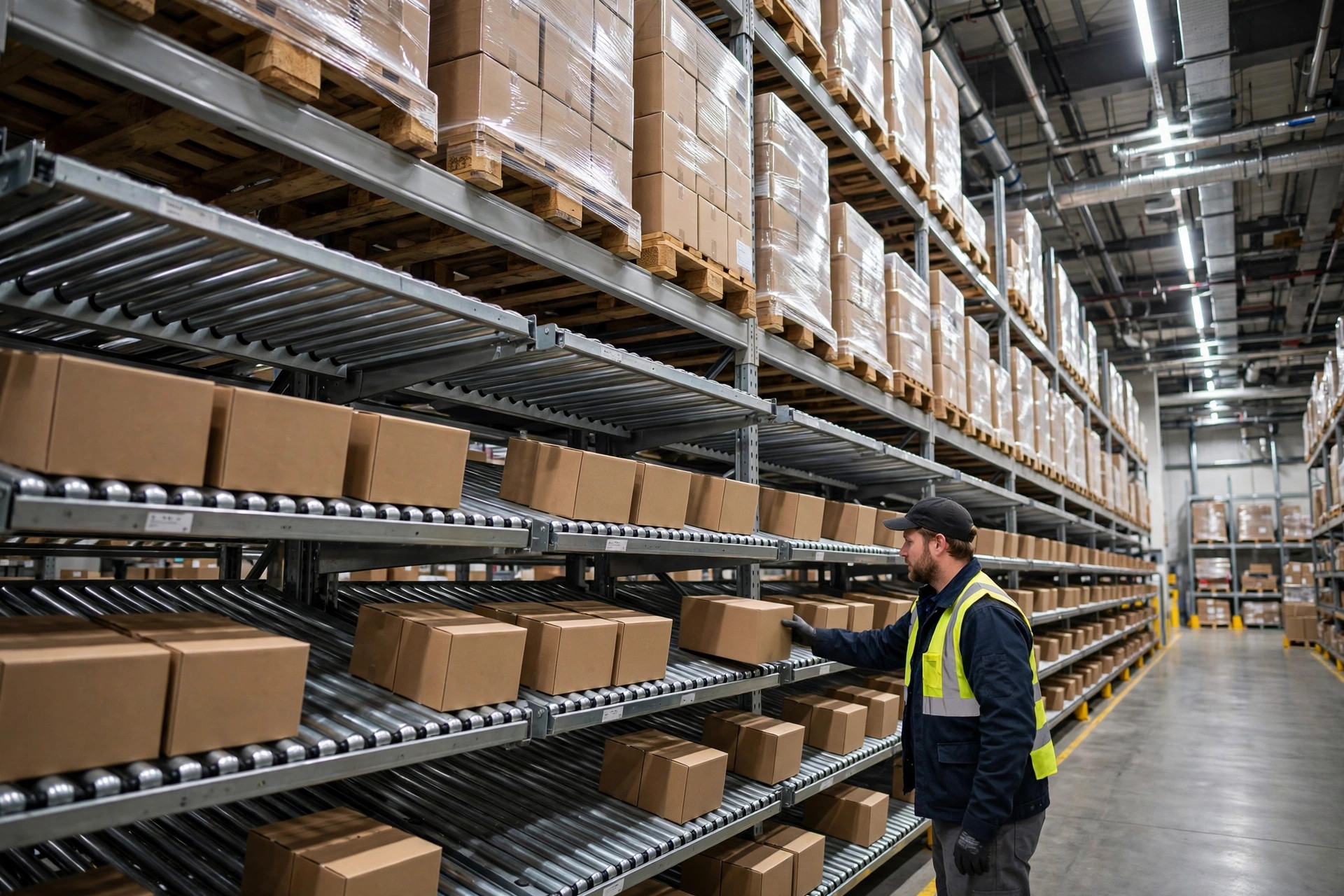
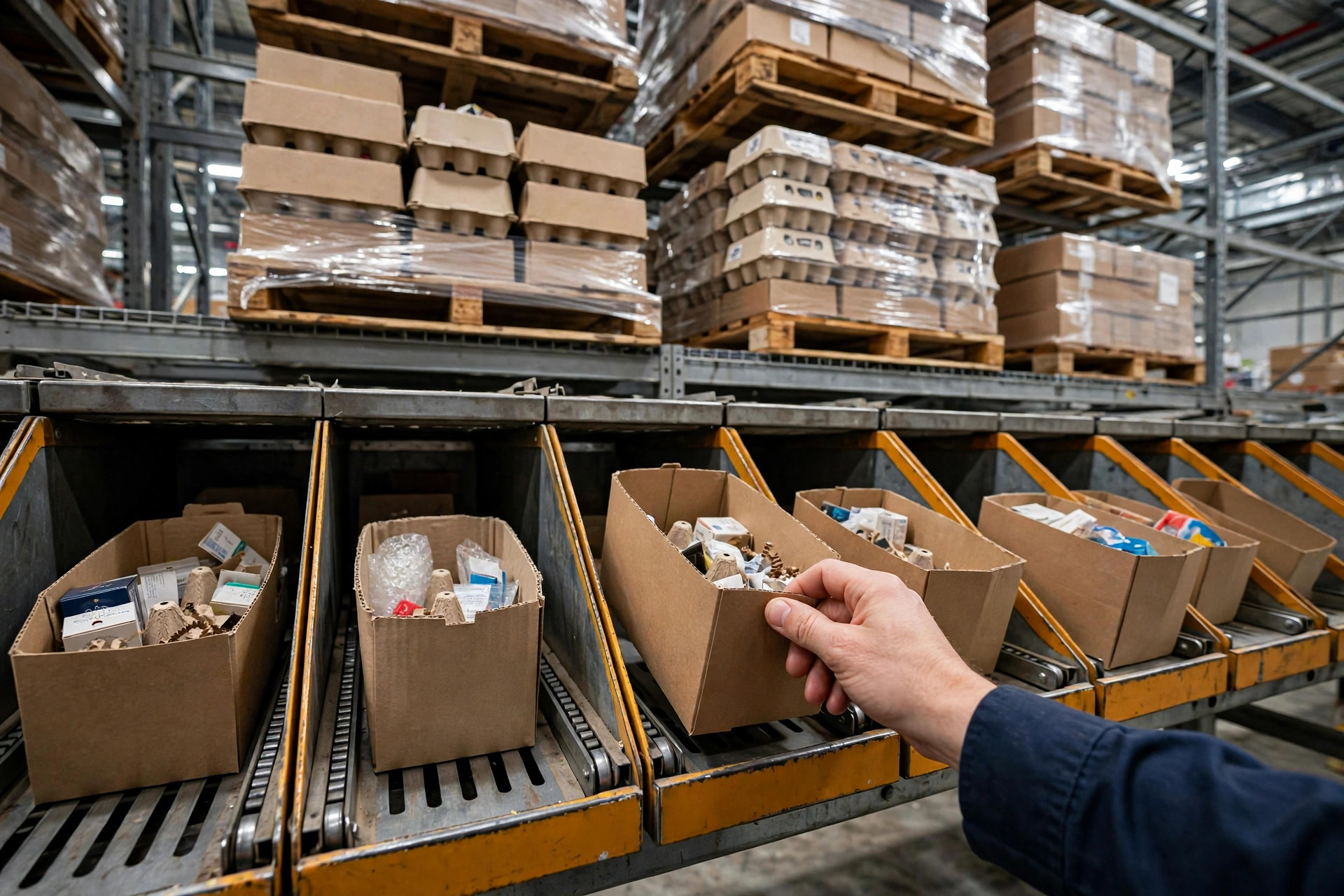
Fall 2025. I'm walking the forward pick area of an auto-parts 3PL in Chino, California — roughly 150,000 square feet, close to 8,000 SKUs. The warehouse manager gestures at a seemingly endless run of carton flow rack, pretty proud of himself. "Lao Mi, look — every SKU gets two pick faces. Fair to everyone, right?"
I don't answer. I run a finger along the cartons on the last few faces at the end of the row. Dust.
"How many times a day do you replenish?" I ask. "Twice." "Then when was the last time anything moved off those faces?" He has no answer.
Fairness is the most expensive illusion in a pick zone.
How many forward pick faces should one SKU get? I've been asked that question dozens of times, and my answer never changes: don't guess — work backward. Too many faces and you're paying rent on empty slots while your pickers walk extra miles every day. Too few and the face runs dry, orders stall, and your replenishment crew spends the whole shift firefighting. Here's the method I've used for years.
Before you calculate anything, go measure a face
Most people jump straight to the formula and get it wrong on step one — because they don't actually know how much one pick face holds.
Face capacity means how many pick units fit in a single face: one lane of carton flow rack, one ground-level pallet position, one shelf bin. These are wildly different numbers. And here's the part that matters: use what actually fits, not what the equipment catalog says. A flow lane might theoretically hold eight cartons, but with mixed carton sizes and the hand clearance you need at the front, it really holds six. Then six is your number. The eight might as well not exist.
There's a subtler trap than wrong capacity, and I see it more often: mixing units of measure. Daily pick volume counted in eaches, face capacity measured in cases — divide one by the other and you're off by multiples. The worst case I ever saw calculated twelve faces for a SKU that needed three, all because eaches and cases got mixed up in the same formula. Pick one unit, use it everywhere, write it next to the formula. Tape it to the wall if you have to.
Stop staring at picking. The real constraint is replenishment.
The number of pick faces looks like a picking problem. It's actually a replenishment problem.
The logic is simple: whatever sits in a face has to last until the next replenishment arrives. So how many faces you need starts with how often you can actually replenish — and I mean actually, not what's written on the shift schedule. How many replenishment operators do you have? Do replenishment tasks fight picking tasks for the same forklifts? Is anyone replenishing on night shift? The answers to those questions are your real constraint.
Peak season and normal weeks don't get the same number, either. I pull 90 days of WMS data and calculate off the busy weeks, not the annual average. Faces sized to the average run dry on day one of peak — I learned that one the hard way years ago on an e-commerce slotting project, where the replenishment crew ran dozens of emergency top-offs a day during the holiday surge and the pick lines stood waiting for product.
ABC classification is a prerequisite here, not an afterthought. A-items ship every day — give them multiple faces, side by side, so a picker grabs everything in one pass. C-items move once a week — one face, and one face only. A second face for a C-item is almost guaranteed to sit half-empty collecting dust. No ABC, no conversation about face counts. That's the order of operations.
How do you find your true replenishment interval? Don't ask the supervisor — ask the system. Pull a week of replenishment tasks from the WMS and look at the timestamps from task creation to completion. The median is your real interval. Plenty of warehouses have "twice per shift" on the schedule while the actual crew gets pulled into picking support the moment things get busy, stretching the interval to once a day. Run the formula on the schedule's number and every answer comes out wrong. My habit: calculate off the system median, then add another half day of buffer. I'd rather over-slot by half a face than gamble on perfect replenishment execution.
The formula: work backward from demand
With those three numbers in hand, the math is straightforward:
- D: the SKU's daily pick volume, busy-period basis, consistent units
- C: what one face actually holds, measured — not catalog — units
- T: the true replenishment interval in days (twice a day = 0.5), plus a safety buffer S — I usually carry 0.5 to 1 day depending on how much you hate stockouts
Faces needed = D × (T + S) ÷ C, rounded up.
Walk through it once with made-up numbers for illustration — substitute your own when you do this for real: a SKU picks 120 units a day in busy weeks, one flow lane really holds 30 units, replenishment runs twice a day (T = 0.5), safety buffer 0.5 days. Faces = 120 × (0.5 + 0.5) ÷ 30 = 4 faces.
Where does the rest of the inventory live? Bulk reserve. The forward area holds only what it takes to survive until the next replenishment; everything else goes to full-pallet reserve locations up in the rack. That's the whole logic of the forward-to-bulk split: a square foot of forward pick space costs far more than a square foot of high-bay reserve, and parking two weeks of inventory in a forward face is like using beachfront property as a parking lot. My rule of thumb: if the formula says a SKU needs more than five faces, stop and think — either split it into a hybrid of forward faces plus direct full-pallet picking, or admit the SKU never belonged in piece-pick at all.
One quick way to tell whether your forward area is over-slotted, no data pull required: walk the forward zone before end of shift, randomly check twenty faces, and count how many hold more than two days of picks. If more than half are stuffed full, your forward area is moonlighting as reserve storage — that product belongs up in the rack. Ten minutes, one walk, and I do it on every site visit.
Too many faces and too few faces die differently
Last look at the trade-off, so you don't second-guess yourself after the change.
Too many faces die slowly: the forward zone sprawls, pickers spend half their time walking, C-item faces sit half-empty — you're paying rent to store air — and replenishment somehow gets busier, because more faces means more faces to patrol and the task queue never clears. That Chino warehouse was textbook: 8,000 SKUs, two faces each, a forward zone so big the pickers set a company step-count record, with the far row gathering dust.
Too few faces die fast: faces run dry, pickers stand in front of empty slots waiting, replenishment turns into firefighting, emergency top-offs wreck the normal wave plan, and during peak you stock out two or three times a day while customer service melts down. Given the choice, I start tight and loosen — adding a face takes a day; shrinking an oversized zone means replanning the whole area. On every greenfield startup I've done, I slot to the low end of the formula, run a month, and add faces only where the stockout log tells me to. You can never overshoot that way.
Here's the checklist:
- Get ABC classification done first. Skip everything below until you do.
- Export SKU pick rankings from the WMS, run the formula across them, and flag the top 20 SKUs with the biggest gap between actual faces and calculated faces.
- Fix the worst 3 to 5 first, run a week, and compare replenishment task counts and stockout incidents before and after.
- Recalculate quarterly — six months of demand drift is enough to make any slotting plan obsolete.
- Leave C-item faces alone. If it never stocked out, touching it only loses you money.
Do one thing tomorrow morning: pull your top 20 SKUs by pick volume and run them through this formula. I'd bet at least three of them were slotted by gut feel back in the day. Make the changes, run a week, and let the replenishment task count tell you whether it worked. Slotting isn't scary when you calculate it — it's scary when you don't.