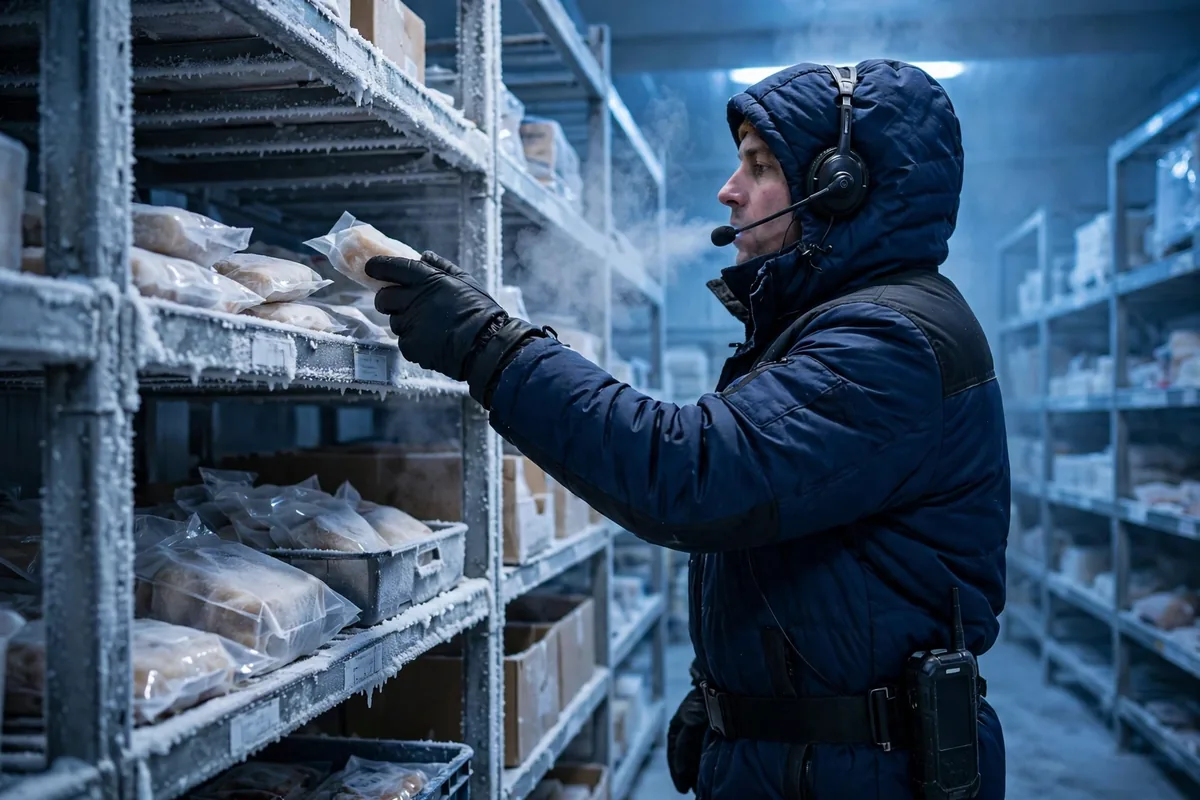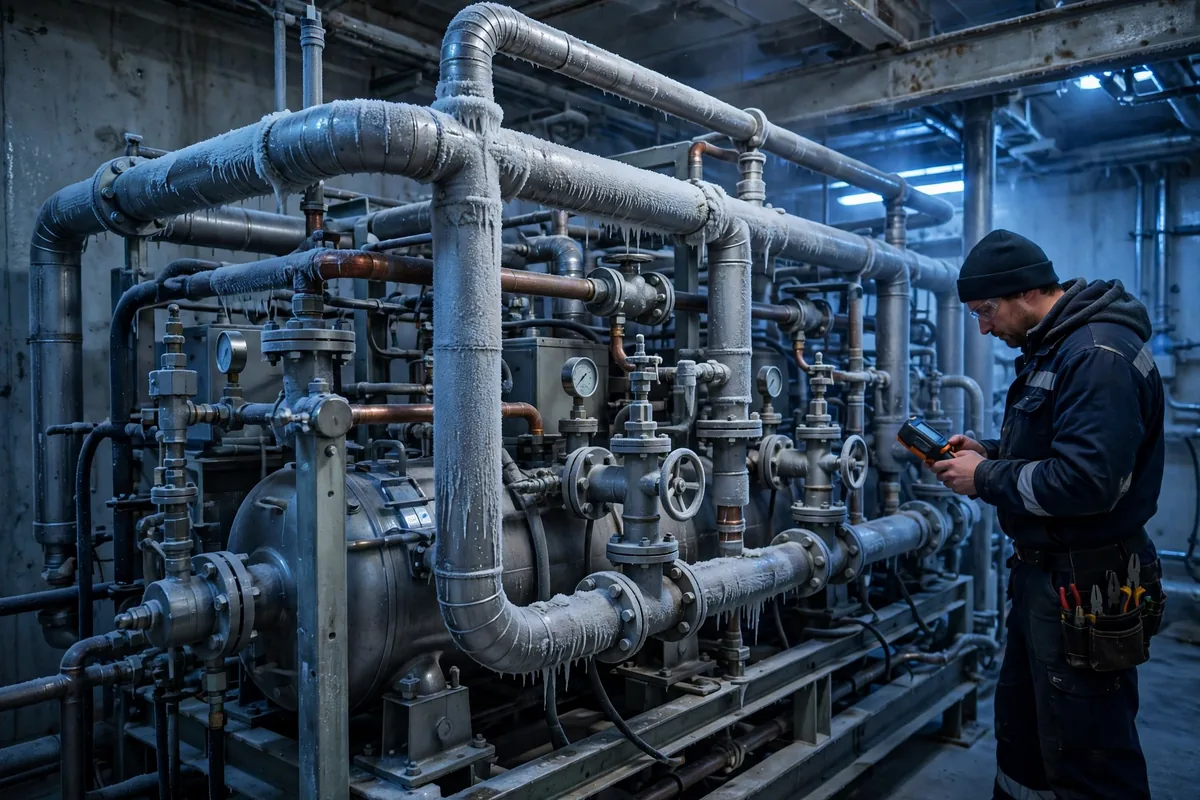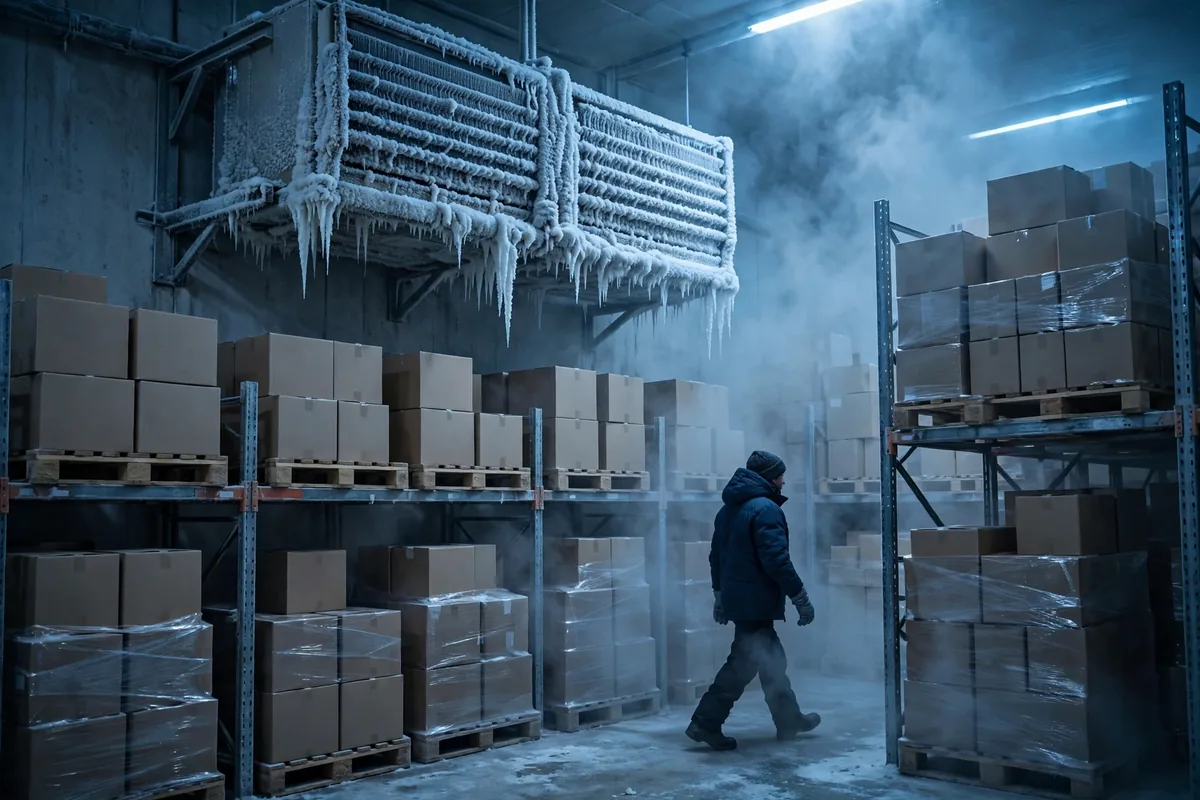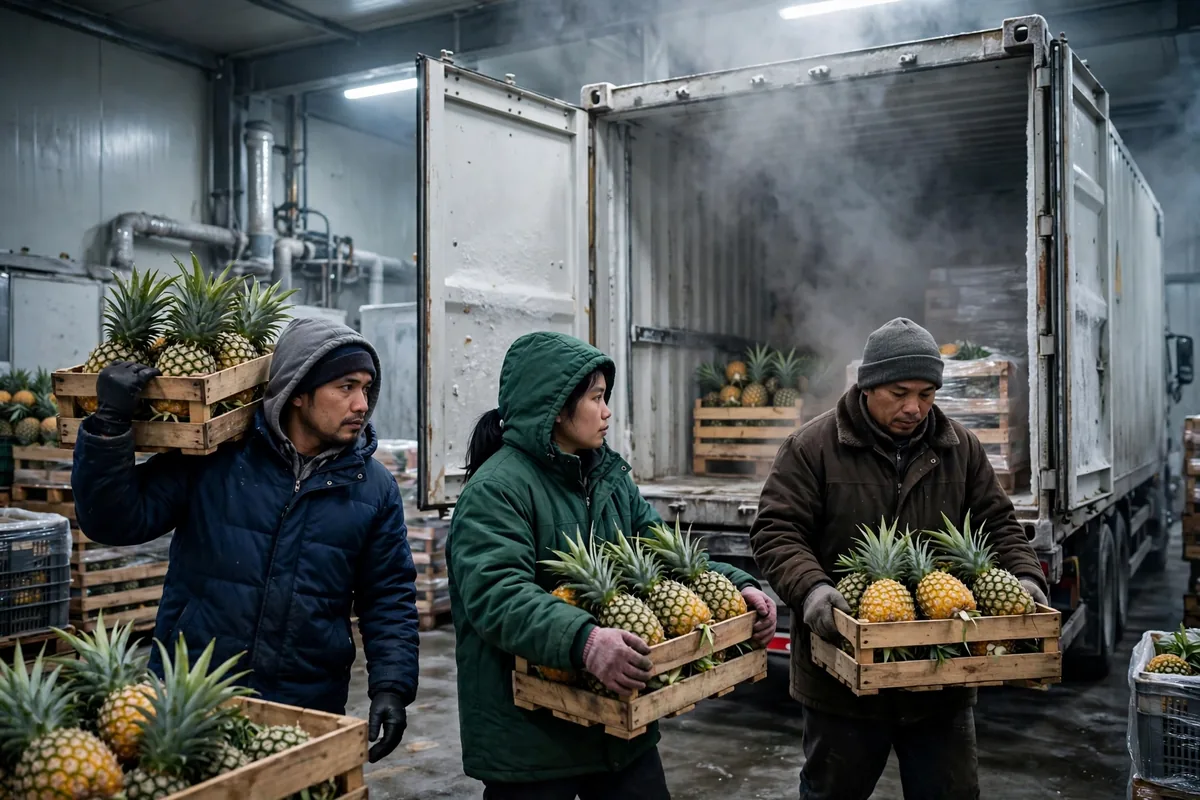
We have a client who has imported fruit for over a decade. Last year he took his first Philippines pineapple order and his opening question to me was: "Susan, a pineapple is not frozen food. Can we cut corners on the cold chain?" I laughed and told him that whatever you save on the cold chain comes back as a number on a claim form, down to the last dollar. From the moment the fruit is picked in a Mindanao orchard to the day it clears a Chinese port, every link in the chain is a race against time and temperature, and every line in the warehouse contract is insurance for that race.
Look at the size of the business first. Philippines pineapple exports reached about 680,000 tonnes in 2024, up about 14% year on year, keeping the country the world's second-largest pineapple exporter for a 16th straight year. Output that year was about 2.92 million tonnes, grown mostly on Mindanao, where Dole and Del Monte dominate planting. China is the biggest buyer, taking about 40% of exports, followed by Japan at about 33% and South Korea at about 16%. Fresh pineapple exports were worth about $430 million, while pineapples and pineapple products together reached about $787 million, up about 7.5%, at an average export price of about $630 a tonne. The message in those numbers is simple: this is a high-volume, low-unit-price business where margins are thin. One bad container can wipe out half a month of profit.
Philippines Pineapple Cold Starts in the Orchard, Not at the Port
A pineapple is not a banana. Once picked, it does not keep getting sweeter, so ripeness is fixed at harvest. That means the cold chain is won or lost at the pre-cooling shed next to the orchard, not at the port. Ripe fruit holds best at 7 to 10 degrees Celsius, at 85 to 95 percent relative humidity, for two to four weeks. Drop below 7 degrees and chilling injury sets in: the core turns brown, the flesh goes water-soaked, and the skin can look fine right up until you cut the fruit open. The counterintuitive part is that colder is not better. I have seen a shipper set the reefer to 4 degrees because "colder feels safer," only to open the container in Shanghai to a full load of black hearts, and the insurer refused the claim because the temperature setting itself was wrong.
We have a client who shipped two containers from Davao to Shanghai in October 2024. The fruit went from the orchard straight onto an ambient truck, spent most of a day on the road, and only reached a cold store at the port (illustrative example). On arrival, sampling found more than one in ten fruit with brown cores, and the buyer withheld the balance payment. The arithmetic is brutal. At 22 tonnes per container (illustrative example), the cargo is worth about $13,860 at $630 a tonne, so a 10 percent loss is $1,386, before inspection fees and the discount for selling downgraded fruit. Across two containers, the loss would have paid for three months of pre-cooling shed rental next to the orchard. Pre-cooling saves hours; skipping it costs whole containers.
Timing matters as much as temperature. Cool the fruit to the set point before loading, because a reefer maintains temperature, it does not chill warm fruit. Load warm fruit and the field heat eats the container's cooling capacity: fruit near the door cools first while fruit deep inside keeps sweating, and the spread in ripeness across one container becomes impossible to defend. When the buyer cuts open three pineapples at destination and gets three different results, you have nothing left to argue with.
Philippines Pineapple Claims: Put the Break in the Contract Before It Happens
A broken cold chain is rarely about a few warm hours. It is about nobody being able to prove what happened afterwards. That Philippines pineapple shipment sat an extra day in a Singapore transshipment yard, the temperature logger went dark for half a day, and by the time the fruit reached China the brown-core rate was over the limit. The carrier, the terminal, and the forwarder spent three months blaming each other (illustrative example). What you can recover in the end depends entirely on whether the contract pins down three things: who produces the temperature curve, where liability changes hands, and what standard decides the loss.
A broken-chain claim usually looks like this (illustrative example):
| Cost item | How it is calculated | About, per container |
|---|---|---|
| Cargo loss | 22 tonnes x $630 x 10% loss | about $1,386 |
| Reefer freight | Freight paid, not refunded | about $2,000 |
| Arrival inspection | Third-party inspection and opening | about $300 |
| Downgrade discount | Price gap on resale as lower grade | about $1,500 |
| Port storage and demurrage | Yard storage and waiting | about $500 |
| Total | Sum of the above | about $5,686 |
The cargo itself is worth about $13,860, so one broken chain costs more than 40 percent of the cargo value. That is why I always say the cold chain bill is not the freight line. The claim is the real cost. A contract with no temperature-curve clause, no handover points, and no loss-assessment standard leaves that $5,686 to luck.
The industry is already moving. In August 2025, a major Philippine grower switched with its carrier to fully containerized shipping, with direct sailings from Davao to several Japanese ports and to Busan in South Korea on a fixed weekly schedule, keeping the fruit inside a temperature-controlled environment from loading to discharge. The old breakbulk routine, loading and unloading several times with hours of ambient exposure at each step, is on its way out. Here is the insider read: when a carrier is willing to sign a temperature curve and hand over live data, the cold chain on that lane actually works. Paper promises do not come with data.
At the Table, Don't Haggle Over Freight. Ask These Three Questions
When I negotiate a pineapple storage and transport contract, I set the freight rate aside first and settle three things. One, put the temperature set point and the allowed swing in an annex, and name who supplies the logger, how often data is shared, and in what format. The logger is not decoration. Whether a claim stands or falls depends on that curve. Two, pin liability handover to each leg: orchard pre-cooling, stuffing, terminal storage, ocean leg, discharge. Name the responsible party for each leg by name, not "the relevant party." Three, agree the claim formula before anything goes wrong: loss assessed against the arrival inspection report, with cargo value, freight, inspection fees, and downgrade discount listed separately, and a cap written down, so nobody invents a number after the fact.
And here is something only the seller side will tell you: the cheapest quote usually hides inspection fees, data service charges, and exception-handling fees in the small print. When you compare quotes, do not compare the freight line alone. Add up every annex charge first, then compare. The buyer haggles over the visible freight, while the seller earns on the hidden extras. Whoever totals the real bill first wins the negotiation.
Next time you sit down to sign a contract, ask these three questions: who produces the temperature curve, and who owns it when it breaks? Who pays for every hour the chain is broken? And if the arrival inspection fails, who decides whether the fruit is returned or sold, and at what price? Get answers to those three before you sign, and the contract will have decided whether the pineapples rot long before the fruit does.
By Susan, 3PL Sales Director