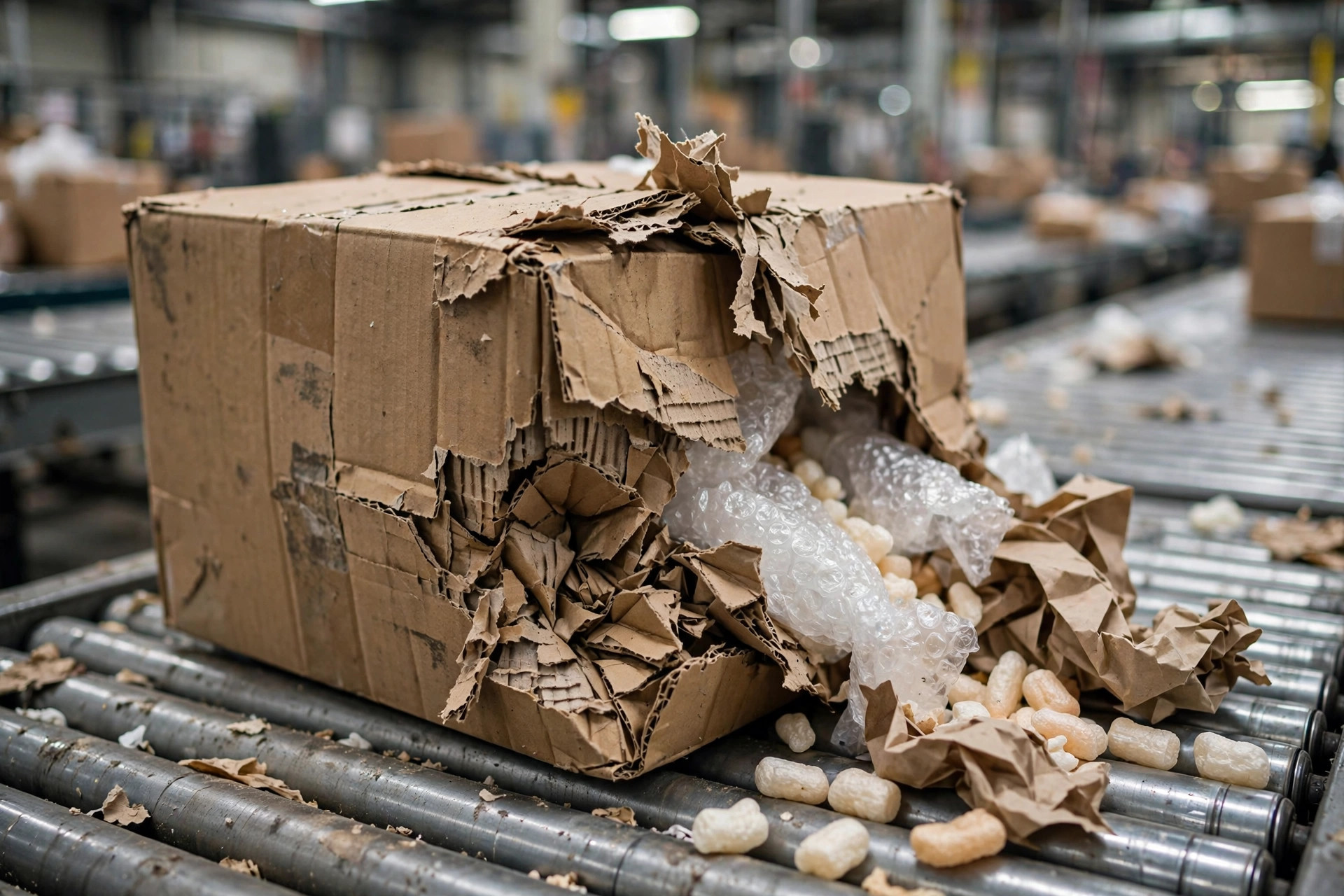
Let me tell you something after all these years on the road: the saddest thing I have seen is not a lost shipment. It is a shipper who loses a shipment and then loses the parcel lost and damaged claim too, because nobody kept the proof. The driver leaves, the box goes in the trash, and by the time someone calls the carrier, there is nothing left to show. I have watched that happen more times than I can count.
Back in November 2024, I was waiting to load outside a warehouse in Ontario, California, and I got talking to a small appliance seller, a fellow named Chen. He had sent twelve cartons of air fryers to a customer in Texas. Eleven arrived. The twelfth simply vanished from tracking. His first instinct was to eat the loss. One carton, he said, was not worth a fight. I told him to hold on. Keep the signed delivery sheets for the eleven cartons, keep the packing list from load-out, photograph the cartons that did arrive, and then go through the carrier's process properly. Two weeks later that missing carton turned up at a sort center, mislabeled, and it was delivered late but intact. If he had written it off on day one, that carton would have been gone for good.
The other story sticks with me even more. In March 2025, at a warehouse in Nevada that ships auto parts, a customer received a carton of brake discs with one corner crushed and two discs chipped. The receiving clerk signed the delivery as clean without looking at the box. When they opened it and found the damage, the carrier pushed back: you signed clean, so who says it happened in transit and not on your own dock? That shipment was worth $430 on the seller's own books, and in the end the seller absorbed it. Thirty seconds at the dock door, one look at the box before signing, would have saved a month of arguing.
A Parcel Lost and Damaged Claim Lives or Dies on Evidence
Carriers do not pay out because you sound upset. They pay out because you can show them something. And evidence cannot be recreated after the fact, so you collect it the moment something looks wrong. Here is the kit I tell every shipper and warehouse crew to keep:
- The tracking number and shipping receipt: the order record, the payment record, the packing list. Proof the shipment existed and what was in it.
- Photos of the outer box, all six sides, with close-ups of the damage, the tape seals, and the shipping label. Make sure the tracking number on the label is legible in the photo.
- Photos of what is inside: what broke, how badly, with something beside it for scale. A tight close-up of a chip means nothing if nobody can tell how big the part is.
- The delivery record: who signed, when, and whether any exception was noted. Writing "outer carton damaged" on the delivery sheet at the dock is worth more than a hundred sentences written later.
- Proof of value: the purchase invoice, the sales order, the cost record on your own books. The amount you ask for has to trace back to a number, not a feeling.
People ask me how many photos are enough. Take ten more than you think you need. Photos on a phone cost nothing. Deleting extras is easy; recreating missing proof is impossible. One more thing crews keep getting wrong: do not throw the damaged box and contents away. I have seen warehouses clear a crushed carton the same day because it was in the way, and then the carrier asked to inspect it and there was nothing to inspect. The box does not take up much room. Keep it for a week, until the process is done. And keep your communication in writing, email or an online case, not just phone calls. A phone promise disappears the moment you hang up. A written record is something you can pull up again.
The Parcel Lost and Damaged Claim Process, Step by Step
The process itself is not complicated. What trips people up is skipping steps. Walk it in this order:
- Secure the evidence first, then contact the carrier. Do it the other way around and the evidence is gone.
- File through the carrier's website or customer service channel. Enter the tracking number, describe the problem in plain facts, state the amount, and upload the evidence kit. Write what happened: when it shipped, when the problem was found, what is missing or broken. Leave the emotion out.
- Save the case number and every exchange after that. Customer service staff change, and without a case number you start from zero every time you call.
- The carrier may ask for more documents, an inspection, or for the damaged item to be returned. Cooperate, even when it feels slow. Going quiet at this stage reads the same as giving up.
- Wait for the decision. If it is approved, settle on the approved amount. If it is denied, read the reason, see what is missing, and refile with the gap filled if you can fill it.
On deadlines, I will be straight with you: every carrier sets its own filing window and document requirements, and those policies change. I am not going to quote you a day count here, because a number I heard last year may be wrong today. Check the carrier's current published policy the moment you spot a problem, and treat that page as the authority. Miss the window and the best evidence in the world will not help you.
Doing the Math: Is It Worth the Fight?
Here is how I run the numbers, and you can run your own the same way. Take Chen's case as an example: the missing carton was worth about $720 on his own books. Pulling the evidence together, filing, and following up took him and his warehouse clerk roughly three hours combined. At their labor cost, those three hours were worth around $90. Seven hundred and twenty dollars against ninety dollars of effort is a fight worth having. Now look at the brake disc case: $430 on the seller's books, and the key piece of evidence, the exception note at signing, was missing. The odds were low, and chasing it could easily have burned more time than the recovery was worth.
| Situation | Value (shipper's own books) | Evidence | My call |
|---|---|---|---|
| Lost carton, tracking goes dark | About $720 | Complete: tracking, packing list, delivery records | File it, it is worth it |
| Damaged, exception noted at signing | Around $500 | Complete: outer and inner photos | File it, it is worth it |
| Damaged, signed clean | $430 | Missing: no exception note | Ask about options, keep expectations low |
| Very small value | Under $100 | Complete | Do the labor math; if your time costs more, let it go |
Now here is the part most people get backwards: filing is not about getting every dollar back. Sometimes the carrier offers a partial payment, the shipper refuses it out of pride and holds out for the full amount, and months later even the partial offer is off the table. After years on the road, my view is simple. If your evidence is solid and your number is honest, take a fair settlement and move on. Time is a cost too. And one more piece of road wisdom: spending two extra minutes packing a carton well and sticking the label on straight beats spending three hours on a claim later. A claim is a safety net, not a business model.
A shipment goes missing or arrives broken, do not panic and do not shrug it off. Photograph everything, keep the paperwork, check the carrier's current policy right away, and walk the steps in order. What is rightfully yours, the evidence will speak for.
By Shifu Zhao, Trucking Veteran (15 yrs)