Here's an uncomfortable question: how much of last month's parcel bill did you pay for no good reason?
Last year I audited invoices for a small home-goods seller in Chino, California. They shipped twenty to thirty thousand parcels a month on direct UPS and FedEx accounts, with Pirate Ship covering the odd lots. Forty-some line items got circled: residential surcharges billed to commercial addresses, cartons that somehow grew an inch in the carrier's "re-measurement," three address-correction fees for what turned out to be the same building. The money we clawed back would have covered half a packer's salary.
What stings is that the carrier writes the bill, grades its own homework, and keeps the difference unless you push back.
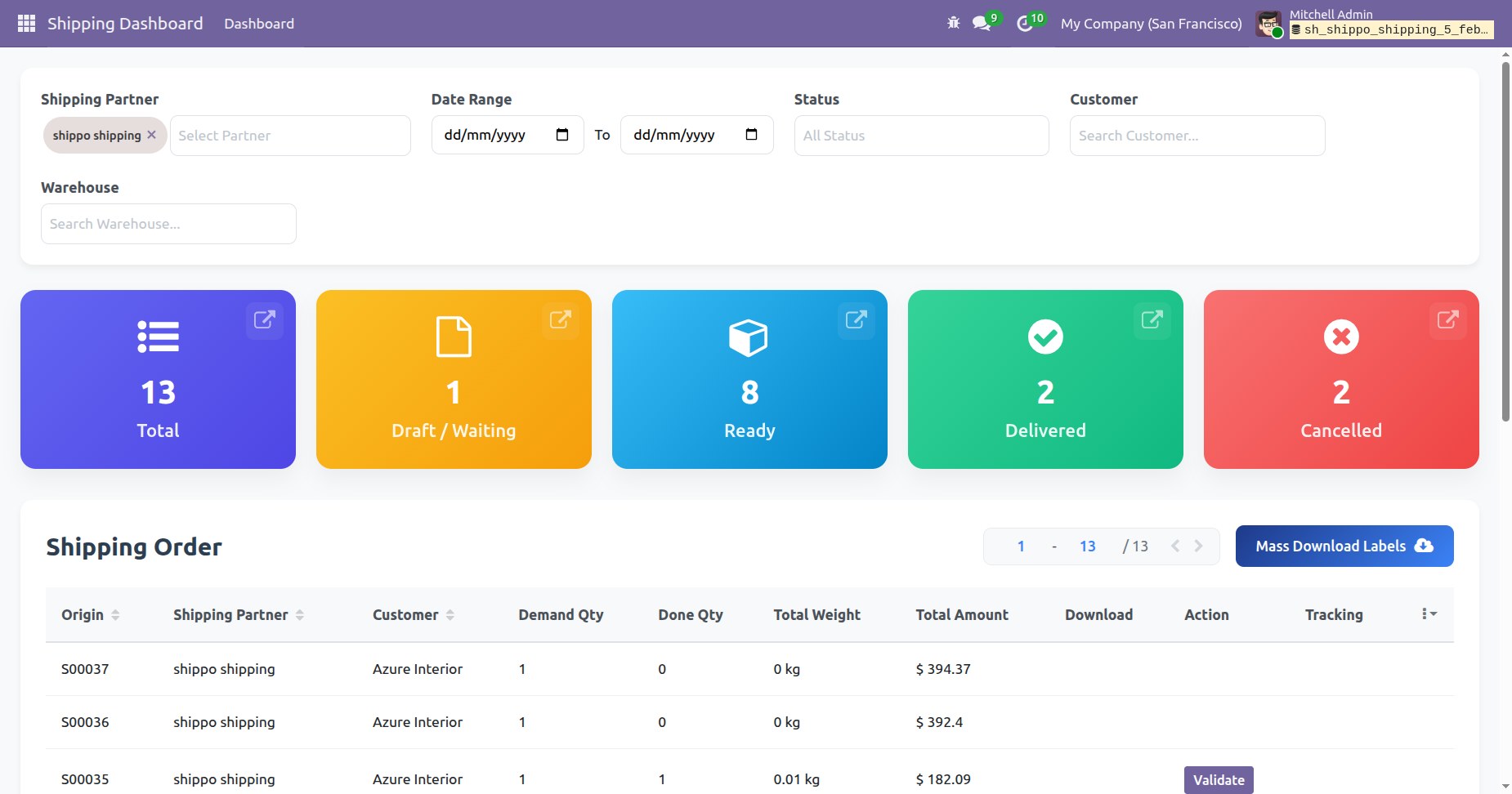
First, what the invoices look like. UPS and FedEx bill weekly, line by line, base rate plus surcharges. Third-party platforms like Pirate Ship and Shippo work differently: they debit you per label in real time, and every charge shows up in the dashboard. That transparency is one reason I tell small sellers to start with a platform account. A clean bill makes errors obvious.
Whichever route you take, three surcharges are where the money leaks.
The three surcharges that quietly eat your margin
The first is the residential surcharge.
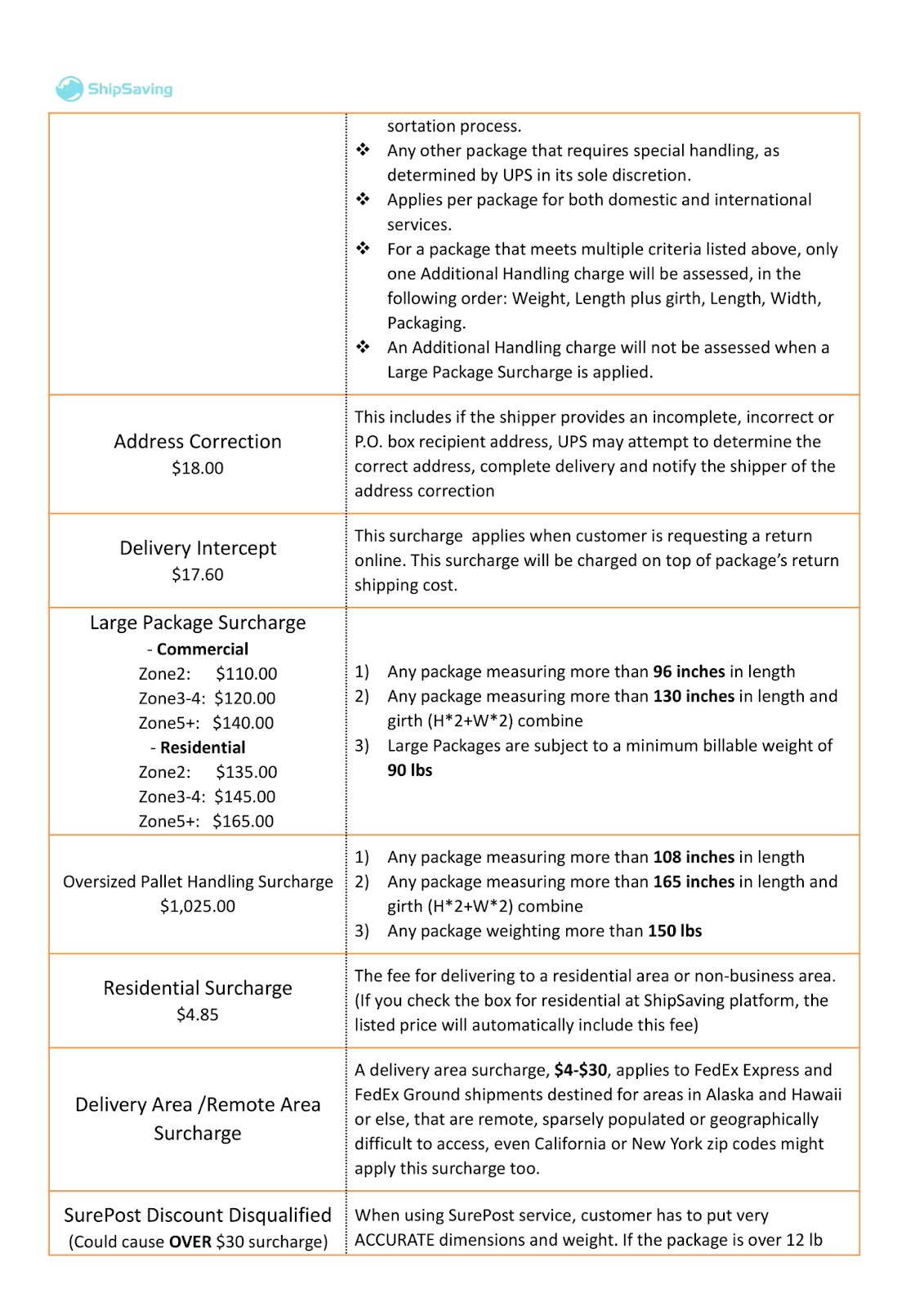
Shipping B2C in the US, a residential delivery address earns a surcharge. The rule is fair. The classification is not. UPS and FedEx decide "residential or commercial" from an address database that updates slowly. A new business park, a converted loft building — the database may still say residential. So a commercial address gets billed the surcharge, and all you see is one quiet line on the invoice.
How to find it: export last week's invoice, search for "residential," and verify each address behind it. Anything commercial goes straight into a billing dispute, with proof — a company website, a lease, anything showing it's a business. Of everything I dispute, this one has the highest success rate. Evidence wins.
The second is dimensional-weight adjustments, the so-called billing corrections.
Carrier hubs run automated dimensioning equipment that re-measures every parcel. If the numbers don't match what you declared, the invoice gets "adjusted" upward. Sounds fair until you see how it works in practice: a carton swells slightly in humidity, an extra wrap of packing tape adds a fraction of an inch, their machine rounds up. You pay for all of it.
The only defense is your own records. Store the weight and dimensions of every shipment at pack-out. If you can, point a camera at the scale on the packing station and snap a photo per parcel. When you dispute, send your original numbers. Reasonable variance usually gets accepted. A 3PL I know in Ontario built an automated flag for this — every week it pulls the labels where the adjustment exceeded a threshold and files batch disputes. It saves them tens of thousands of dollars a year.
The third is the address correction fee.
This is the most expensive single line of the three. The recipient address has a problem — missing apartment number, no company name, misspelled street — the carrier fixes it mid-route and charges you for the favor. The worst ones are the "fake errors": the customer typed the address correctly, but your system's export squeezed the apartment number into address line two, the carrier's system didn't parse it, and the fee lands anyway.
Prevention beats disputes here. Run address validation at order entry — in the US, run addresses through the official validation logic. Scrub bulk-imported address tables monthly, and flag any address that has ever triggered a correction fee. Once this fee is billed, it's the hardest of the three to dispute, so don't let it happen.
Getting your money back
UPS and FedEx both have formal billing dispute channels, online or by phone, but the clock runs out — miss the filing window and the money is gone. Check the carriers' current policies on their official sites for the exact deadlines. This is where platforms like Pirate Ship earn their keep: their support team argues with the carrier on your behalf. You click through a few screens and upload your evidence.
One rule for disputes: bring proof. Address evidence for residential surcharges, pack-out records for dimensional adjustments, the original address as entered for corrections. Don't open with "I think this is wrong" — support agents hear that eight hundred times a day.
If you don't have the bandwidth in-house, there are third-party parcel audit firms that work on contingency — a cut of whatever they recover, nothing if they recover nothing. Worth considering once you're past ten thousand parcels a month with nobody owning the audit. Just negotiate the cut and the terms carefully, so you don't trade one leak for another.
What one label's invoice actually looks like
Concepts only go so far, so let's walk through a single shipment. Below is a parcel from California to Texas, declared at 3 pounds, as it appeared on a UPS weekly invoice. Amounts are illustrative of the structure only — current rates are on the carriers' official sites.
There's the base rate, then a separate line for the residential surcharge since the recipient is in a residential zone, then another line where the billable weight got adjusted up a tier after re-measurement. The three surcharge lines together came to nearly twenty percent of that label's total cost. Pocket change on one parcel. Multiply by twenty or thirty thousand parcels a month and you see why this is worth auditing.
A few more surcharges hide even deeper. Extended and remote area fees: if the destination falls inside the carrier's remote zone map, the fee applies automatically — search your invoice for "extended" or "remote." Oversize fees: one long side or an over-limit girth pushes the parcel into a higher bracket, so shippers of bulky goods need to control dimensions at the packing station. And the peak-season surcharges mentioned earlier, whose windows and rates change every year — read the current published policy, don't estimate from last year's memory.
Making the bill shrink over time
Auditing once is firefighting. Auditing monthly is saving money. My routine takes thirty minutes a month: export the invoice, break these three surcharges out as a percentage of total spend, and chase any uptick — did residential-zone customers increase, or did a new carton supplier change the dimensions?
Two more things while you're in there. Peak-season surcharges: every peak season, UPS and FedEx add a wave of them. Read the carriers' current published policies ahead of time instead of discovering them on the invoice. And claims deadlines: damaged and lost-parcel claims have filing windows, miss them and you eat the loss — again, the current windows are on the carriers' official sites. Plenty of small sellers file claims "whenever they remember." By the time they remember, it's too late.
A parcel bill doesn't get cheaper by staring at it. It gets cheaper by managing it. This weekend, export last month's invoice, filter it through the three categories above, and see how much of that "maybe you shouldn't have paid" three percent is yours.