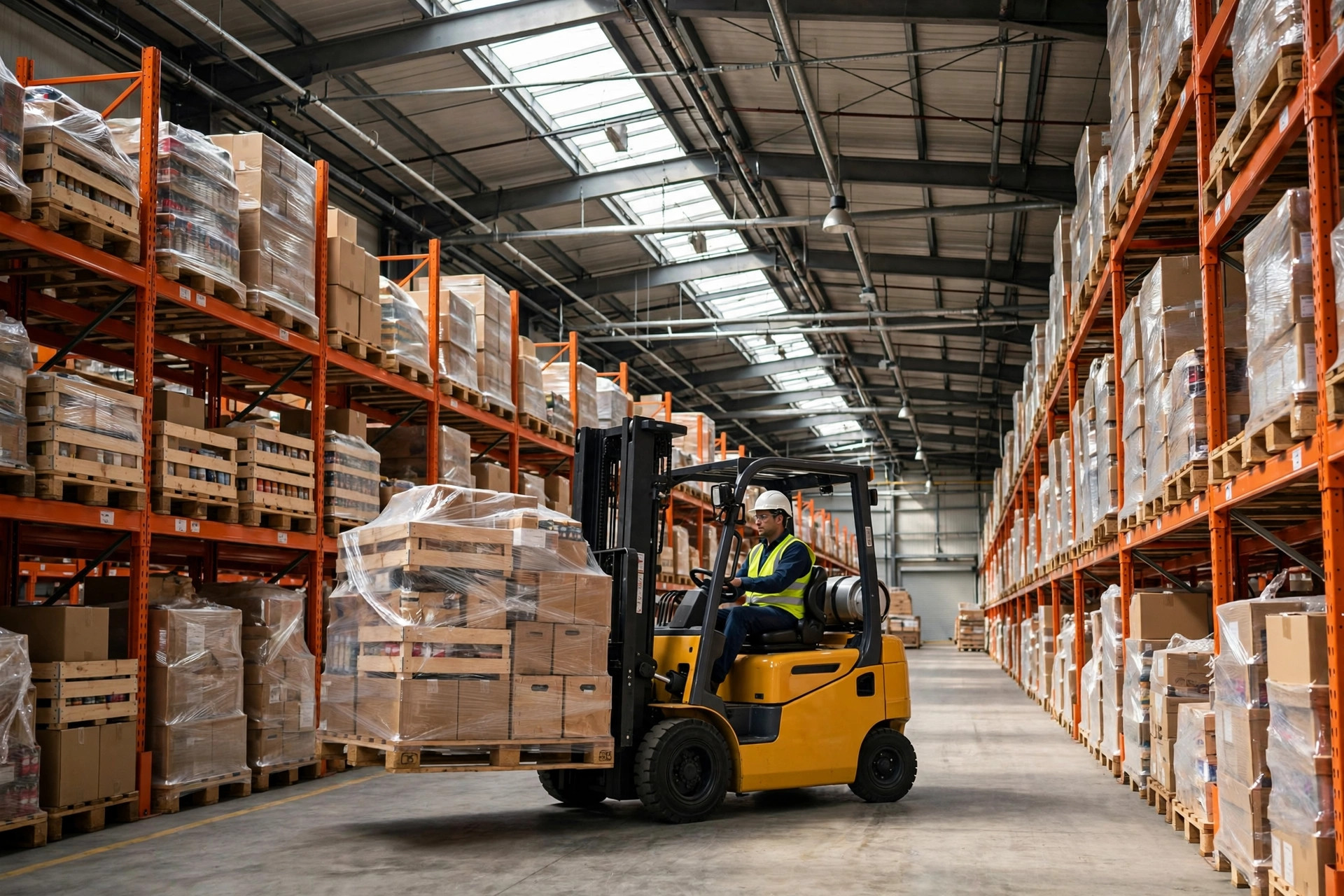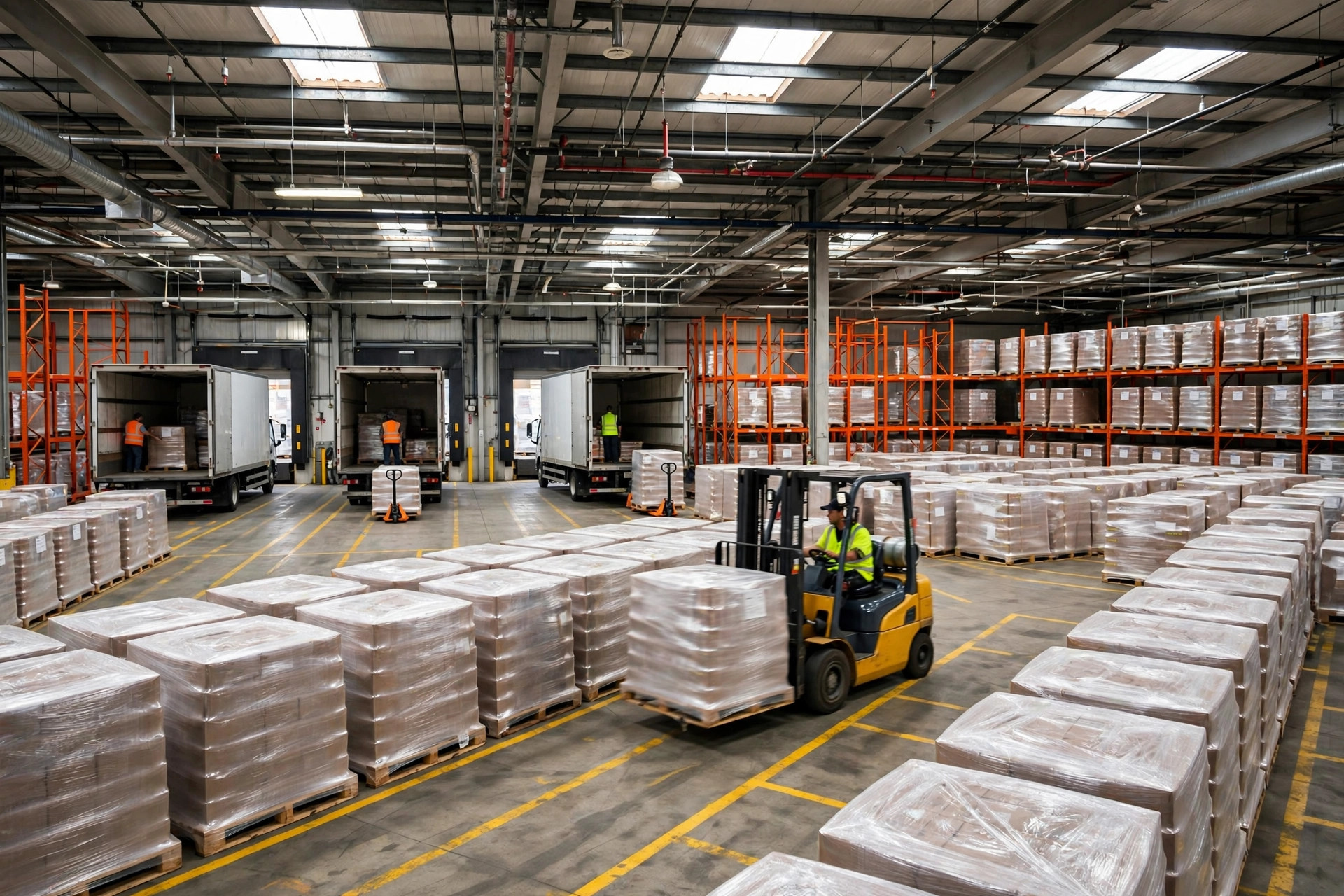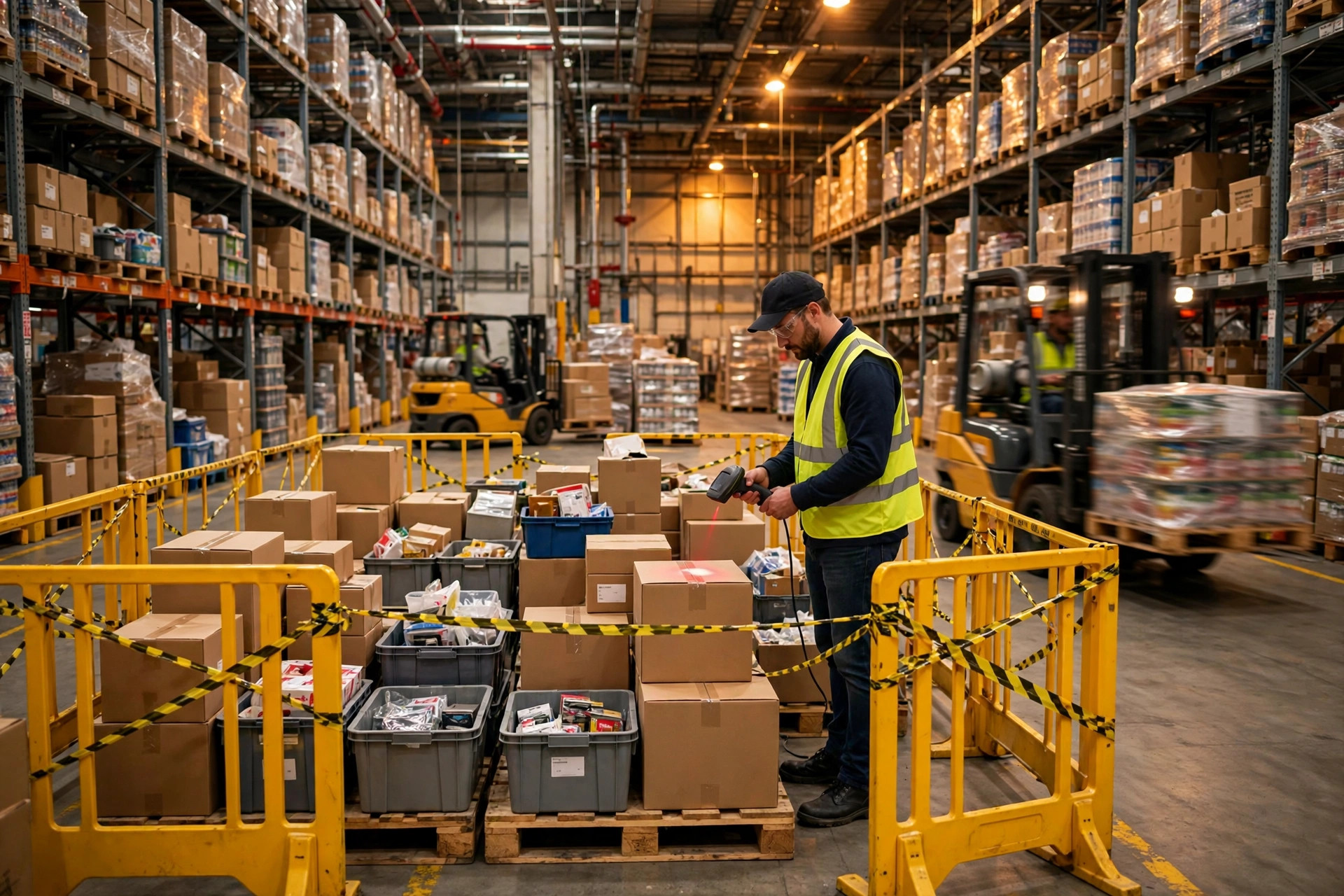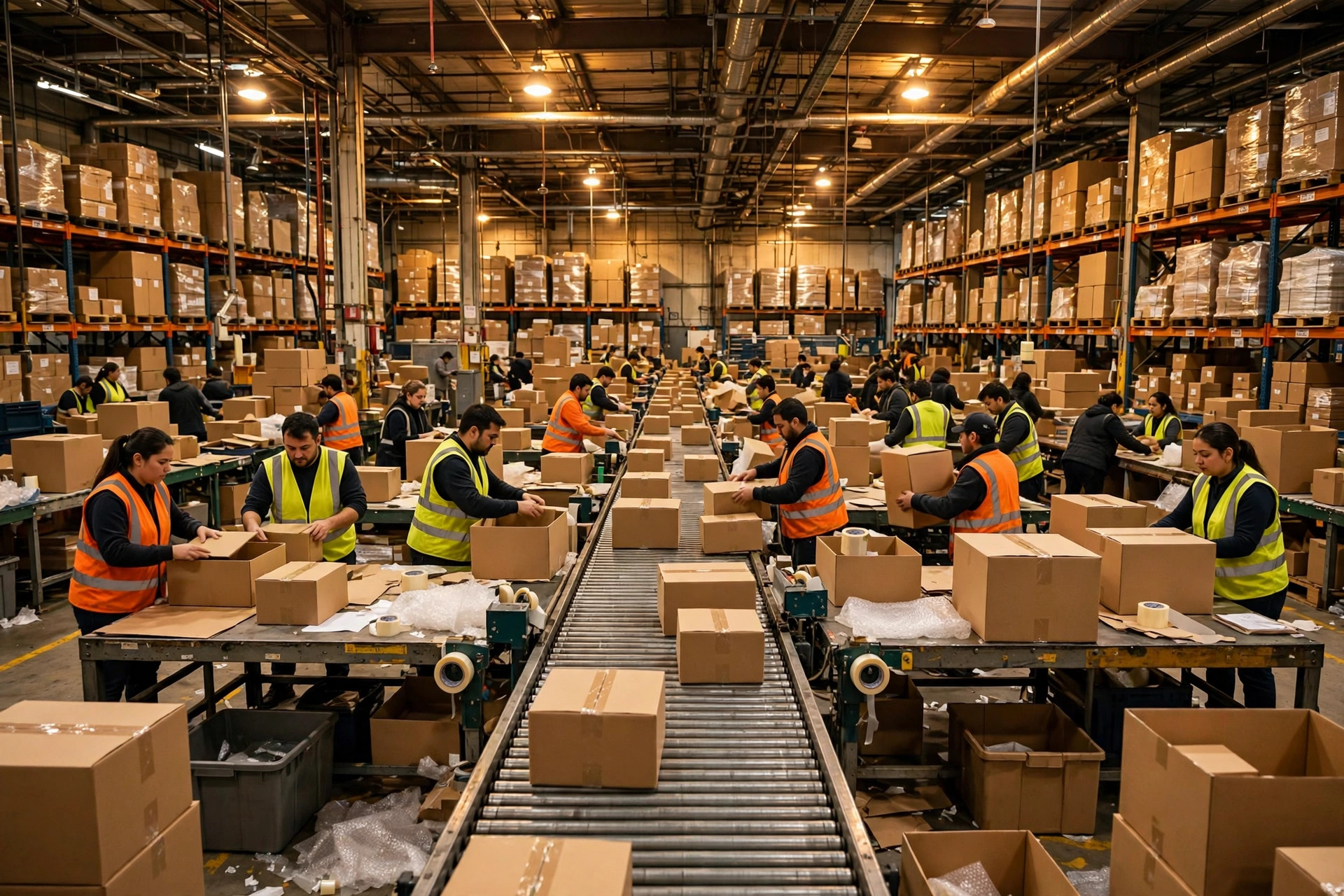
Two in the morning, last November, peak season night shift.
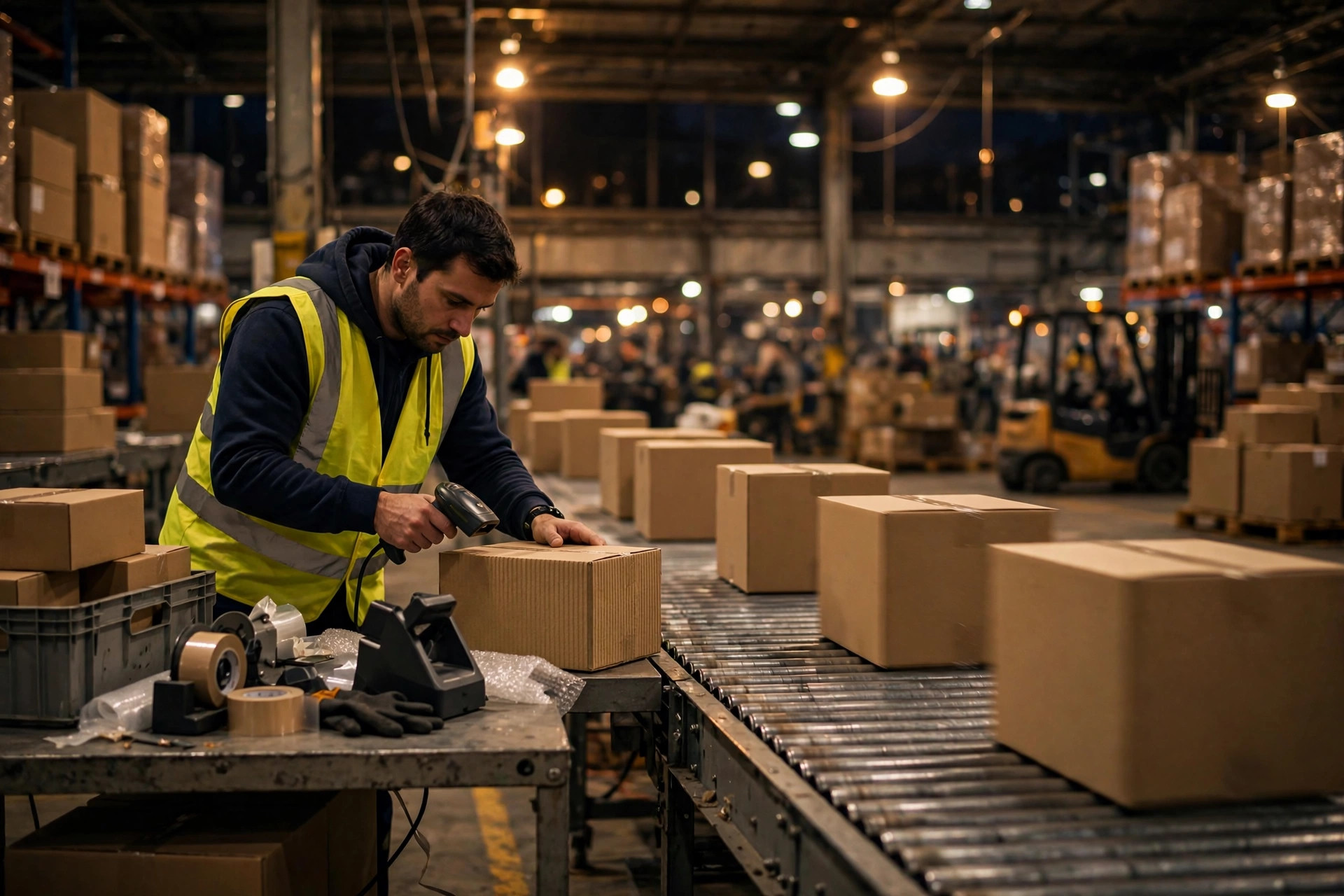
I was walking line B — our small-parcel packing line — and the whole thing was dead. A busted carton was jammed against the conveyor, tape split open, product hanging halfway out. Xiao Zhang, our QC guy, stood at the head of the line with one problem parcel in each hand and a dozen more piled at his feet: shorts, damaged boxes, wrong labels — all of them crowding the main line.
The packers had stopped, hands frozen mid-air. A forklift was honking behind them, trying to squeeze past. I asked Xiao Zhang what happened. "Boss," he said, "there's nowhere to put this stuff. It's piled on the line. It blocked the sensor."
Let me be straight with you: that wasn't the first time I'd seen it. When peak volume hits, QC-flagged exceptions pour in like a tide and stack up right next to the main line. The more they pile up, the slower the good parcels move, until the whole line is running 30% slower — and everyone just shrugs and says, "Well, it's peak season."
Fellas, peak season is no excuse for that.
Exceptions stacked on the main line poison everything
First story — same peak season. Night shift was pushing 4,000 orders, six packing lines running in parallel. We do 100% QC on the small-parcel line: a QC checker clears 600 to 700 parcels an hour, and our exception rate runs about 1.5% to 2%. Do the math and one night shift alone produces 70 to 80 flagged parcels.
Those 70-odd parcels had nowhere to go. They piled up beside the QC station. By midnight the pile had overflowed onto the conveyor edge. At 2:30 AM the line stopped — a damaged carton had slid off the pile and parked itself right in front of the photo-eye sensor. The line sat dead for 20 minutes while the night supervisor and a crew hauled problem parcels into the aisle just to get the belt moving again.
The worse part came after. The parcels we'd dumped in the aisle got mixed together, and six short-shipment cases slipped back into the normal flow and shipped out. Customer complaints about missing items. Two full days of chasing paper to reconcile. Customer service phones ringing off the hook. My boss called me into his office and asked: "So is your QC actually catching problems, or just creating them?"
I had nothing to say.
Second story — a fight with a driver. One order had the wrong label on it. QC caught it and set it down at the edge of the main line. The driver loading the truck was in a hurry and tossed it on the trailer — how was he supposed to know it was flagged? The consignee refused the pallet, 40 cartons came all the way back. Two wasted trips on our dime, then re-sort, re-pack, re-ship. Three people, three hours.
The driver was genuinely upset: "It was sitting right by the outbound lane. I thought it was good to go." Tell me who wins that argument. When exceptions and good parcels share the same real estate, it's a miracle when nothing goes wrong.
The detour we tried: a staging zone with no owner
After those incidents, our first move was to paint a staging zone at the end of the line — two pallet spots where all exceptions went. Sounded reasonable, right?
Within three months that zone had become a junk pile. Parcels went in and nobody touched them. The pile grew until the forklifts were detouring around it. When peak hit again, the zone filled up and exceptions started bleeding back onto the main line. We might as well never have painted it.
Then it clicked for me: the real enemy of exception handling isn't "nowhere to put them." It's "nobody responsible for keeping them moving." An unmanaged staging zone is just a legalized junk pile.
What we do now: a side lane, a 15-minute beat, and a named owner
Three years running, no changes. Here's the setup.
One: exceptions get a real side lane. Beside every packing line, we marked off a 2.4-by-1-meter exception zone with yellow floor tape — two pallet positions. Left pallet: quick fixes (relabel, retape, swap the outer carton). Right pallet: needs investigation (shorts, system mismatches, waiting on customer service). Two pallets, physically separated from the main line. Forklifts, packers, drivers — nobody touches it by accident.
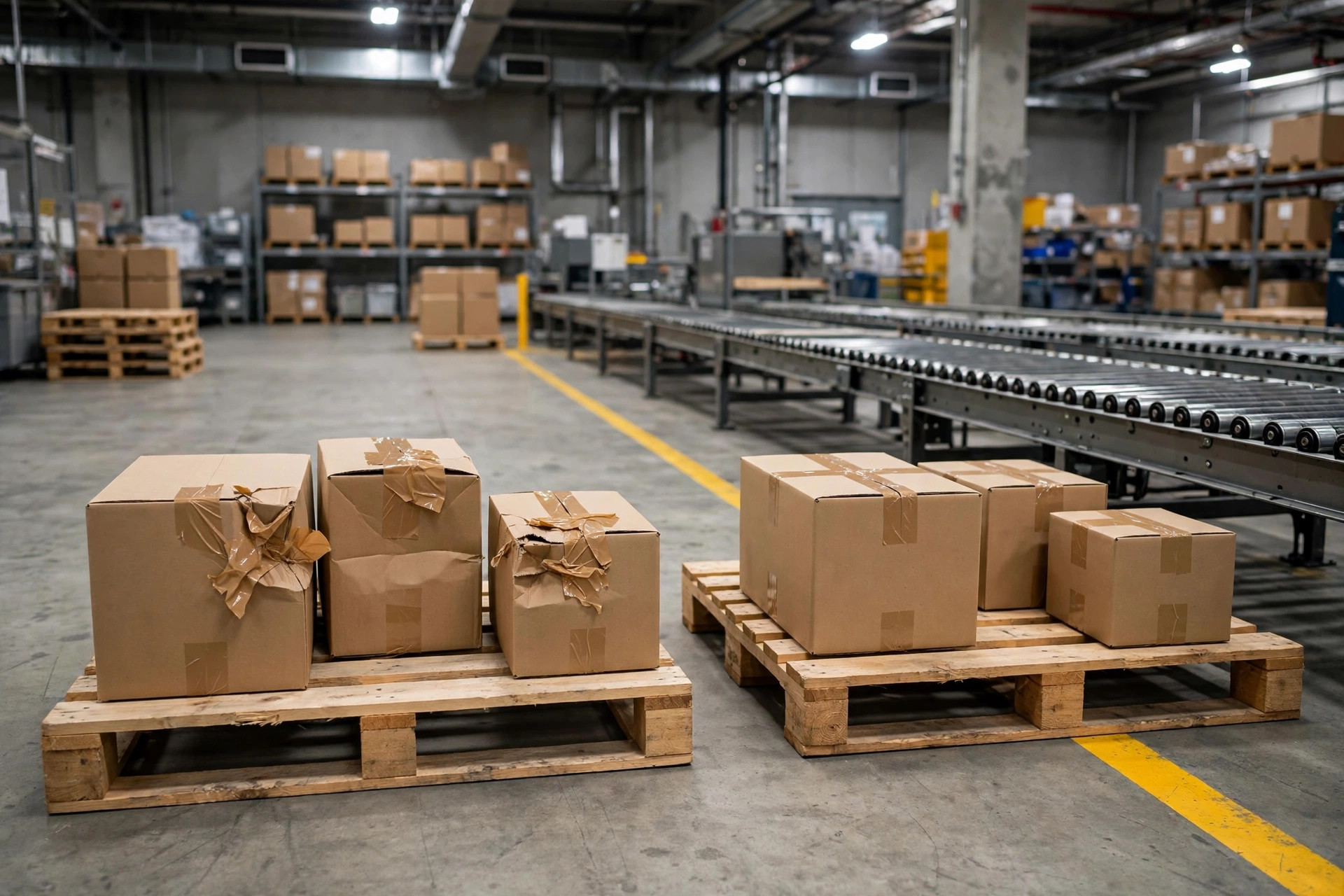
Two: a 15-minute processing beat. Iron rule: any exception sitting in the side lane longer than 15 minutes counts as overdue. Our exception handler sweeps the lane every 15 minutes, takes at most 8 parcels, and must close the loop before the next sweep — fixed ones go back onto the main line, ones needing investigation move to the hold area and get logged, unfixable ones go straight to damage.
Why 15 minutes? We tried hourly sweeps — exceptions kept accumulating, the handler would grab 30 at once, get halfway through, and new ones would bury him. We tried fix-on-arrival — the handler spent the whole night jogging between the line and the lane, and the main line was short a person. Fifteen minutes is the number we earned through trial: 8 parcels or fewer, one person clears them in 10 minutes, 5 minutes left to breathe and log.
Three: a named owner — a fixed one. The exception handler role is held by two fixed people, one per shift. Not a rotation. And it's in their KPIs: exceptions closed per hour, overdue rate, rework rate.
Here's the counter-intuitive call: everyone assumes exception handling is the job nobody wants, so you rotate it. Rotation is exactly what kills your speed. A seasoned handler fixes a wrong-label parcel in 40 seconds — tear, verify, reprint, re-scan, done. A rookie takes 3 minutes and has to call the supervisor to ask "can I just relabel this?" We ran the numbers: with dedicated handlers, average handling time per exception dropped from 4 minutes 20 seconds to 1 minute 50 seconds. Same 70 exceptions — used to take 5 hours of scattered work, now closed out in just over 2.
| What we measured | Exceptions piled on main line (before) | Side lane + 15-min beat (now) |
|---|---|---|
| Unplanned main-line stops | 2–3 per peak night shift | Effectively zero |
| Avg. handling time per exception | 4 min 20 sec | 1 min 50 sec |
| Avg. time an exception sat around | 3–5 hours (until end of shift) | Closed within 15 minutes |
| Exceptions mixed into good flow and misshipped | 2 incidents in one year | Zero in three years |
| QC checker hourly throughput | Dropped to ~450 in peak | Steady at 600–700 |
Those numbers come from our own logs, not a textbook. The last row matters most: when exceptions don't clog the line, the QC checker can actually do QC. That's the job.
One trade-off to be honest about: the side lane and dedicated handlers cost real money. Two exception handlers add up to real payroll in a peak month. Worth it? Our math: the two misship incidents in that bad year cost us close to ten grand each in freight, replacement product, and service time. Never mind the 20-minute stoppage — six lines down for 20 minutes is 800+ orders not going out, and the bill for that shows up in customer service and angry clients. You do your own math, fellas.
A word for my peers
If your exceptions are still stacked at the edge of the main line tonight, don't overthink it. Go paint two yellow lines and drop two pallets during this very shift. Get the space separated first; you can staff it properly later.
But remember the pit I fell into: a zone with no owner is no zone at all. The staging area needs a fixed person and a fixed beat — we use 15 minutes, you can use 20, just don't go past 30. Anything over the beat is an incident and goes in the log.
One last honest word: the value of a QC station is catching the problem. But what happens after the catch decides whether you're running quality control or just slowing down the main line. We've run the side lane for three years now — misships, stoppages, driver fights, all down. Worth a try, fellas.
By Chen Feng, Warehouse Operations Manager