
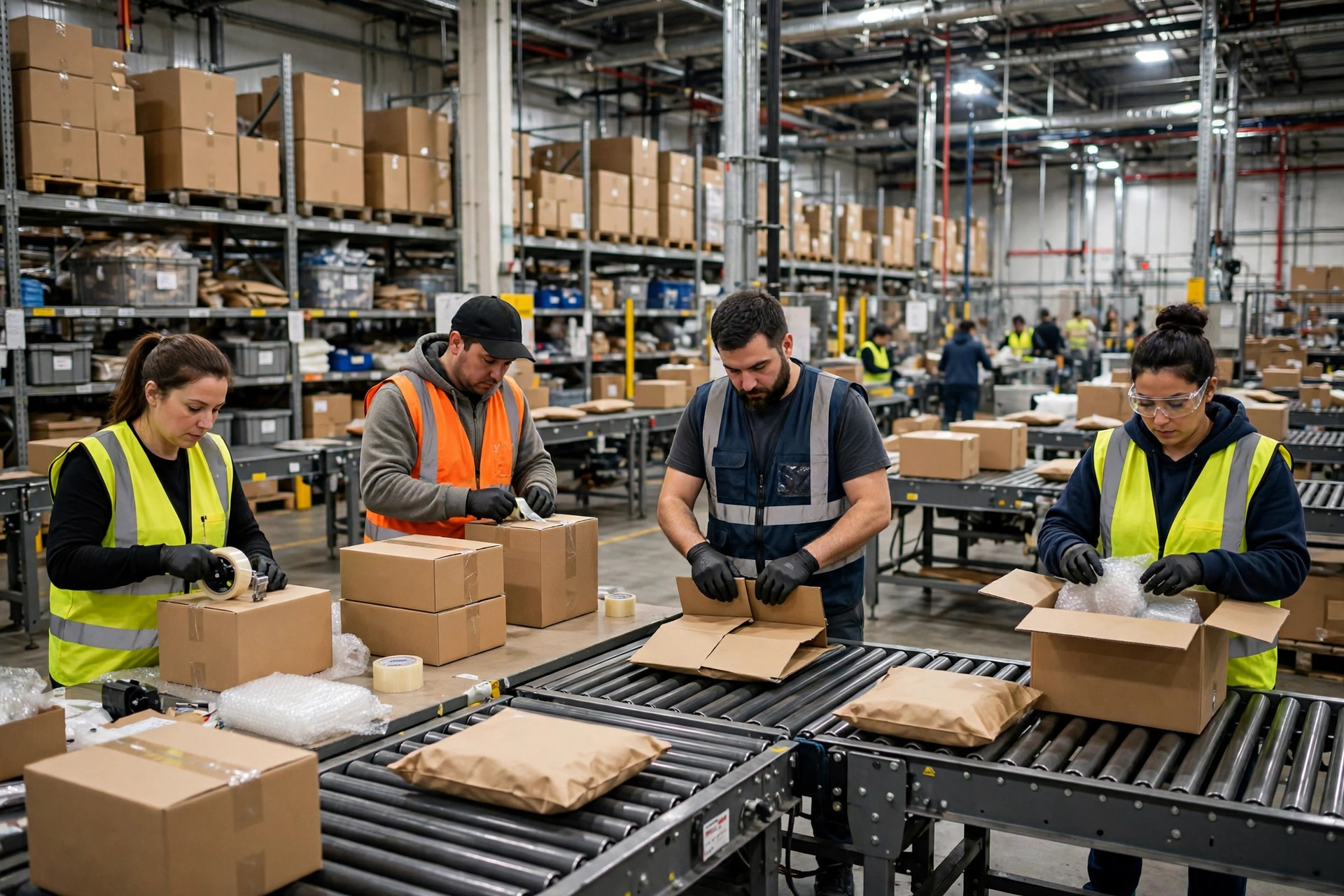
We had a client, a pet treats brand, that in the fall of 2024 split its single Los Angeles warehouse into three: California, Texas, and New Jersey. The goal was simple — cut last-mile freight costs. Three months after the switch, their logistics manager showed the boss a report: last-mile costs down 18%. The boss was thrilled. Then finance looked at the books: inventory value had nearly doubled, with an extra four hundred thousand dollars tied up in stock. The boss called me and asked: Susan, how do we actually do this math?
That is the classic trap of OMS split shipment: people do the freight math and forget the inventory math.
The first ledger: yes, last-mile freight really did drop
With one warehouse in LA, a 3-pound parcel going to the East Coast shipped UPS Ground at Zone 7 or 8 — roughly $9 to $11 a parcel. After splitting into three warehouses, more than 80% of orders fell into Zone 2 to 4 of the nearest facility, bringing the average down to $5 to $7 a parcel. At twenty-something thousand orders a month, that is tens of thousands of dollars saved monthly, hundreds of thousands a year. Delivery times shrank from 4-5 days to 2-3 days, and the "shipping is too slow" complaints in their reviews fell off a cliff.
From an OMS split-shipment logic standpoint, this was a textbook win: the order comes in, the system matches the delivery ZIP code to the closest warehouse with stock, and both cost and speed improve. Show that number to any brand owner and they will want the same thing.
The trouble showed up in the second ledger.
The second ledger: inventory doubled, and cash got buried in stock
With one warehouse, they held about 30,000 units of safety stock for a hot SKU and rarely stocked out. With three warehouses, every facility needs its own safety stock — the Texas warehouse cannot count on California to bail it out, because a cross-warehouse transfer costs more in linehaul than the parcel would have cost in the first place. So each warehouse held 25,000 units: 75,000 total. At their factory cost, that was an extra $400,000-plus of working capital locked in boxes.
And it did not stop there. Three warehouses means three sets of inbound receiving fees, three sets of putaway fees, and pallet-based monthly storage tripled. Returns got messy too: one return address became three, and customer service had to look up which warehouse shipped each order. Our own quote reflected reality — warehouse management fees after the split ran nearly 30% higher than the single-warehouse setup. Splitting one warehouse's work into three is real labor cost.
When finance closed the books on total fulfillment cost: freight was down, but inventory carrying costs, storage fees, and management fees were all up. Net improvement: 3%. The boss had been expecting 18%. The gap was big enough to make him question his life choices.
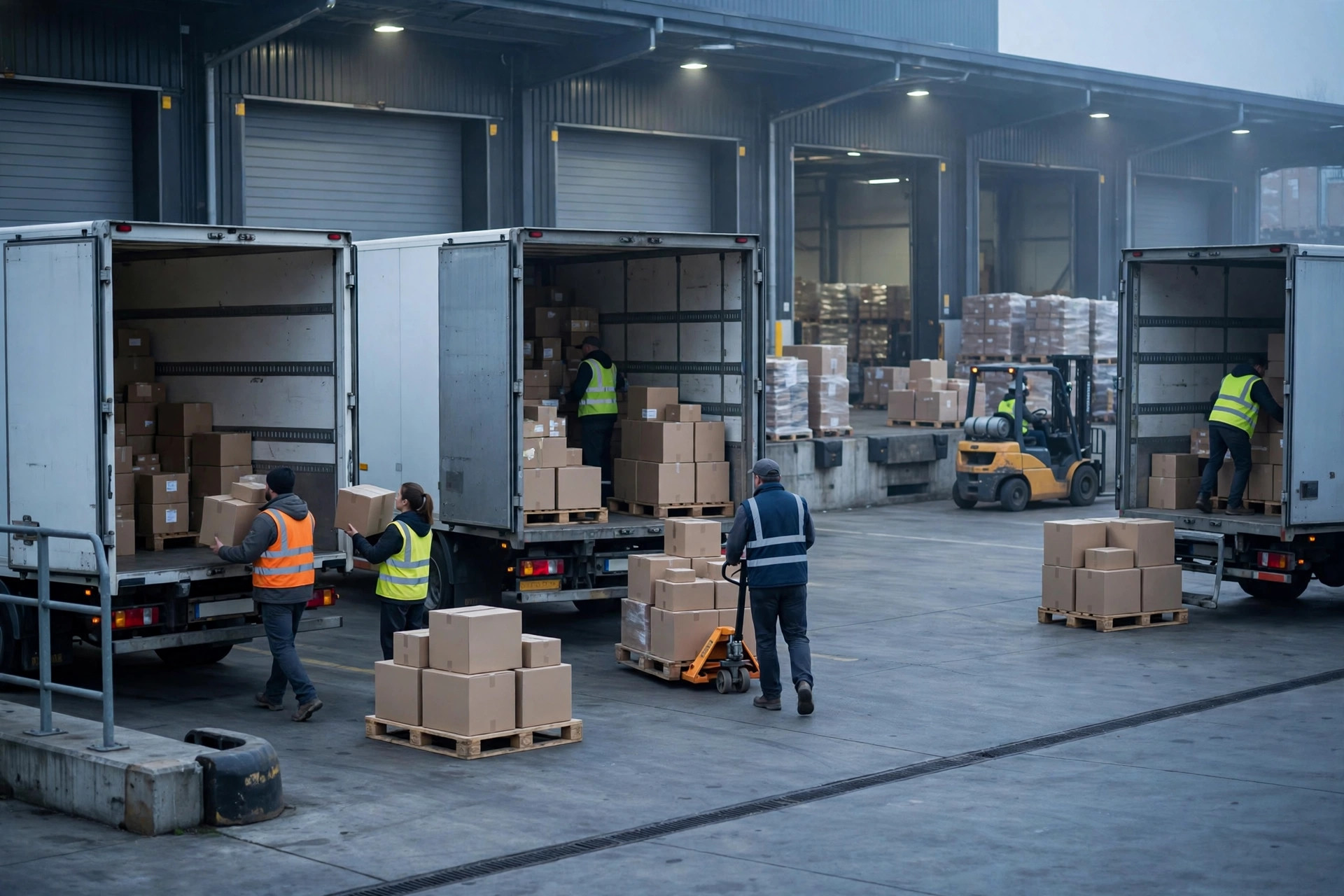
Ship-from-nearby vs. ship-from-one-warehouse: all four ledgers on one table
| Dimension | Centralized (1 warehouse) | Split shipment (multiple warehouses) |
|---|---|---|
| Last-mile freight | High: many cross-zone orders, ~$8-11 per 3-lb parcel | Low: most orders land in nearby zones, ~$5-7 per parcel |
| Delivery speed | 4-5 days coast to coast | 2-3 days covers 90% of orders |
| Inventory carrying | One stockpile, low safety stock, little cash tied up | Every warehouse needs safety stock; total usually doubles, locking up hundreds of thousands |
| Split-shipment rate | Low, inventory concentrated | High: a stockout at one warehouse splits the order across two, doubling freight |
| Operational complexity | Simple, one warehouse relationship | Inbound, cycle counts, returns, and billing times three; higher 3PL management fees |
I tell every brand considering a split to print this table and tape it to the wall. People who decide based on the first row alone always get burned on rows three and four.
The counterintuitive take: splits save freight, but inventory and complexity are what cost you
After years on the 3PL side, here is something only the vendor side will tell you straight: split shipment is not worth it for everyone. It works when your order density is high and your SKU count is concentrated. A brand doing thousands of orders a day across a few dozen hot SKUs turns a split into a money printer. But a brand with a thousand SKUs where each one sells a handful of units a day is paying for pain: every warehouse ends up sitting on slow movers, and dead inventory eats every dollar of freight savings.
One more counterintuitive point: the speed advantage is real, but only if the OMS allocation logic is smart. The dumbest configuration I have seen routes purely on "nearest" without checking stock — the nearest warehouse is missing one item, the system splits the order, and the second item ships from a thousand miles away. Two freight charges, worse than centralized. The smart rule: when the nearest warehouse is short, move the whole order to the next-nearest stocked warehouse. Walk an extra couple hundred miles rather than split. That rule has to be configured in the OMS, and you should confirm with your 3PL before signing that their system supports it.
The inside game: three traps hiding in the contract
Trap one is in the words "last-mile freight." Those words carry four different meanings in a 3PL contract: billed at the 3PL's own carrier rates, billed at the client's own carrier rates, billed at published rates with a discount, or passed through at actual monthly billing. The difference is enormous. Our carrier discounts are usually deeper than what a client negotiates alone — but if the contract says "3PL rates plus a 5% service fee," half of the split-shipment savings end up in our pocket. If a brand owner does not pin this down before signing, the split was for nothing.
Trap two is warehouse management fees. After a split, many 3PLs stack fees per warehouse: one management fee becomes three, and a 10% discount for the bundle counts as generous. In negotiation, always ask: are management fees charged per order or per facility?
Trap three is the split-order clause. When a stockout forces a split, who pays the freight on the second parcel? Most contracts default to the client paying. We had a beauty client who burned through over a hundred thousand dollars a year in split-order freight and only found out at reconciliation. The contract must state it: splits not caused by the client are on the 3PL, or at minimum there is a cap on the split rate with penalties beyond it.
Next time you negotiate a contract, ask these three questions
First: whose carrier rates apply to last-mile freight, who keeps the discount, and do I get audit rights? Second: after the split, how are warehouse management fees charged — stacked per facility or bundled by volume? Third: who pays for the second parcel when a stockout splits an order, and is there a cap on the split rate?
Get clear answers to those three, and you will have done the real math on OMS split shipment. If you cannot get clear answers, come find me — I sign these contracts for a living, and I would rather have the hard conversation upfront than the fight afterward.
By Susan, 3PL Sales Director



