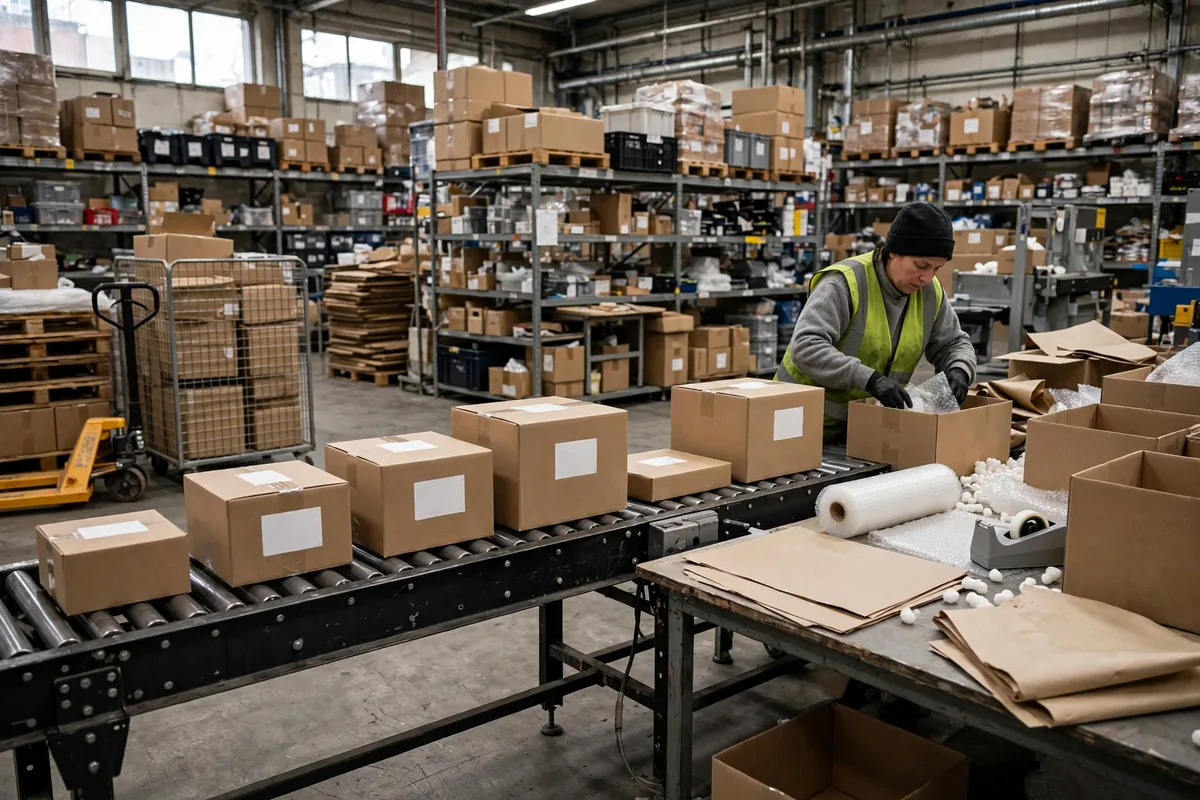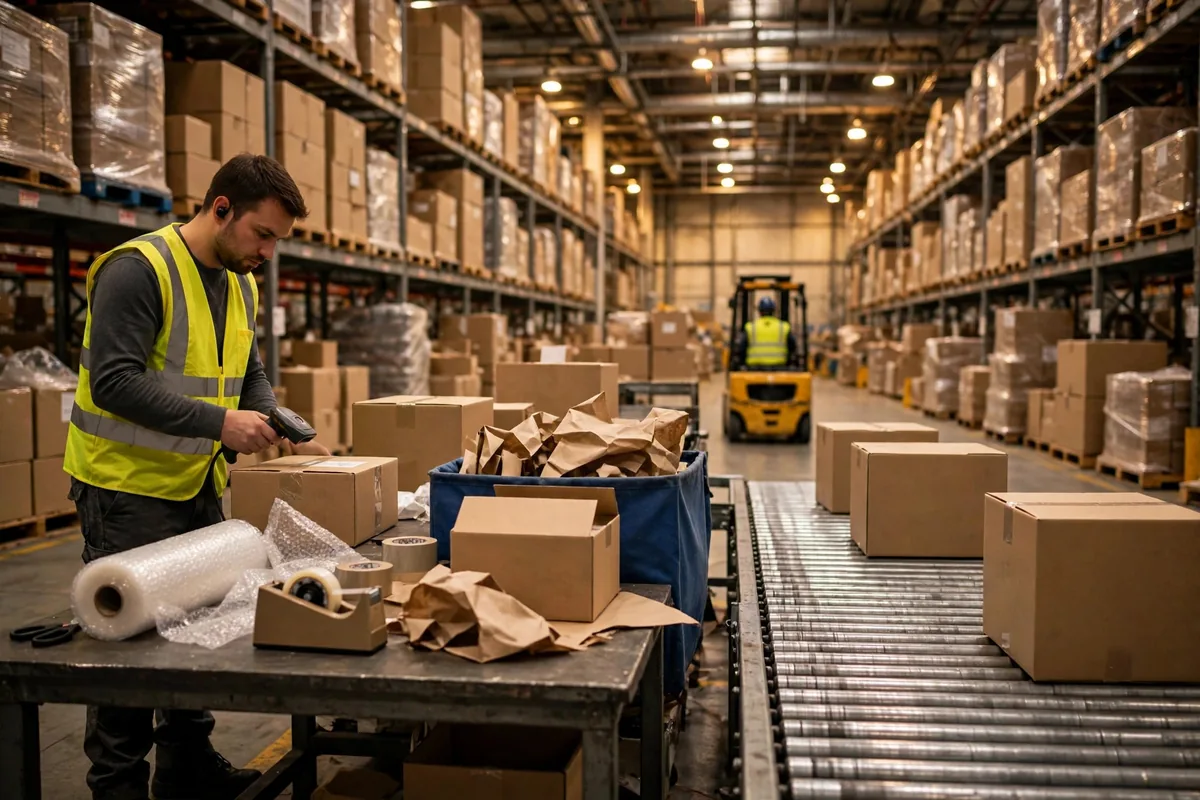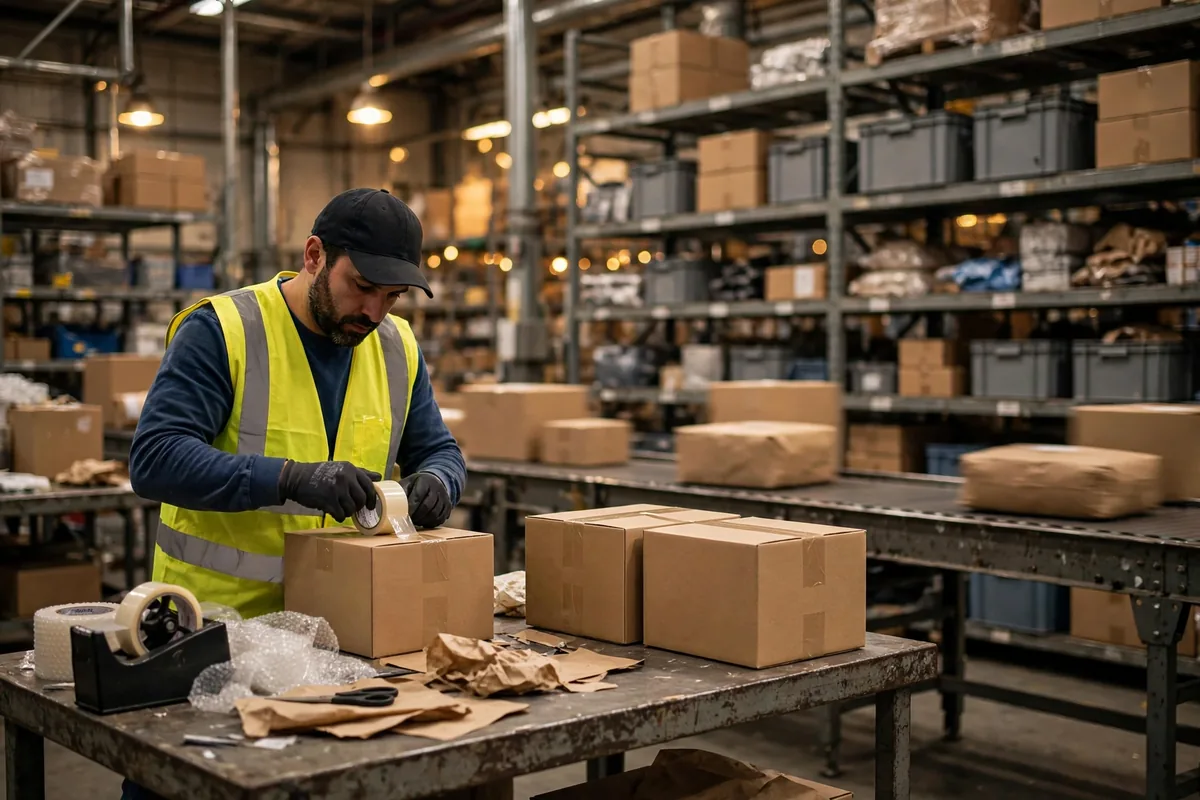
It was 6:30 on the morning of November 11 last year, still dark outside, and I was standing at the door of the packing area watching carts roll down the conveyor. A young packer came running over with a pick list in her hand. "Boss, this order is only three items. Why does the OMS order splitting rule send it out as three packages? Won't the customer think we're wasting money?" Honest answer, folks: when I first took over this warehouse, I thought the same thing. Then came the damage claims, the finance team chasing me about freight costs, and a driver yelling at me at the dock. That's how I learned. Let me lay out how splitting works in our warehouse.
Why One Order Ships as Three Packages
Take that three-item order. A two-liter bottle of laundry detergent, a glass bottle of soy sauce, and a three-kilo bag of rice. Three small things. Put them in one box, the truck shakes twice on the road, the soy sauce bottle breaks, and the whole box is a write-off. If the detergent leaks, the rice is ruined. The system split them into three packages not because it is dumb, but because it remembers what we paid to learn.
Two summers ago we shipped a similar order: a bottle of dish soap and a bag of flour, packed together to save a box. The soap cap came loose, half the bottle leaked, and the flour turned into a solid lump. The customer sent photos, customer service refunded the full order, and the freight was wasted. The goods were worth less than 90 yuan. We paid out more than 200 yuan, plus a one-star review. Since that day, liquids never ride with powders, fragile never rides with heavy, and fresh never rides with room-temperature. No expert wrote that rule. A claim form did.
Some splits have nothing to do with the goods and everything to do with the building. Our ambient zone sits at the east end, the chilled zone at the west end, with a 40-meter aisle between them. An order with everyday goods and a tub of yogurt means a picker walks east, then walks west, then waits for the chilled check before everything goes into one box. That wait costs about 10 extra minutes per order. On a peak day we push more than 3,000 orders. Multiply 10 minutes by 3,000 and the line is dead. So chilled and ambient ship separately, not to charge more freight, but so two lines can run on their own and nobody waits on anybody.
The Real Cost of Order Splitting
Most people do the math on order splitting wrong. They count the extra freight and stop there. At the end of every month our warehouse puts four numbers side by side. Only then does the picture make sense.
| Cost | One combined package | Split into three packages |
|---|---|---|
| Courier freight | 1 shipment, about 12 yuan | 3 shipments, about 30 yuan |
| Boxes and fillers | 1 large box, about 4 yuan | 3 small boxes, about 6 yuan |
| Damage claims (monthly average per order) | About 3 yuan | About 0.5 yuan |
| Picking and packing labor | 1 person, 8 minutes | 3 people in parallel, 3 minutes each |
Look at the first two rows and splitting costs about 20 yuan more. Add damage and labor and the combined box comes out more expensive. The last row matters most. In peak season, time is worth more than freight. Three packages run down three lines at once and the order leaves in 20 minutes. Force everything into one box, wait for the chilled check, wait for the big carton, and one order can drag on for 40 minutes. Last Singles' Day, splitting let us clear the whole day's orders by 9 p.m. Packed together, we would still have been working at 1 a.m., and the overtime alone would have cost more than the freight difference.
Here is the part that surprises people: sometimes you pay extra freight to buy speed. A customer cares about price when they place the order. They care about days when they are waiting for it. After we started order splitting properly, our average time from order to dispatch dropped from 5 hours to about 2.5 hours, and complaints about slow delivery fell by nearly half. Twenty extra yuan of freight bought us half the complaints and better repeat orders. Finance pushed back at first. Three months of numbers on the table ended the argument.
Splitting too much is just as bad. For a while our rules were too loose, and an order of five small items sitting in three different locations went out as five packages. A customer called and asked, "Do you ship one item per box now?" After that we set a floor: combine what can be combined, split only what has to be split, and write the reason in the order notes so customer service can explain it the moment a customer calls.
The Order Splitting Rules We Actually Use
After two years of trial and error, our order splitting rules come down to four lines, posted on the wall of the packing area. New hires learn them on day one.
Dangerous combinations always split. Liquids with powders, fragile with heavy, fresh with room-temperature: these three pairs never share a box. Break the rule and quality control docks your performance points, no discussion. When old hands train new staff, this is lesson one.
Orders across zones ship separately. Ambient and chilled, east warehouse and west warehouse: goods that live in different zones go out on their own, and nobody waits for anybody. Pickers stop running across the whole building and somehow get faster. A few old hands grumbled at first. I had them time it themselves: 40 minutes combined, 20 minutes split in parallel. They stopped grumbling.
Oversized items ship alone. Anything over 15 kilos or longer than 80 centimeters on one side never shares a carton with anything else. It gets its own box and its own label. Pack a small item with a big one and the small one is basically a sacrifice. It gets crushed, we pay for it, and nobody wins.
Read the customer note before splitting. If a customer wrote "please ship together," we try to combine first. If it cannot be combined, we split and send a text explaining why. Customer service forced this rule on us: customers who asked for one box and got three without a word complained twice as often. Once we started reading the notes before splitting, complaints dropped back down.
All four rules live in the OMS now. The system applies them automatically, and people only handle the exceptions. We get about 30 exceptions a day, odd combinations the rules never saw. The shift lead goes through them at the morning meeting and decides on the spot. Each decision gets written down, and the next time the same combination shows up, it goes straight into the rule book. That book has more than 60 rules now, added one at a time this way.
Honest talk: there is no universal answer to order splitting. A warehouse that sells one kind of product may never need to split at all. A warehouse that sells everything cannot work without it. The mistake is letting the system split blindly, or forcing things together by gut feel. Know your goods, know your building layout, know how many hands you have in peak season, and the rules write themselves. If splitting is giving you a headache, pull last month's damage claims and complaint tickets first. Count how many came from packing things together that should never have met. The answer is usually right there.
By Chen Feng, Warehouse Operations Manager