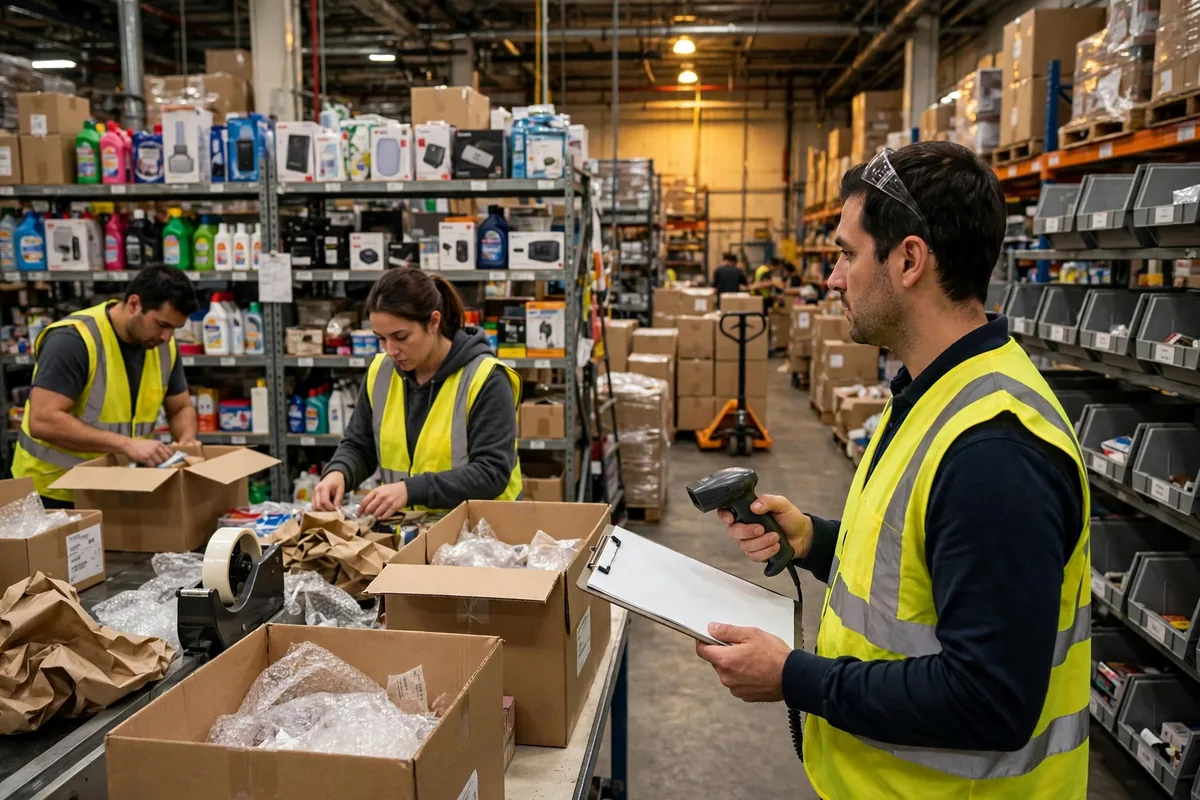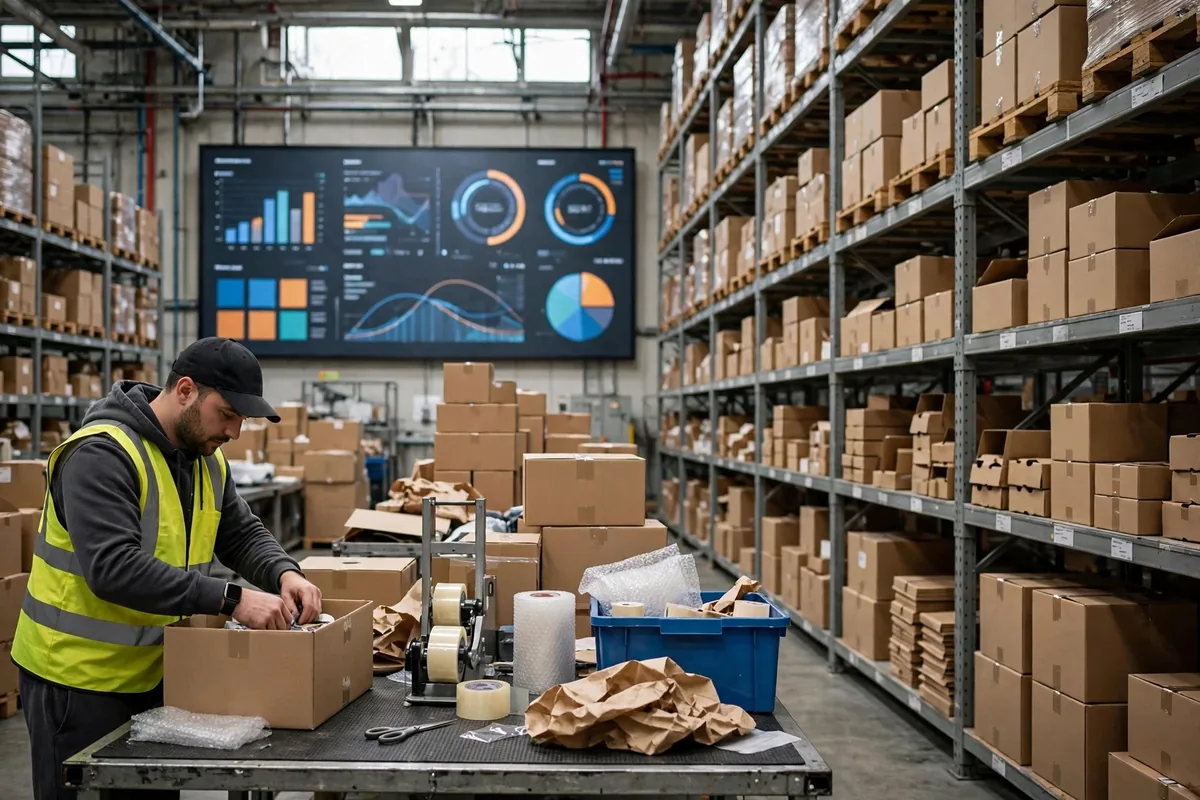
Put simply, when stock runs short, OMS stockout order priority allocation is making a choice for you: these hundred units go to this customer, not that one. Get it right and you have a stockout. Get it wrong and you have a pile of complaints and a lost key account. I have seen too many warehouses treat a stockout as an inventory problem. It never is. It is a choice problem.
Here is my verdict up front: there is exactly one iron rule for OMS stockout order priority allocation — orders you have already taken money for and already promised a delivery date always come before orders you have promised nothing to. Everything else — big customers, high margin, channel importance — comes after. The logic is simple: cut an unpromised order and the customer is disappointed. Cut a promised order and the customer feels cheated. Disappointment can be repaired. Feeling cheated almost never can.
One wrong cut costs more than you think
In September 2025, three days before peak season, a replenishment landed late. A home-goods seller in California had 400 units of a bestselling lamp in the warehouse and 620 units of demand waiting. The OMS was set to first-in-first-out: whoever ordered first got served first. Sounds fair, right? The earliest orders were bulk distributor replenishments, one or two hundred units each, unpaid in full, with no firm delivery date promised. Behind them sat more than 200 retail orders, already paid in full, with "delivered in three days" printed on the product page. FIFO cut every retail order to zero. That week the support phones never stopped ringing. Refunds and bad reviews followed, and the seller later told me the distributor stock never sold through either — it ended up cleared at a discount. A fair rule produced the worst possible outcome.
I have seen this too many times: the rule itself is fine, but the order it ranks by is wrong. FIFO protects order time. It does not protect promises. And when stock is short, order time is the cheapest thing in the building.
Now the opposite mistake. In November 2024, the week before Black Friday, a 3PL warehouse in Ohio had 300 units of a small appliance against 500 units of demand. The OMS ranked by customer tier: tier-A key accounts first, everyone else after. One tier-A order took 240 units. The remaining 60 units were split across a dozen smaller customers, a few units each — not enough to make a single shippable order. The key account shipped whole. Every small customer got a partial order that could not ship at all, so 60 units sat in the warehouse while a dozen customers complained at once. They protected the head and lost the body. Weekly shipped volume actually came in lower than a proportional split would have delivered. That is the price of ranking by customer tier alone.
So how should OMS stockout order priority allocation actually run?
This thing has two sides. One side is promise — what you have already told someone. The other side is value — what shipping this order brings back. Both matter, but the order between them cannot be shuffled.
My ranking runs in four layers, in this sequence:
Layer one: orders already paid and already promised a delivery date. This is the hardest commitment there is. Money taken, date written down. Cutting it is breaking a promise. The OMS fills this layer in full first, whatever it takes, and only then moves on.
Layer two: orders tied to a channel commitment you cannot break. Some marketplaces score on-time shipping, and dropping below the line costs ranking, traffic, or the listing itself. You protect these orders not because they earn the most, but because cutting them wounds the whole storefront. You are protecting the channel's life.
Layer three: key accounts and strategic customers. With one condition — check whether the key account's order also carries a promised date. A key account order with no promise attached sits behind layer two. Do not wave "key account" around as an excuse to skip the first two layers.
Layer four: split the rest proportionally. By now there is not much stock left. Proportional means every order gets a share, so every order can ship something, instead of some shipping whole and others shipping nothing. Whether a partial order can ship depends on whether the channel allows split shipments. If it does, split. If it does not, push the whole order back.
Here is the counterintuitive judgment: when stock is short, the last order you should protect is the biggest one. The biggest order looks the most important, but it is usually the one that can wait longest — distributors hold safety stock and have alternate sources, and three days late will not kill them. The order you must protect is the tiny one: three units, already paid, a parent waiting to give it to a kid for a birthday. It is small, it cannot wait, and it turns into a one-star review faster than anything else in your warehouse.
An OMS stockout order priority allocation framework you can use tomorrow
Rules on paper are useless. They have to live in the OMS, running automatically every day. Five steps to make that real:
Step one: tag every order the moment it enters the pool. Four tags in the OMS — paid or not, delivery date promised or not, customer tier, channel scoring requirement. If the tags are incomplete, the priority ranking is guesswork dressed as a system.
Step two: lock the "never cut" line in place. Orders that are paid and promised get hard-locked in the system, so no manual override can touch them. The red line belongs in policy, not in one person's head.
Step three: keep one manual intervention window. The system allocates by the four layers automatically, but once a day the operations lead reviews the result and can adjust anything plainly wrong. Every adjustment gets a reason recorded. A manual override with no record becomes an argument three months from now, guaranteed.
Step four: run the numbers before you act. Using a stated hypothetical example: suppose the warehouse holds 500 units against 800 units of demand. Rank by "key accounts first" and the key account takes 400, leaving 100 units spread across 200 retail orders — half a unit each, nothing shippable, so 400 units actually leave the dock. Rank by "promises first, then proportional" and 300 promised units ship in full, the remaining 200 units split proportionally across the rest, and 500 units leave the dock. Same 500 units. A hundred more units shipped, and complaints cut by more than half. The rule changes the outcome more than the inventory does.
Step five: review every stockout allocation in the weekly meeting. Every Monday, look at last week's cuts: who got cut, why, and whether any cut was wrong. A cut that was wrong changes the ranking next time. Priority is not set once and forgotten. It gets sharpened every week.
One last piece of advice: a stockout tests a company not on how much inventory it holds, but on whether it can admit it is out of stock. An allocation rule is, at bottom, the most honest way to tell a customer you do not have the goods — not by claiming the shipment is on its way, but by telling them when it will actually arrive, and then keeping your word. Without that, the prettiest OMS in the world is just a machine that splits shortages faster.
So next time stock runs short — who are you going to cut first?
By Lao Mi, Supply Chain Veteran (20 yrs)