Let me rant for a second: in cross-border e-commerce, nine out of ten sellers are staring at Southeast Asia and Latin America, and almost nobody looks seriously at African agricultural exports. Sesame is the one they ignore. I have followed the Nigeria sesame seed export warehouse logistics chain for two seasons now, and here is my conclusion up front: this is a business where warehousing decides the profit. The cargo itself isn't expensive. The margin hides in four links — drying, grading, pest control and consolidation. Get sloppy on any one of them and the whole container's profit is gone.
Some numbers first, so nobody thinks this is small-time. FAO data puts Nigeria's 2024 sesame production at 450,000 tonnes, fourth in the world, about 6.7% of global output. On exports, 2024 shipments were roughly 232,280 tonnes worth about US$391.4 million — fifth in the world by export value. Nigeria's Export Promotion Council puts it more bluntly: Africa's second-largest sesame exporter, fourth in the world. The biggest buyer is Japan, taking about 36% of export value, with China, Turkey and India behind it. Why Japan matters becomes clear in the inspection section — it is one of the strictest sesame inspection markets on earth.
Buying at origin: Nigeria sesame is dried, not just bought
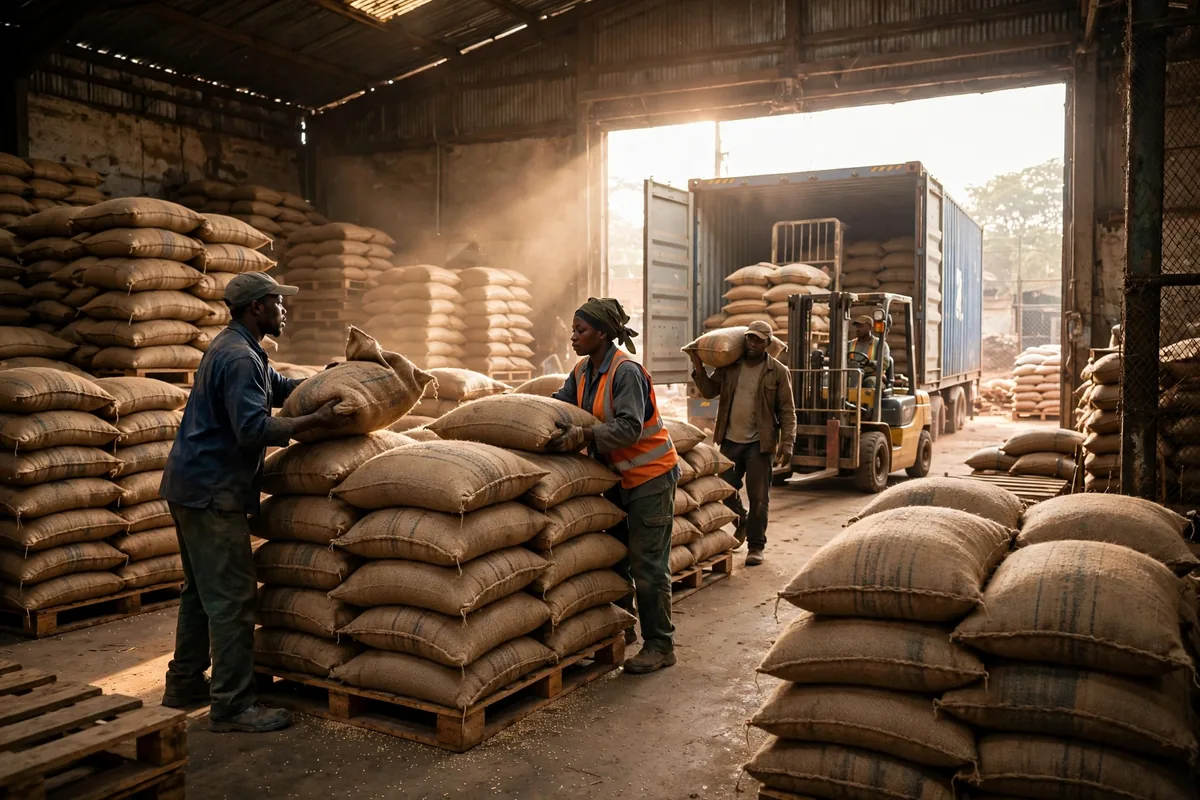
Nigeria's sesame belt sits in the north: Taraba, Jigawa, Kano, Yobe, Borno and Bauchi. After the rains, farmers harvest and spread the seed to dry in the villages. This step decides how much money you will spend later in the warehouse.
I followed a buyer friend in Kano through the October 2025 season, and he took in two lots. The first had been dried three days by the farmers themselves, moisture down where it should be — straight to screening and grading at the warehouse, then bagged. The second was rushed to market, moisture too high, and needed two more days spread out and turned twice at the warehouse, plus extra labour and floor space, and two bags of mouldy seed picked out. Same tonne of sesame, but the second lot cost noticeably more to process in storage and graded a level lower at sale. That is the counter-intuitive part: most people think export warehousing money is spent at the port end. The biggest spend is in the first two weeks at the origin warehouse. Dry it badly, and every later step — pest control, moisture control, fumigation — is just paying for the earlier sloppiness.
Grading is a craft of its own. Nigeria's export trade is mostly white sesame, and Japanese buyers want large, white, low-impurity seed. The origin warehouse routine is air-screen cleaning plus sieving: blow off light impurities and shrivelled seed, sieve by size, then a final hand pick. It sounds old-fashioned, but it sets the price your lot can command. Carefully graded cargo qualifies for premium Japanese orders; carelessly graded cargo goes to price-sensitive markets, and the gap can run to hundreds of dollars a tonne — an illustrative range, confirmed against actual deals.
Pests and moisture: the two most expensive things in a Nigeria sesame warehouse
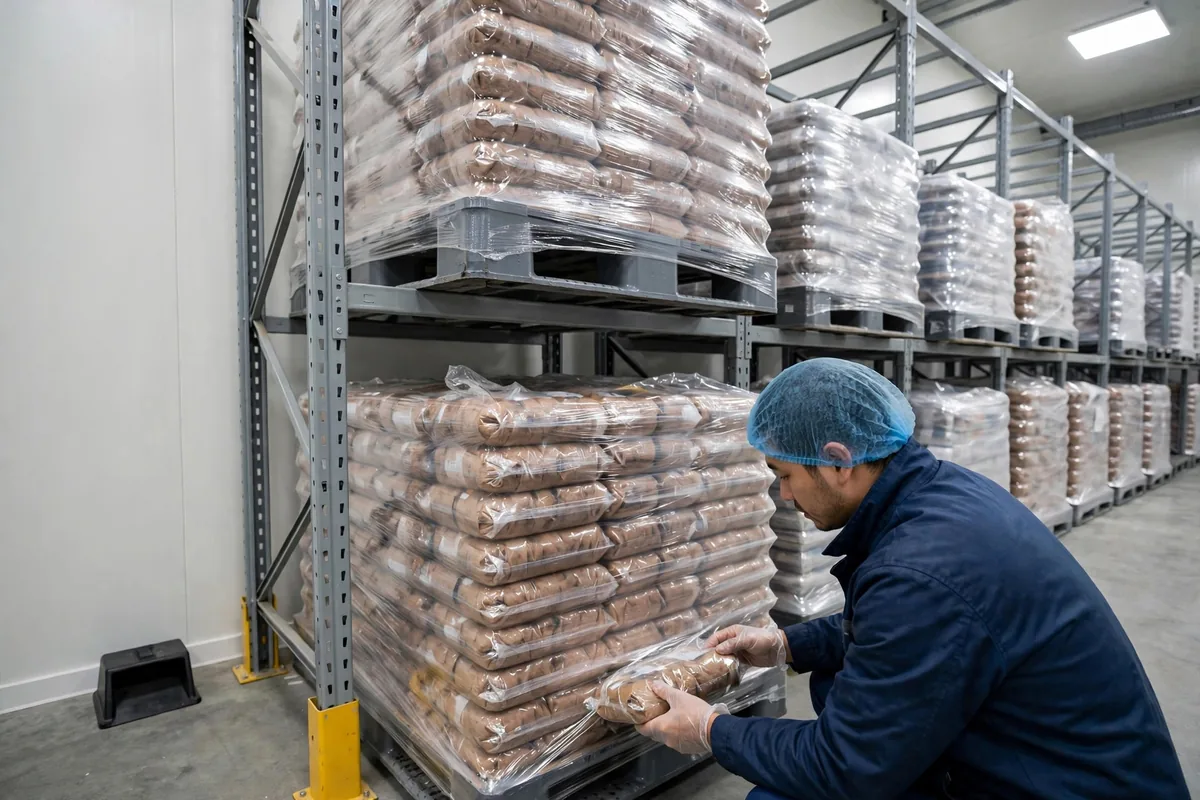
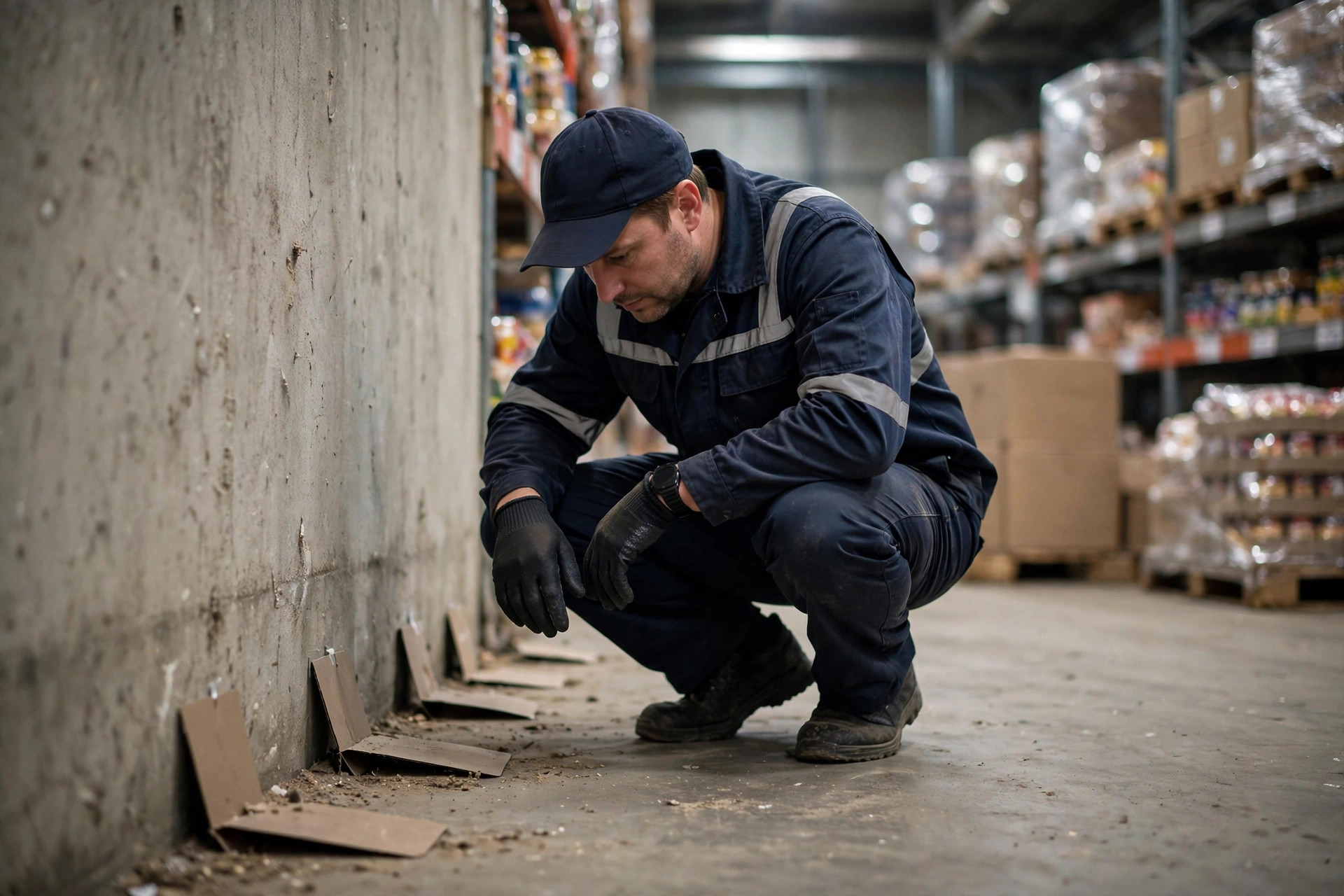
In the warehouse, sesame fears two things: insects and damp. The seeds are small and oil-rich; once insects get in, the whole lot's appearance collapses. Mould from damp is worse — a downgrade on the spot, and if a Japanese buyer's inspection finds excess mouldy seed, the whole container can be rejected. The standard answers are fumigation plus sealed storage for pests, ventilation and pallets off the floor for moisture. Simple to say, all in the details.
Here is a real scene from an export warehouse in Lagos I visited. It had been refitted in August 2025: a moisture-proof floor coating, everything on pallets off the ground, ventilation gaps along the walls, exhaust fans in the roof. The warehouse keeper told me they had learned the hard way: one rainy season a lot went straight onto the floor, the bottom sacks absorbed damp, and when they opened them the bottom was caked and mouldy. The whole lot was downgraded and sold at a loss. After the refit, the rule is simple: test moisture on arrival, hold anything over the limit aside to dry, never stack it with compliant cargo, fumigate on a fixed monthly cycle, tag every fumigation with its date, and ship the earliest-fumigated stock first. A few lines of procedure on paper, all labour cost in practice — but that is the truth of export warehousing. Every step you skip gets repaid with interest at the buyer's inspection.
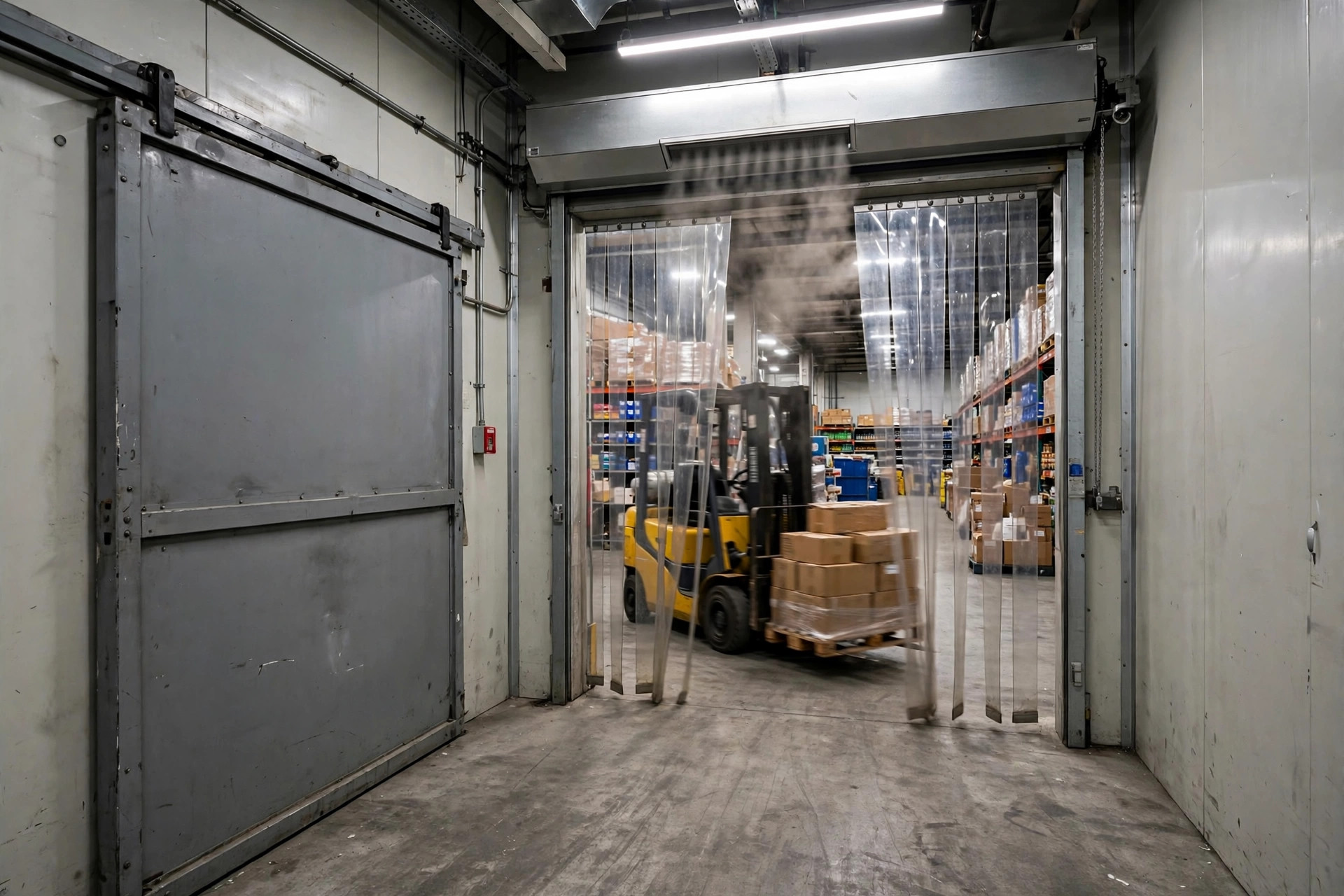
Consolidation is the other place where the maths matters. Sesame export is not a full-container game for everyone. Plenty of small and mid-size exporters consolidate: several shippers sharing one box, or one shipper waiting for the next lot to fill it. Done well, consolidation spreads the freight. Done badly, it brings all the trouble. One, the more shippers in a box, the harder the loading coordination — one late lot holds the whole container. Two, different shippers' sesame grades differ, so the stow has to be marked lot by lot, or nobody can tell whose cargo is whose at discharge and the dispute starts. Three, fumigation and documents have to be done as one set — one shipper's paperwork problem can hold the whole box at Apapa port.
My own rule: I only consolidate with two kinds of people — long-term partners with reliable schedules, or cargo from the same origin area at the same grade, where the mixing risk is low. I'd rather wait a sailing than gamble on a consolidation. And on timing: Nigeria's sesame shipping season runs roughly October to February, buying concentrates, and export warehouse space at Lagos gets tight. My stocking rhythm is to finish the first lot's warehousing and fumigation before the end of September, catch the first wave of sailings in October, run a second wave in November and December. Leave it until January and berths and warehouse space both squeeze, costs climb, and buyers' orders won't wait.
The maths: how much of one container's profit does warehousing eat?
Finally, the full cost picture, so you can see where the money goes on this chain (figures are an illustrative scenario, not a quote):
| Link | Where the money goes | Illustrative share of warehousing cost |
|---|---|---|
| Origin buying warehouse | Drying, air-screen cleaning, sieving, bagging | ~25% |
| Pest and moisture control | Fumigation, ventilation, pallets, regular sampling | ~20% |
| Pre-port warehouse at Lagos | Short-haul, storage, pre-customs holding | ~30% |
| Consolidation and stuffing | Coordination, supervised stuffing, documents | ~25% |
See the pattern? The pre-port warehouse is the most expensive link, but the origin warehouse is the one that decides success or failure. Every cent saved at origin can come back tenfold at the Japanese buyer's inspection. Japanese sesame inspection tests three hard numbers — impurity rate, mouldy seed rate and moisture content. Over the limit means a price deduction; badly over means rejection. On my first Japan-bound shipment, the inspection report came back with impurity a touch above the contract standard, and 2% of the payment was deducted. Since then my rule is: run your own pre-shipment sampling against the buyer's standard first. If a lot fails my own check, it waits for the next sailing. It does not ship.
That trick works — I have tested it myself: move the inspection standard forward into the warehouse, instead of discovering the problem after the cargo reaches the destination port. The Nigeria sesame business is never about who buys the cheapest cargo. It is about whose warehousing chain makes no mistakes. Dry it properly at origin, grade it carefully, don't cut corners on pest and moisture control, don't rush consolidation — do those four things, and inside a 450,000-tonne, world-number-four market, there is a share with your name on it.
By Ah K, E-commerce Seller (5 yrs)