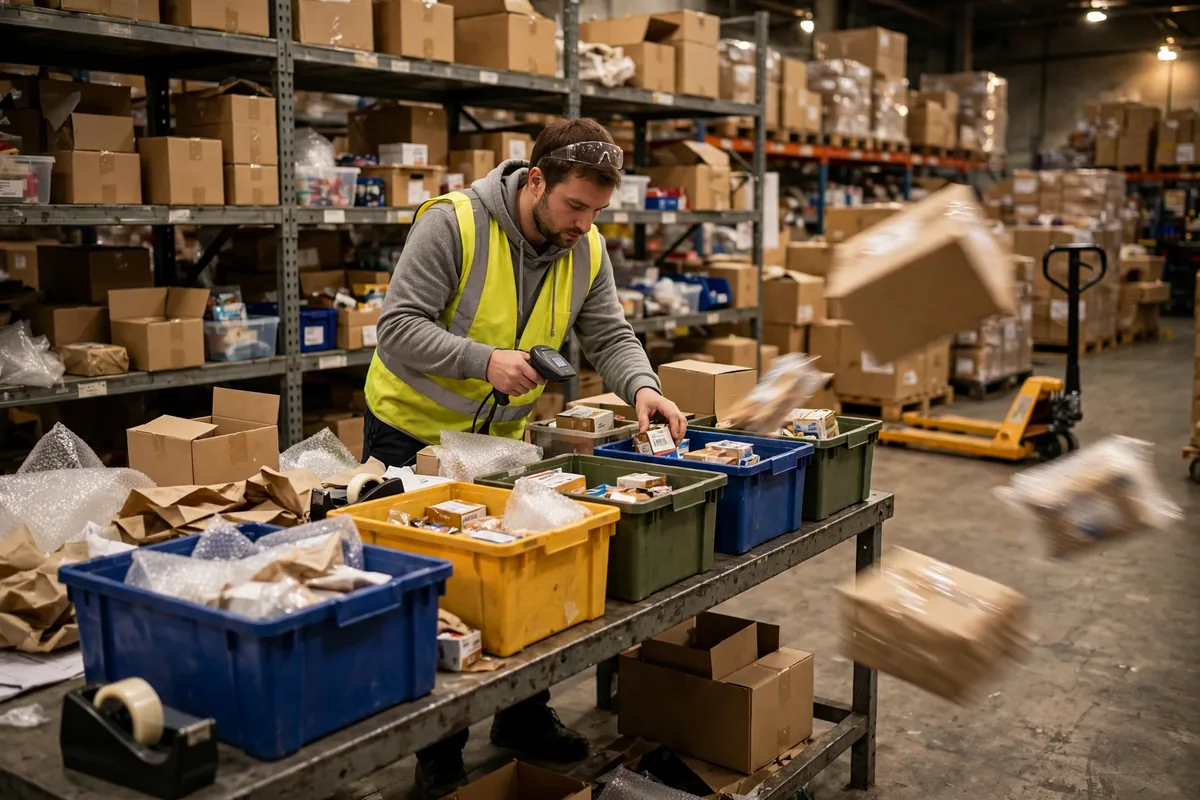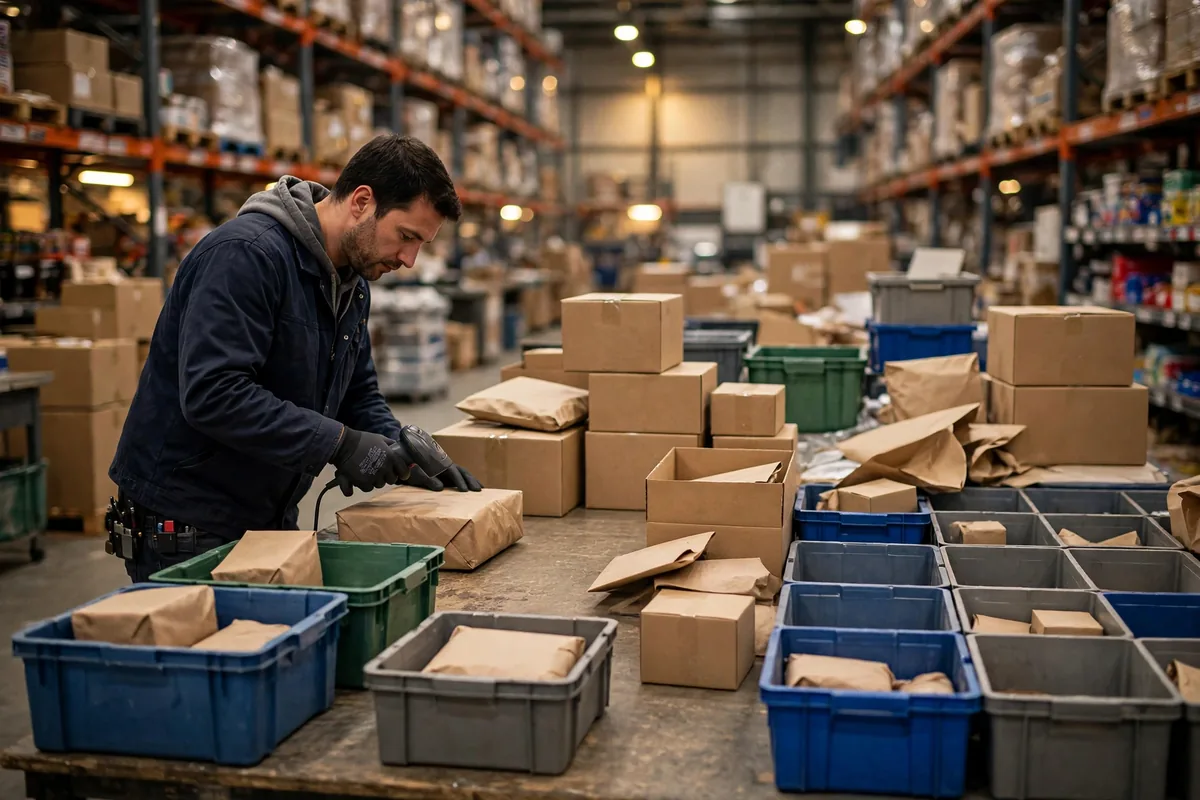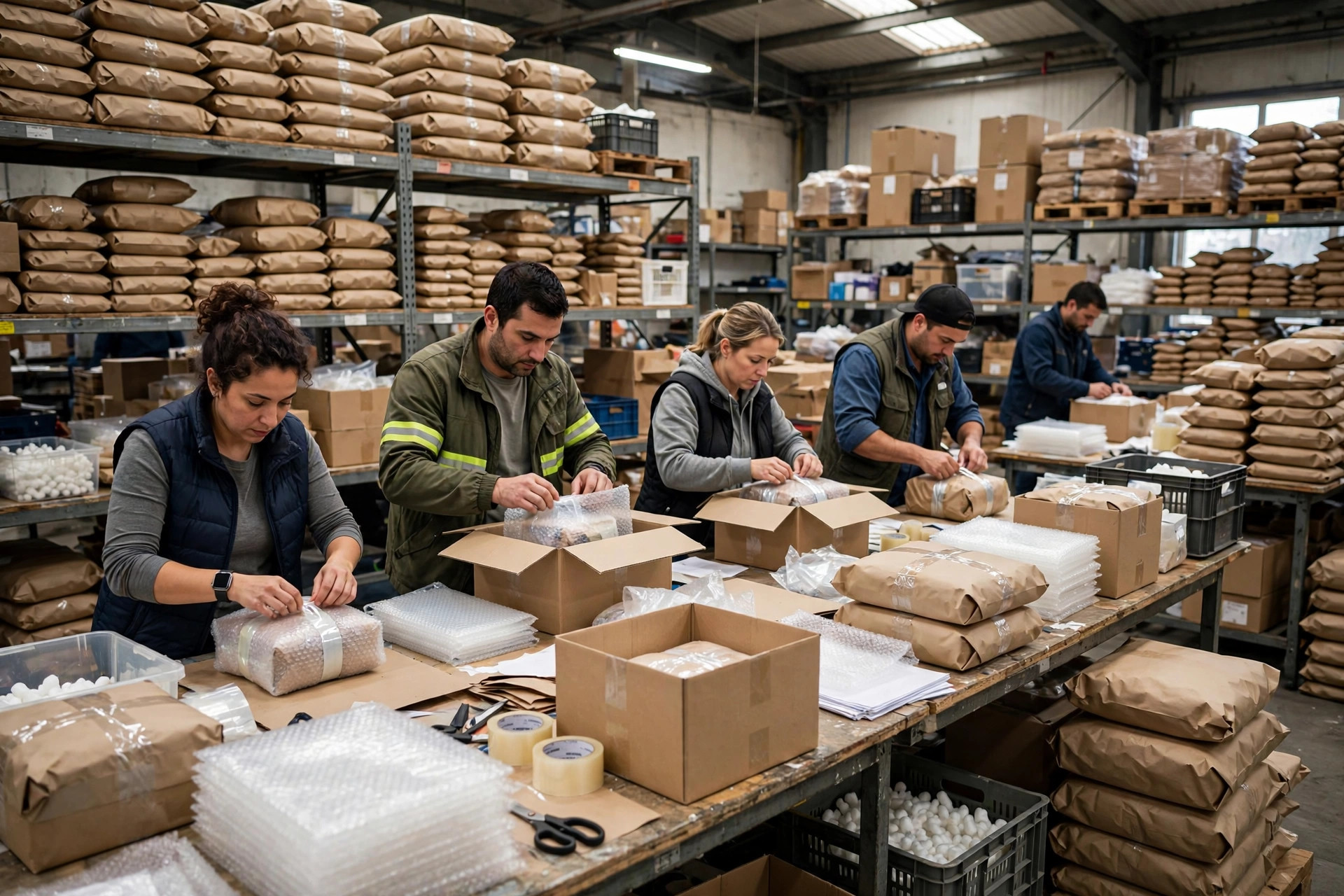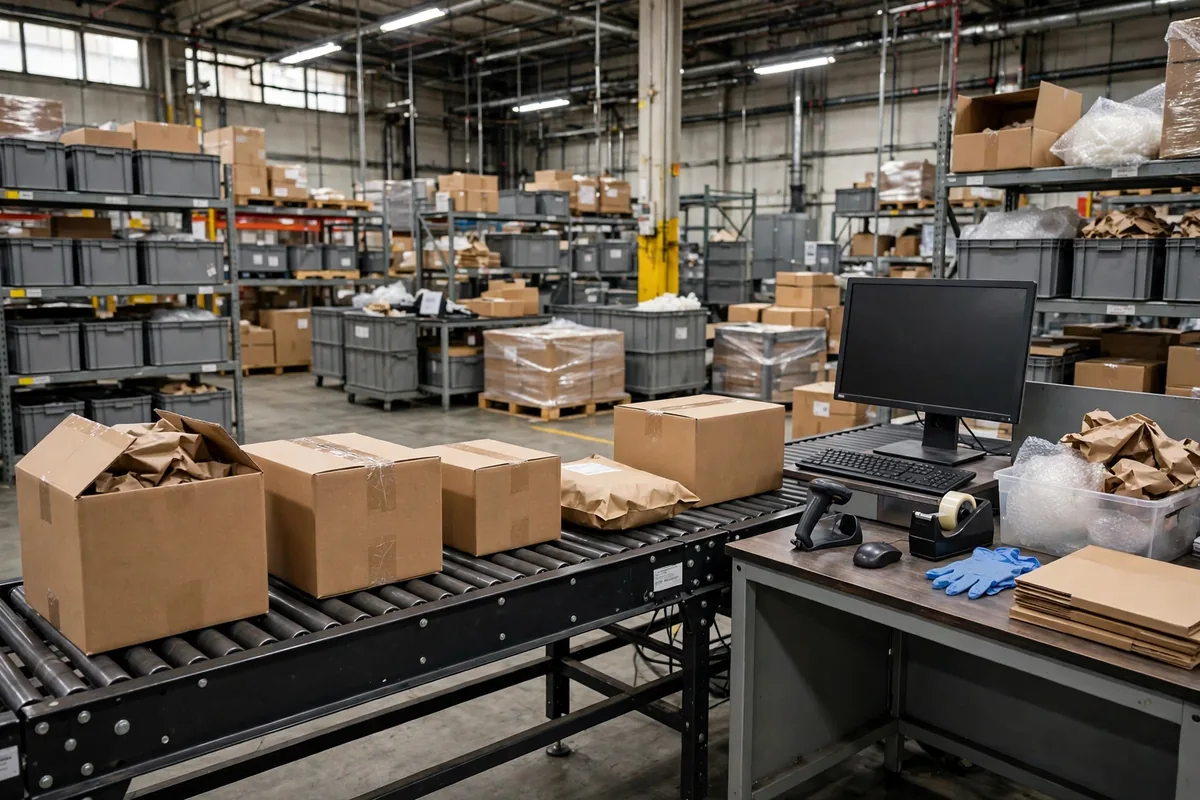
Here is my judgment up front: multichannel fulfillment order batching is not about how many orders you can stuff into one wave. It is about whether you dare to cut waves by cutoff time first. I have seen too many warehouses split waves by channel — one wave for Amazon, one for Shopify, one for Walmart — because it looks tidy on a whiteboard. It is tidy. It is also the least efficient way to run a building, and the cost shows up later as mis-ships and missed SLAs.
Multichannel fulfillment order batching starts with the clock
Picture a typical afternoon. Orders drop from the OMS, a supervisor sorts them by channel, and three teams start picking in parallel. The problem is invisible at first: orders that must leave in ninety minutes are treated exactly like orders that can leave in six hours. The urgent orders wait while a wave fills up. The relaxed orders get picked early, staged early, and sometimes packed wrong because nobody at the pick face is thinking about which promise was made to which customer.
In 2023 I walked a self-operated warehouse in Ontario, California, shipping home goods — roughly 3,000 orders a day as an illustrative figure — across Amazon, a Shopify storefront, and Walmart. They batched strictly by channel. One afternoon the Amazon wave sat for more than forty minutes waiting to reach its target size, and when it finally released, the packing team found Walmart orders mixed into the flow that needed a different carrier label. Nothing was wrong with their people. The wave logic itself had no second check against channel cutoff times, so picking finished before anyone discovered the deadline problem. They had saved steps in picking and paid for it in rework at packing and in marketplace performance warnings. That math never works for long.
The fix is to reverse the order of decisions. First cut by time: anything due to cut off within a short window — ninety minutes is the example window I often start with, tuned to your carrier pickup rhythm — goes into an urgent wave. Everything else goes into regular waves. Inside each wave, you batch by zone and SKU overlap to save travel. Channel does not disappear. It moves down a level, where it belongs: label rules, packaging requirements, and performance tracking. At the pick face, people pick product, not channels.
Where channel differences belong in multichannel order batching
Channel differences are real. Amazon has its own packaging and labeling expectations. A direct-to-consumer storefront may need a thank-you card or branded insert. Walmart watches delivery promises closely. The mistake is pushing all of that upstream into picking. Every channel rule you load onto the picker multiplies training, slows the pick, and creates a new way to make an error.
At that Ontario warehouse, we changed only two things. Wave release started sorting by countdown to cutoff, closest deadline first. And the packing benches were organized by channel, with the put-wall prompt showing the packaging type at the moment of sortation. By their next promotion peak, with no added headcount, on-time dispatch steadied. What was the trade-off? The OMS and WMS had to keep cutoff times in sync, and when a channel moved a cutoff, the warehouse had to update it the same day or the waves were planned against a stale clock. That is the honest price of batching efficiency: master data discipline. There is no version of this that is both efficient and maintenance-free.
Some sellers avoid this problem entirely by handing multi-channel volume to a platform warehouse. That can be a legitimate choice, and we covered the service itself in our complete guide to Amazon MCF multichannel fulfillment. But the moment orders come back into your own building, you need your own batching rules. Borrowing a platform warehouse's logic does not work, because their scale hides mistakes yours cannot.
A second case makes the other failure mode clear. In New Jersey in 2024, a 3PL serving five sellers combined all Shopify orders into one giant wave before peak season because SKU overlap was high. In the second week of peak, it broke. Two sellers sold the same insulated tumbler, differing only in a sleeve sticker. Picking pulled the bare product, and sortation relied on human eyes to separate the stickers. Mis-ships hit double digits in a single day, as an illustrative account of that week. The lesson is plain: identical SKUs do not mean orders can be batched without conditions. Any difference that a human has to resolve downstream — stickers, gifts, custom cards — must either become a system-recognizable inventory unit upstream, or those orders do not belong in the same sortation batch.
Three ways to cut a wave, and what each one costs
| Cutting method | Benefit | Cost | Best fit |
|---|---|---|---|
| By channel | Simple rules, no packing split | Fragmented waves, more travel, cutoff collisions | Mostly single-channel, low volume |
| By cutoff time, channel handled downstream | Urgent orders protected, larger batches | You must maintain cutoff and packaging rules per channel | Multi-channel in-house warehouse (my default) |
| By SKU overlap alone | Fewest picking steps | Highest mis-sort and mis-ship risk | Only when product differences are system-visible |
My decision framework is three questions. First, how far apart are the earliest and latest cutoffs inside this wave? If the spread runs to several hours on your pickup schedule, do not force them together. Second, can the system — not a person squinting — catch the differences between these orders at sortation? If not, split the batch. Third, can your packing area actually separate output by channel? If it cannot, fix packing before you expand batching. Most warehouses try to fix these in the wrong order.
Three details get missed most often. Keep exception orders out of the batch pool: short picks, address problems, and orders held for review will stall an entire wave, so the OMS should fence them off before wave creation. Do not get greedy with wave size — size waves backward from your put-wall slots, not forward from cart capacity, or the first order picked sits waiting for the rest of its wave while its SLA clock runs. And keep a human check on the final wave before cutoff. Carriers pull pickups forward during peak every year; a supervisor glancing at the cutoff list before releasing that last wave has saved more shipments than any algorithm I have seen.
Here is the counterintuitive part I leave with every operator: a higher batching rate is not automatically better. I have watched a warehouse turn batching rate into a KPI, and supervisors merged waves that should never have merged just to hit the number. The mis-ship claims cost more than the labor saved. The goal of batching is lowest total cost, not fewest steps, and those two numbers are often not the same number.
So, one question to close: does your warehouse still cut waves by channel? If it does, do not buy equipment before the next peak. Change this one rule, run it for a week, and let your own dispatch data argue with me.
By Lao Mi, Supply Chain Veteran (20 yrs)