The conclusion first: a stock transfer is not "move goods out of the full warehouse." It is a calculation — transfer cost versus stockout loss versus dead-stock risk — and you do not touch a single carton until that calculation is done. A stock transfer without a decision rule is just spending money to create a new problem somewhere else.
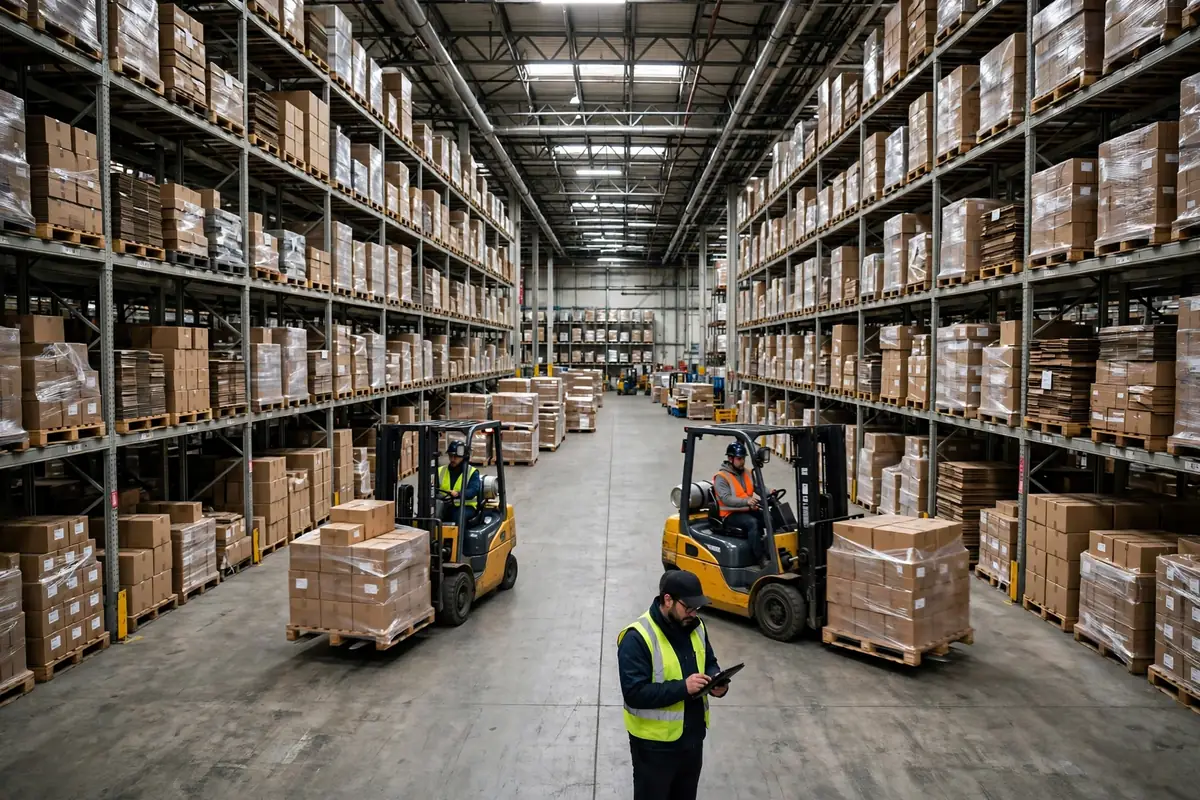
I have seen this mistake three times, and it plays out the same way every time. In 2023, just before Black Friday, a home-goods client had its East Coast warehouse bursting while the West Coast site still had a third of its space free. The warehouse manager decided that same evening to move 20,000 units west. Trucks were booked before anyone asked what exactly was overflowing: the East Coast was choking on large furniture, and the free space out west was small-item racking. The goods physically could not go in. The trucks drove to the dock and drove back, burning several thousand dollars in freight, and on day one of Black Friday the East Coast warehouse was still bursting. The failure was not execution. It was a decision made before anyone asked: transfer what, how much, and into which rack.
Three Questions Before Any Stock Transfer
A transfer decision is really three questions. If you cannot answer all three, do not move anything.
First: will the transferred goods actually sell at the destination? Look at the destination warehouse's sales and open orders over the past 30 days, not national sales. A product can sell well nationally and barely move in one region. In 2024 I worked with a 3C electronics client whose Los Angeles warehouse was out of stock while Dallas held 8,000 units of the same earphones. Nationally the model sold over 10,000 units a month, so a transfer looked obvious. But the Dallas catchment area had sold only 900 units of that model in the previous month. Moving the full quantity would have left Dallas holding eight months of stock. We moved 1,500 units and cleared the rest at origin with a promotion.
Second: what does not transferring actually cost? A stockout is not just "a few missed sales." One day of stockout costs the daily gross margin multiplied by the days out of stock, plus the recovery period after your listing rank drops. That second part is the trap on marketplaces: a week out of stock can push a listing down, and traffic may take two to three weeks to come back after replenishment. If you leave that out of the calculation, you will systematically underestimate the cost of doing nothing.
Third: what does the transfer itself cost? Freight is only the visible line. The hidden lines are outbound and inbound handling at both ends, the capital tied up while stock is in transit, and the labor behind transfer paperwork and system entries. Many teams count freight alone and conclude a transfer "only costs a few hundred dollars," when the true all-in cost is often double the freight bill.
Answer all three and the decision writes itself: if the all-in transfer cost is lower than the stockout loss, and the destination can sell through the quantity within 60 days, transfer. Otherwise, clear the stock at origin with a promotion instead of moving it.
The Step-by-Step Stock Transfer Process
Think of it like a go-live night checklist: break the transfer into steps, each with an owner and a check point, and no truck leaves until every step is ticked.
Step one, lock the transfer list. Work at SKU level: transfer quantity, origin stock, destination 30-day sales, destination on-hand stock. The quantity formula is destination demand for 45 days, minus destination on-hand stock, minus stock already in transit. Never estimate the number by feel. Numbers guessed by feel are always too much or too little.
Step two, confirm physical capacity at the destination. Do not trust the "remaining capacity percentage" in the system. Check the actual slot types: bulky goods need floor positions, small items need racking, temperature-controlled goods need cold storage. Have the destination warehouse supervisor reserve the slots in the system before the truck departs. I have seen this pitfall three times, and every time the truck arrived before anyone discovered the goods had nowhere to go.
Step three, run a system transfer order, never a manual note. The transfer order flows through outbound at origin and inbound at destination, and inventory status moves with it. Move goods on a handwritten note and system stock will diverge from physical stock within a week, leaving you with no clean starting point for a cycle count. Quantities, batches, and expiry dates on the order must match the physical goods, and the earliest-expiry stock moves first.
Step four, arrange transport with buffer built in. Plan three to five days in transit for an interstate transfer, and at least two weeks for a cross-border one. The destination's safety stock must cover the transit time plus two extra days, or the destination will stock out before the truck arrives. Match the mode to the value: full truckload for high-value or urgent goods, LTL for low-value, non-urgent goods. Full truckload costs more but is controllable; LTL is cheaper but the delivery window is a promise, not a guarantee.
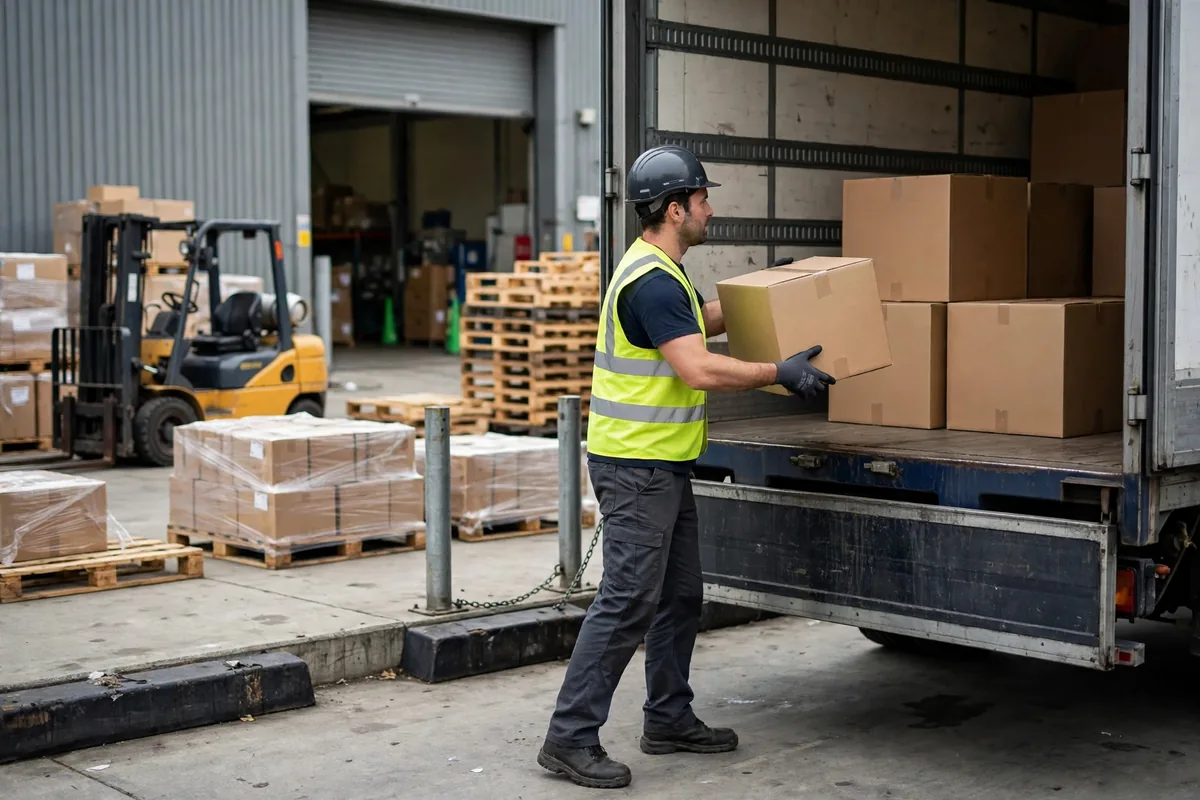
Step five, receive, verify, and handle discrepancies on the spot. The destination checks every line against the transfer order, photographs any quantity gap, damage, or expiry issue, and reports it within 24 hours. A discrepancy that goes into stock unreported becomes a problem buried in inventory, surfacing three months later at the annual count.
| Decision item | Transfer | Do not transfer (clear at origin) |
|---|---|---|
| Direct cost | Freight + handling at both ends | Discount given up in promotion |
| Hidden cost | In-transit capital, system labor | Ranking loss, brand damage |
| When it fits | Destination sells through within 60 days | Destination sells slowly, or goods are slow-moving |
| Main risk | Slot mismatch at destination | Promotion drags down the price anchor |
Three Ways Transfers Go Wrong
The first failure mode is the transfer that merely relocates the problem. A bursting warehouse means the replenishment structure is wrong, not that one building is in the wrong place. If you move stock without fixing the replenishment parameters, the same SKU will burst in the same warehouse next month. Every transfer should trigger a parameter review: lower the safety stock at the overflowing warehouse, raise it at the short one.
The second failure mode is a transfer order disconnected from the physical goods. The classic case: origin ships per the order, destination finds several cartons missing, because origin picked the wrong batch. Transfer outbound must be scan-verified, and even full-carton shipments need spot checks. Without verification, an error is a matter of time, not chance.
The third failure mode is no post-mortem. Every transfer is a sample of forecasting error: why did warehouse A burst while warehouse B sat empty? Was the regional forecast wrong, or was the promotion calendar out of sync? Spend thirty minutes after each transfer writing the answer into next month's replenishment meeting. That half hour is worth more than the transfer itself.
Here is the contrarian judgment: the more often you transfer stock, the worse your inventory allocation is. A healthy overseas warehouse network should need no more than two routine transfers a month, and both should be planned seasonal rebalancing. If your team is running emergency transfers every week, the problem is not warehouse execution. It is the allocation model upstream. A stock transfer is first aid, not a daily routine. Teams that treat it as routine pay at least ten percent more in annual freight than they need to.
One executable standard to take away: before every transfer, fill in a three-line sheet — all-in transfer cost, stockout loss, and destination sell-through days. Fill in the three lines, and the answer to transfer or not will present itself.
By Lin Xiao, WMS Implementation Consultant