Bottom line up front: for Chinese pharma companies exporting to Brazil, ANVISA's pharmaceutical warehouse requirements are not a test of how new your facility is — they are a test of whether your records hold together under audit. Warehouse compliance comes down to three things: an unbroken qualification chain (your Brazilian partner actually holds a CBPDA); system-level evidence for temperature control and batch traceability you can pull up in one click; and quarantine plus record retention — a physical zone plus a system lock. RDC 982/2025, published on July 28, 2025, replaced the old certification model with risk-based classification plus continuous monitoring. In plain language: compliance is no longer "the day you get the certificate," it is "every single day." If any leg is made of paper, your shipment stalls at step one in Brazil.
I implement WMS systems for a living. I've sat through three pharma warehouse audits, and every time the auditor's first question was the same: "pull up the temperature records for this batch over the last three months." If it's in the system, it's there; if it isn't, you can't invent it on the spot. So no regulation recital here — just how the 17 warehouse standards land inside a WMS, item by item.
What ANVISA Actually Requires of a Pharma Warehouse
Three terms, explained once so nothing gets confusing later.
ANVISA is Brazil's national health surveillance agency, overseeing drugs from registration to distribution. For a Chinese pharma company selling into Brazil, the product needs a registro (registration) and the Brazilian importer needs an AFE (operating authorization) — product-side and entity-side gates handled by your Brazilian counsel.
The hard gate on the warehouse side is the CBPDA — the Good Distribution and Storage Practices certificate, issued to companies distributing and storing pharmaceuticals inside Brazil, not to the Chinese manufacturer. Two paths in practice: your Brazilian importer already holds a CBPDA and you hand the goods over, or you build or lease your own warehouse and pursue the certificate yourself. Most take the first path — but that doesn't outsource the risk. ANVISA audits the chain; if your importer's warehouse fails, your goods get held all the same.
Then RDC 982/2025 — published July 28, 2025 (verify against the DOU, Brazil's official gazette). Its core change is one sentence: certification moved from one-size-fits-all issuance to risk-based classification with continuous monitoring. Inspection frequency follows your risk tier, and after certification you keep submitting data and face unannounced inspections. The auditor won't just check whether you "have" temperature monitoring — they'll review a year of curves for gaps and whether every gap went through a deviation process. Paper logs and after-the-fact spreadsheets count as no records at all.
RDC 982's Risk-Based Model: A WMS Landing Checklist for the 17 Warehouse Standards
The annex of RDC 982/2025 lists 17 warehouse-related standards (per the DOU original — auditors don't test memorization either). I've consolidated them into seven implementation modules, each with exactly how to configure it in the WMS. Misconfigure them, and the standards are just posters on the wall.
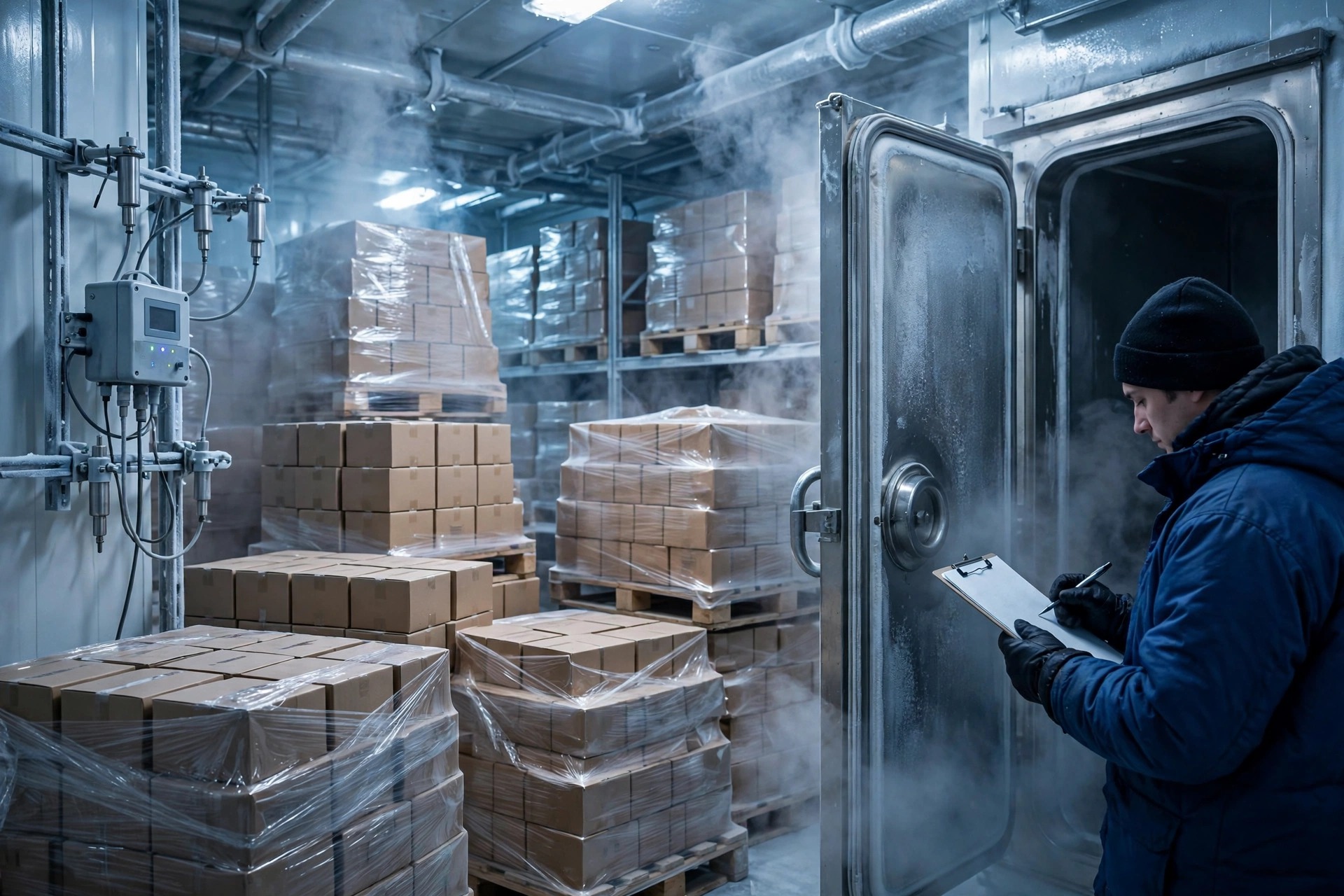
One, temperature and humidity monitoring and mapping. The most heavily scrutinized item. Map the warehouse for temperature, find the hot spots, install probes at the mapping-confirmed points, and stream data in real time into the monitoring system (it can interface with the WMS or stand alone, but at audit time you must retrieve it by batch). Set alarm thresholds per the product label — typically 15–25°C ambient, 2–8°C refrigerated. Every excursion must auto-trigger an alert and auto-open a deviation record. Don't forget: probes need periodic calibration with certificates on file, plus a documented power-outage plan with records of its own.
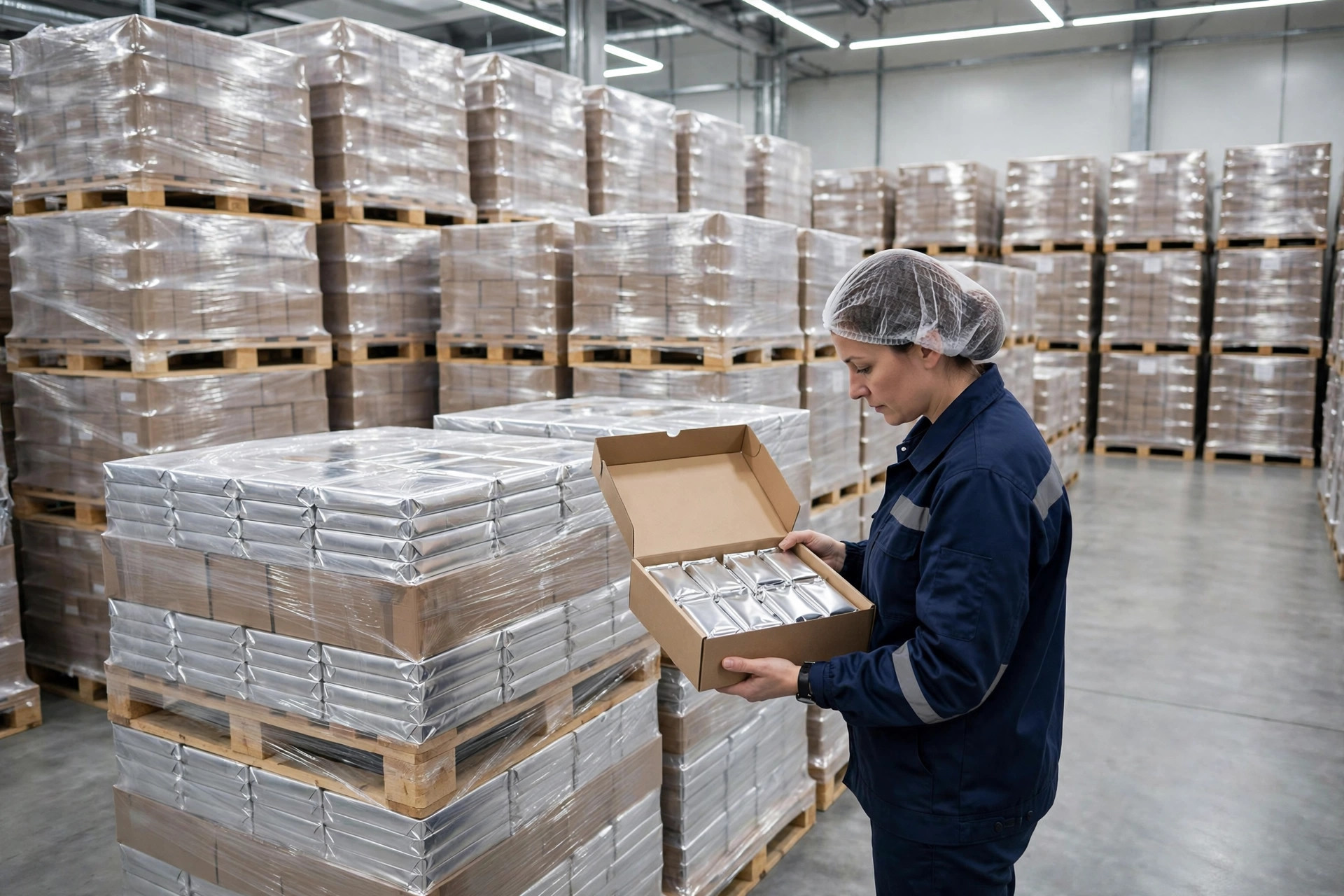
Two, batch and serial-number traceability. Build every receipt around the batch number — expiry, manufacturing batch, supplier batch, all mandatory. Allocate picks by FEFO, and support one-click forward and backward traceability: finished-goods batch back to raw materials, raw-material batch out to every destination. Brazil runs its own drug serialization framework and the granularity will only tighten — build the batch fields in the WMS now, not when the auditor asks.
Three, quarantine for returns and non-conforming goods. Physical quarantine zone plus a system status lock: returns arrive in pending-decision status, and no outbound order can pick them until dispositioned. Too many warehouses have the quarantine sign but not the quarantine behavior. Once the auditor sees that, everything afterward gets viewed skeptically.
Four, record retention. Inbound/outbound records, temperature data, deviations, training — retention follows ANVISA's latest requirements. Electronic records need audit trails (who, when, what changed), plus an off-site backup; the server can sit in China, but you must produce records on demand.
Five, personnel and access control. Key roles (receiving, verification, release) need training records tied to SOP versions; accounts bound to responsibilities; departed employees deactivated promptly. Auditors spot-check this constantly — one random operator, one question about their last training, and silence earns an observation.
Six, deviations and CAPA. Excursions, damage, mis-shipments, expiry anomalies — all through the deviation process: record, root cause, corrective action, preventive action, effectiveness check, closed loop. A deviation that never closed tells the auditor "we found the problem and didn't fix it."
Seven, traceability drills. At least one mock recall a year: draw a random batch, retrieve its full-chain records against the clock, and keep the drill record — the only proof your traceability isn't decorative.
CBPDA Certification: The Evidence Your Warehouse Must Produce
The certificate is the outcome; evidence is the process. Ranked by "will definitely be asked for":
- Complete temperature records for the last 12 months, retrievable by zone and time window, every gap matched to a deviation record;
- A live traceability demo — a randomly drawn batch number, timed;
- Returns and non-conforming goods ledger with clear status flow, physical quarantine matching the system;
- Deviation and CAPA records with closure rate;
- Training matrix: role, SOP version, training date, assessment result;
- Calibration certificates for probes and refrigeration equipment;
- The record of your last traceability drill.
Now the money question. Many owners treat compliance spending as wasted money — here is the comparison:
| Area | Do it upfront (cost) | Fix it after failure (price) |
|---|---|---|
| Automated temperature monitoring | One-time cost priced per monitoring point, plus annual calibration | Audit observation, batch quarantined for re-testing, schedules wrecked, emergency retrofit costs more |
| Batch traceability | Configure fields during WMS go-live — near-zero marginal cost | Failed mock recall, importer qualification questioned, start over with a new partner |
| Quarantine zone | A marked area plus a system status lock — the cheapest item here | Conforming stock suspected of contamination, pallets written off, value evaporates |
| Electronic records | Standard IT spend; audit trails are standard features | Paper logs from filing cabinets, auditor rules the operation "not traceable" |
One sentence of logic: compliance money has a listed price; remediation money is a blank check.
Common Failure Points: I've Seen This Exact Failure Three Times
Failure one: the temperature logger data can't be exported. I've seen this exact failure three times: probes installed, data collected, auditor says "export it" — and the software license has expired, or the export is a proprietary format nobody can open. Data a third party can independently read is evidence; data viewable only inside your own software is just your word.
Failure two: quarantine in name only. The sign is hung, but returns still land in the receiving area with "conforming" status. The auditor asks why a returned pallet sits in the conforming zone, and the room goes silent.
Failure three: traceability breaks at packaging materials. Finished-goods batches tightly controlled, but nobody recorded the packaging supplier or batch change. The auditor follows one thread down and it snaps at packaging — one broken link voids the whole chain.
Failure four: retention periods set by home-country habit. Some companies default to three years; Brazil follows ANVISA's latest position, and one year short still fails.
Failure five: SOPs exist, training records don't. Immaculate binders, then "were the operators trained?" produces nothing. The auditor's line, translated: "An SOP nobody was trained on is the same as no SOP."
One counterintuitive judgment to close: ANVISA never audits how new your warehouse is — it audits whether your records tell a consistent story. I've seen an old facility score highly with every deviation closed-looped, and a brand-new automated warehouse collect observations because the system went live but the processes didn't.
Before kickoff, print this checklist and put it on the wall: confirm the qualification chain (partner's CBPDA status) → temperature mapping and probe calibration → WMS batch fields and FEFO rules → quarantine with physical and system locks → audit trails switched on → deviation process running → one mock recall done. Until these seven are configured, don't book the vessel. In compliance, the wrong order turns every step into rework.
By Lin Xiao, WMS Implementation Consultant