Conclusion first, and it applies to all of Manila Philippines warehouse logistics distribution. One: never pick a warehouse on rent alone. If any one of three things jams — pulling the box out of the port, moving through city traffic, or returning the empty container — the rent you saved turns into detention fees and lost sales. Two: for cargo entering Manila in the second half of 2026, plan on three extra buffer days for pickup. The vessel arrival date is not the available-to-sell date. Three: split your stock in two layers — a small forward point in the city and a buffer warehouse to the south — instead of betting everything on one site.
I have seen this exact failure three times, always the same script. A client picks a cheap warehouse "within 30 kilometers of the port," using the logic that works back home. The system goes live, and only then does everyone discover that distance in Manila is not measured in kilometers. It is measured in hours — and in whether trucks can even enter the port area today.
The Port Bill: Start Manila Philippines Warehouse Logistics Distribution at Pickup
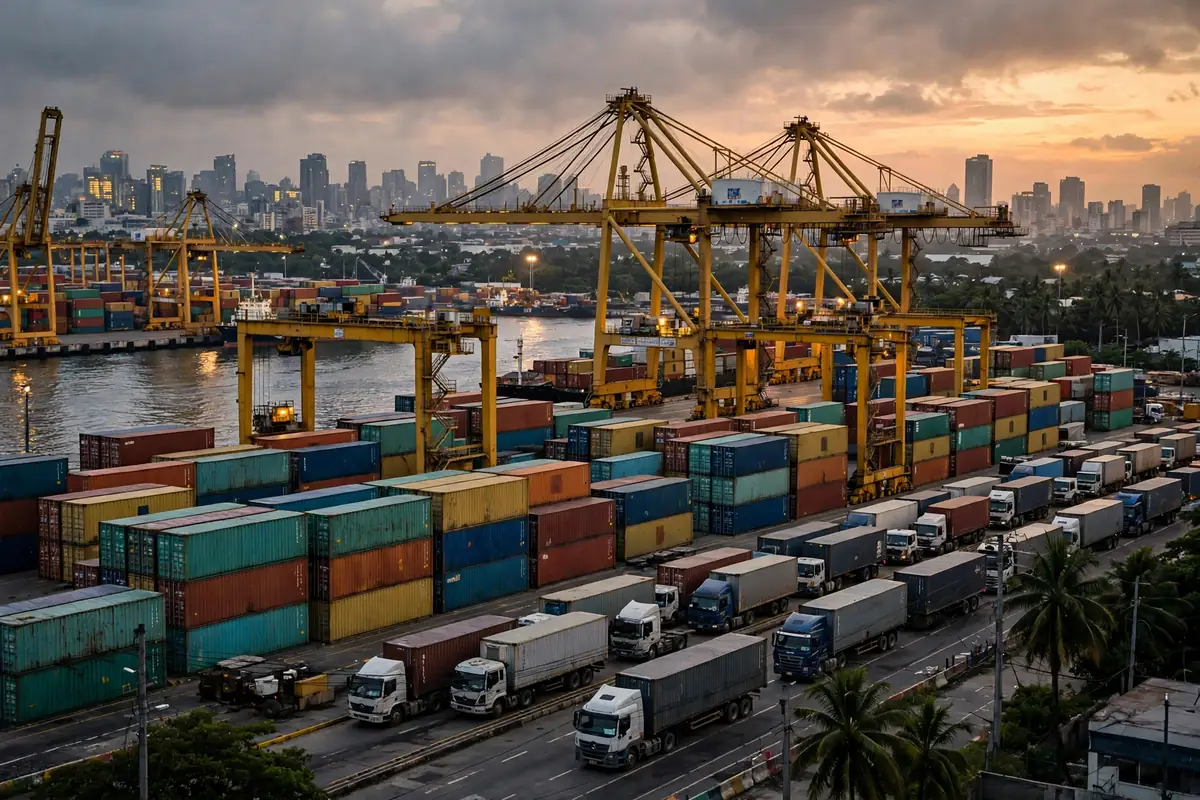
Manila has two main container terminals: the Manila International Container Terminal at North Harbor and the South Harbor terminal, run by different operators. In October 2026, import boxes sat in port for 8 days on average, while the Philippine Bureau of Customs regards 5 to 6 days as the desirable dwell time. Between January 1 and October 18, 2026, the Manila International Container Terminal alone handled about 1.36 million TEU of imports. Behind those numbers is a chain reaction over empty containers: terminals and yards fill up with boxes waiting to be processed, trucks queue to pick up imports, and once they have picked up, they cannot find anywhere to return the empties.
In early October 2026, customs brokers and truckers staged a work stoppage over empty-container returns, detention fee disputes, and fuel costs. Hapag-Lloyd then suspended acceptance of new bookings to Manila, Batangas, and Subic Bay, with the suspension running through December 31, 2026. On November 3, 2026, the Philippine Chamber of Commerce and Industry said stakeholders had committed to move 1,000 ageing containers out of Manila's port facilities within two weeks, and to reposition some empties to Subic and Batangas for collection by sweeper vessels. The Bureau of Customs also extended examination hours at Manila and other congested ports from the usual 8 a.m.–5 p.m. window until midnight, in a memorandum dated October 30, 2026. All of these moves point to the same reality: the port is not "the vessel arrives, you pick up." It is queues, inspection windows, and return slots.
Take an illustrative example. A Shenzhen consumer-electronics seller shipped four containers to Manila in September 2026, planning to have stock on shelves by mid-October for the local year-end shopping season (illustrative scenario, not a real company). The vessel berthed on schedule, but pickup took five days in queue, one box was selected for examination, and returning the empties took three more days. The goods reached the shelves nine days late, and the first wave of the promotion was effectively missed. Nothing in that chain was a surprise — every delay had a warning in public reporting at the time. The failure was in planning: the schedule listed the vessel date but gave the port no buffer.
The Traffic Bill: Plan City Deliveries Around Windows, Not Distance
The truck ban is the first rule to check when planning distribution in Manila. Under the Metropolitan Manila Development Authority's rules, cargo trucks above 4,500 kilograms gross vehicle weight face restricted hours on EDSA and other major roads, with the permitted window generally running from 10:00 p.m. to 5:00 a.m. daily — always confirm against the latest official notice. Anyone who has run deliveries in Manila knows this rule decides when your trucks can leave and when they can return.
The Japan International Cooperation Agency estimated as far back as 2017 that congestion in Metro Manila cost about ₱3.5 billion per day, and warned it could reach ₱5.4 billion per day by 2035 without effective intervention. Local trade press in May 2026 put it more bluntly: a truck that used to complete three or four container moves a day now struggles to complete two. Fewer trips per truck means more trucks and more drivers for the same volume, and the cost per trip climbs directly.
So plan the schedule backwards. Step one: fix the pickup window first, and write inspection and empty-return waiting time into the plan itself, not into a footnote. Step two: run city deliveries on the night window, and keep daytime for in-warehouse work and picking. Step three: give every order a fallback for pickup delays — wait, change port, or ship partial stock first. Step four: make empty returns a standalone task assigned to a driver and a dispatcher, not an afterthought to pickup. I have seen this pitfall three times, and every time nobody was watching returns until the detention invoice arrived.
Three Warehouse Options: How to Choose
| Option | Location logic | Advantage | Risk |
|---|---|---|---|
| Near-port city warehouse | Around the Manila port area | Fast pickup, close to city deliveries | High rent, truck access restricted, congestion eats your service level directly |
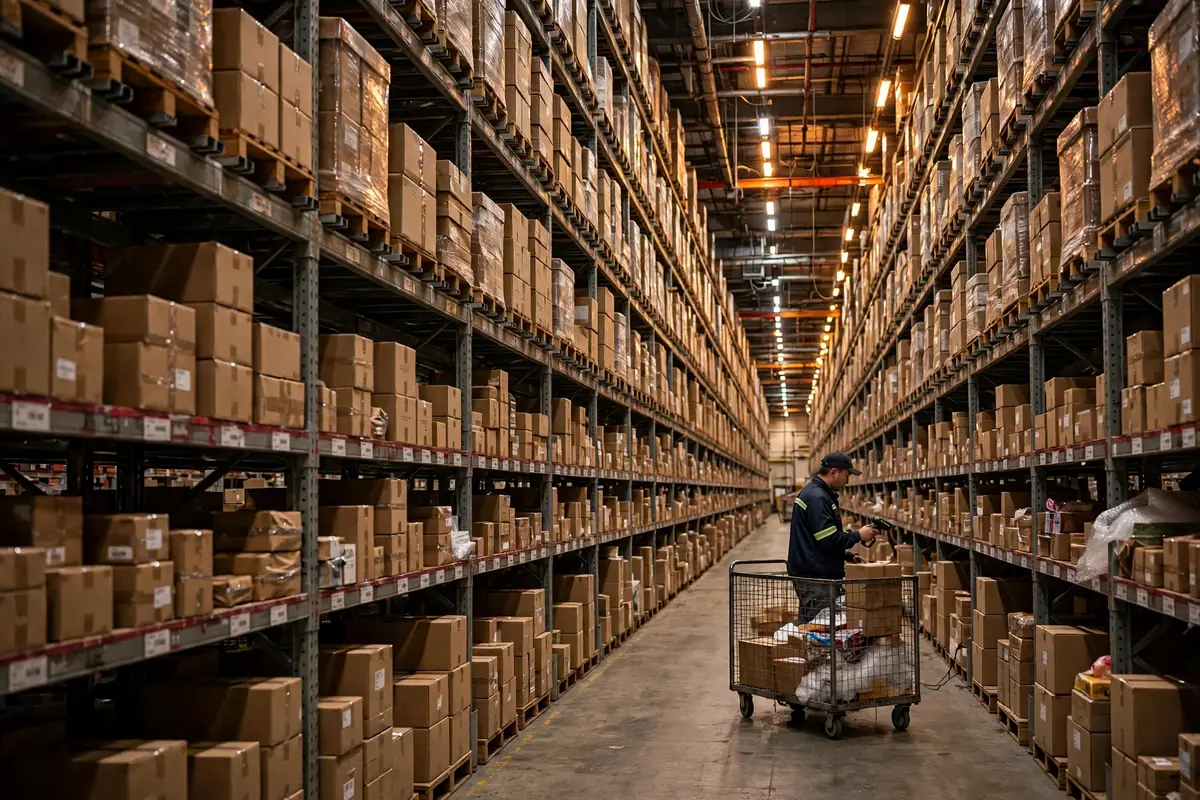
| Southern buffer warehouse | Cavite–Laguna corridor | Lower rent, close to southern markets, avoids city congestion | Extra inland leg from the port, still congested in peak season |
| Diverted-port warehouse | Subic–Batangas direction | Less port pressure, can take diverted cargo | Clearance and inland connections must be rebuilt, uneconomic at low volume |
There is no standard answer — only a decision framework. First, which port does your cargo enter through? Second, where are your customers concentrated? Third, how much delay can your orders tolerate? Answer all three, and the option picks itself. The counterintuitive point is this: in Manila, the warehouse closest to the port is not necessarily the fastest. When the port area itself is queuing, the near-port truck queues too, while the southern warehouse can at least finish picking and packing outside the port and move the moment a window opens.
Another illustrative example. A Guangzhou freight forwarder priced two routes for a home-goods client (illustrative estimate): the near-port city warehouse came out about 8% cheaper per container, but peak-season on-time performance had to be discounted by roughly 30% based on historical volatility. The two-layer structure — a southern buffer warehouse plus a small city forward point — cost about 8% more per container but kept shelf-ready dates controllable. The client chose the two-layer structure, for a very practical reason: the promotion revenue lost to a nine-day delay was worth far more than an 8% cost difference. In Manila, cost the lost sale first, then the rent saved.
Go-Live Night Checklist: Eight Items Before You Enter Manila
- Confirm booking status for Manila, Batangas, and Subic Bay with the carrier's latest advisory on its official site.
- Confirm whether pickup is at North Harbor or South Harbor, and re-check the examination window and empty-return slots on the day.
- Verify truck-ban windows and exemptions against the latest official notice — never use last year's screenshot as your source.
- Put at least three buffer days for pickup in the schedule, plus two more for any box selected for examination.
- Assign a named person to empty returns, and put the detention start date into system alerts.
- Schedule city deliveries inside the 10:00 p.m.–5:00 a.m. night window; no heavy trucks out during the day.
- Split stock in two layers: fast movers only at the city forward point, buffer stock at the southern warehouse.
- Write the escalation into the system: alert automatically if pickup slips more than two days, start a port-change assessment after four.
One last reminder: Manila is workable, but not with the playbook of "port plus highway plus warehouse" that works back home. The variables here are port queues, city truck bans, and empty-return capacity. If any one of them slips, the whole chain slows down. Get monitoring and alerts for those three variables wired into your system before go-live, and where the warehouse sits and how the freight splits become the easy questions that follow.
By Lin Xiao, WMS Implementation Consultant