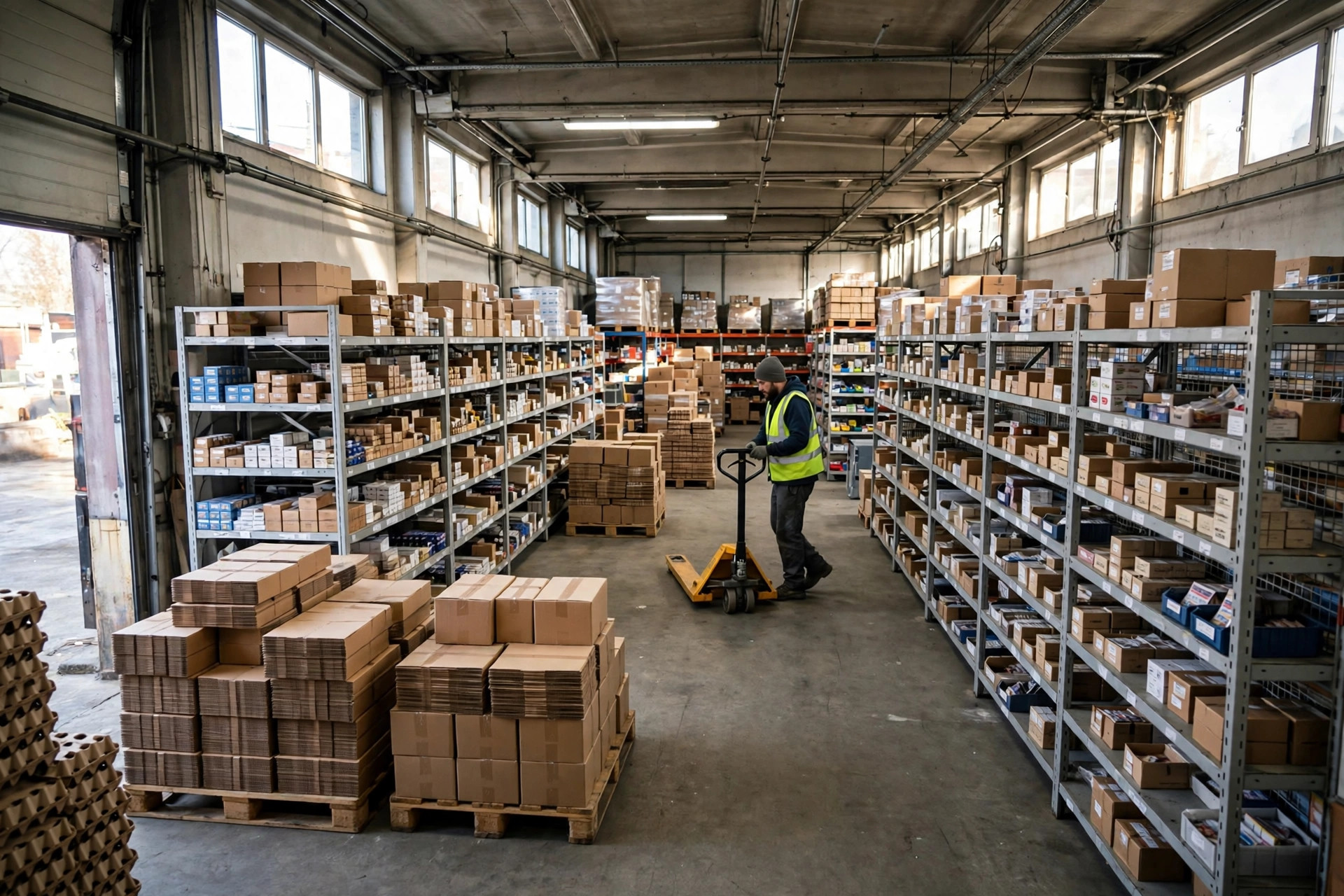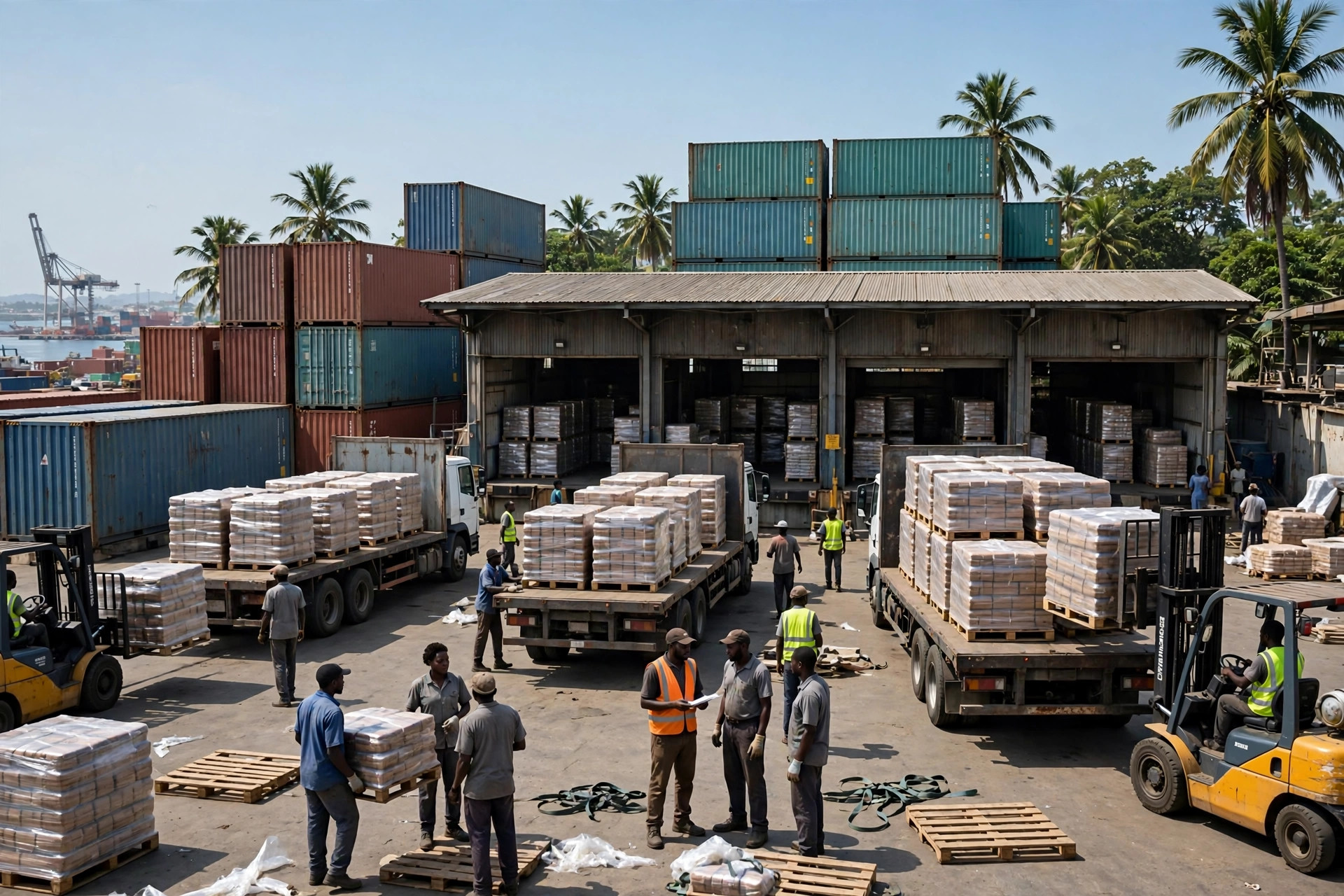
Let me be honest first: I run a 3,000-square-metre small warehouse, so writing about the Lome warehouse market in a West African port city is a bit like a minnow writing a guide to the ocean. We small warehouses cannot afford to burn that kind of money. Renting a big building in Lome and gambling on it? I would not even dream of it. But precisely because I run a small warehouse, I look at site selection differently from a big company. A big company starts with strategy. I start with one question: can a warehouse like mine survive here without one bad shipment dragging the whole business down?
What draws me to Lome is really one thing: it is Togo's seaport, and also the gateway for cargo heading inland. Goods arrive by sea at Lome, then move on toward landlocked markets like Burkina Faso, Niger and Mali. Lome is the door they all have to pass through. A door is valuable real estate, but a warehouse at the door is not a business just anyone can run.
Our small-warehouse predicament gets magnified in Lome. First, money: a big warehouse can sit half-empty for months, while one empty month makes a small operator sweat. Second, people: we have only a handful of staff, and loading, paperwork and chasing trucks all fall on the same few shoulders, so complicated processes fall apart fast. Third, tolerance for mistakes: when a big company has a shipment problem, it switches supplier and carries on; when a small warehouse has a shipment stuck at the port, the whole month's cash flow shakes with it. So my rule for Lome is simple: keep the warehouse as small as possible, keep the steps as few as possible, and refuse any step we do not have to touch.
Three roads in the Lome warehouse market, and a small warehouse can only take one and a half
The first road is the warehouse right by the port, closest to the berth, where cargo can roll off the vessel and straight into storage. It sounds like the best deal, and for a small warehouse it is the most dangerous. Why? Because a port warehouse runs on the vessel's schedule and on customs clearance. When vessels arrive in a bunch, the gate queues up; when one document is missing, the cargo sits in the warehouse waiting. A small warehouse does not have spare staff to run to the port every day chasing paperwork, nor spare cash to sit and wait. Being close to the vessel is nice, but vessel schedule swings are something a small operator cannot absorb.
The second road is the suburban and corridor warehouse, a distance from the port but close to the highway out of town. This is the road for inland distribution: cargo clears customs, enters the warehouse, gets deconsolidated, sorted and consolidated onto trucks, then heads inland. For a small warehouse, this road is far friendlier. The rhythm is one you control: how many containers arrive today and how many trucks leave tomorrow are set by your orders, not by a vessel timetable. Suburban warehouses also tend to offer more flexible leases, with small areas available to start, so you do not have to swallow a whole building on day one.
The third road is the inland transfer point, which strictly speaking is no longer a Lome warehouse at all, but a relay point further inland. For a small warehouse, taking this on means stretching the business further than its staff and money can reach. My advice is: do not touch it yet. Once you are standing steady in Lome, then think about whether to step forward.
So in Lome, a small warehouse really has one and a half roads: the suburban corridor warehouse is the main road, and the port warehouse is only for light cooperation — sharing space, or using someone else's port warehouse for a brief transfer, never renting one alone. One and a half roads sounds modest, but surviving beats looking big.
How a small warehouse counts the cost in Lome: not rent, but survival per shipment
Big companies compare rent per square metre. Small warehouses need a different calculation. My rough-and-ready method is to take one typical shipment, from arrival at the port to dispatch inland, draw every step it has to pass, and ask three questions about each step: does it need my people to go and chase it, does it need me to put money up front, and if it gets stuck, is there a backup?
The table below is the comparison I drew for myself. Treat any specific rates, tariffs and market figures as subject to the latest local policy and on-the-ground quotes — the table ranks relative highs and lows only, and invents no numbers:
| Location direction | Fits a small warehouse? | Biggest advantage | Biggest risk | The small-warehouse way to run it |
|---|---|---|---|---|
| Beside the port | Not for renting alone | Closest to the vessel | Vessel and paperwork swings land directly on you | Share space only, brief transfer only, no standalone lease |
| Suburban corridor warehouse | Best fit | You set the rhythm, flexible lease | One extra trucking leg from the port | Deconsolidate, sort, consolidate trucks, serve small inland orders |
| Inland transfer point | Not yet | Closest to the end customer | Stretches staff and money too far | Consider it only after Lome is stable |
An example makes this concrete. Suppose one container of daily consumer goods has to go to two inland customers. The port warehouse route looks cheaper because the cargo enters storage the moment it lands, saving a trucking leg. But if customs clearance stalls, the labour and waiting inside that warehouse are your cost. The suburban route adds a truck leg after clearance, yet the moment the cargo enters the warehouse it can be broken down, sorted and loaded, and both customers' goods can share a truck the same day. Here is the counterintuitive part: being further from the port can mean shipping faster, because your rhythm is no longer dragged around by vessel schedules. For a small warehouse, a rhythm you control is worth more than a location that merely looks close.
A second example is about cargo choice. The cargo that suits a small warehouse in Lome is standardised and needs no complicated processing: daily goods, food products, building materials, simple consumer goods — in, deconsolidate, sort, consolidate, out. Whatever you do, do not start by taking on cargo that needs labelling, assembly and a full inspection routine. In a big warehouse those are routine; in a small warehouse they are overtime and mistakes. The small-warehouse way is to do one thing steadily, not to take on ten things at once.
The traps in Lome a small warehouse should walk around first
The first trap is treating a port warehouse as a badge of status. Renting beside the port sounds impressive, but prestige does not pay cash flow. A small warehouse's reputation is built on shipping on time, not losing cargo, and not sitting on stock.
The second trap is signing too big a contract. Cargo volume in Lome is seasonal, and inland demand is not the same every month. Before you sign, settle the flexibility questions: can the area expand, can the term stay short, can extra hands be added temporarily in peak season? Settling those matters more than haggling over the rent rate.
The third trap is ignoring paperwork and customs clearance. In Lome, the place cargo most often gets stuck is not inside the warehouse but in the documents: clearance files, inland transit formalities, and the differing requirements of each destination. Sort these out in advance, and work with reliable local clearance and transport partners rather than carrying it all yourself. The small warehouse's rough-and-ready rule is: let local specialists handle the specialist parts, and keep your own hands on the warehouse stretch only, doing that stretch well.
The fourth trap is staffing. A Lome warehouse needs people for loading, sorting and truck follow-up, and a small warehouse cannot hire like a big one. So make the process simple: fixed zones for goods, one standard document format, fixed daily dispatch times. The simpler the process, the faster a new hire gets up to speed, and the less peak-season temp hiring panics you.
So in the end, Lome is not off-limits for a small warehouse — it just cannot be played the big-warehouse way. Big warehouses bet on scale; small ones bet on flexibility and survival. Look at the port, but do not rent there; make the suburban corridor home; pick simple cargo; sign flexibly; let local partners handle paperwork. Hold those lines, and a small warehouse can live in Lome — and keep living there.
By Xiao Ma, Small Warehouse Owner