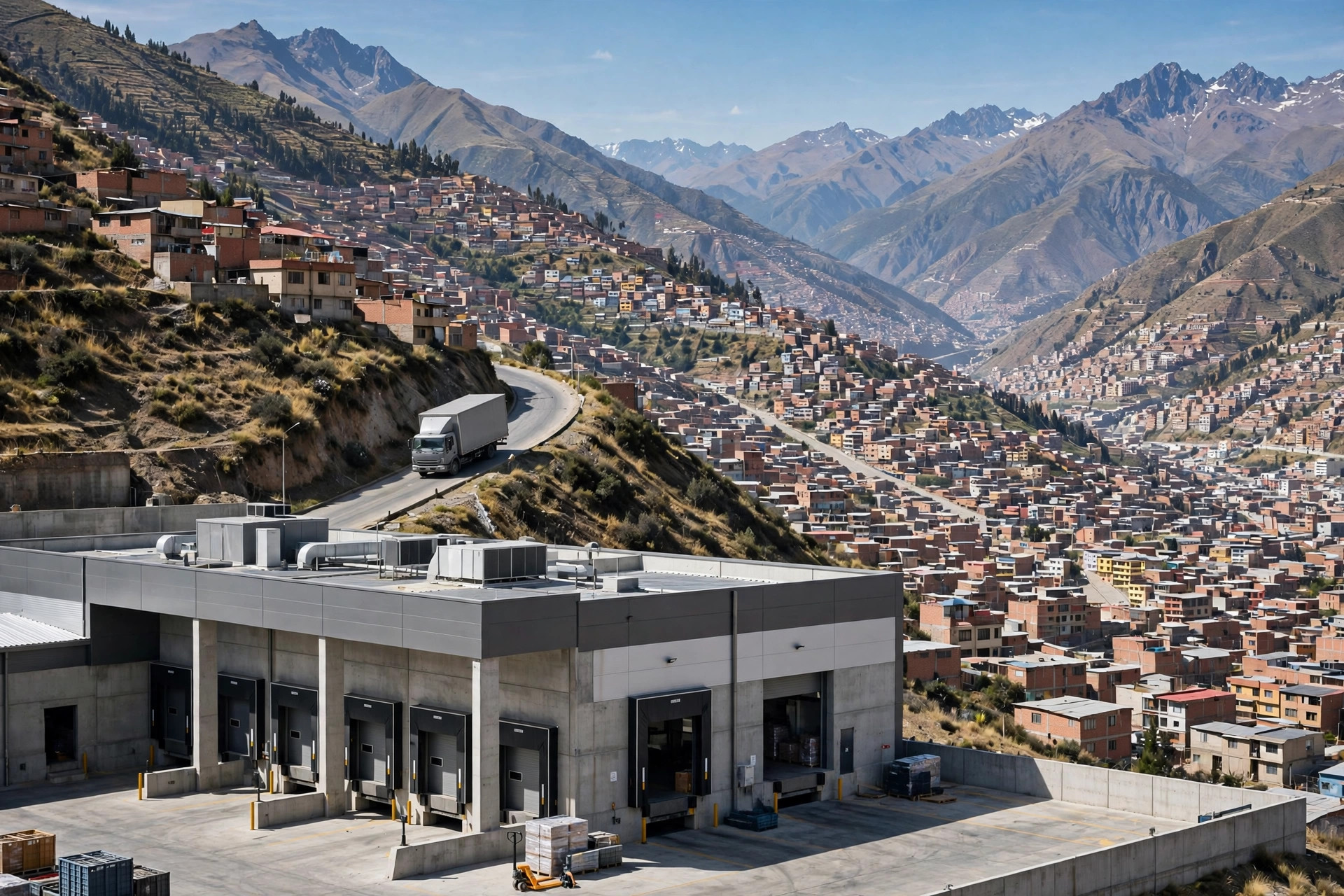
Start with one bill: one 8-ton truck delivering everyday goods from a suburban warehouse to 12 stores in La Paz. On paper, the freight for that run might look only about 20% higher than the same run in a flat city. Add the extra fuel burned on continuous climbs, the acclimatization period for drivers and loaders, and the empty return leg down the slope, and the cost per order can run more than 40% higher. If that bill is not worked out before signing a lease, the monthly accounts will work it out later, and they will be less forgiving. In the La Paz warehouse market, the starting point is not finding a cheap building. It is accepting that a city at roughly 3,600 meters reprices every kilometer and every labor hour.
The La Paz warehouse market starts with one ledger
I split warehouse costs into four blocks: rent and site, inbound freight into the city, urban distribution, and labor plus loss. In a flat city, rent is usually the largest block, and negotiating it down wins half the battle. Here, the order reverses. Urban distribution and labor loss often eat whatever rent saving a suburban site appears to offer. In 2024 I costed a job for a consumer-goods distributor that had found a 1,200-square-meter suburban site whose rent looked about 30% cheaper. I will not quote that rent as a market rate; local terms change, and current terms should be checked against the latest official sources. What changed the calculation was distribution. The daily route from that warehouse to the central shopping area included a long, continuous climb. A truck went up loaded and came back down empty, fuel use and brake and tire wear ran higher than on flat ground, and a driver completed one fewer round trip per day. Over a month, distribution cost absorbed most of the rent advantage, and what remained did not cover one major vehicle repair.
A second job makes the point more sharply. In early 2025, a small-appliance seller wanted stock held in an older warehouse at the city edge, close to its stores. It priced distance and ignored gradient. Access to that site ran through a narrow, steep side road that large trucks could not use, so goods had to be transferred to small vehicles. That added one extra handling step, one extra damage risk, and, in peak season, a queue of small vehicles waiting to load. When two stores ran out of stock, the replenishment vehicle spent half a day stuck on the slope. That job did not lose money on rent. It lost money on transfer handling and stockouts. Being close to customers does not mean delivery is cheap. Gradient, road width, and vehicle fit decide the real distribution cost.
Climbing, thin air, and distribution: three hard costs in the La Paz warehouse market
Climbing cost is best measured in trips, not kilometers, and in the La Paz warehouse market trip count is the unit that matters. A route where a driver completes six trips a day on flat ground may allow only four trips here, and each trip burns more fuel. Vehicle choice has to change with the route. A low-powered truck that is adequate on flat ground struggles to pull away fully loaded on a continuous climb, and clutch and brake wear accelerates. My working method is to spread depreciation and repair cost per trip rather than per month, so a climbing route cannot hide its true cost. If a vehicle goes from one repair visit a month to two, the cost allocated to each order rises at once. That figure belongs in the model before the lease is signed, not after the repair invoice arrives.
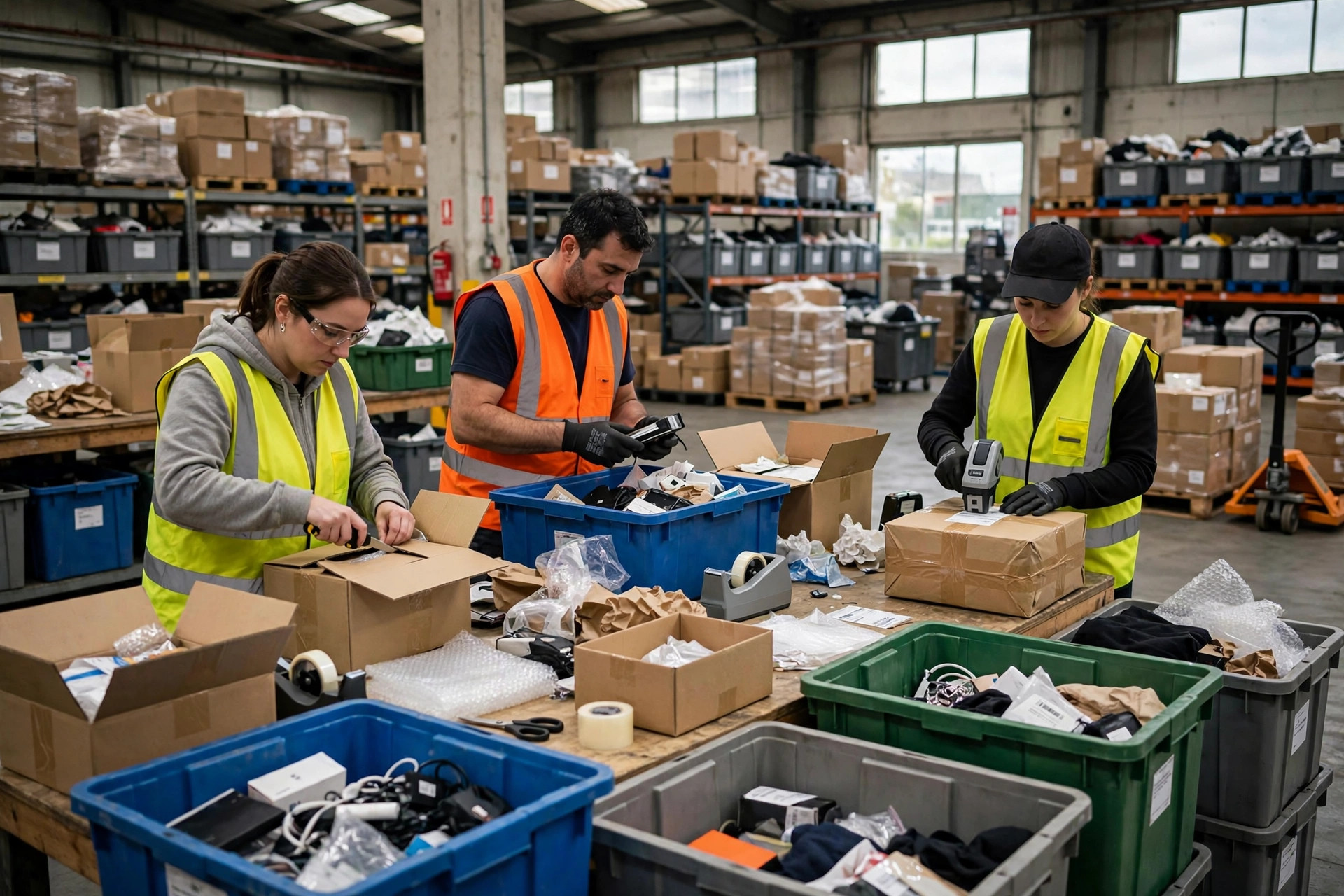
Thin air is the second hard cost, and it is the easiest to underestimate. Workers and drivers newly arrived at altitude work noticeably slower for the first two weeks, heavy manual work needs rotation, and night shifts need extra care. That is a question of acclimatization, not attitude. The practical response is to write the adaptation period into the roster: new staff take light work and day shifts for the first two weeks, experienced staff work alongside them, and piece rates during that period are set separately. Pressing new staff to meet a flat-city quota from day one raises turnover, and recruitment and training cost then eats the efficiency gain. The consumer-goods distributor I mentioned adjusted its roster in 2024 and saw monthly labor cost fall by roughly 10% under its own internal calculation, compared with pressing the quota. Treat that as a reference from one job, not as an industry statistic.
The third variable is the return leg. Stores sit up the slope and warehouses often sit lower down or on suburban flat ground, so a truck that has delivered its load frequently returns empty. There are only two real answers: find a city-side consolidation point for pooled loads and return freight, or move the warehouse closer to demand so that both distance and climbing length fall together. The first costs coordination effort, the second costs rent, and the choice depends on order density. With low order density, coordination cost spreads thinly and empty running may be the cheaper evil. With high order density, a small city-side distribution point can pay for its higher rent through trips saved.
| Option | Rent tendency | Trips per day | Transfers | Best fit |
|---|---|---|---|---|
| Large suburban warehouse, direct truck delivery | Lower | Fewer, higher cost per trip | 0 | Concentrated orders, large orders |
| Suburban warehouse plus city-side distribution point | Medium | More, lower cost per trip | 1 | Dispersed orders, many stores |
| Small city-edge warehouse | Higher | More, large trucks restricted | 1 | Very dense orders, time-sensitive |
Suburban warehouse or city-edge stock: a calculable trade-off
Read against the La Paz warehouse market, the table is not a menu for picking the cheapest row. It forces the trade-off into numbers. My decision framework uses only three inputs: average orders per month, average weight per order, and the length of the climbing section serving the store cluster. Feed those three figures into each option and calculate monthly total cost: rent plus distribution freight plus transfer cost plus labor cost plus vehicle repair allocated per trip. Choose the option with the lowest monthly total. Do not decide on rent per square meter alone. The counterintuitive judgment here is worth stating plainly: many people assume thin air is the main enemy of operating in a high-altitude city. On the ledger, the more expensive problem is usually the loss of trips caused by climbing and empty returns. Acclimatization affects the first two weeks. Climbing affects every day and every trip. Mixing a one-off adaptation cost with a daily route cost in the same line produces a misleading answer.
Inventory structure is the trade-off most often missed. Once climbing and weather lengthen the replenishment cycle, safety stock has to thicken. Thicker safety stock ties up cash, and cash is not free. My approach splits products into two tiers. Fast-moving products where a stockout is expensive get more cover and sit at the distribution point closer to stores. Slow-moving, bulky products stay at the large suburban warehouse and accept a longer replenishment time. Each side gives something up, and the combined total usually looks better than either extreme. Tax, fee, and clearance terms change often; specific rates should be checked against the latest official sources rather than carried forward from a deal negotiated in an earlier year.
The closing calculation: is this warehouse worth it?
The closing test is one calculation, not a slogan. Before committing, run one month on your real orders: monthly total cost equals rent plus distribution freight plus transfer cost plus labor cost plus vehicle repair allocated per trip, divided by monthly orders, giving fulfillment cost per order. Compare that figure with the per-order cost of shipping from outside the city today. In the La Paz warehouse market, a local warehouse is worth setting up only when its per-order cost is lower than shipping from outside, and when the gap covers more than three months of adaptation and bedding-in loss. If the gap covers only one month, or if the calculation has not yet counted the lost trips on climbing routes, rent a smaller space on a shorter term and trial one distribution point for a season. Let the trip count and the per-order cost decide. A warehouse that looks cheap on rent and expensive on every trip is not a bargain.
By Lao Zhou, Logistics Cost Analyst