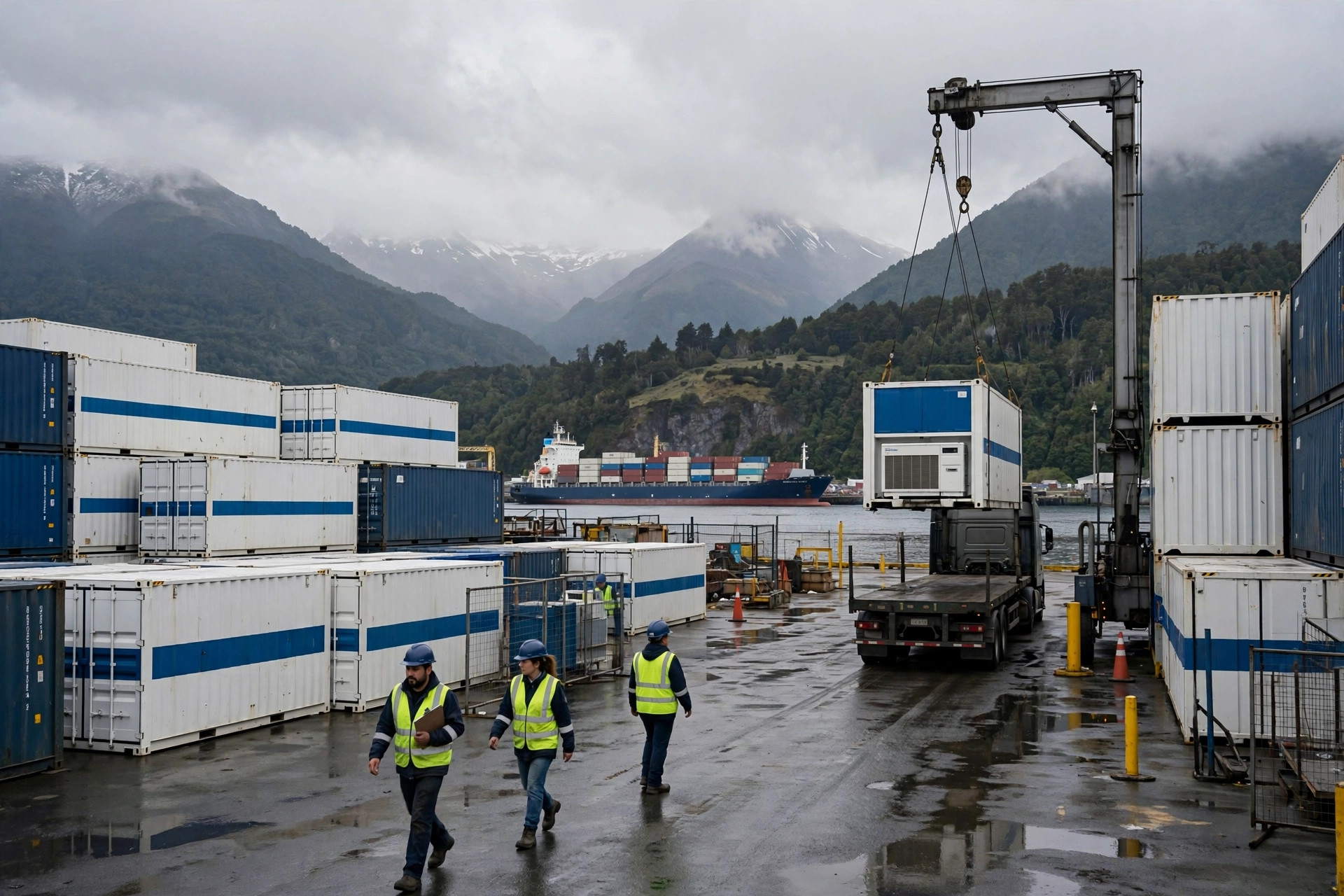
We have a client — the export manager of a salmon processing plant in Puerto Montt, Chile. Call him Yang. Last September, peak season, he called me with a shaking voice: "Susan, one of my reefer containers of frozen salmon sat at the port of San Vicente for three days. Plugged in the whole time, but the buyer's temperature logger shows it spiked to -12°C in the middle. They're holding the cargo. Who eats the cost of those three days?"
Few people search "chile salmon export cold chain logistics" — but everyone who does is about to spend money. This is the full accounting of that chain, from plant to vessel: sea, air, or rail, and how to choose without getting burned.
Two baseline numbers. Chile is the world's second-largest salmon exporter, behind Norway. According to SalmonChile, 2024 exports were worth about US$6.37 billion — the country's second-largest export after copper (I only trust the value figure; published tonnage gets revised every year). In 2025, Biobío's ports alone handled 52% of Chile's salmon exports, roughly 445,000 tonnes. One out of every two Chilean salmon in the world leaves through San Vicente, Coronel, Lirquén or Penco.
Where a salmon export cold chain container gets stuck
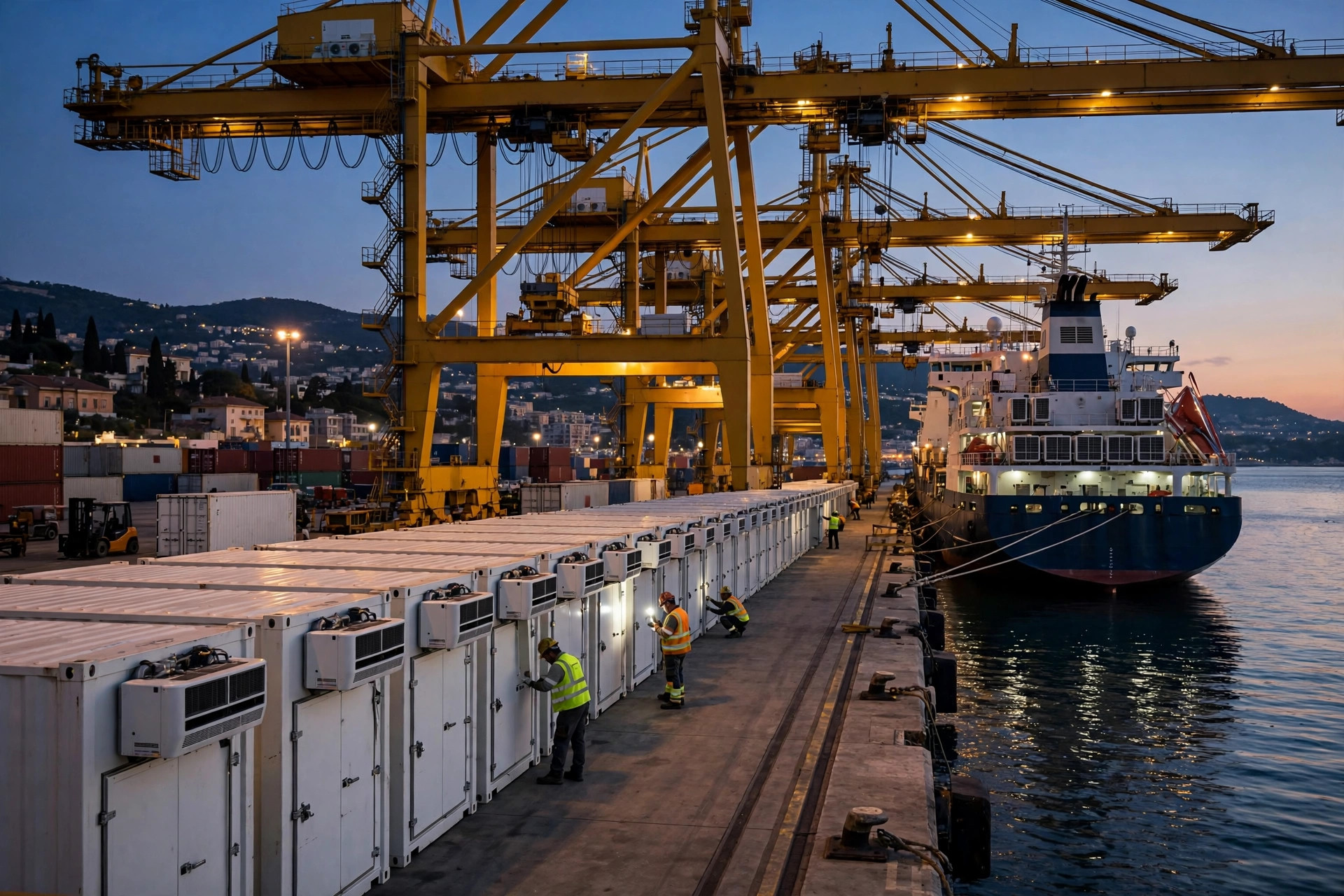
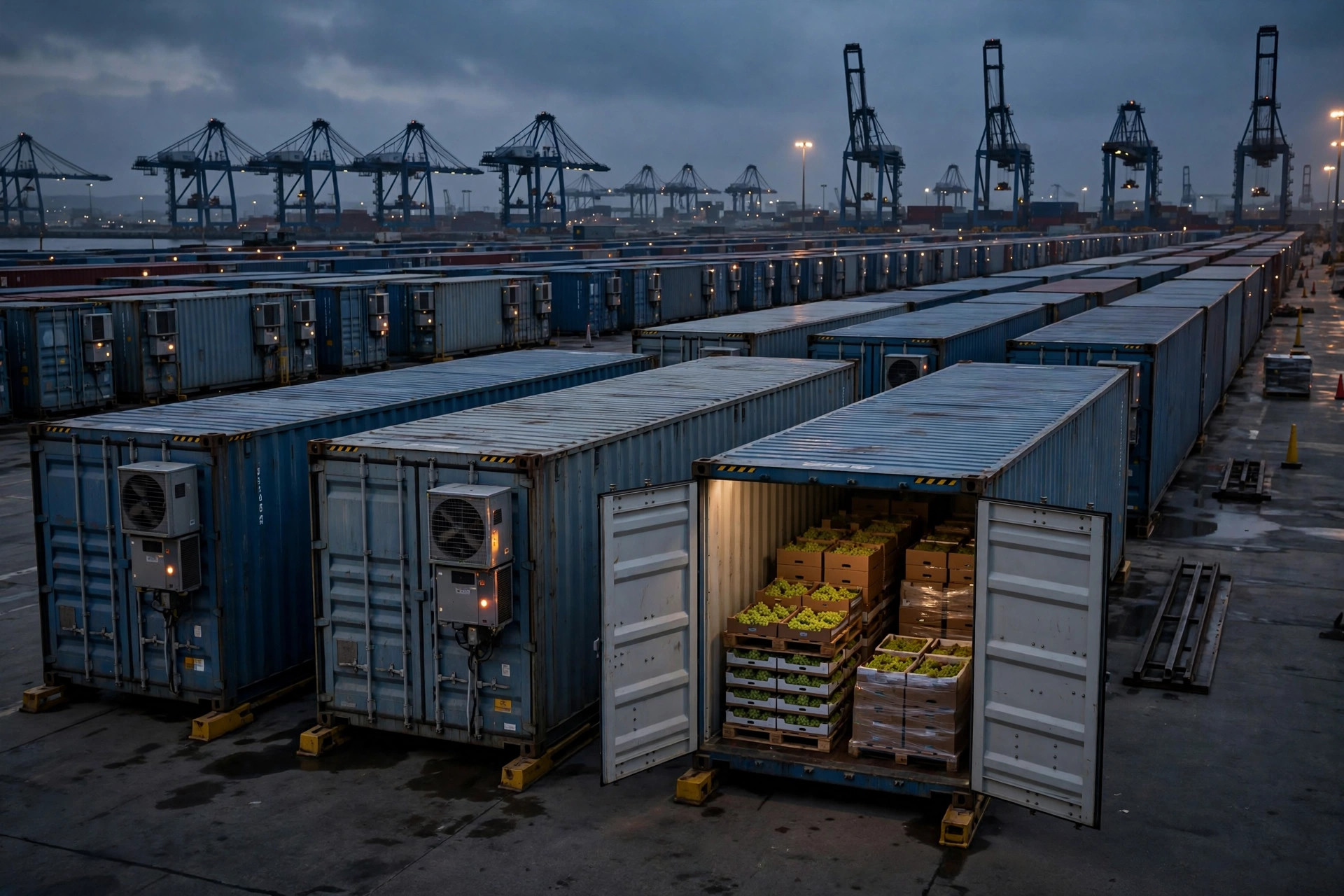
The flow: the plant blast-freezes at -25°C and stores the fish; two days before shipment, trucks haul it to the reefer yard, load it into a 40-foot reefer set at -18°C, and keep it plugged in; then the box either sails directly or gets trucked 1,000 kilometers north to a Biobío port — because Biobío is where the mainline vessels call, and more than half the volume goes that way.
The trouble sits in that transshipment leg. In peak season, Biobío's reefer plug capacity runs short and boxes queue for power; the roads outside the port jam; the plant's own cold store can't turn over, so boxes get pulled out three days early and sit in the yard — plugged in, but who guarantees the power never blinks?
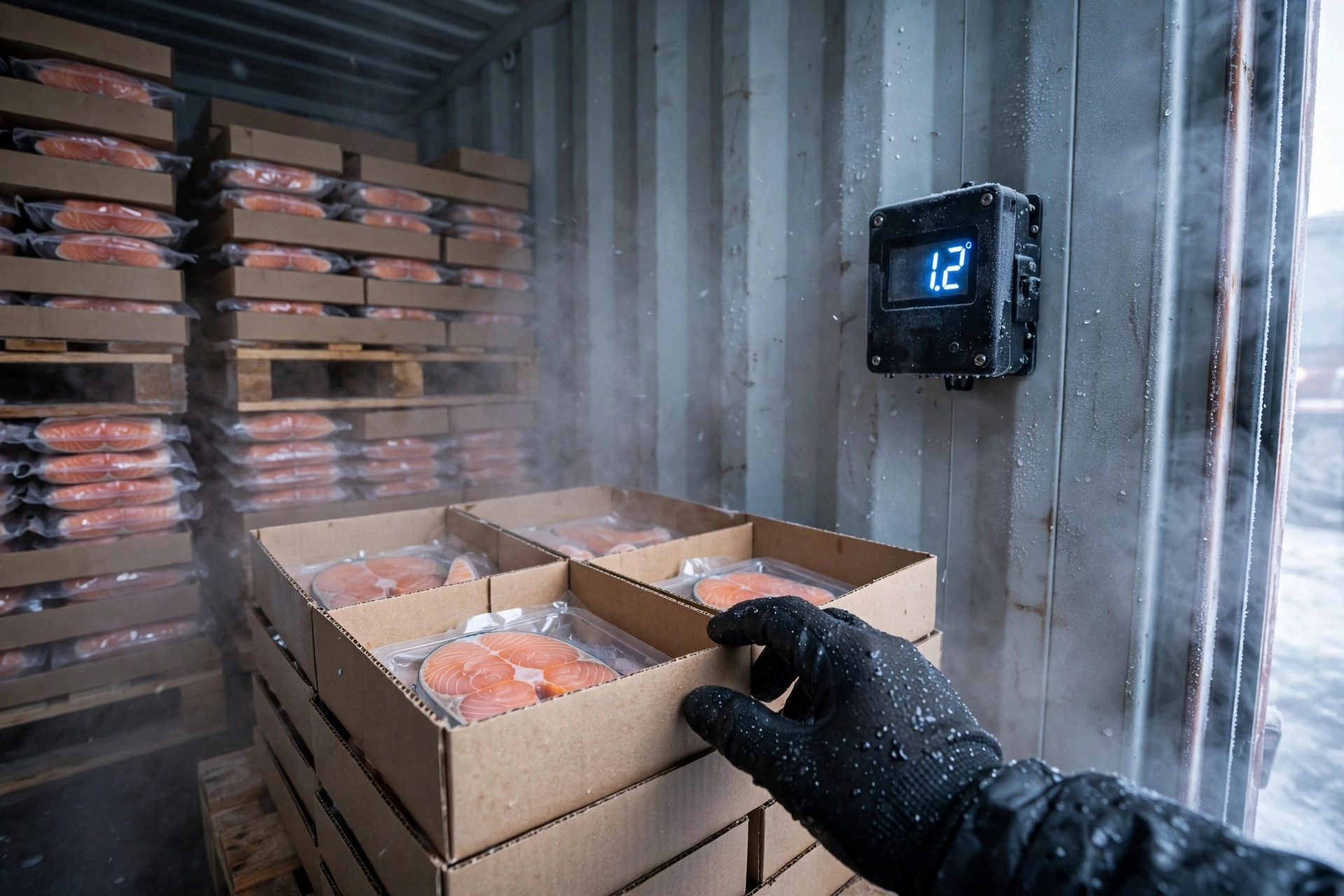
Yang's logger told the story: six hours in the middle, the box interior crept from -19°C to -12°C, then fell back. For frozen fish -18°C is a hard red line — cross it once and the whole container's shelf life and appearance take a hit. The buyer held the cargo and claimed a little over US$200,000 — a 40-footer holds about 26 tonnes, and at Chile's 2025 average export price of roughly US$7.6 per kilo, that checks out. The plant blamed the transport leg, the forwarder blamed the port, the port said the plugs were live and it must be the reefer machinery. Yang's company ate half — US$100,000, booked as tuition.
Anyone who's sold 3PL for a while knows: nine out of ten cold chain disputes are about who pays, not about what the temperature actually was.
The pricing logic: sea, air, or rail
Chilean salmon splits into two products with two very different games:
- Frozen salmon (whole fish, fillets, H/G): mid-value, long shelf life, over 90% goes by sea. The game is "keep the chain unbroken and don't get stranded."
- Fresh salmon (fresh fillets for premium US and Brazil markets): high value, shelf life in days, almost entirely by air. The game is "speed plus secured capacity."
Then there's 2026's third option: rail. For anyone mapping chile salmon export cold chain logistics end to end, this is the new variable. Chile's state railway EFE is working on a scheduled reefer service — salmon in refrigerated containers from Los Lagos to the Biobío ports, targeted for Q4 2026, two trains a week with about 100 reefers of weekly capacity, departing Frutillar. This follows a 2025 pilot of 15 reefer containers from Puerto Montt to Greater Concepción, reportedly cutting carbon footprint 60% (EFE's Alejandro Merello, via salmonbusiness — solid).
Here's the three-way comparison every chile salmon export cold chain logistics buyer should run. Caveat: every freight figure below is a range I quoted in 2025–2026, order-of-magnitude only. Re-quote before signing — peak and off-peak rates can differ 2x.
| Sea (frozen mainstream) | Air (fresh mainstream) | Rail (2026 newcomer) | |
|---|---|---|---|
| Typical route | Puerto Montt → Biobío port → US East Coast / Europe / Asia | Puerto Montt → Santiago → Miami / São Paulo | Frutillar → Biobío port (then ocean) |
| Cost level | A 40-ft reefer, several thousand USD | Several USD per kilo; a shipment costs 5–8x sea | Targeted below pure trucking; depends on final tariff |
| Transit | ~3 weeks to US East Coast | Under 48 hours to Miami | Rail leg comparable to truck, ~1–2 days |
| Carbon | Baseline | Highest | Pilot data: ~60% below trucking |
| Biggest risk | Port plug shortage, stranded boxes | Tight capacity, one day's delay devalues the fish | Few departures, multiple handovers, many cold-chain seams |
| Fits | Bulk frozen, long-term contracts | Fresh premium lines, holiday peaks | Frozen via Biobío, clients with ESG scorecards |
Seeing this table, most people's first reaction is: rail is cheapest and greenest, pick rail. But selling this stuff for years teaches you something — rail's biggest value right now isn't saving money. It's a negotiating chip.
Look at reality. Two trains a week, 100 boxes. Camanchaca alone moves about 45,000 reefer containers through Biobío's ports a year (salmonbusiness, July 2026). National exports run into the hundreds of thousands of boxes; 100 a week doesn't register. Camanchaca's logistics manager Mario Aguilera said the challenge is "the cost of multiple transfers": truck → rail → port, and every extra handover is an extra cold-chain seam and an extra argument. SalmonChile president Patricio Melero welcomed the idea but said cold-chain integrity has to be proven first.
So rail's real job today: a "green option" for European clients with ESG scorecards, and a price club to swing at trucking vendors. Slide a rail tariff sheet across the table and the trucking quote softens 5–10%. That 5% is the money rail actually earns you — don't expect it to carry much cargo.
The counterintuitive part of cold chain logistics: freight is never the most expensive line
Yang's US$100,000 tuition bought me a counterintuitive rule: in this cold chain, the most expensive line item is never freight — it's ambiguity. Ambiguity about where the temperature broke, who pays for three stranded days, who owns the logger data.
Do the math. A 40-foot box of frozen salmon is worth about US$200,000; the ocean leg costs a few thousand — 2–3% of cargo value. One excursion devalues the box 30–50%, a dozen times the freight. Everyone haggles over US$500 of freight and nobody wants to spend US$2,000 on an independent third-party temperature monitor. We just shake our heads.
Here's an insider detail only the selling side knows: "plugged in at the port yard" is not what you imagine. When plugs run short in peak season, yards rotate power — box A gets four hours, unplug, box B gets four. Reefer machinery has thermal inertia, so a short cut doesn't show on the curve. Age the equipment, stretch the intervals — and the curve climbs. A contract that says "the port provides plug-in service" says nothing. It must spell out maximum cumulative power-off hours, the excursion threshold, and who downloads and keeps the logger data.
A second insider note, about air freight. Fresh salmon flies, and people assume "fast is safe." Wrong. The most dangerous leg isn't in the sky — it's the 1,000-plus-kilometer truck ride from the Puerto Montt plant to Santiago airport, 20 hours on the road. If the truck's reefer unit dies there, the fish is gone before it ever flies. So the trucking leg's temperature liability has to be carved out separately — "door to door" in one breath is how shippers get fooled.
Three questions to ask before your next contract
When you're negotiating salmon cold chain terms, throw these out — they'll know you're an insider:
One: "For the days the box waits at the port yard — plug-in power, detention charges, temperature records — whose is each? Put it in an appendix." Don't trust verbal promises. With 445,000 tonnes pressing through Biobío in peak season, the yard manager's word is worth less than one contract line.
Two: "In a dispute, whose logger data counts? Can I install my own third-party monitor?" The carrier installs the logger and downloads the data. A cheap independent monitor can save your life.
Three: "Can I lock in an LOI for the EFE rail service's 2026 capacity now?" A hundred boxes a week, first come first served. Talk now and you're the early bird who gets terms; wait until everyone's piling in and you're the one queuing. Even if you never ship by rail, the LOI is free leverage against trucking quotes.
Yang later printed these three questions and stuck them on his office wall — his chile salmon export cold chain logistics cheat sheet. The fish is frozen; the accounting has to stay hot — every fuzzy line eventually becomes real money.
By Susan, 3PL Sales Director