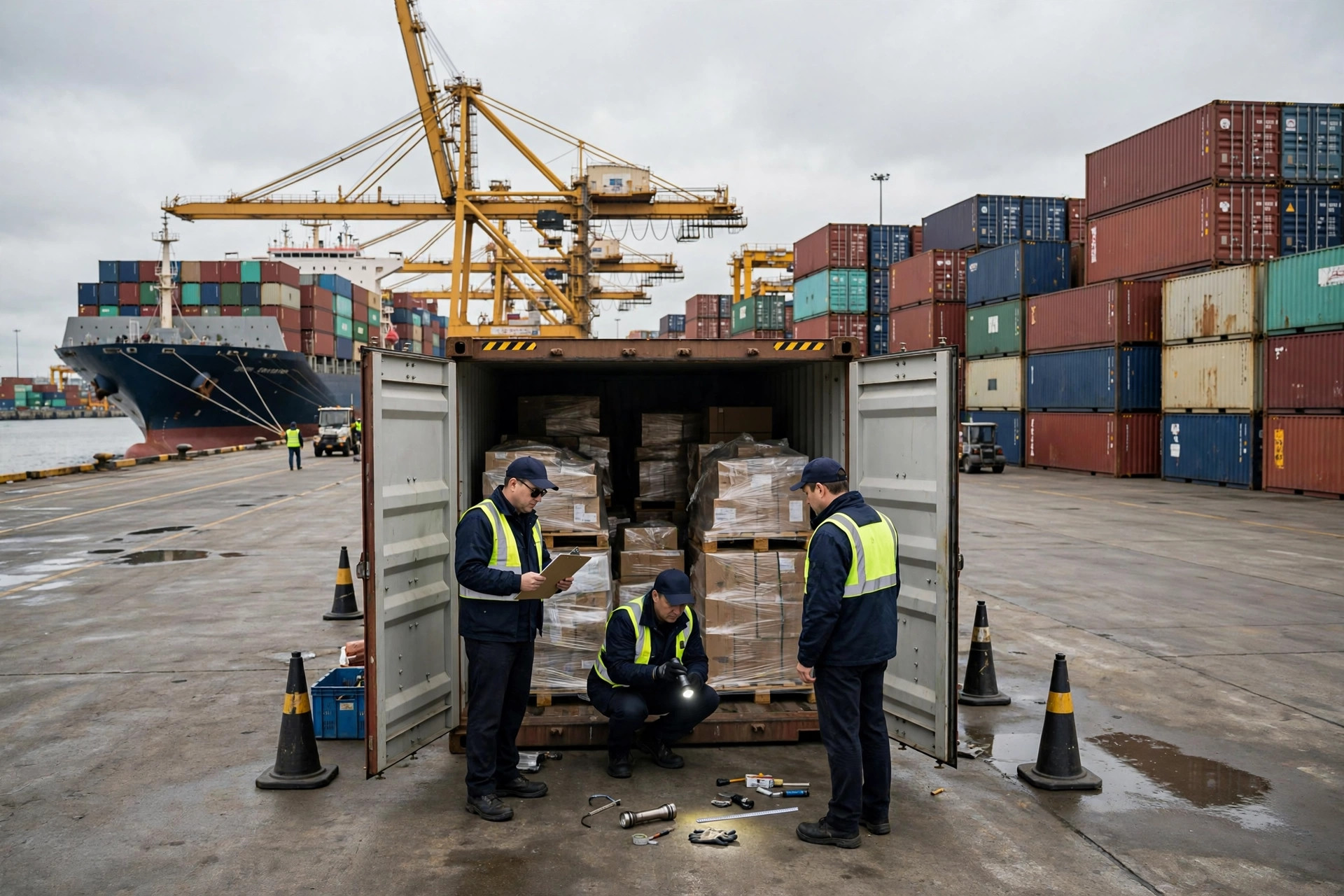
In US importing circles in 2026, one number keeps coming up: five thousand dollars. That is not the freight cost of a shipment — it is the liquidated damages CBP (US Customs and Border Protection) can assess for a single ISF 10+2 violation. More notably, according to published analyses from several trade compliance providers, CBP has been tightening ISF enforcement over the past two years: ports are now directed to issue claims within 90 days of discovering a violation, and the old informal "three strikes" leniency is gone. The ISF 10+2 late filing penalty is shifting from a probabilistic cost to a near-certain one.
Where the $5,000 Comes From: The Legal Basis of the ISF 10+2 Penalty
The Importer Security Filing, known as ISF or 10+2, requires the importer to submit ten data elements to CBP at least 24 hours before cargo is loaded onto the vessel at the foreign port (the carrier files two more). Note the timing carefully: 24 hours before loading, not before arrival. Many newcomers trip on exactly this point.
The penalty sits under the basic importation and entry bond at 19 CFR 113.62(j): $5,000 in liquidated damages per ISF violation. A shipment with both a late and an inaccurate filing can theoretically face $10,000 at face value. That is the face value — actual exposure can be mitigated. Published guidance from multiple customs brokers notes that first-time, low-severity violations are in practice often mitigated to between $1,000 and $2,000, and C-TPAT members may receive up to 50% in additional mitigation. None of this is a statutory right; it is CBP discretion, so verify against current official policy.
The 12 Data Elements: Where Errors Cluster
The "10+2" is ten importer data elements plus two carrier elements. The importer's ten: seller, buyer, importer of record, consignee, manufacturer, ship-to party, country of origin, HTS number, container stuffing location, and consolidator. The carrier's two — the vessel stow plan and container status messages — are the carrier's job, not the importer's.
According to published compliance analyses, errors cluster in three elements: the HTS number (only six digits required, but they must tie to the manufacturer and country of origin at the line level — many importers' six digits do not reconcile with the ten digits on the entry), the manufacturer address (factory moved and nobody updated it, or the trading company was listed instead of the actual producer), and the stuffing location (consolidated cargo is the worst offender — actual stuffing location differs from what was declared). These three are also what CBP scrutinizes most, because they answer the core question: who made this cargo, where, and what is it.

What Late Filing Actually Costs: The Numbers
One compliance technology provider worked through the math in a public analysis: three late filings in a quarter means $15,000 in claims at face value. Even with mitigation on every filing, that is a painful surprise expense.
Two recurring case patterns are worth recording. The first is the "broken document chain": a new importer's first shipment, the supplier's packing list arrived two days late, and the ISF went in six hours before loading — eighteen hours late. Because the filing was completed before the vessel arrived, it was a first offense, and the importer cooperated throughout, mitigation was secured. The second is the "systemic gap": an importer with multiple late filings in a year saw its CBP risk score climb, and the examination rate on subsequent shipments rose noticeably — costs beyond the fine itself.
The attribution is consistent: ISF violations are rarely deliberate non-filing. They are almost always process failures — supplier documents arriving late, nobody owning the 24-hour deadline between broker and forwarder, amendments never filed after changes. In other words, CBP is not really penalizing one late filing; it is penalizing a process that has lost control. Note that ISF applies to ocean freight only — air, truck, and rail are outside its scope. That concentrates the risk on ocean importers, who also happen to move the highest-value shipments on the longest supply chains. Concentrated risk plus high cargo value is exactly why ISF compliance deserves its own process, not a casual hand-off to the broker.
Filed Late? A Four-Step Damage-Control Framework
If the filing is already late, or you discover an error, work through these four steps. Losses narrow significantly:
| Step | Action | Why it matters |
|---|---|---|
| 1. File or correct immediately | Do not wait; get it in before the vessel arrives | Brokers consistently note that proactive filing before arrival is the key fact for mitigation |
| 2. Keep every transmission record | Timestamps, confirmations, amendment history | Proof that you were late but diligent — you will need it for the petition |
| 3. Petition within 60 days of a claim | File a petition for relief under 19 CFR 172 | Argue first offense, corrective action, and new internal controls |
| 4. Fix the process, not the filing | Lock document deadlines, assign one owner for the 24-hour cutoff | Avoiding the "systemic gap" label is what CBP cares about most |
One caution: the petition is not a formality. CBP looks for evidence that you built something to prevent recurrence — a written corrective plan spelling out how many days early documents now arrive and who owns the deadline carries far more weight than a hundred promises to "be more careful." A persuasive petition letter typically contains four things: a first-offense statement, a complete timeline of when documents arrived and when the filing went in, the corrective actions already taken, and documentation of the new internal control process. Missing any one of them weakens the case.
One more small but important detail: C-TPAT members get additional mitigation consideration — published guidance cites up to 50% extra. For steady-volume importers, the C-TPAT cost-benefit deserves its own calculation: it affects not just ISF penalties but the overall examination rate.
An Importer's ISF Control Checklist: Six Questions
After studying enough violation cases, a self-check list emerges. Every question you cannot answer is an open risk:
- By when must supplier documents (packing list, manufacturer details) arrive — and is it in the purchase contract?
- Who owns the 24-hour deadline — a named person, or "the broker probably handles it"?
- After a document change (new factory, different stuffing location), who updates the filing?
- Where are transmission confirmations stored — retrievable within ten minutes if needed?
- Any late filings in the past 12 months — causes documented?
- Does the filing agent agreement spell out deadline responsibility and delay-notification duties?
This list turns ISF from "the broker's problem" into the importer's own process — which is exactly what CBP wants to see.
Trend Assessment: Enforcement Is Moving From Education to Billing
Zoom out on the timeline. After the ISF rule took full effect in 2009, CBP's posture leaned toward education and warnings. In the last two years, public information points to clear tightening: the 90-day claim directive, the end of the three-strikes practice, higher risk scores for repeat violators. The signal is unambiguous — the margin for error is shrinking.
Put the tightening enforcement together with the "systemic gap" idea and the logic becomes clear: CBP's resources are finite, and it targets repeatable, predictable violation patterns — not one-off mistakes. An importer with one late filing in a year that self-corrected, and an importer with two or three late filings every quarter, are two entirely different species in CBP's risk model.
Here is a counter-intuitive but important finding: hiring a broker or forwarder to file your ISF does not hand off the liability. Under 19 CFR, legal responsibility for the ISF always sits with the importer of record — the claim names you, not your broker. You paid someone to do the work; CBP still comes to you when it goes wrong. So when choosing a filing agent, the question is not just "how much per filing" but "how do you guarantee the 24-hour cutoff, and who watches it."
An open question to close with: as the ISF penalty shifts from an uncertain probabilistic cost to a predictable certain one, how should an importer's compliance investment logic change? Perhaps the answer is that compliance stops being an after-the-fact problem to fix when something breaks, and becomes a cost item to be managed with process discipline up front — the way freight itself is managed.
By Dr. Chen, Supply Chain Researcher