Let me tell you something. After all these years on the road, and after writing this India mango export cold chain warehouse guide the hard way, the cargo that hurts most to watch go wrong is mangoes. One year I was waiting for a pickup outside an airport cargo terminal, and a shipment of Indian mangoes had just come off the plane. The boxes looked fine from the outside. Open one up, and the bottom layer was already bruised. The shipper just stood there shaking his head. I still remember that look. Mangoes do not punish you for being half a day slow. They punish you for one careless step.
Start with the numbers, because they tell the story plainly. India is the world's largest mango producer, growing about 26.3 million tonnes a year, more than 40% of global output. And exports? In fiscal year 2024-25, only about 30,000 tonnes, worth about 56.5 million dollars, roughly 1% of production. The world's biggest grower ships 1% of what it grows. That does not add up unless something is wrong between the orchard and the buyer. The problem is not growing the fruit. It is getting it there in one piece.
India Mango Export Cold Chain: Where the Fruit Is Fragile, the Chain Breaks
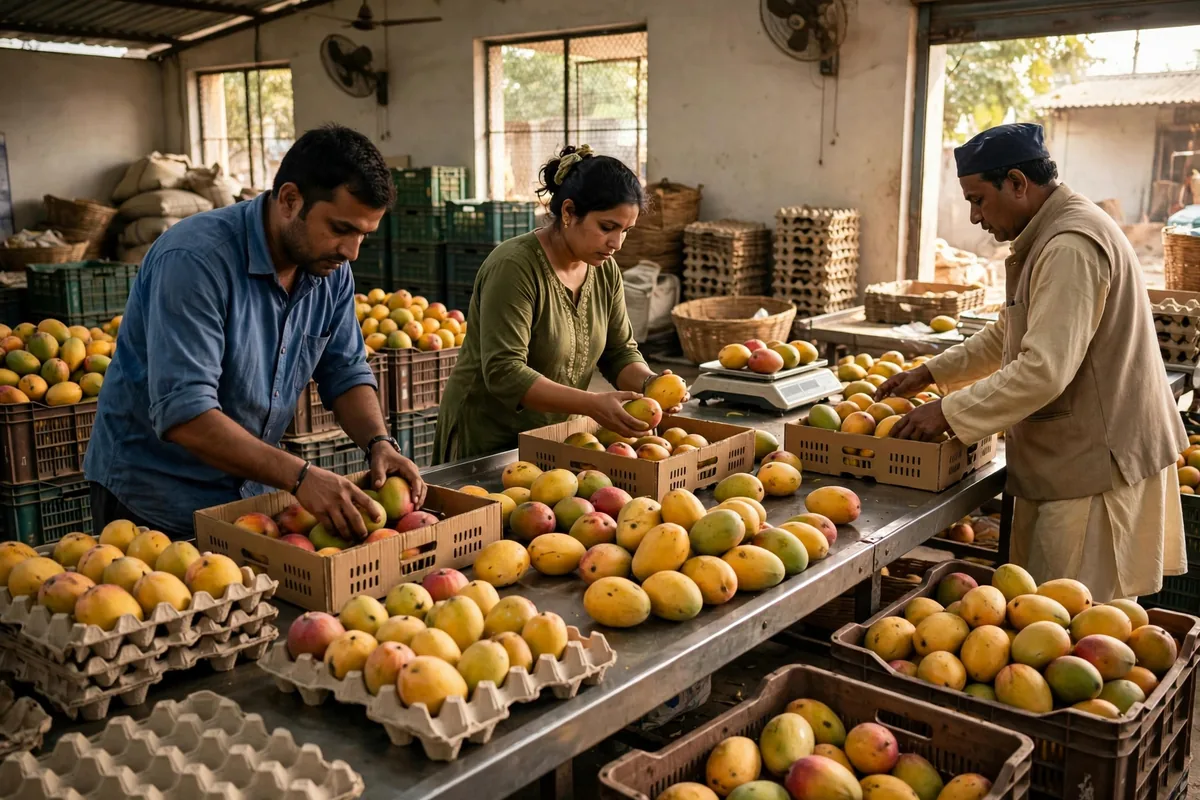
Mangoes are fragile in three ways. First, they chill easily. Too cold and you get black spots and uneven ripening. Second, they bruise under weight. Stack the boxes high and the fruit at the bottom gets crushed, and a bruise turns rotten by the next day. Third, the ripening window is short. From picking to perfect eating is only a matter of days, so one extra day lost on the road can mean the fruit arrives overripe.
You also have to know your varieties. India has about 1,000 mango varieties. Alphonso is the famous one, with a geographical indication. Kesar has been gaining fast: in fiscal year 2024-25, Kesar exports were worth 11.48 million dollars, ahead of Alphonso at 8.56 million. Then there are old varieties like Dasheri. Thick skin and thin skin behave differently in transit, and a warehouse that receives them all the same way, mixed and stacked together, is asking for trouble.
India Mango Export Cold Chain: Air Freight First, and the First Hours in the Warehouse Decide Everything
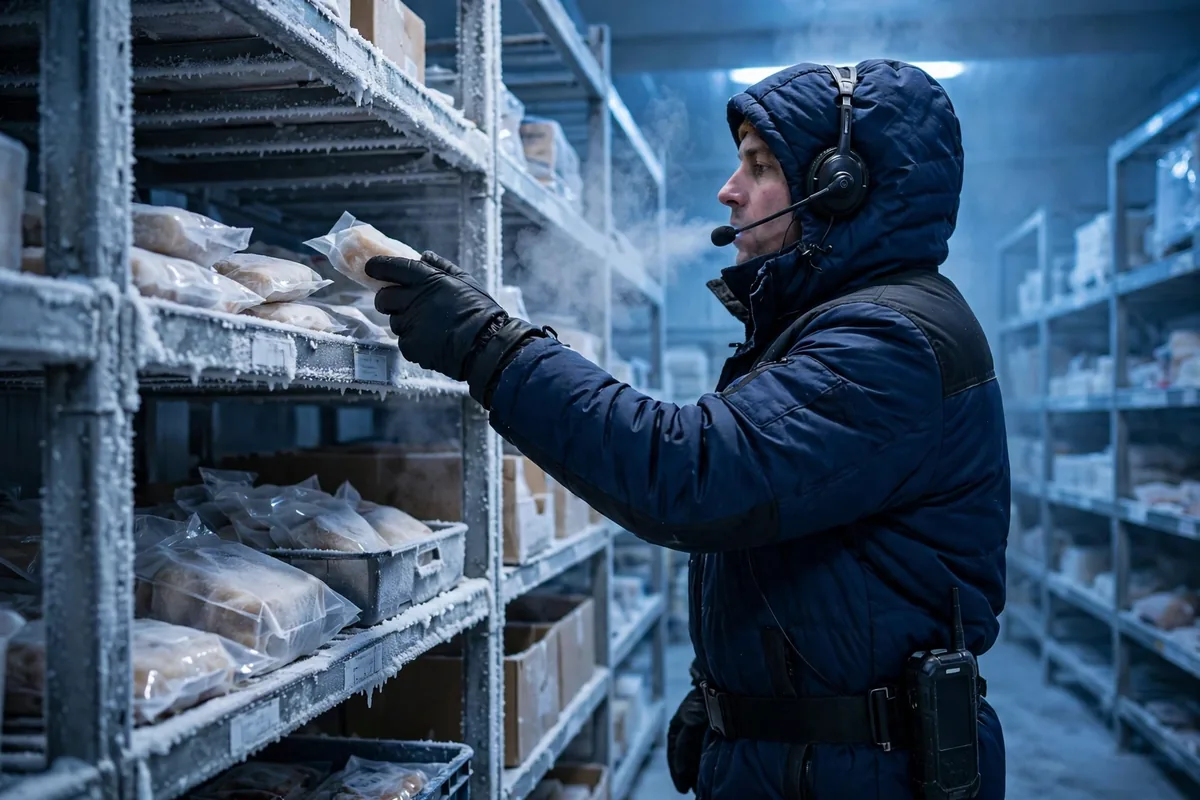
Indian mango exports move mainly by air, and that sets the rhythm of the whole cold chain. Air freight is fast, but the hours on the plane plus the ground time on both ends add up, and one break in temperature wipes out the speed advantage. In my experience, the first few hours after the fruit reaches the warehouse matter most: whether pre-cooling was done, and done properly, decides whether the shipment is still sellable when it lands. Skip it or rush it, and the centre of the box stays warm while the outside feels cool. Open it at destination and the fruit has gone soft inside, and nobody can say which step failed.
Here is a detail too many people shrug off: a refrigerated container or a temperature-controlled air freight box has to stay plugged in, and someone has to watch it. While the fruit waits for its flight, the box holds temperature. Unplug it to move it, or park it in a corner with no power, and the temperature climbs and the mangoes start ripening faster. By the time anyone notices, the shipment is already in the air and nothing can save it. My rule is simple: whoever takes over a mango shipment signs for the power supply and the temperature record. If the handover is unclear, I do not take the load.
Here is the counterintuitive part. Most people think mango exports are a race, and faster is always better. It is not. The race is about steadiness, not speed. Air freight is already fast. Saving an hour or two does not save much money, but losing temperature control can cost you the whole shipment. Speed is the visible bill. Temperature is the hidden one, and the hidden bill is the bigger one.
Who Pays for What: Shipper and Warehouse Each Own a Piece
So how does the money work? Here is an illustrative example, not a real shipment, just to show the shape of it: suppose a load is worth 100,000 in whatever currency you like, and air freight plus ground handling takes about 30% of that value. If poor pre-cooling or a broken handover spoils 20% of the fruit at destination, that 20% is a pure loss, and nobody will pay you for it, because you cannot prove where the chain broke. Do the pre-cooling properly and keep the temperature record all the way through, and if something still goes wrong, at least the responsibility is clear and an insurance or damage claim has something to stand on.
So here is my straight advice, one line for each side, and the same advice I would give any India mango export cold chain warehouse operator. Shippers: do not just chase a freight quote a few hundred cheaper. Ask who does the pre-cooling, how thoroughly, and whether you can see the temperature record. Warehouses: when mangoes arrive, check three things first: dents on the boxes, whether the fruit temperature is even through the load, and whether the paperwork matches the temperature record. If anything is off, photograph it and log it before the goods go into storage. Do not wait until dispatch to start arguing.
The main export markets are the United Arab Emirates, the United Kingdom, the United States, Kuwait and Canada, and exports to the United States were 2,188 tonnes in 2025. The volumes are small but the bar is high. Uttar Pradesh alone accounts for about 26.6% of India's mango production, so supply is concentrated, and when the season peaks, cargo terminals and warehouses are all slammed at once. That is exactly when handovers slip. Being busy is no excuse. Busy is when the routine matters most.
After all these years on the road, and after seeing what this India mango export cold chain warehouse trade really rewards, I believe one old saying: with delicate cargo, the contest is not speed, it is steadiness. If India wants that 1% export share to grow, the answer is not planting a few more acres. It is making every handover in the cold chain solid. Shippers willing to pay for steadiness, warehouses willing to stand behind it, that is the only way this trade lasts.
By Shifu Zhao, Trucking Veteran (15 yrs)