How much does an AMR cost? I heard that question hundreds of times back when I led integration projects. Here is the straight answer: a 1-ton low-profile pallet AMR costs $20k-$60k per unit, roughly. But that is also the most useless answer you can get — what it actually costs to get the thing running is often double. Let me tear the whole bill apart.
Why One Question Gets Ten Different Prices
Think of it like buying a truck: four wheels that move, yet prices span an order of magnitude. AMR pricing comes down to three things.
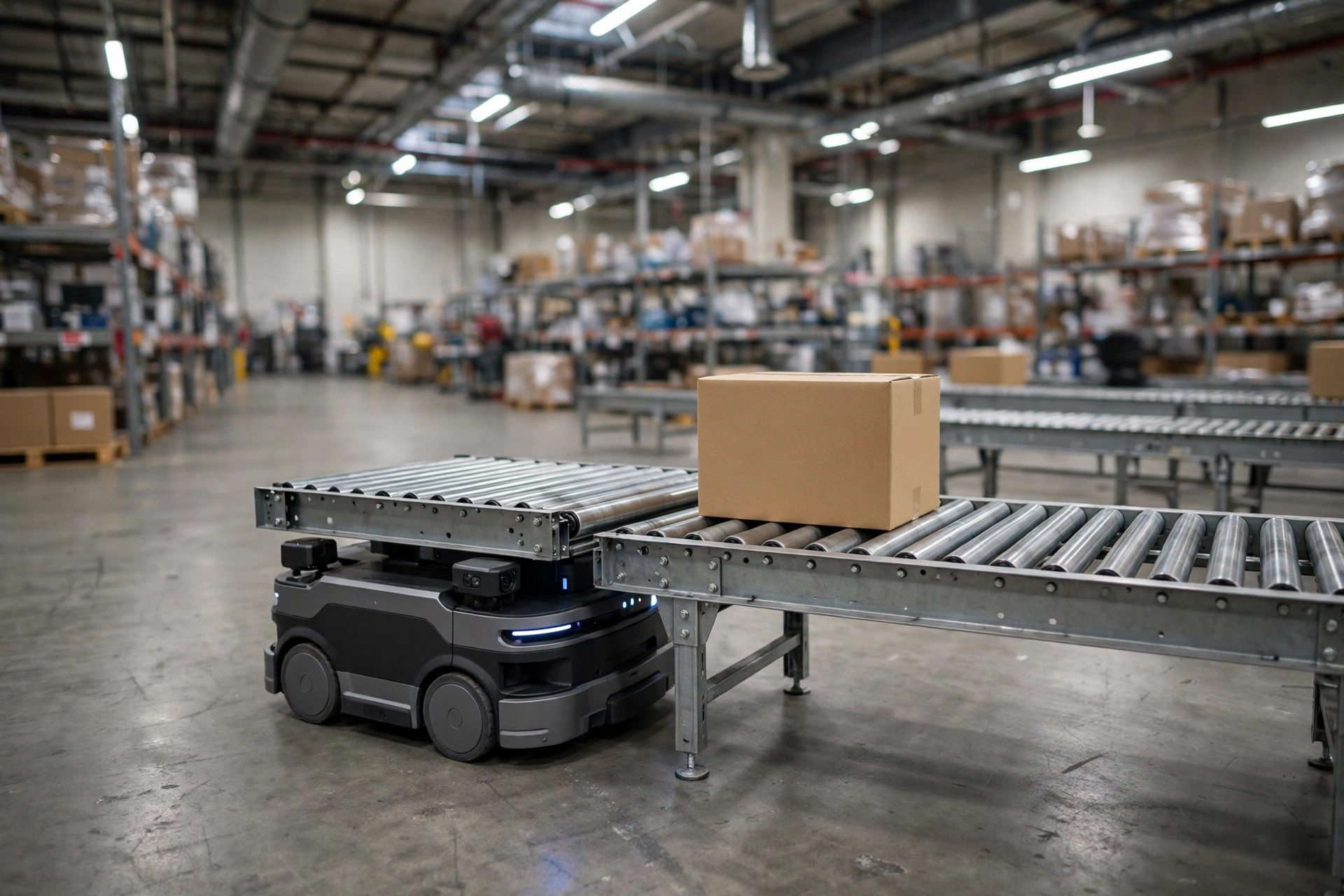
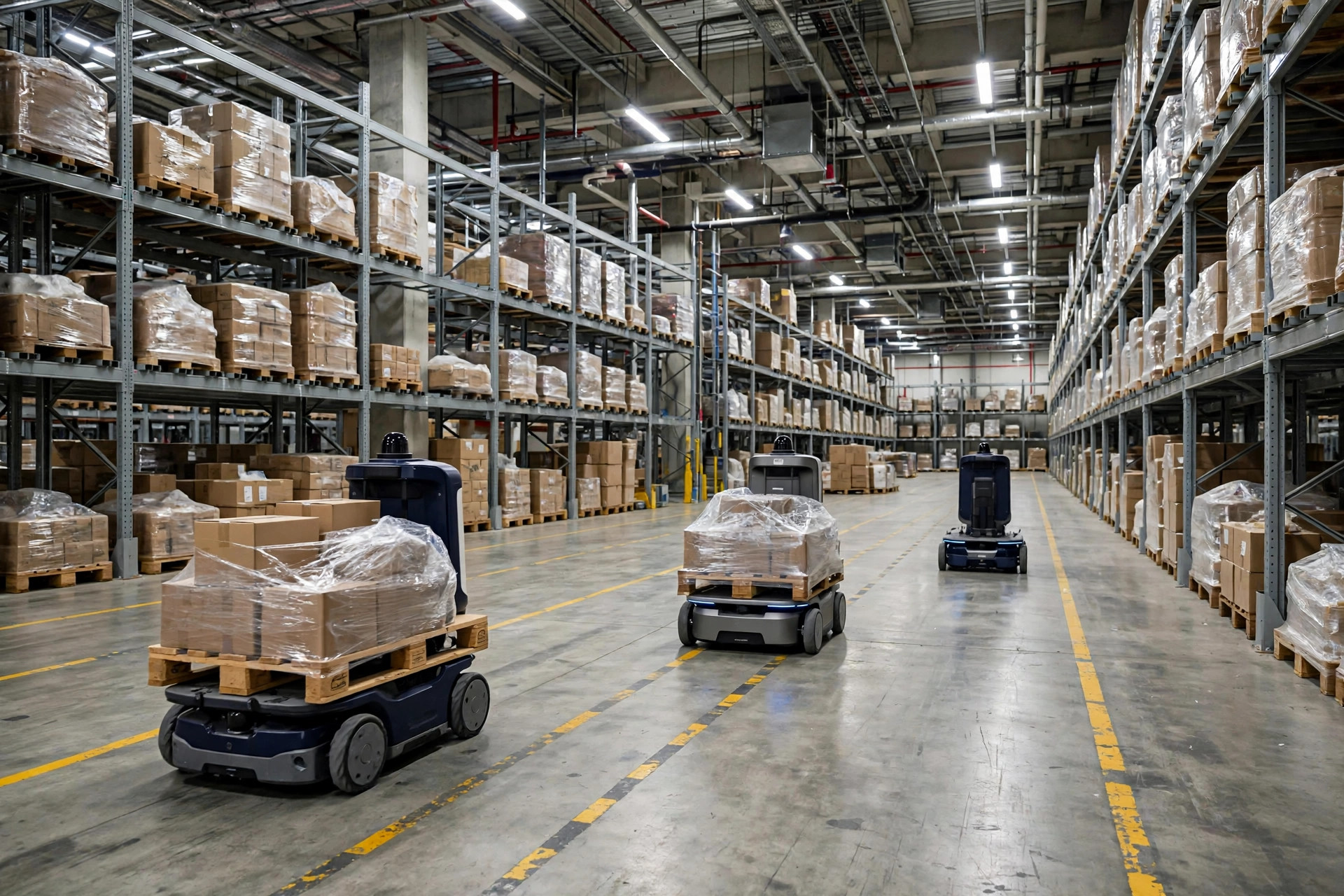
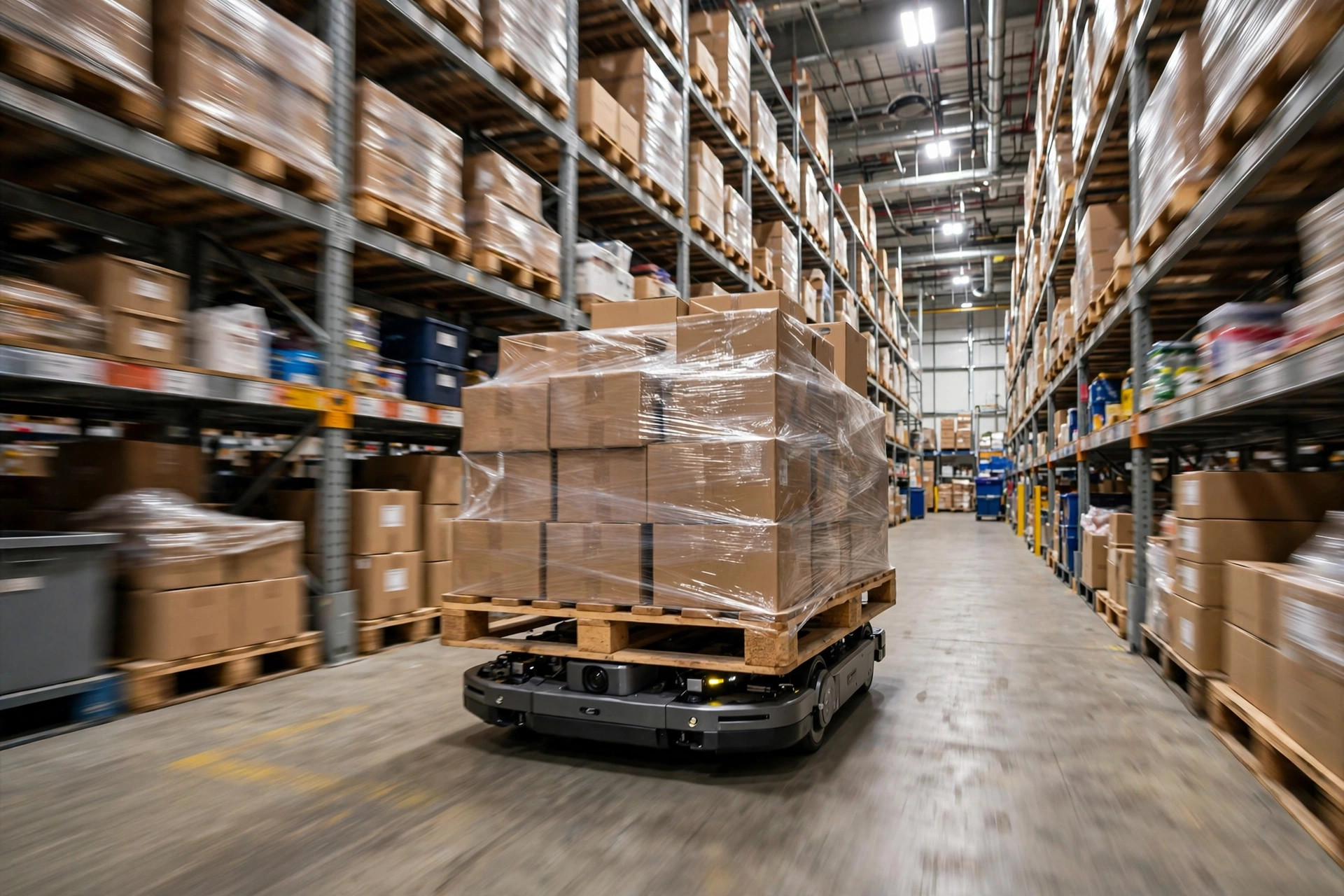
First, payload. A 500 kg chassis and a 2-ton chassis are not the same machine — different drivetrain, different battery, different safety rating. Second, navigation. LiDAR plus SLAM mapping is the mainstream choice now: accurate, good at dodging surprises, and priced accordingly. Magnetic tape or QR-code navigation is cheaper, but you pay for it in floor rework and lost flexibility. Third, form factor. A low-profile unit that slides under a pallet, a tugger that drags carts, a forklift AMR that picks and stacks — the more complex the mechanics, the higher the price.
So asking "how much does an AMR cost" without qualifiers is like asking "how much is a truck" without saying pickup or semi. Pick the form factor first, then talk price.
How Much Does an AMR Cost? Four Price Bands by Type
Here are rough 2026 market bands (USD, bare unit, integration and software not included). I have cross-checked these against industry reports such as Polaris Market Research and public vendor pricing, and kept everything conservative:
| Type | Typical job | Unit price band |
|---|---|---|
| Low-profile / lift AMR | Pallet moves, 500 kg-1.5 t | $20k-$60k |
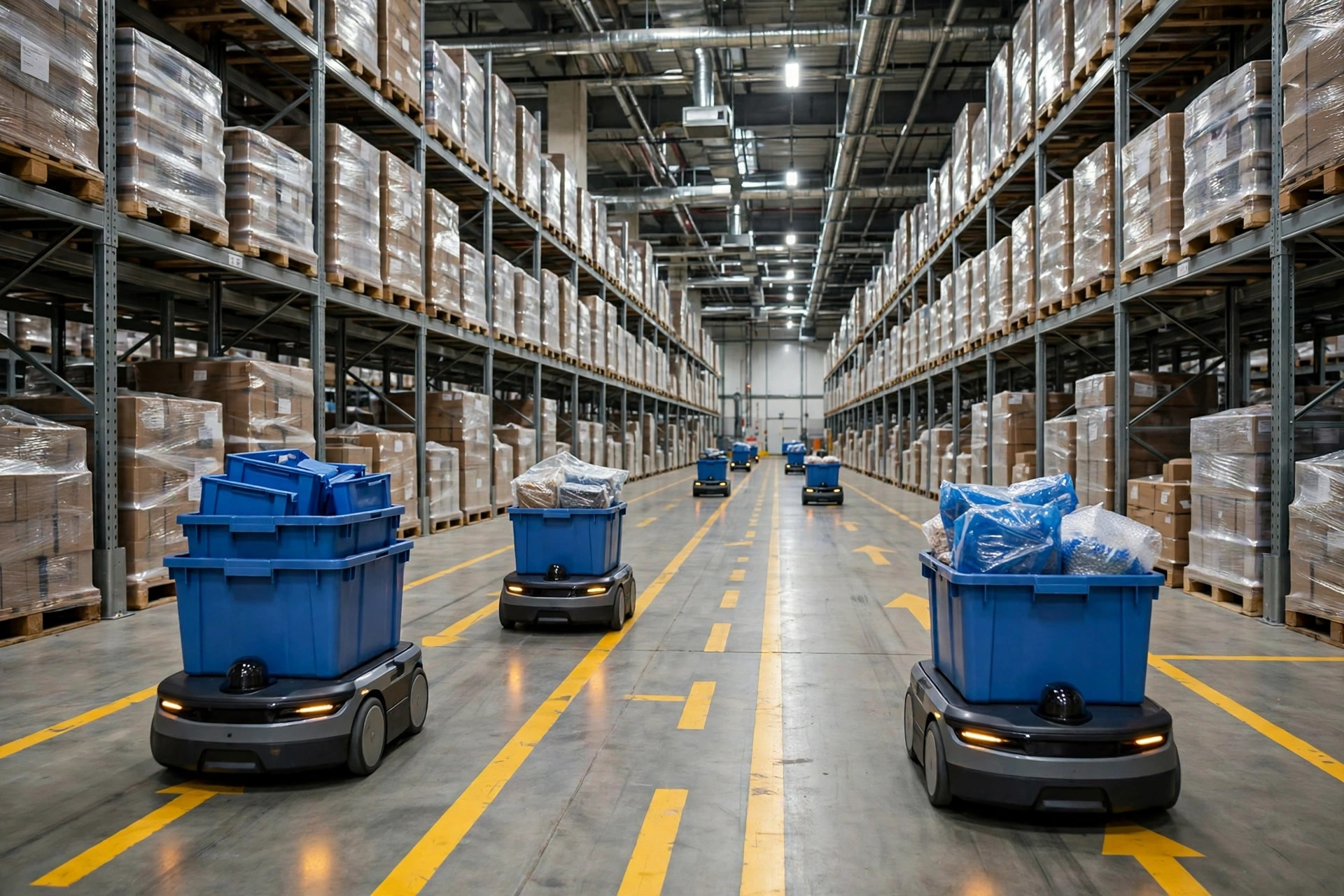
| Tote / sorting AMR | Goods-to-person, tote transport | $20k-$60k |
| Tugger AMR | Cart trains, multi-stop delivery | $40k-$120k |
| Forklift AMR | Auto pick-and-stack | $80k-$200k |
There it is: the most common 1-ton low-profile unit sits at $20k-$60k. That is where my opening answer comes from. But remember — that is the naked sticker price.
The Hidden Bill: What a Robot Really Costs Over Five Years
Beyond the unit price, four more line items will find you. Every one of them.
First, integration and commissioning. An AMR does not start working the day it rolls off the truck: site mapping, route planning, hooks into your warehouse management system, safety zoning, pilot tuning. Rule of thumb from the field: integration usually lands at 20%-50% of the unit price, and the messier your site and the older your systems, the closer you get to the top.
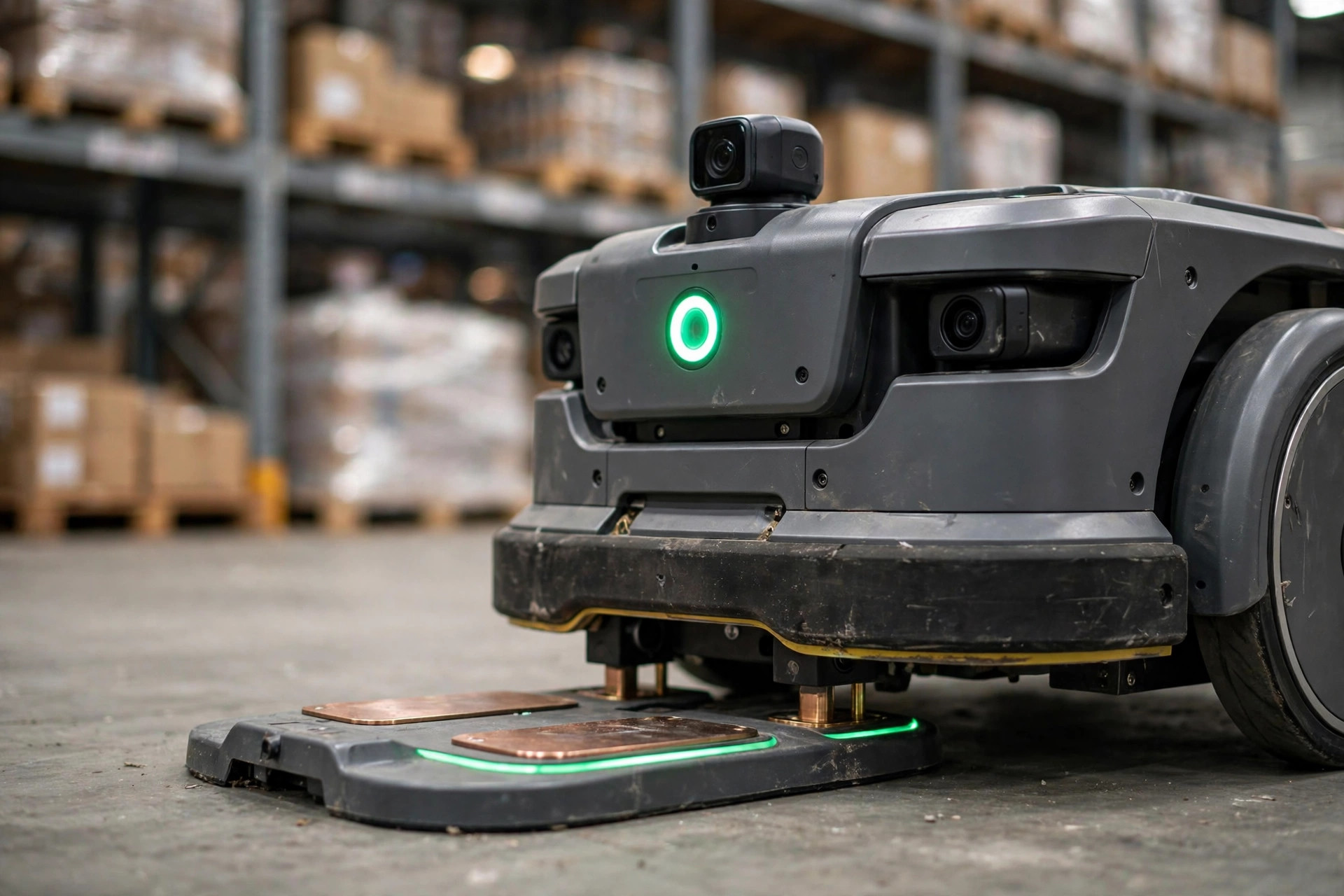
Second, charging and infrastructure. Budget a charger per robot — several thousand dollars each is normal — plus Wi-Fi coverage, floor leveling, and pallet standardization. Uneven floors and seven pallet sizes in one building will send your fault rate through the roof. This line item gets forgotten more than any other.
Third, software licenses. Fleet management and dispatch software is commonly charged per robot per year, several thousand dollars per unit annually.
Fourth, maintenance. 8%-15% of the unit price per year is the industry norm, covering spares, remote support, and software updates. Do not skip this to save money — you would be gambling uptime against a rounding error.
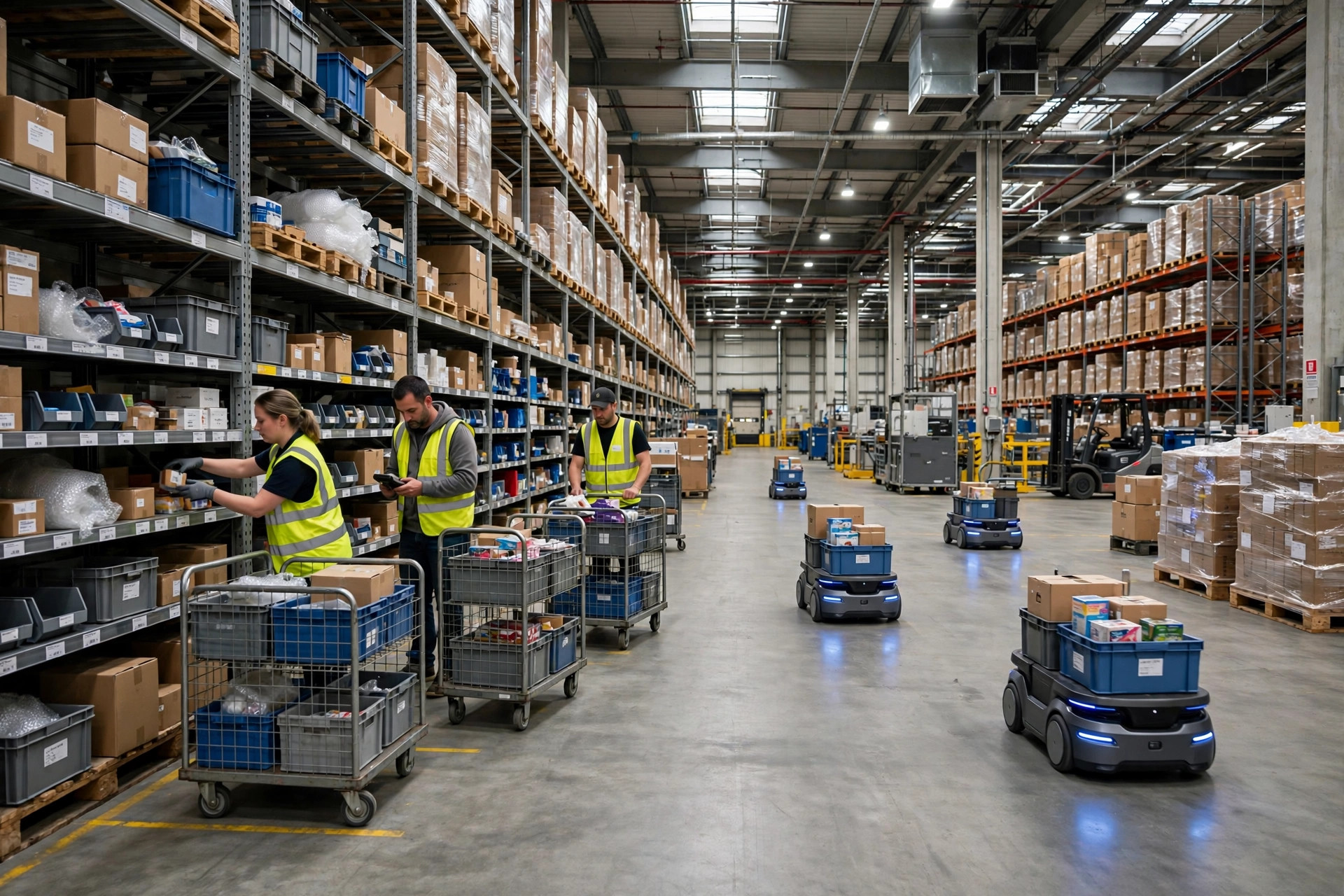
Let me show you a real build. In 2023, a 3PL e-commerce warehouse in Ontario, California put 8 low-profile 1-ton AMRs on the pallet run from receiving to putaway. Unit price $35k each, so $280k for the fleet; integration at 30%, $84k; chargers plus minor floor work, $32k; software at $2,500 per robot per year, $20k a year; maintenance at 10%, $28k a year.
Five-year total cost of ownership = 280 + 84 + 32 + 5 x (20 + 28) = $636k. Notice: the robots themselves are only 44% of the bill. The other 56% is the hidden part nobody puts on the quote.
What did it save? The site runs three shifts, and 2 material-handler positions per shift went away — 6 people total. A fully loaded US warehouse associate (wages, benefits, insurance) costs $40k-$60k a year; call it $50k, and that is $300k a year saved. 636 / 300 = roughly 2.1 years to payback. That is why you keep hearing 18-24 months as the typical AMR payback window — when the math is honest, the number speaks for itself.
The Maintenance Traps: Affordable to Buy, Expensive to Feed
Math done. Now the part integrators least like to discuss: keeping the fleet alive.
Batteries are trap number one. Lithium cycle life is what it is — run three shifts hard and you will watch range degrade within two or three years. A replacement battery pack runs several thousand dollars. Charging strategy matters too: opportunity charging wears batteries, fast charging in batches means buying more robots. Get the robot-to-charger ratio right at design time, not after delivery.
Trap number two is downtime. A 95% uptime SLA is a common line in AMR service contracts. Sounds fine? Do the math: on a 24-hour operation, 5% is 1.2 hours a day. One robot down 1.2 hours a day across an 8-robot fleet is 9.6 robot-hours gone daily. In peak season, those 9.6 hours will blow straight through your outbound plan. Read the response-time and spares clauses in the maintenance contract — not just the price.
Trap number three is software. The annual fee never stops, and version upgrades can force a round of re-integration testing. Ask before you buy: is the license perpetual or subscription? What is the escalation clause? Do not wait until the year-three invoice to find out.
Three Fake Use Cases I Will Call Out Every Time
Years of integration work have given me a short list of requests I shoot down on sight.
One: under 200 pallets a day moved, but you want forklift AMRs. The robot works two or three hours and spends the rest of the day napping on its charger. AMRs are flow machines — without flow density, yours is the most expensive decoration in the building.
Two: potholed floors and seven pallet sizes, but you want the fleet first. AMRs are pickier about floors than forklifts, and non-standard pallets are a daily reading-comprehension test for the navigation stack. Standardize floors and pallets first — small money, big payoff, in that order.
Three: comparing bare-unit quotes only. Two vendors, 30% apart on the unit, you pick the cheap one. Then integration is billed per man-day, software per module, chargers separate — and the total lands 20% above the "expensive" quote. Compare total cost of ownership, not sticker price.
The Counterintuitive Truth: The Cheapest AMR Is Usually the Most Expensive
In 2024, an auto-parts warehouse outside Chicago asked me to review their project. They had bought a low-cost domestic forklift AMR at 30-40% below the tier-one brands. What happened? Sloped floors, non-standard pallets, constant fault alarms; every factory engineer visit meant another international trip billed separately; commissioning dragged on for months and nearly broke the project team. By the time they paid for extra integration, floor fixes, and extended support, total spend had passed the quote from the "expensive" vendor.
It is the printer business model: cheap machine, expensive ink. An AMR's "ink" is integration, commissioning, downtime, and maintenance. The unit price is just the admission ticket — the real money moves in the five years after.
So, how much does an AMR cost? $20k-$60k for the unit, roughly double to actually run it, about two years to earn it back. Whether the money is worth it comes down to one number: the payback period. Work out the five-year total cost of ownership, divide by what you save in labor and throughput each year — around 2 years, go for it; over 3 years, go back and rethink your flow density and use case; and if you cannot do this math at all, do not buy a single robot.
By Da Liu, Automation Engineer